Passive volume pedals are a simple way to add hands-on control without extra power, menu diving, or complex setup. For guitarists who want clean level swells, quick mute access, or expression-style control, the right pedal can make a rig feel much more responsive.
In this roundup, we focus on the best passive volume pedals for players who care about tone, size, travel friendliness, and practical features like tuner outs, dual-function designs, and smooth treadle action.
Best 10 Passive Volume Pedals Picks for 2026
Compact Passive Volume Pedal
Ernie Ball VP JR 250K for Passive Signals

- Jr. size fits pedalboards more easily
- Mono volume control for passive signals
- Taper switch adds two swell rates
Best For: compact pedalboard setups needing passive mono volume control
2-in-1 Passive Control Pedal
HOTONE Ampero II Press passive expression pedal
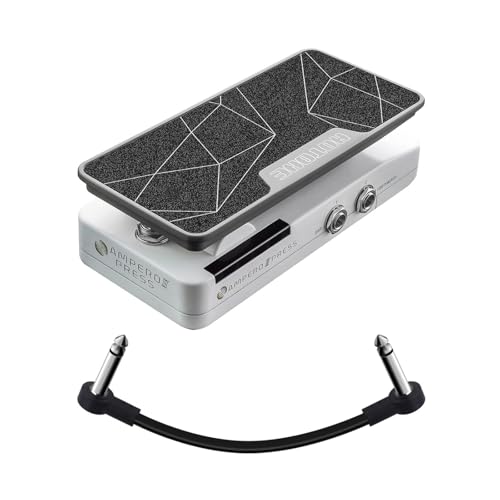
- Passive design needs no power supply
- Separate jacks for expression and footswitch
- Compact 2-in-1 pedal layout
Best For: players wanting passive expression control with an extra footswitch
Limited Edition Passive Volume Pedal
Ernie Ball 40th Anniversary 250K passive volume pedal

- Works with active or passive signals
- Switchable taper for two swell rates
- No power required and compact chassis
Best For: guitarists wanting passive volume control with active-signal compatibility
Mini Passive Volume/Expression Pedal
SONICAKE Vexpress passive volume and expression pedal
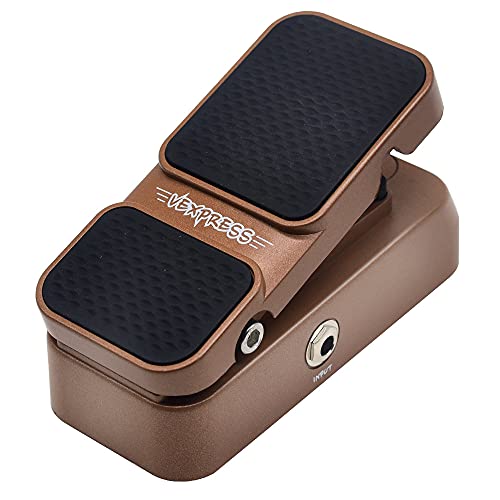
- 2-in-1 volume and expression control
- Automatically detects function mode
- No battery or pedal power required
Best For: players needing a compact passive pedal for both volume and expression
Stage-Ready Passive Stereo Pick
Passive Stereo Pedal with Mute Function

- No power required for simple pedalboard setup.
- Mute-on-press enables silent transitions.
- Non-slip, heavy-duty build for live use.
Best For: Live players needing passive stereo volume control with mute
Flexible 2-in-1 Budget Pick
Donner Viper Passive Volume/Expression Pedal

- Passive volume and expression in one pedal.
- Auto-switches by detecting the input jack.
- Lightweight hard plastic body for easy travel.
Best For: Budget-minded players needing one pedal for volume and expression
Mini Precision Control Pick
Valeton Surge EP-2 Passive Volume/Expression

- Mini 2-in-1 pedal for volume and expression.
- Automatic source detection simplifies switching.
- Smooth taper supports precise control.
Best For: Players wanting a compact passive pedal with responsive control
Dual-Function Passive Control
Hotone Ampero Press 2-in-1 Passive Pedal

- Passive volume and expression control in one pedal
- No power supply needed
- Independent output jacks for flexible hookup
Best For: Players who want one no-power pedal for volume and expression control
Silent Dual-Function Controller
Passive Volume & Expression Pedal for Guitar

- Volume and expression control in one compact pedal
- Passive circuit needs no battery or external power
- Silent tread and metal chassis for regular use
Best For: Players who want a quiet passive controller for pedals and amp control
Accessory-Ready Passive Control
HOTONE Ampero Press 2-in-1 with TS Cable

- Passive volume and expression pedal with no power needed
- Includes a 15 cm TS cable
- Independent output jacks for multiple device types
Best For: Users who want the Ampero Press design with an included cable
Compact Passive Volume Pedal – Ernie Ball VP JR 250K for Passive Signals
If you want one of the more straightforward passive volume pedals for a pedalboard, the Ernie Ball VP JR 250K keeps the focus on simple mono volume control. Its Jr. size makes it easier to fit into tighter rigs, and the taper switch gives you two different swell feels depending on how you like to control dynamics.
Best For: Players who need a compact passive volume pedal for pedalboards and mono guitar or bass setups.
Pros:
- Jr. size is easier to place on crowded pedalboards.
- Designed for passive signals in mono volume applications.
- Taper switch offers two distinct swell rates.
- Simple, no-frills layout keeps operation easy.
Cons:
- Mono-only design limits routing flexibility.
- Built for passive signals, so it is not the most versatile choice for every rig.
This is a practical choice if you want a compact passive volume pedal with a known layout and adjustable response. It stays focused on the basics, which is often exactly what you want for reliable live control.
2-in-1 Passive Control Pedal – HOTONE Ampero II Press passive expression pedal
The HOTONE Ampero II Press stands out among passive volume pedals because it combines passive expression control with a built-in footswitch. If you want one pedal that can handle expression duties while also offering a separate switch output, this 2-in-1 design keeps the rig compact and avoids the need for a power supply.
Best For: Players who want a passive expression pedal with an added footswitch and separate output jacks.
Pros:
- Passive design requires no power supply.
- Separate jacks for expression and footswitch use.
- High-quality potentiometer is built for accurate response.
- Compact footprint for a dual-function pedal.
Cons:
- More specialized than a standard volume-only pedal.
- TRS/TS cable setup may require close attention during hookup.
This is a smart option if you need passive control in a more versatile format than a basic volume pedal. The dual outputs and no-power design make it appealing for streamlined boards.
Limited Edition Passive Volume Pedal – Ernie Ball 40th Anniversary 250K passive volume pedal
For shoppers comparing passive volume pedals, the Ernie Ball 40th Anniversary model adds a compact chassis and a limited-edition black finish without changing the core idea: simple, no-power volume control. It works with active or passive signals, and the switchable taper gives you two swell rates for different playing styles.
Best For: Guitarists who want a compact passive volume pedal that also works with active signals.
Pros:
- Works with both active and passive signals.
- Switchable taper offers two volume response styles.
- Improved Kevlar cord is designed for precise control.
- No power required for operation.
Cons:
- Compact chassis may feel smaller than full-size pedals.
- Limited-edition finish may not matter if you only want basic function.
This model is a strong fit if you want a passive volume pedal with a bit more range in signal compatibility. It keeps the controls simple while adding a premium build touch and adjustable taper.
Mini Passive Volume/Expression Pedal – SONICAKE Vexpress passive volume and expression pedal
The SONICAKE Vexpress is a compact choice for players looking at passive volume pedals that can also double as expression control. It automatically detects the function, works without a battery or pedal power supply, and its lightweight size makes it easy to carry for small boards or mobile rigs.
Best For: Musicians who want a small passive volume pedal that also handles expression control.
Pros:
- 2-in-1 passive volume and expression functionality.
- Automatically detects volume or expression mode.
- Works without battery or pedal power supply.
- Very compact and lightweight for travel or tight pedalboards.
Cons:
- Requires a TRS cable for proper gradual control.
- Mini size may not suit players who prefer a larger foot platform.
This is a practical budget-minded style of passive control pedal if space and portability matter most. The dual-function design gives it more flexibility than a basic volume pedal, while still staying simple to power and use.
Stage-Ready Passive Stereo Pick – Passive Stereo Pedal with Mute Function
If you want passive volume pedals that keep your rig simple, this stereo model gives you real-time level control without needing batteries or a power supply. It’s designed for guitar, bass, keyboard, synth, and multi-effects setups, and the mute-on-press function makes quick silent changes easy during live sets or recording.
Best For: Players who want a no-power, stereo passive pedal with mute control for stage or studio use.
Pros:
- No power required, so it’s easy to drop into minimalist or mobile pedalboards.
- Mute function supports silent transitions between songs or tones.
- Non-slip tread and heavy-duty chassis are built for stage reliability.
- Works with guitars, basses, keyboards, synthesizers, and multi-effects units.
Cons:
- Uses a mono input and stereo output setup, so connections need to match your rig.
- Best suited to players who specifically need volume/expression control rather than effects.
This is a practical choice if you value precise passive control and want a pedal that’s ready to go without extra power planning. The mute feature and rugged build make it especially useful for live players who need dependable hands-free control.
Flexible 2-in-1 Budget Pick – Donner Viper Passive Volume/Expression Pedal
Among passive volume pedals, this Donner 2-in-1 model is a practical pick if you want one unit that can handle both volume and expression duties. It switches automatically by detecting the input jack, which makes it a flexible fit for guitar, bass, keyboard, synth, workstation, and controller setups without needing a battery or power supply.
Best For: Players who want a lightweight passive pedal that can switch between volume and expression modes automatically.
Pros:
- Combines passive volume and expression functions in one pedal.
- Automatic switching simplifies use between different rigs or tasks.
- No power supply required for straightforward plug-and-play use.
- Hard plastic casing keeps it robust while staying lightweight.
Cons:
- Plastic construction may not feel as rugged as heavier-duty metal pedals.
- Does not include a battery compartment, so it’s strictly passive/non-powered.
This pedal makes sense if you want a compact, all-in-one controller rather than a dedicated volume-only unit. The automatic mode detection is the main convenience feature, especially for players moving between different instruments or setups.
Mini Precision Control Pick – Valeton Surge EP-2 Passive Volume/Expression
Valeton Surge EP-2 Mini Expression/ Passive Volume Guitar Effect Mini Pedal (EP-2)
Check Price On AmazonIf you’re shopping passive volume pedals in a smaller format, the Valeton Surge EP-2 offers 2-in-1 volume and expression functionality with automatic source detection. It works without a battery or power adapter, and its smooth taper is designed to respond to different parameters with precision, making it a solid fit for guitar, bass, and other compatible instruments.
Best For: Players who want a mini passive pedal with smooth response for both volume and expression control.
Pros:
- 2-in-1 design handles both volume and expression use.
- Automatically detects the output source for easier switching.
- Works without a battery or power adapter.
- Smooth taper supports precise parameter changes.
Cons:
- Product details list it as battery powered, so the power specification may be confusing.
- Mini format may not suit players who prefer a larger treadle.
This is a strong option if precision and compact size matter more than a full-size pedalboard footprint. Its automatic detection and smooth taper make it especially useful for players who move between volume rides and expression duties.
Dual-Function Passive Control – Hotone Ampero Press 2-in-1 Passive Pedal
If you want passive volume pedals that can also handle expression duties, the Hotone Ampero Press keeps the setup simple with a 2-in-1 design. Its passive circuit needs no power supply, and the independent output jacks make it easy to use with a range of instruments, multi-effects units, and guitar pedals.
Best For: Guitarists who want one passive pedal for both volume swells and expression control without adding a power requirement.
Pros:
- Passive design requires no power supply
- 2 functions in 1 pedal for volume and expression control
- High-quality potentiometer is built for precise response and long life
- Independent volume and expression output jacks
Cons:
- Single-pedal design may not suit players who want dedicated pedals for each task
- Compatibility depends on the instruments and devices you use
The Ampero Press is a practical pick if you want a straightforward passive controller with dual-purpose flexibility. It focuses on simple operation, reliable response, and broad use with pedals and other devices.
Silent Dual-Function Controller – Passive Volume & Expression Pedal for Guitar
This passive volume pedal is built for players who want simple control without adding a power adapter to the rig. It combines volume and expression functions in one compact controller, with a silent tread and 1/4-inch connections for use with effects, pedalboards, amps, and multi-effects gear.
Best For: Guitarists who want a quiet, passive foot controller for both volume swells and expression-based effects control.
Pros:
- Dual-function design handles volume or expression control
- Fully passive circuit needs no battery or external power
- Silent, smooth tread is suitable for studio or live use
- Solid metal chassis and reinforced mechanism are rated for heavy use
Cons:
- Compact controller may be less specialized than separate pedals
- Use depends on compatible expression inputs or effects chains
For a no-power pedalboard addition, this model emphasizes quiet operation and broad compatibility. The mix of passive simplicity and durable construction makes it a sensible option for regular rehearsals and gigs.
Accessory-Ready Passive Control – HOTONE Ampero Press 2-in-1 with TS Cable
Among passive volume pedals, this HOTONE Ampero Press keeps the same 2-in-1 volume and expression concept while adding a 15 cm TS cable in the box. It uses a passive design with no power supply needed, plus independent output jacks for use with instruments, multi-effects pedals, and other compatible devices.
Best For: Players who want a passive volume and expression pedal with an included short TS cable for an easier start.
Pros:
- Passive design requires no power supply
- Combines volume and expression control in one pedal
- Includes an additional 15 cm TS cable
- High-quality potentiometer is designed for precise response and long life
Cons:
- Included cable is short, so some setups may still need longer cabling
- Best results depend on compatibility with your pedals or devices
If you like the Ampero Press format and want a small accessory included, this version adds a little convenience right out of the box. It stays focused on passive operation, dual-function control, and broad device support.
How We Picked the Best Passive Volume Pedals
We looked for pedals that make sense for real-world use: dependable passive operation, smooth sweep behavior, sturdy build quality, and footprints that fit crowded pedalboards. We also prioritized models with clear compatibility for passive instruments or dual-use volume/expression setups, since many players want one pedal that can do more than one job.
Quick Comparison: What Matters Most
When comparing Passive Volume Pedals, the biggest differences usually come down to control range, resistance feel, physical size, and whether the pedal is optimized for guitar level signals or also supports expression-style operation. Some models are minimal and compact, while others add mute switches, stereo capability, or hybrid functionality for broader use.
Key Buying Factors for Passive Volume Pedals
Signal Type and Impedance
Make sure the pedal is designed for your instrument or rig. Passive guitar pickups can be sensitive to impedance loading, so a pedal built for passive signals is often the safest choice when you want the most natural response.
Size and Board Space
If your pedalboard is tight, mini formats can be a major advantage. Larger treadles may offer a more traditional feel, but compact models are easier to fit alongside drives, delays, and wireless gear.
Functionality
Some Passive Volume Pedals are volume-only, while others combine volume and expression modes or include mute functions. Choose based on whether you mainly need level control, silent tuning, or controller-style flexibility for compatible gear.
Sweep Feel and Build
A smooth, predictable sweep makes a big difference for swells and fine volume adjustment. Look for a stable treadle, non-slip base, and durable jacks or cable routing if you plan to use the pedal regularly on stage.
Who Should Buy Which Passive Volume Pedals?
Players who want the most straightforward setup should lean toward a dedicated passive volume pedal built for passive signals. Guitarists with limited board space may prefer mini Passive Volume Pedals, especially if portability matters. If you also want controller functionality for modelers or effects units, a 2-in-1 volume and expression design is usually the better fit.
For most buyers, the best choice depends less on brand and more on compatibility, size, and how you actually use your rig. Match the pedal to your signal chain first, then narrow in on features like mute switches, stereo support, and treadle feel.