Finding the right volume pedal can make your bass rig easier to control, cleaner to tune, and more expressive onstage. The best models offer smooth taper, reliable tracking, and the right impedance match for your instrument or pedalboard.
Below, we’ve selected ten strong options for players who want practical volume control without sacrificing tone, feel, or space.
Best 10 Volume Pedals for Bass Guitar Picks for 2026
Compact Passive Control
Ernie Ball VP Jr 250K for Passive Signals

- Jr size fits better on pedalboards
- Mono volume control for simple operation
- Taper switch provides two swell rates
Best For: Bass players using passive signals who want a compact volume pedal
Mini Footprint Control

- Mini footprint for tight pedalboards
- Internal controls for polarity and level setup
- No power required
Best For: Bass players who want a compact pedal with extra control options
Limited Edition Control
Ernie Ball 40th Anniversary Volume Pedal

- Works with active or passive signals
- Improved Kevlar cord for precise control
- No power required
Best For: Bassists who want one pedal that fits both active and passive rigs
Dual-Function Flexibility
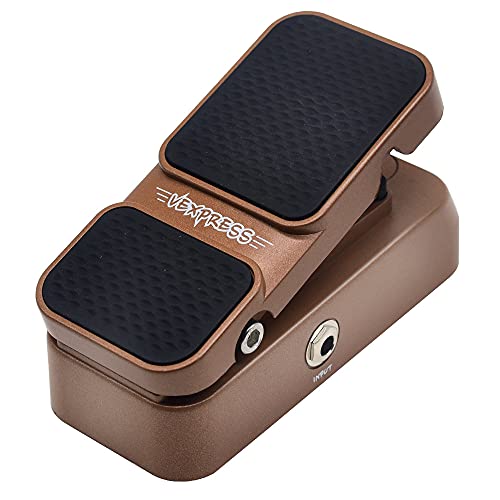
- Volume and expression control in one pedal
- Automatically detects volume or EXP mode
- No battery or power supply required
Best For: Players who want a lightweight 2-in-1 pedal for bass and other gear
Active Bass Signal Volume Control
Ernie Ball VP JR 25K Volume Pedal

- 25K pot for active pickup signals
- Compact design for smaller setups
- Includes tuner output
Best For: Bass players with active pickups who want a compact volume pedal
Dual-Function Flex Control
SONICAKE FlipVol Volume Expression Pedal
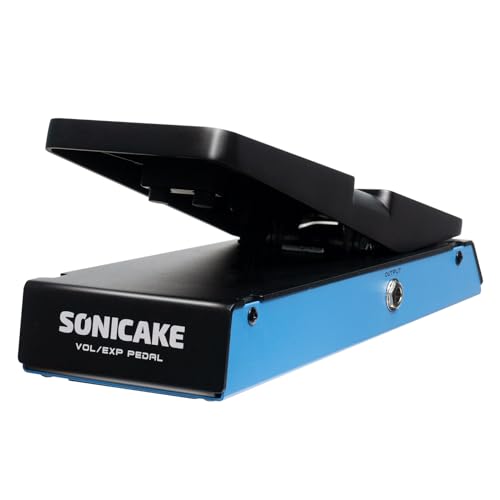
- Passive volume and expression in one pedal
- Works without battery or pedal power supply
- Full-size design with bass compatibility
Best For: Bass players who want a 2-in-1 volume and expression pedal
Passive 2-in-1 Utility Pedal
Donner Viper Volume Expression Pedal

- Passive volume and expression in one pedal
- Automatic mode switching by input jack
- No power supply required
Best For: Bass players who want a lightweight passive 2-in-1 pedal
Dual-Function Passive Controller
Volume & Expression Pedal for Electric Guitar

- Passive, no-power operation
- Works as volume or expression
- Silent tread with metal chassis
Best For: Bass or guitar players wanting a simple passive control pedal
Compact 2-in-1 Controller
Volume Expression Pedal for Guitar Bass

- Volume and expression in one pedal
- Passive TRS/mono plug-and-play design
- Metal chassis with non-slip base
Best For: Bass players who want a compact all-in-one control pedal
Mute-Ready Passive Pedal
Volume Expression Pedal with Mute Function

- Adds mute-on-press silence
- Passive, no-power operation
- Non-slip tread and heavy-duty chassis
Best For: Bass players who need quick mute control in a passive pedal
Compact Passive Control – Ernie Ball VP Jr 250K for Passive Signals
If you want volume pedals for bass guitar that stay simple and reliable, the Ernie Ball VP Jr 250K is built for passive signal paths and a smaller pedalboard footprint. Its mono volume control and switchable taper give you two different swell rates, which can be useful when you need either smooth fades or a quicker response underfoot.
Best For: Bass players using passive signals who want a compact, no-fuss volume pedal.
Pros:
- Jr size fits better on crowded pedalboards.
- Mono volume control keeps operation straightforward.
- Taper switch offers two distinct swell rates.
- Designed for passive signal use.
Cons:
- Only specified for passive signals.
- May be too basic if you want expression-style features.
This is a practical pick if you mainly need dependable level control in a smaller format. The brushed aluminum build and simple layout make it easy to drop into a bass rig without adding complexity.
Mini Footprint Control – Dunlop Volume (X) Mini Pedal
The Dunlop Volume (X) Mini Pedal is a strong option in volume pedals for bass guitar when space is tight but you still want detailed control. It offers smooth swells, adjustable torque, and internal setup options for heel/toe polarity, minimum level, and Aux jack mode, making it a flexible choice for compact rigs.
Best For: Bass players who want a compact pedal with tuning options and expression-style flexibility.
Pros:
- Mini footprint is ideal for travel boards.
- Low Friction Band-Drive is tested to over one million cycles.
- Internal controls let you fine-tune polarity, minimum level, and Aux mode.
- No power required for simple operation.
Cons:
- Uses internal controls, so setup may take extra time.
- Designed as a compact pedal, which may feel small to some players.
If you want a small but capable pedal with more adjustment than a basic volume rocker, this one stands out. It is especially appealing for players who need consistent action and flexible routing without adding another powered device.
Limited Edition Control – Ernie Ball 40th Anniversary Volume Pedal
For bass guitar players looking at volume pedals for bass guitar with a premium compact feel, the Ernie Ball 40th Anniversary Volume Pedal combines a limited edition black finish with practical control features. It works with active or passive signals, uses an improved Kevlar cord for precise volume control, and includes a switchable taper for two swell rates.
Best For: Bassists who want a compact pedal that works with both active and passive setups.
Pros:
- Works with active or passive signals.
- Improved Kevlar cord supports precise volume control.
- Switchable taper gives two distinct swell rates.
- No power required.
Cons:
- Limited edition design may not appeal if you want a basic utility pedal.
- Compact chassis may feel smaller than full-size alternatives.
This is a clean, practical choice if you need broad signal compatibility in a straightforward pedal. The no-power design and refined cord action make it a solid fit for players who value simplicity and control.
Dual-Function Flexibility – SONICAKE Vexpress Mini Pedal
The SONICAKE Vexpress is a compact choice among volume pedals for bass guitar because it combines passive volume control and expression control in one mini pedal. It automatically detects whether you are using it for volume or EXP control, and it works with bass, keyboards, synths, and other gear when used with the proper TRS connection.
Best For: Players who want a lightweight 2-in-1 pedal for bass and other instruments.
Pros:
- Two functions in one pedal: volume and expression control.
- Automatically detects volume or EXP mode.
- Works with guitar, bass, keyboard, synth, and more.
- No battery or pedal power supply required.
Cons:
- Must use a TRS cable for proper gradual volume control.
- Mini design may be less comfortable for players who prefer larger pedals.
This is a useful option if your bass setup needs versatility and portability more than a traditional full-size pedal. The lightweight build and dual-function design make it a practical travel-friendly solution for multi-instrument rigs.
Active Bass Signal Volume Control – Ernie Ball VP JR 25K Volume Pedal
If you’re comparing volume pedals for bass guitar and your instrument uses active pickups, the Ernie Ball VP JR 25K is built for that job. Its compact footprint keeps it easy to place on a crowded pedalboard, and the 25K potentiometer is matched to active signals.
Best For: Bass players with active pickups who want a compact, straightforward volume pedal with a tuner output.
Pros:
- 25K potentiometer is designed for active pickup signals
- Compact design saves pedalboard space
- Tuner output adds routing convenience
Cons:
- Specified for active signals, so it may not be the right fit for every bass setup
- No extra mode options beyond standard volume control
For active bass rigs, this is a focused, no-frills option that prioritizes compatibility and simplicity over extra features. The compact size and tuner output make it practical for players who just want reliable volume control in a smaller footprint.
Dual-Function Flex Control – SONICAKE FlipVol Volume Expression Pedal
For players shopping volume pedals for bass guitar, the SONICAKE FlipVol stands out because it combines passive volume and expression control in one full-size pedal. It works without battery or pedal power supply, and its analog design is listed as compatible with bass as well as other instruments and controllers.
Best For: Bass players who want a full-size passive volume pedal that can also function as an expression pedal.
Pros:
- 2-in-1 design combines passive volume and expression functions
- Works without battery or pedal power supply
- Full-size pedal may be more comfortable underfoot
- Listed as compatible with bass, keyboard, synth, and more
Cons:
- As a dual-purpose pedal, it may be more than you need if you only want basic volume control
- Requires standard pedalboard-style setup with 1/4-inch audio connections
The FlipVol is a practical pick if you want one pedal to handle both volume and expression duties. Its passive, analog operation and full-size form make it a flexible option for bass rigs that need simple control without extra power requirements.
Passive 2-in-1 Utility Pedal – Donner Viper Volume Expression Pedal
If you want volume pedals for bass guitar that keep things simple, the Donner Viper gives you passive volume control plus expression capability in one analog pedal. It automatically switches modes by detecting the input jack, and it’s listed as compatible with bass, keyboard, synthesizer, and controller setups.
Best For: Bass players who want a no-power passive pedal with automatic volume/expression switching.
Pros:
- Combines passive volume and expression functions
- Automatic switching detects the input jack
- No power supply required
- Hard plastic casing keeps it robust but lightweight
Cons:
- No battery compartment is included
- Hard plastic construction may not appeal to players who prefer a heavier pedal feel
The Donner Viper is a straightforward utility pedal for players who want passive operation and flexible routing in a lightweight format. If you value automatic switching and broad compatibility, it offers a very practical set of features for bass use.
Dual-Function Passive Controller – Volume & Expression Pedal for Electric Guitar
If you need one of the more flexible volume pedals for bass guitar setups, this passive volume/expression pedal is built for simple, no-power operation and quick integration into a pedalboard. It can handle volume swells or expression duties, making it a practical choice if you want fewer devices in your rig.
Best For: Players who want a passive, compact volume/expression pedal for bass or guitar rigs without needing external power.
Pros:
- Passive design requires no battery or power supply.
- Dual-function layout works as both volume and expression pedal.
- Silent tread is well-suited to recording, live, and worship use.
- Metal chassis is rated for 100,000+ tread cycles.
Cons:
- Listed as mono input with stereo output, so cabling needs to match your setup.
- Designed primarily as a general-purpose controller rather than a bass-specific pedal.
This is a solid pick if you value straightforward operation and a rugged build over specialized bass-only features. Its passive, plug-and-play approach makes it easy to add to a bass board that already relies on external control inputs.
Compact 2-in-1 Controller – Volume Expression Pedal for Guitar Bass
Among volume pedals for bass guitar, this compact 2-in-1 model stands out for combining volume and expression control in a single pedal. It’s aimed at players who want to streamline a pedalboard while still having hands-free control over level changes and effect parameters.
Best For: Bass players who want a compact, passive volume and expression pedal for streamlined pedalboard control.
Pros:
- Combines volume and expression functions in one unit.
- Passive, plug-and-play design needs no batteries or adapter.
- Metal chassis and silicone non-slip base help it stay put.
- Silent, smooth operation is suited to live or studio use.
Cons:
- Compatibility depends on standard TRS or mono cable connections.
- Compact size may feel less spacious than larger pedals.
If your bass rig needs one controller that can handle swells, fades, and expression duties, this is a practical option. It focuses on portability and ease of use rather than extra features, which can be a plus for minimal setups.
Mute-Ready Passive Pedal – Volume Expression Pedal with Mute Function
If you’re comparing volume pedals for bass guitar and want instant silence between songs, this passive pedal adds a mute-on-press function to standard volume and expression control. It’s designed for players who want precise, no-power operation for bass, keyboard, synth, or multi-effects use.
Best For: Bass players who want a passive volume pedal with a built-in mute function for quick silent transitions.
Pros:
- Mute-on-press function supports silent transitions.
- Passive design requires no batteries or external power.
- Non-slip tread and heavy-duty chassis are built for stage use.
- Compatible with basses, keyboards, synths, and multi-effects units.
Cons:
- Uses a mono input and stereo output, so connection type matters.
- Not specialized specifically for bass-only control features.
This pedal makes sense if your bass setup needs more than simple volume shaping and you want a fast mute option built in. It keeps the same passive simplicity as the others, while adding a useful live-performance function.
How We Picked the Best Volume Pedals for Bass Guitar
We focused on pedals that make sense for real bass rigs: reliable mechanical action, predictable volume sweeps, compatibility with passive or active instruments, and formats that work on crowded pedalboards. We also looked for models that offer either dedicated bass-friendly signal handling or flexible use with expression control.
Quick Comparison
In this roundup, you’ll see three main categories. Dedicated volume pedals are the safest choice when you want the most direct control over bass level. Combo volume/expression pedals add flexibility for players who also control effects or synth-style parameters. Mini pedals are best when board space matters, while full-size pedals usually provide a broader foot surface and a more traditional feel.
Key Buying Factors for Volume Pedals for Bass Guitar
Passive Vs. Active Bass Compatibility
Match the pedal to your bass’s output. Passive basses often pair best with higher-impedance designs, while active basses generally need a lower-impedance option to preserve tone and avoid dulling the signal.
Taper and Sweep Feel
A good volume pedal should feel natural underfoot, with no sudden jumps at the top or bottom of the range. Smooth taper matters whether you’re doing swells, ride-style level control, or quick mute-to-full transitions.
Size, Stability, and Build
Full-size pedals usually feel more stable and easier to control live. Compact pedals save space, but they should still have enough grip and resistance to stay put during heavy playing.
Expression Functionality
If you only need level control, a dedicated pedal is simplest. If you want one pedal to handle volume and expression duties, make sure the switching and jack layout fit your setup.
Noise and Bypass Behavior
Quiet operation matters in bass rigs, especially in studio settings or low-volume gigs. Look for designs that mute cleanly and don’t introduce scratchy movement or unwanted level jumps.
Who Should Buy Which Volume Pedals for Bass Guitar?
Players with passive basses and straightforward signal chains should prioritize classic high-impedance volume designs. Active-bass users should look at lower-impedance models built for buffered or onboard-preamp outputs. If you need maximum flexibility, choose a 2-in-1 volume/expression pedal. If board space is tight, a mini model is the most practical pick. For the most comfortable live control, full-size Volume Pedals for Bass Guitar remain the easiest to use and the most familiar underfoot.