Choosing the right volume pedal can make a huge difference in pedal steel feel, tone, and control. The best models give you smooth swells, a predictable taper, and a comfortable foot feel for long sessions.
Below, we focus on volume pedals for pedal steel players who want reliable performance for passive or active setups, from simple workhorses to more compact pedalboard-friendly designs.
Best 10 Volume Pedals for Pedal Steel Picks for 2026
Compact Passive-Control Choice
Ernie Ball VP JR 250K for Passive Signals

- Junior size fits better on pedalboards.
- Mono volume control keeps it simple.
- Taper switch adds two swell rates.
Best For: Passive pedal steel players who want a compact board-friendly volume pedal.
Heavy-Duty High-Impedance Pick

- High-impedance design for guitars and similar gear.
- Die-cast aluminum body built for durability.
- Adjustable pedal feel changes the torque.
Best For: Players wanting a rugged high-impedance volume pedal with adjustable treadle feel.
Flexible Control Option
Ernie Ball MVP Most Valuable Pedal

- Minimum volume control expands the range.
- Gain boost adds an extra performance tool.
- Works with any signal in the chain.
Best For: Players who want added boost control and flexible placement options.
Space-Saving Stereo Pick
BOSS FV-30L Low-Impedance Compact Pedal

- Compact design saves pedalboard space.
- Stereo input and output support low-impedance rigs.
- Rugged die-cast body with smooth pivot feel.
Best For: Pedalboard users needing a compact low-impedance stereo volume pedal.
Active Signal Compact
Ernie Ball VP JR 25K for Active Signals

- 25K pot for active pickup signals
- Compact VP JR chassis
- Tuner output included
Best For: Pedal steel rigs with active pickups and limited pedalboard space
Mini Dual-Use
SONICAKE Vexpress Mini Volume & EXP Pedal
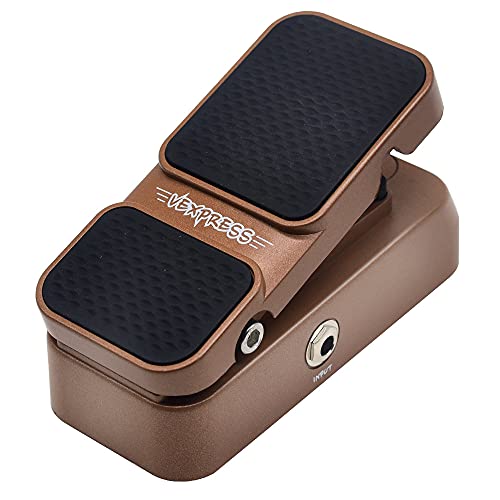
- Passive volume plus expression in one
- No power required
- Compact, lightweight build
Best For: Portable rigs needing a small passive volume/expression pedal
Limited Edition Swell Control
Ernie Ball 40th Anniversary Volume Pedal

- Works with active or passive signals
- Switchable taper for two swell rates
- Kevlar cord for precise control
Best For: Players wanting flexible active/passive compatibility and adjustable swells
Dual Function Pick
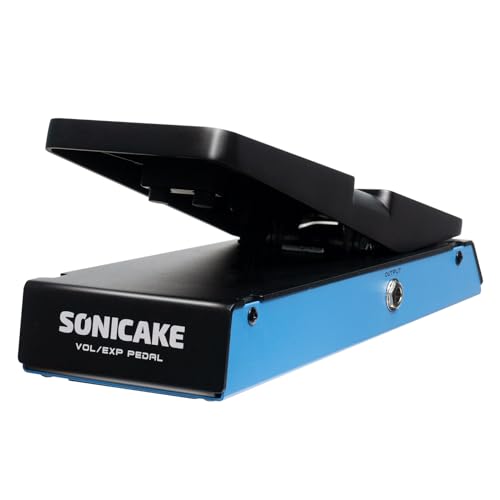
- Combines passive volume and expression control.
- Full-size pedal layout is foot-friendly.
- Works without battery for passive use.
Best For: Players wanting one pedal for both volume and expression duties.
Transparent Active Choice

- Magnetically controlled Blackmer VCA design.
- Neutral, transparent sound profile.
- Includes DC power supply and supports multiple instruments.
Best For: Players who want clean, precise volume control without tonal coloration.
Classic Passive Standard
Ernie Ball 250K Mono Volume Pedal

- Passive mono volume control for passive signals.
- Taper switch offers two swell rates.
- Classic, straightforward pedal format.
Best For: Players wanting a simple passive pedal with adjustable swell feel.
Compact Passive-Control Choice – Ernie Ball VP JR 250K for Passive Signals
If you want one of the more practical volume pedals for pedal steel in a compact format, the Ernie Ball VP JR 250K is built for passive signals and keeps the footprint small enough to fit tighter boards. The mono volume control and taper switch make it a straightforward option when you want different swell responses without a lot of extra features.
Best For: Players using passive pedal steel setups who want a smaller pedalboard-friendly volume pedal.
Pros:
- Junior size is easier to place on crowded pedalboards.
- Mono volume control keeps operation simple.
- Taper switch offers two distinct swell rates.
- Designed for passive signal use.
Cons:
- Single-item design may be less flexible than multi-function pedals.
- Passive-signal focus limits its use cases.
- Not the largest pedal if you prefer a bigger treadle area.
For players who need a no-fuss pedal for passive rigs, this model prioritizes size and basic control over extras. It is a sensible pick when board space and simple volume swells matter most.
Heavy-Duty High-Impedance Pick – BOSS FV-500H Volume Pedal
Among volume pedals for pedal steel, the BOSS FV-500H stands out for its high-impedance design and rugged build. It is made for guitar and other high-impedance instruments, and the heavy-duty aluminum die-cast body plus adjustable pedal feel make it a solid choice if you want a durable pedal with a controllable treadle response.
Best For: Players who want a high-impedance volume pedal with a durable metal body and adjustable feel.
Pros:
- High-impedance design suits guitars and similar instruments.
- Heavy-duty aluminum die-cast body adds durability.
- Adjustable pedal feel lets you tune the torque.
- Can function as a volume or expression pedal.
Cons:
- Larger footprint than compact board-saving models.
- Higher-impedance design is more specialized.
- More pedal than some players may need for simple volume-only use.
If you want a robust pedal that feels substantial underfoot, this BOSS model is a dependable fit. Its combination of high-impedance compatibility and adjustable action makes it easy to justify for serious use.
Flexible Control Option – Ernie Ball MVP Most Valuable Pedal
The Ernie Ball MVP is a flexible choice for players comparing volume pedals for pedal steel, especially if you want more than basic level control. It includes minimum volume control and gain boost, and its notes say it works with any signal anywhere in the signal chain, which gives it unusually broad placement options.
Best For: Players who want a volume pedal with added boost control and broad signal-chain flexibility.
Pros:
- Minimum volume control adds more range management.
- Gain boost gives you an extra performance option.
- Works with any signal anywhere in the chain.
- Offers more than standard volume-only operation.
Cons:
- Heavier than some compact pedalboard options.
- Extra controls may be more than some players want.
- Not the simplest straight volume pedal in the group.
This is a strong pick if you want a pedal that can do more than just fade levels up and down. It is best suited to players who value control and flexibility over minimalism.
Space-Saving Stereo Pick – BOSS FV-30L Low-Impedance Compact Pedal
If space matters on your rig, the BOSS FV-30L is one of the more compact volume pedals for pedal steel setups that need a low-impedance, stereo-capable solution. It is designed to save pedalboard room while keeping the BOSS reputation for sound quality, reliability, and durability, and its smooth pivot gives it a controlled feel underfoot.
Best For: Pedalboard users who need a compact low-impedance volume pedal with stereo input and output.
Pros:
- Compact footprint helps save pedalboard space.
- Stereo input and output support low-impedance setups.
- Rugged aluminum die-cast body adds confidence.
- Smooth pivot offers silky foot control.
Cons:
- Low-impedance design is not the right match for every rig.
- Smaller size may feel less substantial than full-size pedals.
- Not the simplest choice if you only need a basic mono pedal.
For players building a tighter board, this model balances size, build quality, and control well. It makes the most sense when your system benefits from a compact stereo-capable pedal.
Active Signal Compact – Ernie Ball VP JR 25K for Active Signals
If you’re shopping for volume pedals for pedal steel and your setup uses active pickups or other active signals, the Ernie Ball VP JR 25K is built for that job. Its compact chassis keeps the footprint manageable, while the 25K pot is tuned for active signal use and the tuner output adds a practical routing option.
Best For: Pedal steel players with active pickups or buffered active signal chains who want a compact volume pedal with a tuner output.
Pros:
- 25K potentiometer is designed for active pickup signals
- Compact VP JR size helps save pedalboard space
- Tuner output adds extra routing flexibility
- Includes a Vectran cable and stainless steel spring
Cons:
- Not the best match for players needing a passive-signal volume pedal
- Smaller format may feel less substantial than full-size models
For a pedal steel rig that needs an active-signal-friendly volume control, this VP JR keeps things simple and focused. It’s a practical choice when compact size and tuner routing matter more than extra features.
Mini Dual-Use – SONICAKE Vexpress Mini Volume & EXP Pedal
For players looking at volume pedals for pedal steel in a smaller footprint, the SONICAKE Vexpress offers passive volume control plus expression control in one mini pedal. It works without battery or pedal power supply and is designed to automatically detect whether you’re using it for volume or EXP control when paired with the right TRS cable.
Best For: Players who want a lightweight, compact pedal for passive volume or expression duties and need easy portability.
Pros:
- Two functions in one: passive volume and expression control
- Compact, lightweight design is easy to carry
- No battery or power supply required
- Works with guitar, bass, keyboard, synths, and controllers
Cons:
- Requires a TRS cable for proper volume gradual control
- Mini size may not suit players who prefer a larger treadle feel
This is a flexible pick if you want a small pedal that can pull double duty on a pedal steel rig. It makes the most sense when portability and multi-use capability matter more than a traditional full-size volume pedal feel.
Limited Edition Swell Control – Ernie Ball 40th Anniversary Volume Pedal
If you want a volume pedal for pedal steel that can work with either active or passive signals, the Ernie Ball 40th Anniversary model gives you that flexibility. It uses a compact chassis, adds an improved Kevlar cord for more precise control, and includes a switchable taper for two distinct swell rates.
Best For: Pedal steel players who want one volume pedal that can handle both active and passive signals with adjustable swell behavior.
Pros:
- Works with active or passive signals
- Switchable taper offers two swell rates
- Improved Kevlar cord supports precise volume control
- Compact black limited-edition chassis
Cons:
- No power required, but it remains a straightforward pedal without extra outputs
- Limited-edition styling may not matter if you just want a basic workhorse
This model stands out for players who want control over swell feel without committing to one signal type. For a pedal steel setup that may change between active and passive sources, it offers a useful mix of flexibility and precision.
Dual Function Pick – SONICAKE FlipVol 2-in-1
If you want one of the more flexible volume pedals for pedal steel, the SONICAKE FlipVol gives you both passive volume control and expression-pedal use in a full-size format. It runs without battery or pedal power for basic passive use, and its wide compatibility makes it a practical utility pedal for steel, guitar, bass, keyboards, and other controller setups.
Best For: Players who want a single full-size pedal that can serve as either a passive volume pedal or an expression pedal.
Pros:
- 2-in-1 design combines expression and passive volume functions.
- Works without battery or pedal power supply for passive operation.
- Full-size pedal format is more suitable for the feet.
- Broad compatibility across guitar, bass, keyboard, synth, and workstation gear.
Cons:
- Passive design may not suit players who specifically want an active volume pedal.
- More of a general-purpose controller than a pedal-steel-specific model.
For pedal steel players building a versatile rig, this is a practical choice when you want volume control plus expression capability in one unit. The tradeoff is that it is designed as a broad compatibility pedal rather than a dedicated steel-specific solution.
Transparent Active Choice – Lehle Mono Volume Pedal S
Among volume pedals for pedal steel, the Lehle Mono Volume Pedal S stands out for its magnetically controlled Blackmer VCA design and neutral, transparent sound profile. If you want a pedal that focuses on clean level control rather than adding color, this active mono model is built for precise volume work with guitar, bass, and keyboard rigs.
Best For: Players who want a transparent, active mono volume pedal for clean signal control.
Pros:
- Magnetically controlled Blackmer VCA for volume handling.
- Neutral/transparent sound profile.
- Includes a DC power supply.
- Suitable for guitar, bass, and keyboard use.
Cons:
- Requires DC power supply to operate.
- Higher-complexity design than a simple passive pedal.
This is a strong pick if your priority is keeping the signal character clean while controlling level with precision. For pedal steel players, the transparent approach can be especially appealing when you want the pedal to stay out of the way sonically.
Classic Passive Standard – Ernie Ball 250K Mono Volume Pedal
If you’re comparing classic volume pedals for pedal steel, the Ernie Ball 250K Mono Volume Pedal is a straightforward passive option for mono signal control. Its taper switch offers two different swell rates, which can be useful when shaping volume movement under your foot.
Best For: Players who want a simple passive mono volume pedal with adjustable swell response.
Pros:
- Designed for passive signals in mono volume control.
- Taper switch provides two distinctive swell rates.
- Simple, familiar pedal format for hands-free control.
Cons:
- Passive design may not suit every rig.
- Heavier and larger than some compact alternatives.
This model makes sense if you want a proven, no-frills approach to volume control and value the ability to switch between two swell feels. For pedal steel use, that straightforward passive behavior can be exactly what some players prefer.
How We Picked the Best Volume Pedals for Pedal Steel
For Volume Pedals for Pedal Steel, the most important factors are taper smoothness, impedance match, build quality, and how naturally the pedal responds underfoot. We favored models with a proven reputation for consistent sweep, durable mechanics, and setup flexibility for different rigs.
Quick Comparison
Before buying, match the pedal to your signal type. Passive pedal steels typically pair best with 250K-style volume pedals, while active pickups or buffered systems often work better with lower-impedance options such as 25K models. Compact pedals save board space, but full-size models can offer more control and a more familiar feel.
Key Buying Factors for Volume Pedals for Pedal Steel
Impedance and Signal Matching
The wrong impedance can dull your tone or make the sweep feel uneven. Passive rigs usually need high-impedance pedals, while active rigs generally need low-impedance models. If you are unsure, check your pickup, preamp, or buffer first.
Taper and Throw
A good pedal should let you make small, musical changes without sudden jumps in volume. Pedal steel players often prefer a smooth, gradual taper that supports subtle swells and fine dynamic control.
Size and Stability
On stage, a pedal should stay planted and be easy to control with the ankle. Full-size pedals tend to feel more traditional, while mini or compact options work better in tight pedalboard layouts.
Expression Vs. Passive Volume
Some models do double duty as expression pedals, which can be useful if you also control effects. For pure volume control, prioritize the pedal’s sweep feel and signal compatibility over extra features you may not need.
Who Should Buy Which Volume Pedals for Pedal Steel?
If you play a passive pedal steel, start with a 250K-style model. If your setup is active, buffered, or preamped, a 25K pedal is usually the safer choice. Touring players and frequent giggers may prefer a rugged premium build, while players with tight pedalboards may value compact footprints and dual-purpose designs.
In short, the best Volume Pedals for Pedal Steel are the ones that match your signal path, feel natural underfoot, and give you smooth, repeatable control every time you play.