If you want more consistency, tighter dynamics, and a cleaner foundation without adding hiss, the right compressor matters. The best quiet bass compressor pedals can smooth peaks, support fingerstyle or slap playing, and keep your tone controlled at any volume.
This roundup focuses on pedals that balance low noise, useful compression control, and bass-friendly features so you can choose confidently for studio sessions, rehearsals, and live gigs.
Best 10 Quiet Bass Compressor Pedals Picks for 2026
Transparent Studio Control

- CHT Constant Headroom Technology
- Transparent compression voicing
- 10 gain-reduction LEDs
Best For: transparent compression with clear headroom and easy visual feedback
High-Fidelity Limiting

- THAT Corp. 4320 design
- Very low noise compression
- 20 kHz+ bandwidth
Best For: clean studio-grade compression with low noise and high headroom
Adaptive Punch Control
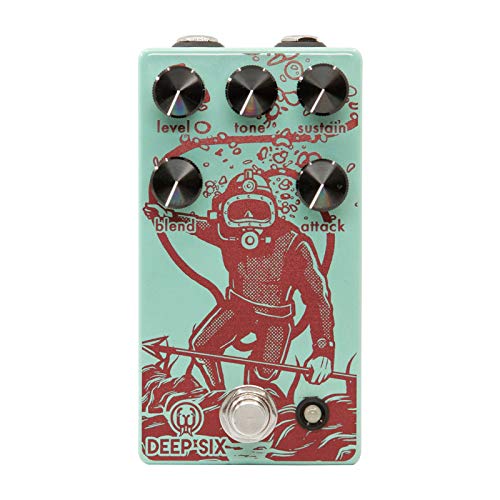
- Studio-grade compressor
- Tone knob for bass cut
- Soft switch relay bypass
Best For: compression with low-end shaping and smooth pedalboard operation
Smart Multiband Response

- Intelligent multiband-style processing
- Digital circuitry reduces noise
- 18V input with gain-reduction display
Best For: natural compression with low noise and easy stompbox control
Classic Feel, Bass-Friendly Control

- Retuned classic compression for bass
- Simple output and sensitivity controls
- Analog pedal with included 9V adapter
Best For: Bassists wanting a simple, classic compressor with preserved low end
Ultra-Compact Multiband Pick
TC Electronic SPECTRACOMP Bass Compressor

- Studio-quality multiband compression for bass
- Ultra-compact size with true bypass
- TonePrint support for customization
Best For: Players who want a small, bass-tuned compressor with TonePrint flexibility
Transparent Pro Control
Empress Effects Bass Compressor CPBB
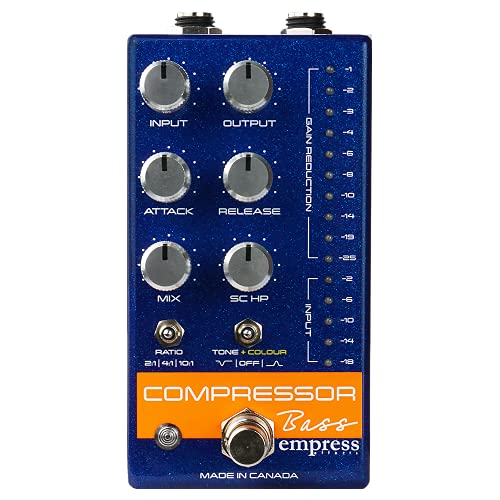
- All-analog and extremely transparent
- Three ratios plus mix and metering
- Sidechain tools and low-end response to 20Hz
Best For: Players seeking transparent compression with advanced shaping control
Quiet Control for Bass and Guitar
Donner Ultimate Comp 2-Mode Compressor
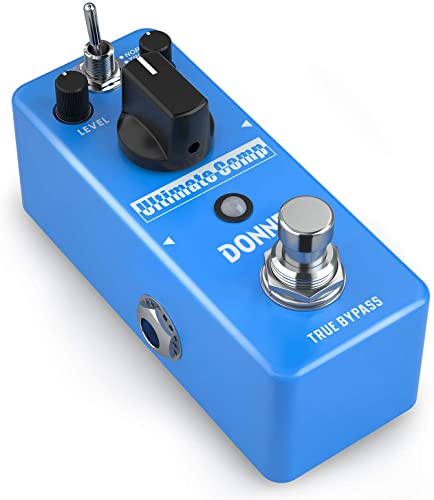
- True bypass keeps the off-state signal transparent.
- COMP, TONE, and LEVEL controls keep setup simple.
- NORMAL and TREBLE modes add flexibility for different needs.
Best For: Players who want a warm, balanced compressor with straightforward controls.
Bass-Focused Sustain and Control
Electro-Harmonix Bass Preacher Compressor

- Works with passive and active basses across a wide input range.
- Three attack settings shape how quickly compression starts.
- True bypass and up to 21 dB of gain reduction add control.
Best For: Bassists who need a dedicated compressor/sustainer with bass-specific input handling.
Quietest Compact Option

- Noise reduction targets common compressor swells.
- Sustain and Attack controls keep the sound easy to dial in.
- True bypass and aluminum housing add practical value.
Best For: Players who want a compact compressor with an emphasis on reducing compression-related noise.
Transparent Studio Control – MXR Bass Compressor
If you want quiet bass compressor pedals that stay out of the way, the MXR Bass Compressor is built for clear, clean performance. Its CHT Constant Headroom Technology and transparent design help preserve your full dynamic range until the compression threshold kicks in, while the 10 gain-reduction LEDs make it easy to see what the pedal is doing.
Best For: Players who want transparent compression, strong headroom, and a simple visual readout.
Pros:
- CHT Constant Headroom Technology supports clean, clear operation.
- Transparent compression lets your full dynamic range shine through.
- Ten gain-reduction status LEDs provide a visible compression indicator.
- True bypass helps keep the signal path direct when the pedal is off.
Cons:
- Focused on transparency rather than obvious compression character.
- Requires understanding gain-reduction LEDs to dial in quickly.
For a bass compressor that prioritizes clarity and low-noise style control, the M87 is a straightforward choice. It is especially appealing if you want compression you can see and hear without losing the natural character of your bass.
High-Fidelity Limiting – Keeley Bassist Compressor
The Keeley Bassist is a strong pick if you are comparing quiet bass compressor pedals and want studio-style control in a stompbox. It uses the THAT Corp. 4320, true-RMS detection, and high-performance op-amps to deliver high-fidelity compression and limiting with very low noise and wide bandwidth.
Best For: Bassists who want very clean, studio-grade compression with lots of headroom and low noise.
Pros:
- Built around the THAT Corp. 4320 for high-fidelity compression and limiting.
- Very low noise helps keep the signal clean.
- Over 20 kHz bandwidth supports detailed bass tone.
- Handles very large signals in a compact stompbox format.
Cons:
- More of a precision compressor than a color pedal.
- Uses a straightforward knob-based layout rather than deeper controls.
This is a practical choice for players who value clean tracking and subtle control over effect character. If your priority is preserving detail while keeping compression quiet, the Bassist is squarely aimed at that use case.
Adaptive Punch Control – Walrus Audio Deep Six V3
For players shopping quiet bass compressor pedals that can still shape the low end, the Walrus Audio Deep Six Compressor V3 offers studio-grade compression with a tone knob for bass cut. Its soft switch/relay bypassing and top-mounted jacks add modern convenience, while the added tone control makes it easier to tailor the bottom end.
Best For: Bassists who want compressor control plus a simple way to trim low-end content.
Pros:
- Studio-grade compressor in stompbox form.
- Tone knob (bass cut) helps shape the low end.
- Soft switch/relay bypassing supports smoother operation.
- Top-mounted in/out jacks help with pedalboard layout.
Cons:
- Tone shaping may be more than you want if you prefer pure transparency.
- Described as a bass cut control, so it is not aimed at boosting lows.
The Deep Six V3 is a smart middle ground if you want quiet compression but also want some control over bass content. It suits players who need a polished feel without giving up the ability to rein in the low end.
Smart Multiband Response – BOSS BC-1X Bass Compressor
The BOSS BC-1X is a strong option if you want quiet bass compressor pedals with intelligent, natural-sounding control. Its digital circuitry reduces noise, and the internal multiband processing adapts to each register and nuance so the compression stays responsive without flattening the bass tone.
Best For: Bassists who want natural compression, easy controls, and reduced noise.
Pros:
- Intelligent circuitry adapts to playing nuance and register.
- Digital circuitry greatly reduces noise.
- 18-volt input electronics provide ample headroom.
- High-resolution gain reduction indicator makes compression easy to monitor.
Cons:
- Digital approach may appeal less to players seeking a fully analog compressor.
- Simple stompbox controls hide the more complex internal processing.
This pedal is aimed at players who want dependable, natural compression with as little noise as possible. If you want a set-and-play compressor that stays clean and punchy, the BC-1X fits that brief well.
Classic Feel, Bass-Friendly Control – MXR Dyna Comp Bass Compressor
If you want one of the more familiar quiet bass compressor pedals with a classic feel, the MXR Dyna Comp Bass Compressor is tuned to preserve low end while adding the compression and sustain players expect. Its simple familiar output and sensitivity controls make it easy to set a usable level of compression without digging through menus.
Best For: Bassists who want a straightforward, classic compressor sound with preserved low end.
Pros:
- Re-tuned Dyna Comp sound designed to keep bass frequencies intact
- Familiar output and sensitivity controls for quick setup
- Analog compression with a simple knob-based layout
- Includes a 9-volt adapter in the box
Cons:
- Only basic control options compared with more feature-heavy compressors
- No multiband, sidechain, or blend features listed
For players who value simplicity over deep editing, this pedal offers an easy way to get compression that stays focused on the bass register. It is a practical pick if you want a compact pedal with a classic response and minimal setup time.
Ultra-Compact Multiband Pick – TC Electronic SPECTRACOMP Bass Compressor
Among quiet bass compressor pedals, the TC Electronic SPECTRACOMP Bass Compressor stands out for its studio-quality multiband compression and ultra-compact design. It is tuned for bass, true bypass, and TonePrint support give you a flexible starting point if you want a small pedal that can still cover a lot of ground.
Best For: Bass players who want a compact, bass-tuned compressor with customizable TonePrint options.
Pros:
- Studio-quality multiband compression tuned specifically for bass
- Ultra-compact footprint saves pedalboard space
- TonePrint support for signature and customizable effects
- True bypass design
Cons:
- Only one knob is listed in the supplied details, so hands-on control appears limited
- Battery powered spec may not suit every board power setup
This is a strong option if you want a small compressor that still aims for polished results. The multiband approach and customization features make it useful for players who need a compact, adaptable pedal rather than a purely vintage-style compressor.
Transparent Pro Control – Empress Effects Bass Compressor CPBB
If you are shopping for quiet bass compressor pedals with more control, the Empress Effects Bass Compressor is built for transparency and flexibility. It uses an all-analog signal path, offers multiple compression ratios, and includes mix, attack, release, metering, and sidechain tools for dialing in a precise response.
Best For: Players who want highly transparent compression with detailed shaping options.
Pros:
- All-analog signal path with extremely transparent operation
- Three compression ratios: 2:1, 4:1, and 10:1
- Mix control for parallel compression
- Sidechain send/return plus a variable high-pass filter
Cons:
- More elaborate control set may take longer to dial in
- Higher current draw than the other pedals listed
This is the most feature-rich compressor in the group and the best fit if you want to shape dynamics very precisely. Its flat low-end response down to 20Hz and sidechain filtering make it especially appealing for players who need control without obvious tone coloration.
Quiet Control for Bass and Guitar – Donner Ultimate Comp 2-Mode Compressor
If you want one of the quiet bass compressor pedals that can smooth out dynamics without getting in the way of your core tone, the Donner Ultimate Comp is a practical, low-fuss option. Its analog design, true bypass, and simple COMP, TONE, and LEVEL controls make it easy to dial in a more even response for bass or guitar, while the NORMAL and TREBLE modes add a bit of extra flexibility.
Best For: Players who want a warm, balanced compressor with straightforward controls for bass or guitar.
Pros:
- True bypass helps keep the signal transparent when the pedal is off.
- COMP, TONE, and LEVEL knobs make basic shaping easy to manage.
- NORMAL and TREBLE modes give you two usable compression voicings.
- Analog circuit aims for a warm, smooth, classical sound.
Cons:
- Power adapter is not included.
- It is a general compressor, so bass-focused features are more limited than on dedicated bass units.
For players who value simplicity and clean dynamics control, this Donner pedal offers a useful balance of ease and versatility. It is a solid fit if you want a compressor that stays unobtrusive while still giving you control over brightness and output level.
Bass-Focused Sustain and Control – Electro-Harmonix Bass Preacher Compressor
The Electro-Harmonix Bass Preacher is a strong choice if you are comparing quiet bass compressor pedals and want a unit built specifically for bass. It supports both passive and active instruments, offers up to 21 dB of gain reduction, and gives you three attack settings so you can shape how quickly the compression comes in.
Best For: Bassists who need a dedicated compressor/sustainer with bass-specific input handling.
Pros:
- Input sensitivity is designed to work with passive and active basses.
- Three attack settings let you choose Fast, Medium, or Slow response.
- Up to 21 dB of gain reduction provides substantial sustain control.
- True bypass preserves signal path integrity when disengaged.
Cons:
- It is powered by battery in the supplied details, so you may prefer a separate power setup.
- It is tuned for bass, so guitar-first users may find it more specialized than they need.
This pedal stands out for bass players who want a purpose-built compressor with enough flexibility to handle different pickup outputs. If your priority is a bass-heavy, controlled response rather than a general-purpose effect, it is an easy model to consider.
Quietest Compact Option – Pogolab Mini Compressor Pedal
If your priority is one of the quiet bass compressor pedals that minimizes noise, the Pogolab Mini Compressor is built around that goal. The product notes specifically call out noise reduction for compressor circuits, and the pedal also keeps things simple with Sustain and Attack controls for adjusting compression timing on bass or high-output active pickups.
Best For: Players who want a compact compressor with an emphasis on reducing compression-related noise.
Pros:
- Noise reduction is specifically designed to reduce common compressor swells.
- Sustain and Attack controls help tailor compression timing.
- True bypass helps keep the signal intact when the pedal is off.
- Aluminum alloy construction adds durability in a small format.
Cons:
- Power cable and adapter are not included.
- Controls are limited to the basics, so deep tone shaping is not the focus.
For bassists who want a simple pedal that aims to stay quiet in use, this Pogolab model is appealing. Its compact build and basic control set make it a straightforward pick for players who mainly want clean compression without extra complexity.
How We Picked the Best Quiet Bass Compressor Pedals
We prioritized quiet operation, bass-appropriate headroom, and controls that make compression easy to dial in without flattening the instrument. We also favored models with proven reliability, clear level matching, and features that help preserve low-end clarity.
Quick Comparison
Among Quiet Bass Compressor Pedals, the main differences usually come down to transparency versus character, simplicity versus control, and whether the pedal is best for subtle leveling or more obvious squeeze. Some options are ideal for set-and-forget bass compression, while others are better if you want precise shaping for different instruments, pickups, or playing styles.
Key Buying Factors for Quiet Bass Compressor Pedals
Noise Floor and Headroom
Low-noise circuitry is essential if you play clean, use high-output pickups, or run a bright rig. More headroom helps avoid distortion on strong attack transients and keeps the compressed signal from sounding cramped.
Compression Style
Transparent compressors preserve your natural tone, while more colored designs can add punch or sustain. If you want subtle control, choose a pedal known for smooth leveling rather than aggressive pumping.
Controls and Metering
Simple controls are great for quick setup, but attack, release, blend, and gain-reduction indicators can make it easier to fine-tune the feel. A mix or parallel control is especially useful for keeping your original transient intact.
Power and Pedalboard Fit
Check whether the pedal uses standard 9V power, fits your board layout, and offers true bypass or buffered bypass depending on how you route your signal chain. Compact models save space, while larger units often provide more control.
Who Should Buy Which Quiet Bass Compressor Pedals?
If you want the most transparent leveling, look for a compressor with strong metering and blend control. If you prefer a simple pedal for everyday use, a compact analog unit may be enough. Players who need studio-style precision or maximum consistency should lean toward more advanced designs, while budget-minded buyers can still find usable Quiet Bass Compressor Pedals that handle basic dynamics well.
For most bassists, the best choice comes down to your playing style: subtle compression for clean support, stronger control for slap or pick attack, or a flexible pedal that can adapt across genres and rigs.