Building a home studio does not require a room full of expensive hardware. The right keyboard, synthesizer, groovebox, or MIDI controller can give you expressive playing, hands-on control, and a faster path from musical idea to finished track.
This roundup covers 10 options for different workflows and budgets, including full-featured music production keyboards, portable controllers, desktop instruments, and useful studio accessories. Use the guide below to match each option to your space, software, and creative goals.
Best 10 Synthesizers for Home Studios Picks for 2026
Full-Range Production

- Motif sound engine with deep layering controls
- USB audio and 16-channel MIDI
- 128-note polyphony for complex sequences
Best For: Home producers needing a full-size hardware synthesizer and computer integration
Portable Virtual Instruments
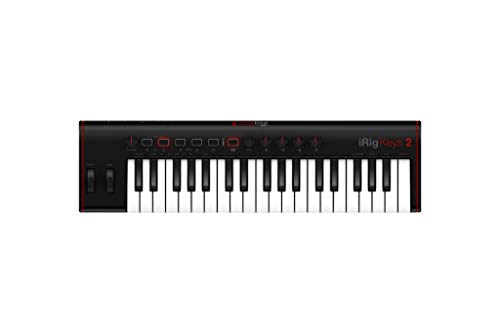
- 37 velocity-sensitive mini-keys
- USB, MIDI, and headphone connectivity
- Lightweight, bus-powered design
Best For: Compact home studios and mobile production with virtual instruments
Hands-On Creative Play

- 12 oscillator types, filters, and two LFOs
- Built-in melodies and speakers
- Battery power with MIDI and stereo output
Best For: Beginners and creators seeking an approachable, portable synthesizer
Space-Saving Studio Setup
Stage Right Recording Studio Desk

- Fits a typical 49-key MIDI controller
- Raised monitor platform and pullout tray
- Supports up to 175 pounds
Best For: Small home studios organizing keyboards, monitors, and recording gear
Best Mobile Idea Station

- All-in-one drums, synths, sampling, and sequencing
- Built-in speaker, microphone, and rechargeable battery
- Compact workflow for composing and arranging ideas
Best For: Portable songwriting, beat-making, and sampling
Best Novelty Synth Instrument

- Touch-sensitive stem for sliding melodic lines
- Wah and vibrato effects from physical gestures
- 3.5mm output for headphones, speakers, or amps
Best For: Experimental melodies and playful studio performances
Best Beginner Keyboard Workstation

- 61 touch-sensitive keys with over 1,000 Roland sounds
- 200-plus accompaniment styles and chord sequencing
- Bluetooth and USB audio/MIDI connectivity
Best For: Beginner keyboardists and connected home-studio production
Best Space-Saving Stand
Adjustable Desktop Synth Stand

- Fits gear 6.6–10.6 inches wide
- 30° angled viewing position
- Non-slip pads and front stop
Best For: Compact home-studio equipment organization
Best Portable MIDI Controller

- 25 velocity-sensitive mini keys
- Pads, knobs, and touch controls
- USB and Bluetooth connectivity
Best For: Mobile virtual-synth and beat-making setups
Best Wide Desktop Stand
Konohan Adjustable Synth Stand
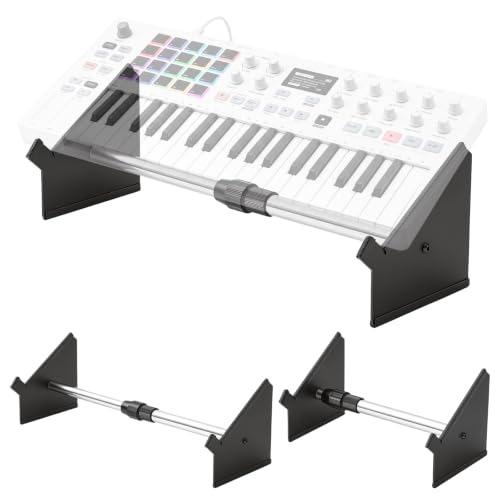
- Adjusts from 10.6–18.6 inches
- Raises gear with a 30° tilt
- Anti-slip pads support stable placement
Best For: Larger desktop synths, samplers, and controllers
Full-Range Production – Yamaha MX49
For home studios that need a dedicated synthesizer with substantial sequencing and connectivity options, the Yamaha MX49 combines a Motif sound engine with class-compliant USB audio and MIDI. Its 128-note polyphony also supports complex live playing and full 16-track sequences.
Best For: Home producers who want a full-size synthesizer for layered sounds, computer recording, and MIDI sequencing.
Pros:
- USB handles stereo audio and 16 channels of MIDI through one cable.
- Motif sound engine supports layering, zoning, switching, cycling, and randomizing up to eight elements.
- 128-note polyphony helps reduce dropouts during demanding performances.
- Virtual Circuit Modeling recreates vintage effects and signal processors.
Cons:
- Its 38.6-inch width requires more workspace than a compact controller.
- The supplied notes identify USB connectivity but do not list onboard speakers.
The MX49 is a strong choice when your home-studio workflow calls for hardware sounds and direct computer integration rather than a minimal portable keyboard.
Portable Virtual Instruments – iRig Keys 2
The iRig Keys 2 is a compact MIDI controller for home studios built around laptops, tablets, and mobile devices. Its 37 velocity-sensitive mini-keys, assignable controls, audio output, and bus-powered design make it practical when desk space and portability matter.
Best For: Mobile and compact home studios using virtual instruments on Mac, PC, iOS, Android, or tablets with USB connectivity.
Pros:
- 37 velocity-sensitive mini-keys provide expressive control in a compact format.
- Assignable knobs, a push encoder, and octave/program buttons support real-time adjustment.
- Includes USB, MIDI input/output, and a headphone stereo output.
- Lightweight, measuring 20.4 inches wide and weighing 30.7 ounces.
Cons:
- Mini-keys are less spacious than full-size keys.
- It is a MIDI controller rather than a standalone synthesizer with its own sound engine.
Choose the iRig Keys 2 when flexibility and portability are more important than full-size key spacing or standalone synthesis.
Hands-On Creative Play – Blipblox After Dark
The Blipblox After Dark offers an approachable way to explore synthesizers for home studios, with 12 oscillator types, filters, two LFOs, and hands-on modulation. Built-in melodies and speakers let you begin without additional equipment, while MIDI and stereo output support later expansion.
Best For: Beginners, families, and experienced creators who want an accessible, portable synthesizer for experimentation.
Pros:
- Combines 12 oscillator types, filters, two LFOs, and hands-on modulation.
- Built-in melodies and an intuitive control layout require no complicated setup.
- Built-in speakers, AAA battery power, MIDI, and stereo audio output support flexible use.
- Durable construction and rounded edges are designed for users age three and up.
Cons:
- Its playful, approachable design may not replace a full workstation synthesizer.
- The supplied notes do not specify polyphony or computer audio-interface features.
After Dark is especially appealing for discovering synthesis quickly, then connecting keyboards, drum machines, or recording software as your setup develops.
Space-Saving Studio Setup – Stage Right Recording Studio Desk
Monoprice Recording Studio Desk - with Raised Platform and Keyboard Tray, Black - Stage Right
Check Price On AmazonAlthough it is not a sound generator, the Stage Right Recording Studio Desk can make synthesizers for home studios easier to organize. Its 31.5-inch width accommodates a typical 49-key MIDI controller, while the raised platform and pullout tray help conserve room.
Best For: Apartment and bedroom studios needing a compact workstation for a keyboard, monitors, and recording gear.
Pros:
- Compact 24-inch depth and 31.5-inch width suit smaller rooms.
- Pullout keyboard tray stores the controller when it is not in use.
- Raised platform accommodates monitor speakers without separate stands.
- Supports up to 175 pounds and includes assembly tools and hardware.
Cons:
- It is furniture rather than a synthesizer or MIDI controller.
- The compact tray is intended around a typical 49-key controller, so larger keyboards may not fit.
- Assembly is required.
For a home studio built around a compact synthesizer or MIDI controller, this desk provides a practical foundation while keeping the overall footprint controlled.
Best Mobile Idea Station – Yamaha SEQTRAK
For musicians comparing synthesizers for home studios, the Yamaha SEQTRAK is a compact all-in-one option for sketching, sampling, and arranging ideas. Its dedicated interface, onboard sounds, microphone, speaker, and rechargeable battery also make it practical beyond a fixed studio setup.
Best For: Portable songwriting, beat-making, sampling, and quick musical idea capture.
Pros:
- Combines drums, synths, sound design, sampling, and sequencing in one unit.
- Advanced sequencer supports intuitive composition, arrangement, and dynamic playback.
- Built-in speaker, microphone, and rechargeable battery support mobile creation.
Cons:
- Its compact controls may be less suitable for players wanting a traditional keyboard.
- The plastic body prioritizes portability over a more substantial studio feel.
The SEQTRAK is a strong fit when portability and fast idea capture matter more than a conventional keyboard layout. It offers a self-contained workflow for producers who want to build sketches wherever inspiration strikes.
Best Novelty Synth Instrument – Otamatone Deluxe
The Otamatone Deluxe is an unconventional choice among synthesizers for home studios, offering an expressive, hands-on way to add unusual melodic parts. Its touch-sensitive stem, pitch range, vibrato, and wah-style face control make it more of a playful performance instrument than a standard keyboard.
Best For: Experimental melodies, playful performances, gifts, and adding distinctive sounds to recordings.
Pros:
- Touch-sensitive stem lets players slide between notes across roughly four octaves per pitch setting.
- Face squeeze and stem shaking add wah and vibrato effects.
- 3.5mm stereo output connects to headphones, speakers, and amplifiers.
Cons:
- Its unusual playing method is less suited to conventional keyboard performance.
- Requires three AAA batteries.
The Otamatone Deluxe makes the most sense as a character instrument rather than a primary studio synthesizer. Choose it when originality, physical expression, and a playful sound are more important than broad production controls.
Best Beginner Keyboard Workstation – Roland GO:KEYS 3
For home-studio shoppers seeking synthesizers for home studios with a familiar keyboard format, the Roland GO:KEYS 3 offers 61 touch-sensitive keys and a broad selection of built-in sounds. Its accompaniment styles, chord sequencer, Bluetooth support, and USB audio/MIDI interface cover both standalone practice and computer-based creation.
Best For: Beginners, keyboard-based songwriting, accompaniment, and connected home-studio production.
Pros:
- 61 touch-sensitive keys provide a more traditional playing experience.
- ZEN-Core engine includes over 1,000 Roland sounds.
- Includes over 200 accompaniment styles and more than 300 chord-sequencer presets.
- Built-in speakers, Bluetooth audio/MIDI, and USB audio/MIDI support flexible setup options.
Cons:
- At 15.5 pounds, it is less portable than smaller idea-focused instruments.
- Many advanced features depend on navigating presets, styles, and connected devices.
The GO:KEYS 3 is the most conventional and broadly equipped option here for keyboard players. It is especially appealing if you want immediate sounds and accompaniment while retaining direct connections to computers and mobile devices.
Best Space-Saving Stand – Adjustable Desktop Synth Stand
For synthesizers for home studios, this adjustable desktop stand is a practical way to raise compact gear, improve visibility, and reclaim workspace. Its 6.6-to-10.6-inch width range suits many small controllers, synthesizers, samplers, and interfaces, though you should verify your equipment dimensions first.
Best For: Compact home-studio gear that needs a more organized, angled desktop position.
Pros:
- Adjusts from 6.6 to 10.6 inches wide for various compact devices.
- 30-degree angle improves access to controls and displays.
- Non-slip pads and a front stop help limit movement.
- Lightweight PETG construction is easy to reposition and assemble.
Cons:
- Designed for compact equipment, so dimensions must be checked before purchase.
- It is a stand rather than a synthesizer or controller itself.
This is a useful organizational upgrade for a crowded production desk. It is especially appealing when you want a raised, angled position for one compact piece of gear without adding a large stand.
Best Portable MIDI Controller – M-VAVE K5 25-Key Controller
For synthesizers for home studios, the M-VAVE K5 provides a compact way to play and control virtual instruments, synth plugins, and beats. It combines 25 velocity-sensitive keys with pads, knobs, touch controls, USB, and Bluetooth connectivity for flexible studio or mobile use.
Best For: Producers and songwriters who want a portable controller for virtual synthesizers, beat making, and software-based production.
Pros:
- 25 velocity-sensitive keys support expressive parts and virtual synth control.
- Eight RGB backlit pads and eight assignable knobs add beat and parameter control.
- Bluetooth operation and a built-in 2,000 mAh battery support portable use.
- Works with Windows, Mac OS, Android, and iOS, with several DAWs listed as compatible.
Cons:
- It uses mini keys rather than a full-size keyboard.
- Bluetooth battery life is listed at about 16 hours, so charging remains part of mobile use.
- It controls software instruments rather than providing built-in synthesizer sounds.
The K5 is a versatile control surface for a computer- or tablet-based home studio. Its combination of keys, pads, knobs, and wireless portability makes it a strong fit when flexibility matters more than having a standalone hardware synth.
Best Wide Desktop Stand – Konohan Adjustable Synth Stand
For synthesizers for home studios, the Konohan desktop stand offers a wider adjustable platform for larger controllers, samplers, grooveboxes, and drum machines. Its 10.6-to-18.6-inch adjustment range and 30-degree tilt help organize equipment while keeping controls easier to see and reach.
Best For: Home-studio producers with larger desktop synthesizers, controllers, samplers, or drum machines.
Pros:
- Adjusts from 10.6 to 18.6 inches to accommodate varied equipment sizes.
- Elevates gear about 6 inches at a 30-degree viewing angle.
- Anti-slip pads on the base and contact points help reduce shifting.
- Helps free desk space and create a cleaner production setup.
Cons:
- Its wider footprint may be more than needed for very compact gear.
- Equipment dimensions should still be checked against the adjustable range.
This stand is a practical choice for producers building a more structured tabletop rig. It offers more width than a compact stand while retaining an angled layout suited to sound design, beat making, and recording.
How We Picked These Synthesizers for Home Studios
We selected products that serve distinct home-studio needs rather than treating every keyboard as interchangeable. The lineup includes standalone instruments, MIDI controllers, compact sequencing tools, performance-focused keyboards, and desktop stands that can improve an existing setup. We considered portability, sound creation, sequencing, key feel, software connectivity, physical controls, space requirements, and overall practicality for bedroom and project studios.
Because “synthesizer” can describe several types of gear, check whether an item generates sound on its own or primarily controls music software. A MIDI controller may be the better choice if you already use a computer and virtual instruments, while a standalone keyboard or groovebox is more suitable for computer-free sketching and performance.
Quick Comparison
| Best For | What to Look For |
|---|---|
| Computer-based production | USB MIDI, dependable controls, and comfortable keys |
| Portable songwriting | Compact dimensions, built-in sounds, speakers, or battery-friendly operation |
| Hands-on sequencing | Pattern workflow, sampling, knobs, pads, and quick editing |
| Live or all-in-one playing | Internal sounds, performance features, speakers, and straightforward navigation |
| Small desktop setups | Stable stands, adjustable width, and an uncluttered footprint |
Key Buying Factors for Synthesizers for Home Studios
Sound Generation and Software
Standalone instruments produce sounds without a computer, although many can also connect to one. Controllers generally need a DAW or virtual instrument. Confirm the included sounds, instrument types, effects, and compatibility with your preferred software before buying.
Keys, Pads, and Expression
Full-size keys are usually more comfortable for practicing and two-handed parts, while mini keys save space. Velocity sensitivity is important for expressive playing. Pads and knobs are especially useful for beats, automation, and live tweaking, but they do not replace a playable keyboard for every musician.
Workflow, Connections, and Space
Think about whether you prefer recording tracks in a DAW, creating patterns directly on hardware, or switching between both. Check USB, MIDI, headphone, audio, and sustain-pedal connections. Measure your desk before purchasing, and leave room for cables and hand movement. An adjustable desktop stand can improve viewing angle and free space beneath a compact instrument.
Portability and Sound
If you plan to work away from the desk, prioritize weight, built-in speakers, microphones, sampling, and simple controls. For a permanent studio, deeper connectivity and a larger keybed may matter more than portability.
Who Should Buy Which Synthesizers for Home Studios?
Choose a full music-production keyboard if you want one instrument for playing, arranging, and producing. Pick a compact MIDI controller if your computer and software already provide the sounds you need. A sequencing groovebox suits creators who want quick, tactile idea generation without opening a DAW. Small desktop synthesizers work well for electronic experimentation, especially when paired with a suitable stand or audio interface.
Beginners should favor clear controls, useful onboard sounds, and a workflow they will actually use. Experienced producers may prefer targeted gear—such as a portable controller, dedicated sequencer, or additional desktop instrument—that fills a specific gap. Before checkout, verify dimensions, power requirements, included accessories, and whether the product is a sound-generating synthesizer or a controller-only device.