Choosing your first synthesizer can be exciting, but the options vary widely. Some beginner-friendly picks are self-contained instruments with speakers and batteries, while others are MIDI controllers designed to work with music software.
This roundup includes compact analog and digital synthesizers, portable keyboards, MIDI controllers, and a practical learning resource. Use the buying guide below to match the right setup to your goals, budget, and available space.
Best 10 Synthesizers for Beginners Picks for 2026
Most Expressive Portable Pick

- Portable battery-powered design with built-in speaker
- Hands-on LFO, filter, envelope, and PWM controls
- CV/Gate outputs for modular expansion
Best For: Beginners exploring expressive analog-style sound design
Best Hands-On Learning Guide

- Beginner-focused guide to electronic music circuits
- More than 40 practical experiments and projects
- Over 400 full-color images with step-by-step instructions
Best For: Makers learning synthesis through building and experimentation
Best Feature-Packed FM Starter
M-VAVE Portable FM Synthesizer

- 128 presets and piano-layout portable keys
- Six-operator FM engine with 32 algorithms
- Built-in effects, arpeggiator, and 16-step sequencer
Best For: Beginners wanting portable FM synthesis with room to grow
Best Beginner DAW Controller
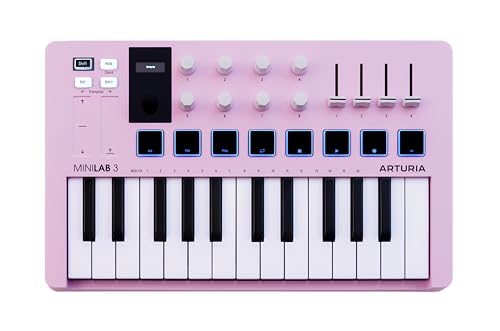
- 25 velocity-sensitive keys with pads, knobs, and sliders
- Built-in arpeggiator, Chord mode, and DAW integration
- Includes Analog Lab and Ableton Live Lite software
Best For: Beginners making music with virtual instruments on a computer
Best Novelty Pick
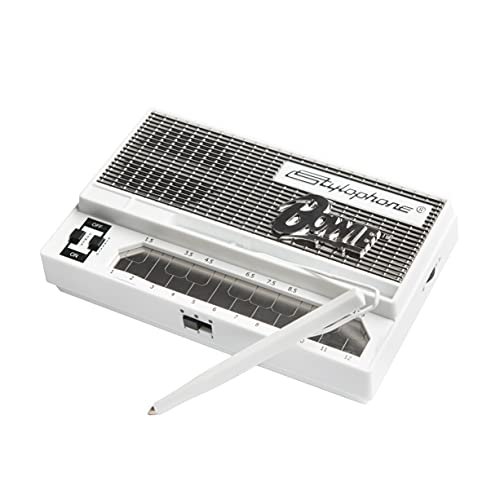
- Limited-edition Bowie-inspired design
- Stylus control with three modes
- Compact and battery-powered
Best For: Beginners and Bowie fans wanting a portable novelty synth
Best All-in-One Choice

- 25-key keyboard with built-in sounds
- Pads, arpeggiator, knobs, and OLED display
- USB MIDI, speaker, and included software
Best For: Beginner beat makers and songwriters wanting room to grow
Best Pocket Starter

- Simple tap-and-slide stylus control
- Three octaves with vintage analog-style sound
- Built-in speaker, headphones, and computer connection
Best For: First-time players and portable retro sound experiments
Best Expandable Controller

- 37 velocity-sensitive keys across three octaves
- MIDI I/O and CV/Gate for hardware expansion
- Sequencer, pads, arpeggiator, and software included
Best For: Beginners building a flexible computer and hardware setup
Best Portable Standalone Synth

- Six-operator FM engine with 128 presets
- Arpeggiator, sequencer, effects, and speaker built in
- Battery-powered with USB-C and Bluetooth MIDI
Best For: Portable FM synthesis and guitar-focused setups
Best Compact Starter Controller

- 25 velocity-sensitive mini keys in a compact design
- Pads, arpeggiator, joystick, and assignable knobs
- MPC Beats, virtual instruments, and sounds included
Best For: DAW-based beginners with limited desk space
Most Expressive Portable Pick – Stylophone GENX-2
For beginners seeking synthesizers for beginners that encourage hands-on experimentation, the Stylophone GENX-2 offers an approachable portable format with genuine sound-shaping controls. Its stylus keyboard, expression strip, built-in speaker, and battery operation make it easy to start playing without a full studio setup.
Best For: Beginners who want an expressive, portable analog-style instrument and an introduction to modular connectivity.
Pros:
- Portable, battery-powered design with a built-in speaker and included headphones.
- Hands-on synthesis controls including an LFO, resonant low-pass filter, envelope, and pulse-width modulation.
- CV and Gate outputs support connection to modular or semi-modular gear.
- Built-in analog delay, sub-octave switches, and expression controls expand performance options.
Cons:
- The stylus-powered keyboard may feel less familiar than standard piano-style keys.
- Its compact two-octave format is better suited to portable play than broad keyboard performance.
The GENX-2 is a strong learning instrument for beginners who want to understand synthesis by shaping sounds directly, while its CV/Gate outputs leave room to expand into hardware setups later.
Best Hands-On Learning Guide – Electronic Music from Scratch
Make: Electronic Music from Scratch: A Beginner's Guide to Homegrown Audio Gizmos
Check Price On AmazonAlthough it is a book rather than a keyboard, Make: Electronic Music from Scratch is a useful companion for anyone comparing synthesizers for beginners and wanting to understand how electronic instruments work. It teaches through more than 40 practical experiments and projects, with step-by-step instructions and extensive illustrations.
Best For: Curious beginners who want to build simple electronic instruments and learn synthesis through practical projects.
Pros:
- Written specifically for total beginners and designed to be approachable rather than academic.
- Includes more than 40 hands-on experiments involving oscillators, filters, sequencers, modulators, and drum machines.
- Provides over 400 full-color images and step-by-step guidance.
- Encourages readers to make usable instruments instead of only studying theory.
Cons:
- It does not function as a standalone synthesizer or playable keyboard.
- The projects may require components and tools beyond the book itself.
This is a particularly good choice for beginners who learn by doing. Pairing its projects with a simple synthesizer can make the concepts of oscillation, filtering, sequencing, and modulation more concrete.
Best Feature-Packed FM Starter – M-VAVE Portable FM Synthesizer
The M-VAVE is a practical option for beginners looking for synthesizers for beginners with immediate sounds and room to explore deeper FM programming. It combines 128 presets and piano-layout keys with six operators, 32 algorithms, built-in effects, an arpeggiator, and a sequencer in a compact battery-powered unit.
Best For: Beginners who want portable FM sounds, presets, and structured features for experimenting with synthesis and sequencing.
Pros:
- Compact battery-powered design with built-in speaker and 27 full-range silicone keys.
- Offers 128 presets covering piano, strings, brass, bass, and electronic sounds.
- Six-operator FM engine and 32 algorithms provide substantial sound-design depth.
- Includes effects, arpeggiator, 16-step sequencer, and USB, Bluetooth, and 3.5 mm MIDI connectivity.
Cons:
- FM synthesis can be more complex to program than simpler subtractive designs.
- The silicone-key format may not provide the feel of a conventional keyboard.
With presets for quick results and extensive FM controls for later exploration, the M-VAVE can grow with a beginner’s skills. Its sequencer, effects, and wireless MIDI also make it more versatile than its small size suggests.
Best Beginner DAW Controller – Arturia MiniLab 3
For beginners who plan to make music on a computer, the Arturia MiniLab 3 is a straightforward alternative to standalone synthesizers for beginners. It is a USB MIDI controller with 25 velocity-sensitive keys, pads, knobs, sliders, and included production software for controlling virtual instruments and DAWs.
Best For: Beginners building a laptop-based music setup who want hands-on control of software instruments, drums, and DAW functions.
Pros:
- Compact 25-key controller with velocity-sensitive slim keys and pitch-bend and modulation touchstrips.
- Eight RGB pads, eight rotary encoders, and four sliders support hands-on production.
- Built-in arpeggiator, Chord mode, Hold mode, transposition, and a mini display aid beginners.
- Includes Arturia Analog Lab and Ableton Live Lite, with USB-C and MIDI out connectivity.
Cons:
- It produces and controls sounds through compatible software rather than operating as a standalone synthesizer.
- Twenty-five mini keys provide limited range for two-handed playing.
The MiniLab 3 is best viewed as an accessible gateway to software synthesis. It offers more control than a basic computer keyboard while keeping the setup compact, and the included software gives beginners a starting point for exploring sounds.
Best Novelty Pick – Bowie Stylophone
For beginners seeking synthesizers for beginners with a playful, uncomplicated design, the Bowie Stylophone offers a compact way to explore classic analog-style sounds. Its stylus control, battery-powered operation, and three modes make it easy to start experimenting without a full keyboard setup.
Best For: Beginners, David Bowie fans, and anyone wanting a portable novelty synth.
Pros:
- Distinctive limited-edition David Bowie-inspired design with embossed logo.
- Compact and battery-powered for portable play.
- Simple stylus interface with three modes for synth and bass sounds.
Cons:
- Stylus-based playing is less familiar than a conventional keyboard.
- Limited to the included sound modes and compact controls.
The Bowie Stylophone is best viewed as an approachable, characterful introduction to electronic sound rather than a full production workstation. It is a strong choice when portability and personality matter most.
Best All-in-One Choice – Akai MPK Mini Play MK3
For beginners comparing synthesizers for beginners with room to grow, the Akai MPK Mini Play MK3 combines a 25-key velocity-sensitive keyboard, built-in sounds, drum pads, and computer connectivity. Its standalone speaker and battery operation also make it practical for sketching ideas away from a desk.
Best For: Beginner beat makers, songwriters, and musicians who want keyboard control plus built-in sounds.
Pros:
- Includes over 100 internal drum and instrument sounds with a built-in speaker.
- 25 dynamic keys, eight velocity-sensitive MPC pads, an arpeggiator, note repeat, and eight knobs support hands-on learning.
- Works as a USB MIDI controller and includes MPC Beats, AIR software, Melodics lessons, and other software offers.
- Portable design can run on batteries or USB power.
Cons:
- Batteries are not included.
- The 25-key layout is compact and may feel limiting for more advanced keyboard parts.
The MPK Mini Play MK3 is the most versatile beginner option here, especially for users who want to practice, create beats, and connect to a Mac or Windows computer. Its broader controls and software bundle provide a clearer upgrade path than a simple pocket synth.
Best Pocket Starter – Original Stylophone
The Original Stylophone is one of the simplest synthesizers for beginners: tap and slide its stylus across the touch-sensitive metal surface to play notes. With a pocket-sized body, built-in speaker, headphone socket, and vintage analog-style sound, it makes casual experimentation approachable.
Best For: First-time players, portable music making, and fans of retro electronic instruments.
Pros:
- Easy stylus-based interface designed for beginners.
- Iconic vintage sound with three octaves and optional vibrato.
- Battery-powered, pocket-sized design with built-in speaker and headphone output.
- Can connect to a computer or other gear through a 3.5mm stereo cable.
Cons:
- Its compact touch surface offers less control than a conventional keyboard.
- Requires three AA batteries for portable use.
The Original Stylophone is a friendly starting point for anyone curious about synth sounds without wanting a complex setup. It is especially appealing for quick ideas, travel, and retro-inspired experimentation, though serious arranging will require additional gear or software.
Best Expandable Controller – Akai MPK Mini Plus 37-Key
For beginners comparing synthesizers for beginners, the Akai MPK Mini Plus is a flexible MIDI controller that combines 37 velocity-sensitive keys with hands-on production controls. It connects to a computer by USB, while MIDI and CV/Gate connections make it useful with software, sound modules, and compatible modular equipment.
Best For: Beginners who want room to grow from computer-based production into hardware and modular setups.
Pros:
- 37 keys provide three full octaves for melodies, chords, and harmonic parts.
- Includes MIDI I/O and CV/Gate connectivity for broader gear compatibility.
- Built-in 64-step sequencer, arpeggiator, chord and scale modes, and eight MPC pads.
- Includes MPC Beats, NKS support, a Komplete 15 Select bundle choice, and two months of Splice.
Cons:
- It is a MIDI controller rather than a standalone synthesizer with built-in sounds.
- Its larger 37-key format is less compact than a 25-key beginner controller.
The MPK Mini Plus is a strong choice when learning synthesizer control is part of a broader production setup. Its extra keys and hardware connectivity make it more adaptable than a basic entry-level controller.
Best Portable Standalone Synth – M-VAVE FM-1
The M-VAVE FM-1 stands out among synthesizers for beginners because it includes its own six-operator FM sound engine, presets, effects, sequencing, and a built-in speaker. Its compact, battery-powered design also lets beginners explore synthesis away from a desk or computer.
Best For: Beginners who want a lightweight standalone FM synthesizer for portable practice, guitar rigs, or basic production.
Pros:
- Six-operator FM synthesis offers 32 algorithms and 128 factory presets.
- Includes a seven-mode arpeggiator, 16-step sequencer, and six effects.
- Supports USB-C, Bluetooth BLE MIDI, and 3.5mm MIDI input.
- Rechargeable battery provides up to 12 hours of play, with a built-in speaker and color TFT display.
Cons:
- The 27-key silicone keyboard may feel less conventional than a full-size keyboard.
- Its FM architecture may require more sound-design learning than a simpler preset-focused instrument.
With built-in sounds and no computer required, the FM-1 offers a direct way to start experimenting with synthesis. Its portability and connectivity are especially useful for musicians who want to add synth textures to guitar or mobile setups.
Best Compact Starter Controller – Akai MPK Mini MK3
The Akai MPK Mini MK3 is a compact starting point for anyone exploring synthesizers for beginners through a computer. Its 25 velocity-sensitive keys, arpeggiator, pitch/modulation joystick, pads, and assignable knobs provide the main controls needed for virtual synthesizers and beat production.
Best For: Beginners who want an affordable, space-saving controller for virtual instruments and home studios.
Pros:
- 25 velocity-sensitive mini keys keep the controller compact while supporting expressive playing.
- Eight MPC-style pads support drum programming, samples, Note Repeat, and Full Level.
- Includes an arpeggiator, four-way pitch/modulation joystick, and eight assignable knobs.
- Starter software includes MPC Beats, three virtual instruments, and 2GB of sound content.
Cons:
- It requires USB-compatible equipment and is not a standalone synthesizer.
- Its 25 mini keys offer less range than the 37-key MPK Mini Plus.
The MPK Mini MK3 is a practical first controller for learning notes, synth plug-ins, drum pads, and basic automation without taking much desk space. It is particularly well suited to beginners working primarily inside a DAW.
How We Picked These Synthesizers for Beginners
We focused on approachable instruments and controllers that make it easier to start creating music without an overly complex setup. The selection covers several common entry points: standalone synthesizers with built-in sounds, portable battery-powered models, compact MIDI keyboards, and controllers bundled with production software. We also considered useful beginner features such as built-in speakers, preset sounds, hands-on controls, drum pads, USB connectivity, and expandable outputs.
Because “synthesizer” can mean either a sound-generating instrument or a controller that operates software, this list includes both categories. Check the product description carefully before buying to confirm whether a model produces sound independently or requires a computer, tablet, or separate synth module.
Quick Comparison
- Best for immediate play: Standalone Stylophone and M-VAVE instruments with built-in speakers and onboard sounds.
- Best for computer-based production: Arturia and Akai MIDI controllers with USB connectivity and software integration.
- Best for portable experimentation: Battery-powered pocket and compact FM synthesizers.
- Best for learning: A simple instrument paired with a structured beginner guide and a DAW.
- Best for more playing room: A 37-key controller such as the Akai MPK Mini Plus.
Key Buying Factors for Synthesizers for Beginners
Standalone Operation
If you want to play immediately without opening a computer, choose a synthesizer with built-in sounds, speakers, and ideally a headphone output. Battery power is useful for travel, casual practice, and setups away from a desk.
Controller or Complete Instrument?
A MIDI controller typically makes no sound by itself. It sends notes and control information to software or external hardware. This can provide more sounds and recording flexibility, but it requires a compatible device and some initial setup. Standalone models are simpler for spontaneous playing.
Keyboard Size and Controls
Compact 25-key keyboards save space, while 37 keys offer more room for two-handed parts and melodies. Knobs, pads, filters, modulation controls, and pitch-bend features can make learning more tactile. For absolute beginners, straightforward controls may be more useful than a long feature list.
Connectivity and Expansion
Check for USB, MIDI, CV/gate, audio, and headphone connections based on your intended setup. USB is usually the easiest route into computer-based music production, while CV/gate is more relevant if you plan to explore modular or semi-modular equipment.
Who Should Buy Which Synthesizers for Beginners?
Choose a pocket-style Stylophone if you want an inexpensive, highly portable way to experiment with electronic sounds. Pick a self-contained FM synthesizer if presets, digital tones, and independent operation matter more than a traditional keyboard layout.
Choose an Arturia or Akai MIDI controller if your main goal is producing tracks in a DAW. The MPK Mini models suit compact desks, while the MPK Mini Plus is a better fit for players who want additional keys and more space for melodies. If you are unsure where to begin, prioritize a simple standalone instrument or a bundled controller-and-software package, then add more hardware after you understand your workflow.