Harmonizer pedals can instantly add width, melody, and movement to your guitar parts, whether you want subtle detune shimmer or stacked lead harmonies.
This roundup focuses on useful, player-friendly options for live rigs, home recording, and compact pedalboards.
Best 10 Harmonizer Pedals for Guitar Picks for 2026
Multi-Mode Harmony Pedal

- Four effect modes in one pedal
- Two- or three-voice harmonies
- Super Bend plus expression control
Best For: Players who want flexible harmony and pitch effects in one stompbox
Intelligent Harmony Pick

- Dual-voiced intelligent harmony
- Pressure-sensitive MASH footswitch
- Latching or momentary modes
Best For: Guitarists wanting compact intelligent harmony with expressive control
Mini Pitch Shifter Value
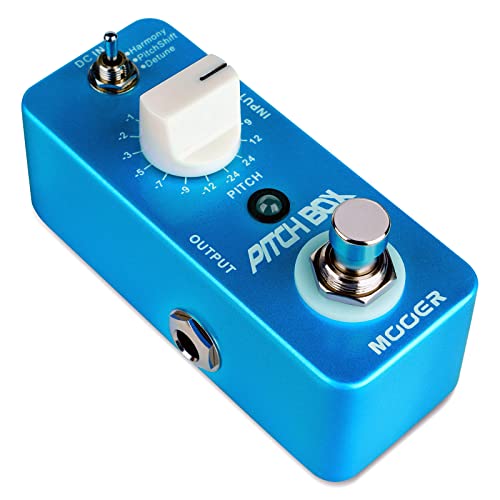
- Harmony, pitch shift, and detune modes
- ±2 octave range with 16 parameters
- Mini true-bypass metal enclosure
Best For: Players who want a compact harmonizer with a small pedalboard footprint
Premium Multi-FX Harmonizer
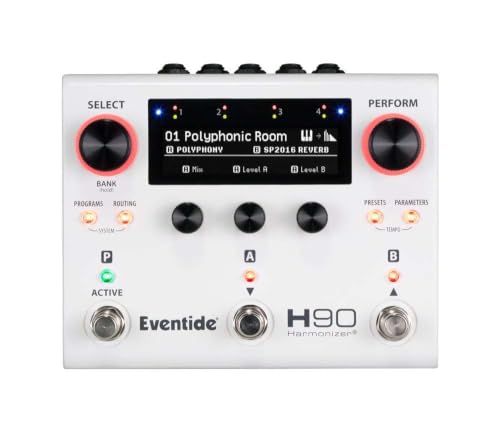
- 62 algorithms and multi-effects processing
- Two expression inputs plus MIDI and USB
- Software editing for deep control
Best For: Guitarists wanting a premium multi-effects harmonizer with advanced control
Compact Pitch-Harmony Pick
7-Mode Pitch Shifter for Creative Voicing

- 7 shift types and 3 tone modes provide 21 options.
- Sharp, Flat, and Detune settings widen the tonal range.
- WET/DRY controls and true bypass add flexibility.
Best For: Players who want a compact octave and pitch-shift pedal.
All-In-One Vocal/Guitar Harmony
Vocal Harmony Stompbox for Mic and Guitar

- 11 harmony modes with major/minor flexibility.
- Works with both microphone and guitar inputs.
- Includes reverb plus mixed or individual outputs.
Best For: Singers and guitarists who need one harmony pedal for both mic and guitar.
Portable Multi-Effects Alternative
Rechargeable Multi-Effects with Amp Modeling

- 100+ effects with 20 amp models and IR cabinets.
- Rechargeable battery and pocket-size design improve portability.
- USB audio, OTG, and presets support practice and recording.
Best For: Players who want a compact multi-effects unit instead of a dedicated harmonizer.
Budget Polyphonic Pick
Compact Polyphonic Harmonizer Pitch Shifter
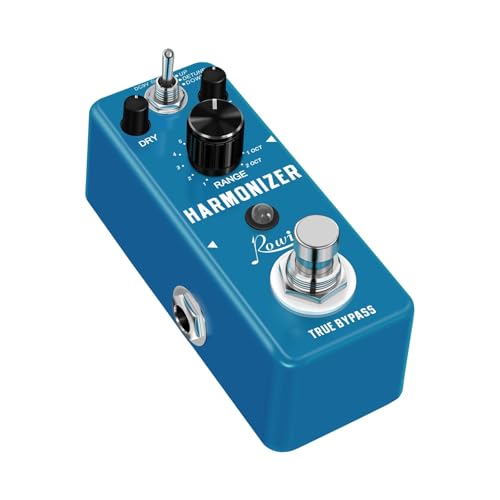
- Harmony, Pitch Shift, and Detune modes
- Polyphonic tracking for chord playing
- Tiny metal shell with true bypass
Best For: Beginners wanting an affordable, compact pitch pedal
All-in-One Practice Rig
LEKATO Multi Effects Guitar Pedal

- 125 effects, 30 amp models, and 30 cab sims
- 40-second looper plus 100 drum rhythms
- USB audio interface with Bluetooth and app editing
Best For: Players needing a portable multi-effects hub with recording features
Mini Pitch Box
LEKATO Mini Pitch Shifter Pedal
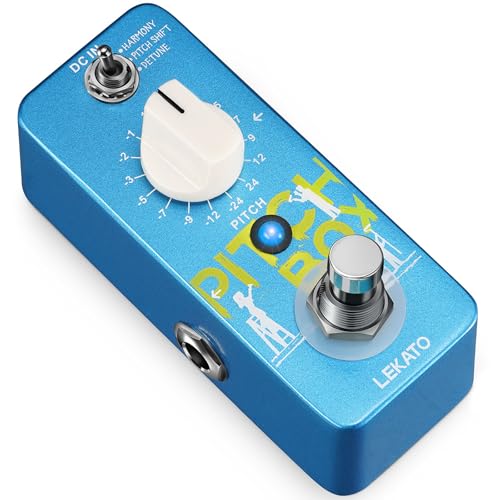
- Harmony, Pitch Shift, and Detune modes
- Polyphonic processing for chord-friendly use
- Compact metal shell with true bypass
Best For: Guitarists wanting a compact dedicated pitch shifter
Multi-Mode Harmony Pedal – BOSS PS-6 Harmonist
If you want one of the most versatile harmonizer pedals for guitar, the BOSS PS-6 packs four useful effects into a compact stompbox. It covers harmony, pitch shifting, detune, and extreme pitch-bend sounds, so it can handle straight-up harmony parts as well as more experimental lead effects.
Best For: Players who want a flexible all-in-one harmonizer with extra pitch effects for live use or sound design.
Pros:
- Four effect modes: Harmony, Pitch Shifter, Detune, and S-BEND.
- Can create two- or three-voice harmonies with selectable key and voicing.
- Includes Super Bend for up to four octaves of pitch bending.
- Supports expression pedal control for added pitch movement.
Cons:
- Expression pedal is optional, so full control requires extra gear.
- More features may be more than needed if you only want basic harmony.
The PS-6 stands out if you want broad pitch-processing options in a single pedal. It is a strong choice when flexibility matters more than keeping the setup minimal.
Intelligent Harmony Pick – TC Electronic Quintessence
The TC Electronic QUINTESSENCE is a focused choice for harmonizer pedals for guitar players who want intelligent dual-voice harmony in a compact format. Its PolySense system and MASH footswitch are built to make harmony parts responsive, with the added ability to pitch-bend harmonized notes during performance.
Best For: Guitarists who want a compact intelligent harmony pedal with hands-on pitch-bending control.
Pros:
- Exceptional dual-voiced intelligent harmony design.
- MASH footswitch acts as a pressure-responsive controller for pitch bends.
- Supports both latching and momentary footswitch modes.
- Compact build with a practical pedalboard footprint.
Cons:
- Focused on dual-voiced harmony rather than a wide range of effects.
- Unit only; no extra components are included.
This pedal is a good fit if your priority is smart harmony tracking and expressive control rather than a multi-effect feature set. It keeps the concept simple while still offering performance-friendly flexibility.
Mini Pitch Shifter Value – Mooer MPS1 Drop
The Mooer MPS1 Drop is a small, practical option among harmonizer pedals for guitar, especially if you want harmony, pitch shift, and detune in a true-bypass mini format. It offers a wide ±2 octave pitch range and multiple parameters, making it useful for both subtle widening and more dramatic pitch changes.
Best For: Players who want a compact, affordable-style harmonizer with multiple pitch modes and a small footprint.
Pros:
- Three effects modes: Harmony, Pitch Shift, and Detune.
- ±2 octave pitch range with 16 optional parameters.
- Mini metal enclosure saves pedalboard space.
- True bypass switching for electric guitar and bass.
Cons:
- Power adapter is not included.
- Smaller format may feel less feature-rich than larger pedals.
If board space matters, the MPS1 is an easy pedal to justify. It focuses on core pitch tools without taking up much room, which makes it especially appealing for simple rigs.
Premium Multi-FX Harmonizer – Eventide H90 Harmonizer
The Eventide H90 is a premium option for players who want a more advanced approach to harmonizer pedals for guitar. With 62 algorithms, MIDI connectivity, USB functionality, and software editing, it goes well beyond basic pitch shifting and is designed for users who want deep control.
Best For: Guitarists who want a high-end multi-effects harmonizer with extensive routing and editing options.
Pros:
- 62 algorithms provide a wide range of multi-effects processing.
- Includes two expression inputs for expanded control.
- Offers MIDI In/Out/Thru plus USB functionality.
- Software edit support makes setup and tweaking more flexible.
Cons:
- Much larger and heavier than typical compact pedals.
- Likely more pedal than needed if you only want basic harmony.
The H90 is the most full-featured unit here, and that breadth comes with a bigger footprint and more complexity. It makes the most sense when you want one pedal to cover advanced harmonizer and multi-effect duties.
Compact Pitch-Harmony Pick – 7-Mode Pitch Shifter for Creative Voicing
If you want one of the more flexible harmonizer pedals for guitar, the Donner Harmonic Square focuses on octave, pitch-shift, and detune textures in a compact mini format. With 7 shift types and 3 tone modes, it gives you a wide range of semitone and octave-based sounds without taking up much space on the board.
Best For: Guitarists who want an affordable, compact octave and pitch-shift pedal with multiple voicing options.
Pros:
- 7 shift types and 3 tone modes create 21 sound options.
- Sharp, Flat, and Detune modes cover pitch up, pitch down, and subtle offset sounds.
- WET and DRY knobs let you blend the harmonic and dry signals.
- True bypass helps keep the signal path transparent when the pedal is off.
Cons:
- Requires a 9V DC adapter with at least 500mA, which is not included.
- Focused on octave and pitch shifting rather than full multi-effects.
The Harmonic Square is a practical pick if you mainly need pitch-based harmonies and layered octave textures. Its small footprint and broad mode selection make it useful for players experimenting with lead voices, detune effects, or bass-style octave tones.
All-In-One Vocal/Guitar Harmony – Vocal Harmony Stompbox for Mic and Guitar
The FLAMMA FV04 is a dedicated harmony pedal for guitar and microphone use, making it a strong option if you need harmonizer pedals for guitar that also work in vocal setups. It offers 11 harmony modes, switches between major and minor scales, and includes reverb for both guitar and vocal paths.
Best For: Singers and guitarists who want an all-in-one harmony pedal with mic support and reverb.
Pros:
- 11 harmony modes with major/minor scale flexibility.
- Accepts both guitar and microphone inputs.
- Includes dedicated reverb effects for each input path.
- Supports mixed or individual outputs for separate channels.
Cons:
- Designed around vocal harmony rather than guitar-only effects.
- Requires the included 9V 500mA power supply.
If your goal is a harmony processor that can handle vocals and guitar in one unit, the FV04 is built for that job. It also adds 48V phantom power support and microphone amplification capability, which makes it more versatile than a standard guitar pitch pedal.
Portable Multi-Effects Alternative – Rechargeable Multi-Effects with Amp Modeling
The SONICAKE Pocket Master is a pocket-sized multi-effects unit rather than a dedicated harmonizer pedal, but it still fits guitarists who want a wide palette of digital tones in one portable box. With 100+ built-in effects, amp models, IR cabinet simulation, and rechargeable power, it is aimed at players who need flexibility on the go.
Best For: Guitarists who want a portable multi-effects pedal with modeling, presets, and USB audio features.
Pros:
- 100+ built-in guitar, bass, and acoustic effects.
- Includes 20 amp models, IR cabinet simulation, and 100 presets.
- Built-in rechargeable battery makes it easy to travel with.
- USB audio interface and OTG support add recording and mobile connection options.
Cons:
- Not a dedicated harmony or octave pedal.
- Requires navigation through many effects and settings.
For players who care more about all-in-one versatility than a single-purpose harmonizer, the Pocket Master offers a lot of tools in a very small format. Its preset storage, looper, drum rhythms, and software editing also make it appealing for practice and home recording.
Budget Polyphonic Pick – Compact Polyphonic Harmonizer Pitch Shifter
If you want harmonizer pedals for guitar that are easy to learn and don’t take up much room, this compact Rowin unit is a practical entry point. It gives you Harmony, Pitch Shift, and Detune modes, with polyphonic tracking that can handle chords and a small metal shell that fits neatly on crowded boards.
Best For: Beginners and budget-conscious players who want a simple, compact harmonizer with multiple pitch effects.
Pros:
- Three modes: Harmony, Pitch Shift, and Detune for different pitch textures.
- Polyphonic design tracks chords for fuller harmonies.
- Very compact metal build is durable and pedalboard-friendly.
- True bypass helps preserve your guitar’s natural signal when off.
Cons:
- Power adapter is not included.
- Feature set is focused on core pitch effects rather than deep editing.
- Best suited to basic harmonizer use instead of multi-effect versatility.
This is a straightforward value pick if your priority is accessible harmonizer tones in a tiny enclosure. It favors simplicity, portability, and chord-friendly pitch shifting over advanced control.
All-in-One Practice Rig – LEKATO Multi Effects Guitar Pedal
For players who want harmonizer pedals for guitar plus a much bigger toolbox, this LEKATO multi-effects unit is built like a compact practice and recording hub. Alongside pitch and harmony-style effects, it adds amp models, cab sims, looper, drum rhythms, app editing, USB audio interface support, and a rechargeable battery for portable use.
Best For: Guitarists who want an all-in-one portable effects processor for practice, recording, and flexible tone shaping.
Pros:
- 125 effects with 30 amp models and 30 cab sims for broad tone options.
- Built-in 40-second looper and 100 drum rhythms support practice and songwriting.
- USB audio interface, Bluetooth, and app editing make it highly versatile.
- Rechargeable battery and compact size suit grab-and-go use.
Cons:
- More complex than a dedicated harmonizer pedal.
- Primary focus is multi-effects, so pitch effects are only one part of the system.
- Small screen may not appeal to players who prefer simple stompbox controls.
This is the most feature-packed option in the group, especially if you want one pedal to cover effects, practice, and recording. It makes the most sense for players who value convenience and flexibility over a single-purpose pitch box.
Mini Pitch Box – LEKATO Mini Pitch Shifter Pedal
If you’re comparing harmonizer pedals for guitar and want a small, purpose-built pitch box, this LEKATO mini model keeps the focus on core pitch shifting. It offers Harmony, Pitch Shift, and Detune modes, polyphonic processing, and a true-bypass design in a rugged metal shell that’s easy to place on a pedalboard.
Best For: Players who want a compact, dedicated harmonizer with simple controls and chord-friendly pitch shifting.
Pros:
- Three modes cover harmony, pitch shifting, and subtle detune textures.
- Polyphonic conversion is designed to work accurately with chords.
- 16 customizable parameters and a ±2 octave range add flexibility.
- Metal shell and true bypass make it practical for gigging rigs.
Cons:
- Power adapter is not included.
- It’s a dedicated pitch pedal, so it doesn’t offer multi-effects extras.
- Best suited to core harmonizer use rather than deep sound design.
This pedal is a sensible choice if you want a small harmonizer that stays focused on pitch effects. It balances portability, chord tracking, and straightforward operation for players who don’t need a larger multi-effects unit.
How We Picked the Best Harmonizer Pedals for Guitar
We focused on Harmonizer Pedals for Guitar that deliver practical pitch control, reliable tracking, and usable harmony intervals without making setup complicated. Priority went to pedals with strong bypass options, straightforward controls, and enough flexibility for both rhythm support and lead lines.
We also considered format and use case: compact single-purpose pedals for simple boards, advanced multi-effects units for players who want more than harmonizing, and specialty units for octave shifts, detune, or multi-voice effects.
Quick Comparison
For the most traditional pedalboard experience, compact pitch shifters and harmony units are the easiest fit. If you want deeper editing, presets, and broader sound design, a premium multi-effects unit can cover harmonizer duties plus much more. Vocal harmony pedals belong in a separate lane, but they may still suit hybrid performers who sing and play.
Key Buying Factors for Harmonizer Pedals for Guitar
Tracking and Note Accuracy
Clean tracking matters more than extra features. A good harmonizer should respond quickly to single-note lines and stay stable with bends, vibrato, and moderate chord playing.
Harmony Options and Pitch Range
Look for the intervals you actually use: thirds, fifths, octaves, detune, and shifted voices. More modes are useful only if the pedal makes them easy to access.
Controls and Presets
Simple pedals suit players who want fast setup on stage. Presets, expression support, or deeper routing help if you switch sounds often or need precise repeatability in the studio.
Bypass, Size, and Power
True bypass is common and helpful in compact rigs. Also check footprint, power requirements, and whether the pedal leaves room for other essentials on your board.
Mono Vs. Multi-Effects
Dedicated harmonizer pedals are usually best when pitch shifting is the main goal. Multi-effects units make sense when you want harmonizing alongside amp modeling, cab simulation, delays, and other processing in one box.
Who Should Buy Which Harmonizer Pedals for Guitar?
Choose a compact dedicated unit if you want the simplest path to harmony parts and octave textures. Pick a premium processor if you need advanced routing, saved presets, and broad tonal flexibility. If you are building a budget board, smaller pitch-shift pedals can deliver a lot of value without taking much space. For players who already own a full rig, the right harmonizer pedal should complement your existing sound rather than replace your core tone.
In short, the best Harmonizer Pedals for Guitar are the ones that match your playing style, tracking needs, and board space. Start with the harmony sounds you use most, then narrow the field by size, control layout, and how much extra processing you actually need.