Need heavier tunings without swapping guitars mid-set? The best pitch shifter pedals for metal can deliver convincing drop tuning, thick harmonies, and quick setup for modern riffs.
This roundup focuses on tracking feel, latency, bypass behavior, and the features metal players actually use on stage and in the studio.
Best 10 Pitch Shifter Pedals for Metal Picks for 2026
Drop-Tuning Workhorse
DigiTech DROP Compact Polyphonic Drop Tune Pitch Shift Pedal

- Polyphonic downward shifting from 1-7 semitones
- Two extra octave-down modes included
- True bypass with momentary or latching control
Best For: Metal players who need quick, compact drop tuning
Versatile Harmonizer
BOSS Harmonist PS-6 Multi-Mode Pitch Pedal

- Four modes: harmony, pitch shifting, detune, and S-BEND
- Selectable key and voicing for 2- or 3-voice harmonies
- Expression pedal support for pitch control
Best For: Metal players who want harmonies and extreme pitch effects
Compact Drop Tuner
DigiTech DROP Compact Polyphonic Drop Tune Pitch-Shifter

- Polyphonic drop tuning from 1 semitone to a full octave
- Momentary or latching footswitch modes
- Compact design with true bypass
Best For: Metal guitarists who want a small dedicated drop-tune pedal
Mini Harmony Option

- Harmony, pitch shift, and detune modes
- Micro size saves pedalboard space
- Full metal shell with true bypass
Best For: Metal guitarists with limited board space who want pitch effects
Polyphonic Flexibility

- Up, down, and dual pitch modes
- 11-position Shift knob for intervals
- Latch and momentary operation
Best For: Metal players needing compact, flexible pitch shifts
Mini Harmonizer
- Harmony, pitch shift, and detune modes
- ±2 octave range with 16 parameters
- Mini metal shell with true bypass
Best For: Players wanting a small pitch pedal for harmony and detune
Studio-Grade Shifter

- Four modes including glide/ramp
- 8 ms latency with polyphonic tracking
- Stereo I/O and USB-C connectivity
Best For: Metal guitarists and bassists wanting advanced pitch control
Most Versatile Mini Option
7-Mode Octave Pitch Shifter for Versatile Tones

- 7 shift types with Sharp, Flat, and Detune modes
- WET and DRY knobs for simple blend control
- True bypass and aluminum-alloy housing
Best For: Players wanting a compact pitch shifter with broad octave and detune options
Best for Modern Metal
Low-Latency Drop Tune Pedal for Modern Metal

- 8ms tracking for tight drop-tuned response
- Tight and Sub modes for different tonal foundations
- Dual-channel presets and glide controls for live use
Best For: Metal guitarists who need fast drop tuning and expressive pitch changes on stage
Best Compact Harmonizer
Compact Harmonizer for Pitch and Detune
- Harmony, Pitch Shift, and Detune modes
- Polyphonic design with 16 adjustable parameters
- True bypass in a rugged full-metal shell
Best For: Players who want a small harmonizer for layered pitch effects and subtle detune
Drop-Tuning Workhorse – DigiTech DROP Compact Polyphonic Drop Tune Pitch Shift Pedal
If you’re shopping for pitch shifter pedals for metal, the DigiTech DROP is built for fast, reliable down-tuning without changing guitars. Its polyphonic design lets you shift from 1 to 7 semitones down, with two extra octave-down options, so it covers everything from subtle lower tunings to heavier drops.
Best For: Metal players who want quick drop tuning with a compact, true-bypass pedal.
Pros:
- Polyphonic pitch shifting helps preserve note tracking across chords and riffs.
- Offers 1-7 semitone drops plus two octave-down settings.
- True bypass helps preserve tone when the effect is off.
- Hold/Tap switch supports momentary or latching operation.
Cons:
- Focused on downward shifting, so it is not a general harmony pedal.
- Requires 9V power at 300 mA.
For metal guitarists who need consistent drop tuning on stage or in the studio, this is a straightforward utility pedal with the right feature set. It stays compact, keeps the signal path simple when bypassed, and gives you enough range for common heavy tunings.
Versatile Harmonizer – BOSS Harmonist PS-6 Multi-Mode Pitch Pedal
Among pitch shifter pedals for metal, the BOSS PS-6 stands out if you want more than simple detuning. It combines harmony, pitch shifting, detune, and S-BEND in one stompbox, with selectable key and voicing for two- or three-voice harmony parts and extreme pitch-bend effects.
Best For: Players who want harmonies, detune, and dramatic pitch effects in one pedal.
Pros:
- Four modes: Harmony, Pitch Shifter, Detune, and S-BEND.
- Selectable key and voicing make harmony parts easier to dial in.
- Three-voice detune adds a fuller, wider sound.
- Expression pedal support enables control over pitch movement.
Cons:
- More complex than a simple drop-tune pedal.
- Expression pedal is optional and not included.
If your metal setup needs one pedal that can cover harmonized leads, thickened rhythm parts, and wild bends, the PS-6 offers a lot of range. Its flexibility makes it better suited to players who will actually use the extra modes, not just basic down-tuning.
Compact Drop Tuner – DigiTech DROP Compact Polyphonic Drop Tune Pitch-Shifter
If you want pitch shifter pedals for metal that keep the board footprint small, this DigiTech DROP is a simple, focused option. It uses polyphonic drop tuning from 1 semitone down to a full octave, and it includes momentary or latching switching plus true bypass for practical live use.
Best For: Guitarists who want a compact, dedicated drop-tuning pedal with easy switching.
Pros:
- Polyphonic drop tuning supports 1 semitone down to a full octave.
- Momentary or latching mode adds flexibility for live playing.
- True bypass helps keep the signal clean when disengaged.
- Compact pedal format saves space on crowded boards.
Cons:
- Dedicated to drop tuning rather than harmony or detune modes.
- Power supply is included, but the pedal is still a cable-powered unit.
This is a practical choice if your priority is fast, dependable down-tuning without extra features. For metal players who mainly need one pedal to handle heavier tunings, it keeps the job simple and the board tidy.
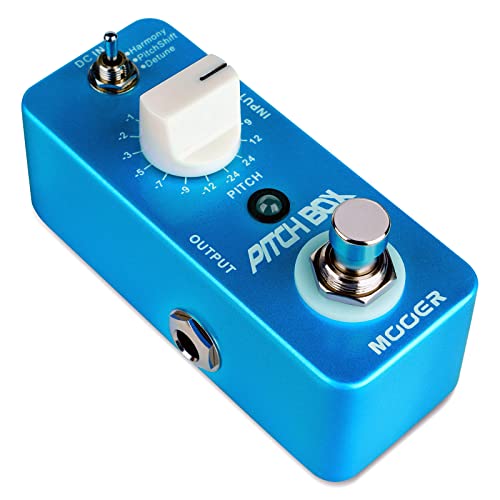
Mini Harmony Option – Mooer Pitch Box Micro Pedal
For players comparing pitch shifter pedals for metal, the Mooer Pitch Box is a micro-sized option that focuses on harmony, pitch shift, and detune. Its full metal shell and true bypass make it appealing if you want a durable pedal that takes up very little room.
Best For: Metal guitarists who need a small multi-mode pitch pedal for tighter pedalboards.
Pros:
- Three modes: Harmony, Pitch Shift, and Detune.
- Very small micro-pedal format saves pedalboard space.
- Full metal shell adds a sturdy feel.
- True bypass is useful for preserving the dry signal when off.
Cons:
- Does not offer the deep drop-tuning range of dedicated down-shift pedals.
- Controls are basic compared with larger multi-effect pitch units.
The Pitch Box makes sense when space is tight and you still want a few useful pitch textures available. It is less specialized for heavy drop tuning, but it offers a compact way to add harmony and detune options to a metal rig.
Polyphonic Flexibility – Electro-Harmonix Pitch Fork
If you want one of the more versatile pitch shifter pedals for metal, the Electro-Harmonix Pitch Fork is built around simple controls and broad interval coverage. Its polyphonic design, up/down/dual modes, and latch or momentary behavior make it useful for harmonies, instant dives, and quick transposition changes without a complicated layout.
Best For: Metal players who want a compact, easy-to-use pitch shifter for harmonies, octave-style moves, and momentary effects.
Pros:
- Three shift modes: up, down, or dual.
- 11-position Shift knob for selecting transposition intervals.
- EXP input supports pitch shift or glissando with an optional expression pedal.
- Latch and momentary modes add flexible footswitch behavior.
Cons:
- Requires an optional expression pedal to use the EXP input features.
- Runs on 9V power and draws 200 mA, so power planning matters.
The Pitch Fork is a practical pick if you need a streamlined pedal that can cover multiple pitch tasks without taking up much space. Its controls are straightforward, but the range of modes gives it enough flexibility for aggressive metal setups.
Mini Harmonizer – Mooer Drop Pitch Harmonizer
The Mooer Drop Pitch Harmonizer is a compact option in pitch shifter pedals for metal if you want harmony, pitch shift, and detune effects in a small footprint. Its true bypass switching and polyphonic pitch conversion make it a straightforward tool for players who want quick tuning changes or layered lead sounds without a large pedalboard commitment.
Best For: Guitarists and bassists who want a mini pitch pedal for harmony parts, detuned textures, and simple pitch shifting.
Pros:
- Three effect modes: harmony, pitch shift, and detune.
- Polyphonic pitch conversion for more precise tracking.
- ±2 octave range with 16 optional parameters.
- Mini metal-shell design with true bypass and a small footprint.
Cons:
- Power adapter is not included.
- Limited to a compact control layout, so it is less deep than larger pedals.
For metal players who value simplicity and board space, the Mooer keeps the feature set focused on essential pitch effects. It is especially appealing if you want a true bypass mini pedal that can handle multiple pitch styles without much setup.
Studio-Grade Shifter – Vein Polyphonic Pitch Shifter
The Vein Polyphonic Pitch Shifter is the most feature-packed of these pitch shifter pedals for metal, with four modes, stereo routing, and a wide interval range. It is designed for players who want low-latency tracking, deeper control over glides and bends, and studio-friendly connectivity for live or recording use.
Best For: Metal guitarists and bassists who want a modern, full-featured pitch shifter with stereo options and expressive interval control.
Pros:
- Four modes: harmony, pitch shifter, detune, and glide/ramp.
- 8 ms ultra-low latency algorithm for fast tracking.
- Wide range with up to 17 intervals and +/- 2 octave coverage.
- Stereo I/O, dry/wet separation, USB-C, and switchable bypass modes.
Cons:
- Higher current draw at 250 mA.
- More complex feature set than a simple set-and-forget pedal.
This is the best fit if you want a pitch pedal that goes beyond basic shifting and can handle more demanding metal setups. The blend of low latency, stereo routing, and flexible interval control makes it especially strong for players who like detailed sound shaping.
Most Versatile Mini Option – 7-Mode Octave Pitch Shifter for Versatile Tones
If you want one of the more flexible pitch shifter pedals for metal-adjacent experimentation, the Donner Harmonic Square gives you a lot to work with in a very small footprint. With 7 shift types and 3 tone modes, it covers octave, semitone, and detune sounds while keeping setup straightforward with separate WET and DRY controls.
Best For: Players who want a compact pitch shifter with lots of tone variations for octave, detune, and pitch-up/pitch-down textures.
Pros:
- 7 shift types plus Sharp, Flat, and Detune modes for 21 total options.
- WET and DRY knobs make it easier to balance the effected signal.
- True bypass helps keep the pedal transparent when disengaged.
- Compact aluminum-alloy build is easy to fit on a crowded board.
Cons:
- Requires a 9V DC adapter with at least 500mA, which is not included.
- Digital pitch-shifting is more feature-focused than specialized for one metal-specific mode.
For players who want maximum variety from a mini pedal, the Harmonic Square is a practical all-round pitch tool. It is less about one extreme effect and more about giving you a wide palette of shifting and detune sounds in a durable format.
Best for Modern Metal – Low-Latency Drop Tune Pedal for Modern Metal
Built with modern riffing in mind, this is one of the more directly targeted pitch shifter pedals for metal thanks to its 8ms tracking and drop-tune focus. It is designed to preserve pick attack and reduce lag, while adding Tight and Sub modes for different low-end responses and dual-channel presets for quick changes on stage.
Best For: Metal players who want fast drop tuning, tight tracking, and on-the-fly pitch changes without swapping guitars.
Pros:
- 8ms latency aims to keep drop tuning tight and synced.
- Tight and Sub modes support either definition or bass-heavy depth.
- Dual-channel presets let you switch between two intervals with one tap.
- Glide controls and momentary/latching modes expand expressive pitch effects.
Cons:
- More specialized for modern metal and drop tuning than for broad general-purpose use.
- Requires a corded 9V power source, so it is not a battery-style grab-and-go pedal.
If your priority is keeping heavy riffs tight while moving between tuned-down parts, this pedal is purpose-built for that workflow. Its low-latency design and live-friendly preset switching make it a strong fit for stage use.
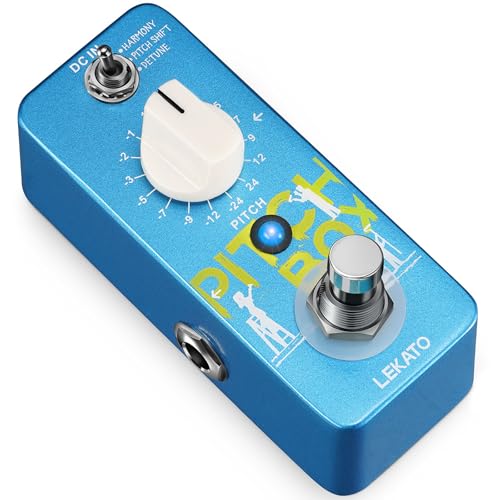
Best Compact Harmonizer – Compact Harmonizer for Pitch and Detune
The LEKATO Mini Pitch Box is a compact choice among pitch shifter pedals for metal if you want harmonies, pitch shifting, and subtle detune effects in one small unit. It uses a polyphonic design, offers 16 adjustable parameters, and keeps the signal path clean with true bypass, making it a practical board-friendly option for guitar or bass.
Best For: Players who want a small harmonizer pedal for layered pitch effects, detune textures, and simple board integration.
Pros:
- Three modes: Harmony, Pitch Shift, and Detune.
- Polyphonic pitch conversion supports full, rich tones.
- 16 customizable parameters with a ±2 octave pitch range.
- True bypass and a full metal shell add practicality and durability.
Cons:
- Uses an adapter power setup, and the 9V center-negative adapter is not included.
- Its feature set is broad, but it is not specifically voiced as a modern-metal drop-tune tool.
For players who need compact harmonizer functionality rather than a single-purpose drop pedal, the LEKATO is easy to recommend. It offers a useful mix of pitch, harmony, and detune options without taking much pedalboard space.
How We Picked the Best Pitch Shifter Pedals for Metal
For this list, we prioritized Pitch Shifter Pedals for Metal that handle fast playing, power chords, and low tunings without sounding glitchy or lagging behind the pick attack. We also looked at whether a pedal is best for simple drop tuning, harmony work, or more experimental lead textures.
We favored models with practical metal-friendly features such as true bypass, compact enclosures, preset options, polyphonic tracking, and stable pitch response on both guitar and bass.
Quick Comparison
If you mainly want instant drop tuning, look for polyphonic pedals built for accurate down-tuning and minimal latency. If you want leads and layered parts, harmonizer-style units give you more interval choices and expressive control. Mini pedals are great for crowded boards, while larger feature sets suit players who need multiple sounds from one box.
Key Buying Factors for Pitch Shifter Pedals for Metal
Tracking and Latency
Metal rhythm parts depend on tight attack. A good pedal should track palm-muted riffs cleanly and respond fast enough to avoid a disconnected feel. Lower latency matters more than extra gimmicks.
Polyphonic Vs. Monophonic Operation
Polyphonic designs are usually the better fit for modern metal because they handle chords and complex riffs more naturally. Monophonic styles can still work well for single-note lead lines, but they are less forgiving on heavy rhythm playing.
Drop Range and Interval Options
Decide whether you need a simple one-step or two-step drop, or broader interval shifting for octave effects and harmony parts. The best choice depends on whether your main goal is tuning down or adding new textures.
Bypass, Presets, and Control
True bypass can help preserve your core tone when the pedal is off. Presets, momentary switching, and quick-access controls are valuable if you switch sounds often during rehearsals or live sets.
Board Size and Power
Metal pedalboards fill up fast, so enclosure size matters. Smaller pedals save space, but bigger units may justify their footprint if they offer better tracking or more usable modes.
Who Should Buy Which Pitch Shifter Pedals for Metal?
Choose a compact drop-tuning pedal if you want one reliable sound for heavier riffs and alternate tunings. Pick a harmonizer if you play melodic metal, solos, or dual-guitar-style leads and want interval flexibility. Go with a feature-rich pitch shifter if you need both practical tuning changes and creative effects from the same pedal.
For most players, the sweet spot is a pedal that keeps low-end riffs tight, stays quiet in bypass, and makes tuning changes fast enough for real-world use. That balance matters more than having the most modes on paper.