Pitch shifting can be a simple way to retune, thicken leads, or unlock harmony parts without changing guitars mid-set. The right pedal should track cleanly, feel responsive, and fit your playing style.
Below, we focus on the best pitch shifter pedals for guitar in 2026, with options for quick drop tuning, polyphonic shifting, and more creative performance effects.
Best 10 Pitch Shifter Pedals for Guitar Picks for 2026
Drop-Tuning Specialist
DigiTech DROP Compact Polyphonic Drop Tune Pitch-Shifter

- Drops pitch from 1 semitone to a full octave
- Momentary or latching switching
- True bypass with included 9VDC supply
Best For: Players who need simple, reliable drop tuning in a compact pedal
Mini Harmony Option
Mooer Drop Pitch Harmonizer Guitar Effect Box
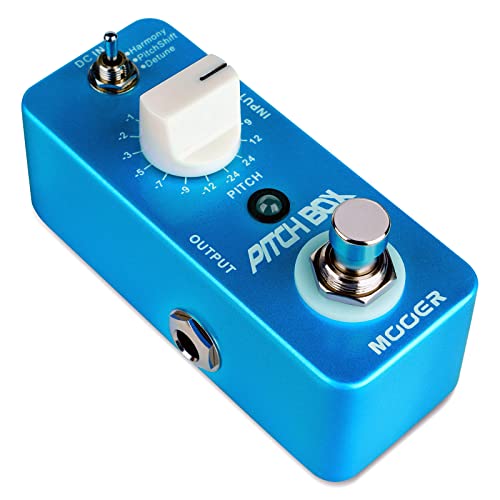
- Three modes: Harmony, Pitch Shift, Detune
- ±2 octave range with 16 parameters
- Mini metal shell with true bypass
Best For: Guitarists who want a tiny pedal with harmony, detune, and pitch-shift options
Expression-Friendly Classic
Electro-Harmonix Pitch Fork Polyphonic Pitch Shift Pedal

- Up, down, and dual shift modes
- EXP input for pitch shift or glissando
- Latch and momentary modes
Best For: Players who want hands-on pitch control and expressive shifting options
Premium Poly Shifter
BOSS XS-1 Compact Pitch Shifting Pedal

- Class-leading pitch shifting with new BOSS algorithms
- Ranges across +/-7 semitones or +/-3 octaves
- External footswitches and expression pedal supported
Best For: Players who want high-quality pitch shifting with flexible control options
Drop Tune Specialist
Digitech DROP Compact Polyphonic Drop Tune Pitch Shift Pedal

- Polyphonic downward shifting from 1 to 7 semitones
- Two octave-down settings, with or without dry signal
- True-bypass and momentary/latching switching
Best For: Players who need a dedicated drop-tuning pedal
Harmony Builder
Electro-Harmonix Intelligent Harmony Machine

- Intelligent Harmony and Polyphonic Override modes
- Works with single notes and chords in polyphonic mode
- 11-position interval selector with mix and dry output control
Best For: Players who want harmonies and routing flexibility
Modern Metal Drop Tool

- 8 ms polyphonic tracking for low-latency response
- Dual-channel presets plus Tight and Sub modes
- Glide controls for dive-bomb style effects
Best For: Metal players needing fast tracking and preset switching
Polyphonic Multi-Shift
Electro-Harmonix Slammi Plus Pitch Shifter Pedal

- Fully polyphonic pitch shifting
- Up, down, and dual modes
- Blend and X-Fade controls
Best For: Players who want clean chord tracking and flexible wet/dry pitch effects
Feature-Rich Stereo Engine
Vein Polyphonic Pitch Shifter Guitar Pedal

- Four modes including harmony and detune
- 8ms low-latency polyphonic tracking
- Stereo I/O with dry/wet separation
Best For: Players who want a versatile stereo pitch pedal with deep control
Compact Mini Harmonizer
LEKATO Mini Pitch Shifter Pedal
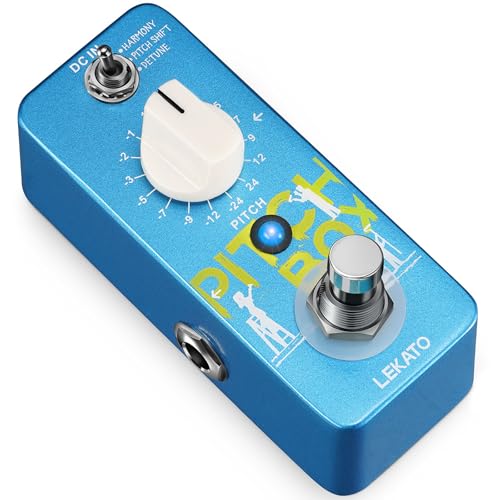
- Three modes: harmony, pitch shift, detune
- Polyphonic conversion with true bypass
- Compact metal housing
Best For: Players who want a small pedalboard-friendly harmonizer
Drop-Tuning Specialist – DigiTech DROP Compact Polyphonic Drop Tune Pitch-Shifter
If you want one of the most focused pitch shifter pedals for guitar, the DigiTech DROP is built for fast, accurate down-tuning without changing instruments. Its polyphonic drop-tune design lets you move from 1 semitone down to a full octave, and the momentary or latching modes make it easy to use for quick dips or constant alternate tuning.
Best For: Players who need simple, reliable drop tuning in a compact pedal.
Pros:
- Polyphonic drop tuning from 1 semitone to a full octave
- Momentary or latching footswitch modes for flexible use
- True bypass helps preserve your dry tone when disengaged
- Compact footprint with 9VDC power supply included
Cons:
- Specialized more for drop tuning than broader harmony effects
- Only one pedal function rather than a multi-effect layout
The DROP stands out if your main goal is quick, musical down-tuning with minimal fuss. It is a practical choice when you want a compact pedal that keeps the job focused and easy to manage on a crowded board.
Mini Harmony Option – Mooer Drop Pitch Harmonizer Guitar Effect Box
The Mooer Drop Pitch Harmonizer is a compact choice among pitch shifter pedals for guitar if you want multiple pitch tools in one small enclosure. It offers Harmony, Pitch Shift, and Detune modes, plus an up-to-2-octave range and 16 optional parameters for dialing in different pitch changes.
Best For: Guitarists who want a tiny pedal with harmony, detune, and pitch-shift options.
Pros:
- Three modes: Harmony, Pitch Shift, and Detune
- ±2 octave pitch range with 16 optional parameters
- Mini metal-shell design saves pedalboard space
- True bypass and works for electric guitar and bass
Cons:
- 9V DC adapter is not included
- Smaller control layout may be less immediate than larger pedals
For players who want versatility without a big footprint, this Mooer pedal covers a lot of ground. It is a practical pick if you need pitch shifting, but also want detune-style blending and harmony sounds in a portable format.
Expression-Friendly Classic – Electro-Harmonix Pitch Fork Polyphonic Pitch Shift Pedal
For players comparing pitch shifter pedals for guitar, the Electro-Harmonix Pitch Fork stands out for its straightforward controls and expression-pedal flexibility. It offers up, down, and dual shift modes, plus an EXP input for controlling pitch shift or glissando with an optional expression pedal.
Best For: Players who want hands-on pitch control and expressive shifting options.
Pros:
- Three shift modes: up, down, and dual
- EXP input supports pitch shift or glissando control
- Latch and momentary modes add performance flexibility
- Compact design with power supply and 9V battery included
Cons:
- Expression pedal is optional, not included
- More control-oriented than a simple one-knob drop solution
The Pitch Fork is a strong option if you want a pedal that can be played dynamically rather than just set and forget. Its mix of shift modes and expression support makes it especially useful for players who like to shape pitch changes in real time.
Premium Poly Shifter – BOSS XS-1 Compact Pitch Shifting Pedal
If you are shopping pitch shifter pedals for guitar and want a polished, modern feel, the BOSS XS-1 is built around class-leading pitch shifting quality and natural response. It changes pitch across +/- seven semitones or +/- three octaves, includes detune for doubling effects, and lets you connect external footswitches or an expression pedal for more control.
Best For: Players who want high-quality pitch shifting with flexible control options.
Pros:
- New BOSS algorithms for class-leading pitch shifting quality
- Natural feel and response that retains the fundamental sound character
- Pitch range covers +/- seven semitones or +/- three octaves
- Supports external footswitches and expression pedal control
Cons:
- Uses an AC adapter rather than battery power
- More advanced control options may be more than some players need
The XS-1 is the most fully featured option here if tone quality and control are your priorities. It is a practical choice for players who want pitch shifting that feels natural but still offers deep performance flexibility.
Drop Tune Specialist – Digitech DROP Compact Polyphonic Drop Tune Pitch Shift Pedal
If you’re comparing pitch shifter pedals for guitar for fast, reliable down-tuning, the Digitech DROP is built for exactly that job. It offers polyphonic downward pitch shifting in 1 to 7 semitone steps, plus two octave-down modes, so you can switch tunings without changing instruments. True-bypass switching helps preserve your dry tone when the effect is off.
Best For: Guitarists who want a simple, dedicated drop-tuning pedal with momentary or latching control.
Pros:
- Polyphonic downward pitch shifting in 1- to 7-semitone steps
- Two extra octave-down settings, with or without dry signal
- Hold/Tap switch supports momentary or latching operation
- True-bypass switching helps preserve tone when bypassed
Cons:
- Focused on downward pitch shifting rather than broad harmony features
- Requires corded 9V power and a 300 mA supply
This is a practical choice if your main goal is quick drop tuning with minimal fuss. It keeps the feature set centered on downward pitch changes, making it a strong fit for players who want a straightforward stage or practice solution.
Harmony Builder – Electro-Harmonix Intelligent Harmony Machine
Among pitch shifter pedals for guitar, the Electro-Harmonix Intelligent Harmony Machine stands out if you want harmonies as well as pitch-shifting flexibility. It has two modes: Intelligent Harmony for diatonic harmonies in a chosen key, and Polyphonic Override for single notes and chords. The 11-position interval selector, key controls, mix knob, and dry output give you several ways to shape the effect.
Best For: Guitarists who want harmonized parts, chord-friendly shifting, and flexible routing options.
Pros:
- Two modes: Intelligent Harmony and Polyphonic Override
- Supports single notes and chords in Polyphonic Override mode
- 11-position interval selector and 12-key access for harmony control
- Mix control plus dry output add routing flexibility
Cons:
- More complex than a basic drop-tuning pedal
- Centered on harmony and interval selection rather than simple one-function shifting
If you want a pitch pedal that does more than just change tuning, this one is built for musical harmonies and practical control. It suits players who need versatile pitch layers rather than a single-purpose down-tune solution.
Modern Metal Drop Tool – Dive Pitch Shifter Pedal
If you’re shopping pitch shifter pedals for guitar for tight, modern low-end work, the Dive is aimed squarely at that use case. It combines polyphonic shifting with 8 ms tracking, drop tuning down to -7 semitones, and dual tone modes called Tight and Sub. It also adds dual-channel drop-tune presets and a glide feature for dive-bomb-style effects without an expression pedal.
Best For: Metal and modern guitar players who want fast tracking, preset jumps, and expressive pitch effects.
Pros:
- 8 ms tracking for low-latency polyphonic shifting
- Drop tuning up to -7 semitones with dual-channel presets
- Tight and Sub modes for different tone shaping needs
- Glide controls and momentary/latching switching for dive effects
Cons:
- Feature set is geared toward modern metal and low-register effects
- Digital signal path may be more than casual users need
This pedal is the most specialized of the three, and that focus is its strength. It favors tight response, flexible preset changes, and expressive pitch movement for players who want more than a basic drop tune.
Polyphonic Multi-Shift – Electro-Harmonix Slammi Plus Pitch Shifter Pedal
If you want pitch shifter pedals for guitar that can handle chords cleanly, the Electro-Harmonix Slammi Plus is built around fully polyphonic shifting and a practical set of performance options. It offers up, down, and dual shift modes, plus an X-Fade function for moving between dry and shifted tones without bending the interval.
Best For: Players who want a straightforward pitch shifter for chords, dual intervals, and flexible wet/dry blending.
Pros:
- Fully polyphonic all the time for more reliable tracking
- Three shift modes: up, down, and dual
- X-Fade function adds smooth transitions between dry and shifted sound
- Blend control lets you fine-tune the wet/dry mix
Cons:
- Only the listed pitch-shift functions are highlighted in the notes
- Requires standard 9V power and draws 25 mA
Overall, this is a solid choice if your priority is clean polyphonic operation with simple, musical control rather than a feature-heavy interface. The dual-pitch and X-Fade options make it especially useful when you want more than a basic octave effect.
Feature-Rich Stereo Engine – Vein Polyphonic Pitch Shifter Guitar Pedal
Among pitch shifter pedals for guitar, the Vein Polyphonic Pitch Shifter is the most feature-packed option here, with four modes in one pedal: Harmony, Pitch Shifter, Detune, and Glide/Ramp. It also adds an up to 17-interval range, stereo routing, and low-latency tracking aimed at live playing and studio work.
Best For: Guitarists and bassists who want a versatile pitch pedal with stereo output, multiple modes, and deep control.
Pros:
- Four modes: Harmony, Pitch Shifter, Detune, and Glide/Ramp
- 8ms low-latency algorithm with polyphonic tracking
- Massive +/- 2 octave range with up to 17 intervals
- Stereo I/O, dry/wet separation, and spillover tails
Cons:
- Higher power draw at 250 mA
- More complex than a simple drop-tuning pedal
This is a strong fit if you want one pedal that can cover harmonies, detune textures, and expressive pitch moves without reaching for extra gear. The stereo and routing features also make it better suited to rigs that can actually use those options.
Compact Mini Harmonizer – LEKATO Mini Pitch Shifter Pedal
If you need pitch shifter pedals for guitar in a smaller footprint, the LEKATO Mini Pitch Shifter Pedal focuses on compact practicality. It gives you three modes—Harmony, Pitch Shift, and Detune—along with polyphonic pitch conversion, true bypass, and a metal shell that is easy to fit on a crowded board.
Best For: Players who want a compact harmonizer with simple controls and a pedalboard-friendly size.
Pros:
- Three modes: Harmony, Pitch Shift, and Detune
- Polyphonic pitch conversion for fuller tones
- True bypass helps maintain a clean signal path
- Compact full-metal enclosure saves pedalboard space
Cons:
- DC 9V adapter is not included
- Fewer advanced features than larger multi-mode units
For players who want a small, reliable pitch pedal without a lot of extra setup, this LEKATO is easy to place and easy to understand. It’s especially appealing if your main priorities are core pitch effects, portability, and true bypass operation.
How We Picked These Pitch Shifter Pedals for Guitar
We looked for pedals that balance pitch accuracy, tracking speed, low latency, and practical footswitch behavior. We also favored compact enclosures, true bypass where relevant, and models that cover the most common use cases: drop tuning, harmonies, octave shifts, and expressive whammy-style movement.
Quick Comparison
If you want the fastest path to a decision, think in terms of function first. Dedicated drop-tune pedals are best for instant alternate tunings. Polyphonic shifters are the better all-round choice when you need clean tracking across chords. Harmony pedals suit players who want third/fifth-style layers, while more experimental units are better for dramatic pitch sweeps and special effects.
Key Buying Factors for Pitch Shifter Pedals for Guitar
Tracking and Latency
Clean tracking is the difference between a usable effect and a glitchy one. For riffing and chord work, choose a pedal known for low latency and strong polyphonic performance.
Range and Musical Use
Some Pitch Shifter Pedals for Guitar only cover a few semitones for drop tuning, while others offer octaves, harmony intervals, or wider creative ranges. Match the range to your real playing needs, not just the biggest spec sheet.
Controls and Switching
Look at whether the pedal offers momentary operation, latch mode, presets, or direct interval selection. Fast live changes matter more than extra features if you play on stage.
Signal Chain and Bypass
True bypass can help preserve your dry tone in simpler rigs. If you run many pedals or buffers, make sure the shifter still behaves well in your existing chain.
Power, Size, and Durability
Mini pedals are great for crowded boards, but larger units may offer easier control and better performance. Make sure the enclosure and power requirements fit your board and touring habits.
Who Should Buy Which Pitch Shifter Pedals for Guitar?
Choose a dedicated drop-tune model if you mainly need quick tuning changes for heavier songs. Pick a polyphonic all-rounder if you want cleaner chord tracking and more versatility. Go for a harmony-focused pedal if you write layered parts or need live lead enhancements. If you want radical pitch motion or special effects, a more experimental design will be the better fit.
In short, the best Pitch Shifter Pedals for Guitar are the ones that match your tuning habits, playing style, and stage workflow. Prioritize tracking and usability first, then choose the smallest feature set that still covers your real-world needs.