If you want your guitar to move closer to a keyboard-style voice, the right octave pedal can make a big difference. The best models add thickness, low-end weight, and a convincing organ-like character without burying your original tone.
We narrowed the field to 10 options that balance tracking, controls, and usability so you can find a pedal that works for practice, recording, or live use.
Best 10 Octave Pedals for Organ Tones Picks for 2026
Industry-Standard Poly Octave

- Polyphonic mode handles chords and multi-note passages.
- Lowest Range applies the octave to only the lowest note.
- Dry direct output helps preserve your core sound.
Best For: players who want a dependable octave pedal for organ-like layering and bass support
Ambient Organ Voice Builder
Verdict Polyphonic Octave Pedal

- 4-voice polyphonic tracking supports chord-based organ tones.
- Swell, envelope filter, and freeze add ambient movement.
- Analog dry-through keeps the original signal out of A/D conversion.
Best For: solo performers and ambient players who want organ layers plus synth-style textures
Warm Analog Bottom End

- All-analog design keeps the tone classic and warm.
- Selectable 1- or 2-octaves-below settings add depth.
- True bypass supports clean signal integrity.
Best For: players who want simple analog low-end support for warm organ-style tones
Budget Organ-Style Layering

- Independent SUB and UPPER controls make blending easy.
- Modulation adds organ-like movement to the octave voices.
- Dry blend helps balance the original signal with layered tones.
Best For: guitarists who want flexible organ-style octave textures with extra modulation control
Multi-Mode Budget Pick
Donner Harmonic Square Octave/Pitch Shifter

- 7 shift types and 3 tone modes
- WET and DRY knobs for blend control
- True bypass with aluminum-alloy housing
Best For: players who want many octave and detune variations in one compact pedal
Preset Workhorse
FLAMMA FS08 Polyphonic Octave Pedal

- 7 saveable preset slots
- Polyphonic octave control with dry blend
- Full metal shell and true bypass
Best For: players who want recalled octave settings and layered polyphonic sounds
Analog Classic
SONICAKE Octaver Lower Octave Pedal

- 100% analog monophonic octave effect
- Blends dry signal with -1 and -2 octaves
- True bypass with very low latency
Best For: players who want a simple analog lower-octave layer for guitar or bass
Compact Polyphonic Shifter
Compact 3-Mode Octave Mini Pedal
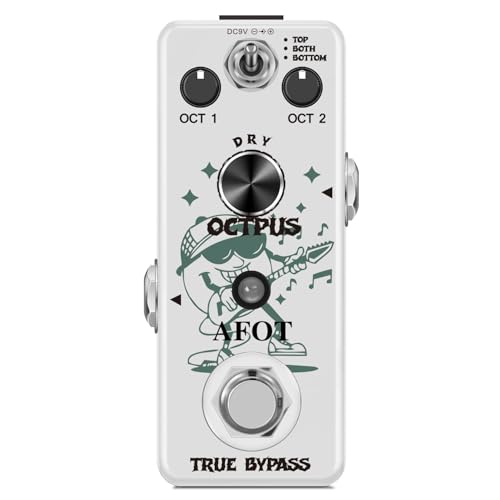
- Handles single notes and chords with polyphonic tracking
- TOP, BOTH, and BOTTOM modes expand octave layering options
- Independent knobs for dry and octave balance
Best For: Players wanting flexible organ-style octave textures in a mini pedal
Compact Pitch Harmonizer
Mini Pitch Harmonizer with 3 Modes
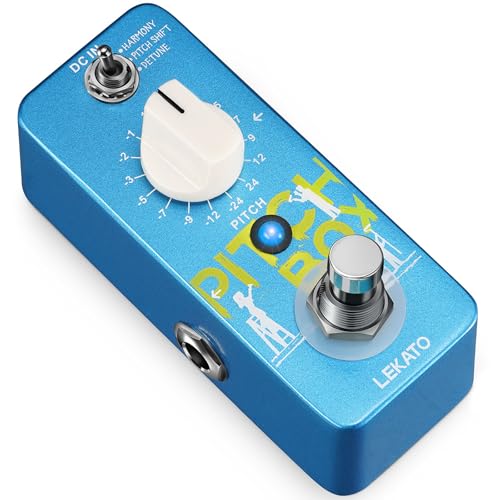
- Harmony, Pitch Shift, and Detune modes add flexibility
- ±2 octave range with 16 adjustable parameters
- True bypass metal mini pedal for tight pedalboards
Best For: Players who want octave-like effects plus harmony and detune options
Budget Octave Workhorse
Pure Octopus 11-Mode Mini Pedal

- 11 octave modes cover a wide sound range
- Known for organ-like highs and deep bass notes
- Compact metal housing with true bypass
Best For: Budget players seeking versatile octave tones in a tiny pedal
Industry-Standard Poly Octave – BOSS OC-5
If you’re shopping for octave pedals for organ tones, the BOSS OC-5 is a straightforward choice for players who want classic octave utility with modern tracking options. Its polyphonic mode, mono/poly switching, and lowest-range setting make it useful for chord-based textures that need a stable, focused low octave.
Best For: Guitarists and bass players who want a reliable, industry-standard octave pedal for clean organ-style layering and low-end support.
Pros:
- Polyphonic operation supports chords and multi-note playing.
- Lowest Range setting applies the octave effect only to the lowest note in a chord.
- Dry direct output helps keep your core signal intact.
- Compact, proven design from a long-running octave-pedal standard.
Cons:
- Does not include the synth or freeze-style features found on more experimental pedals.
- Focused more on core octave duties than broader ambient effects.
The OC-5 is a practical pick if you want dependable octave tones that can sit under organ-like parts without complicating your rig. It leans toward precision and versatility rather than dramatic voice-shaping.
Ambient Organ Voice Builder – Verdict Polyphonic Octave Pedal
For octave pedals for organ tones with extra sound-design options, the Verdict Polyphonic Octave Pedal pushes beyond simple pitch shifting. Its 4-voice polyphonic tracking, organ and bass emulation, detune, swell, and envelope filter tools make it useful when you want one pedal to cover thick chordal textures and expressive ambient movement.
Best For: Solo players and ambient-minded guitarists who want organ-like layers, synth textures, and freeze-based backing sounds in one unit.
Pros:
- 4-voice polyphonic tracking supports rich organ chord emulation.
- Integrated Low-Cut and detune controls help keep tones tight and full.
- Swell and envelope filter add synth-like, touch-sensitive movement.
- Infinite Freeze Sustain can hold a chord as a background pad.
Cons:
- Digital signal format may be less appealing to players who want an all-analog path.
- More feature-heavy than a simple octave pedal, so it may be overkill for basic jobs.
This is a strong fit if you want organ tones that can evolve into pads, leads, and layered textures. It’s less about minimalism and more about turning a guitar into a flexible one-person ensemble.
Warm Analog Bottom End – TC Electronic NETHER OCTAVER
If you want octave pedals for organ tones that stay warm and simple, the TC Electronic NETHER OCTAVER focuses on classic low-end thickness. Its all-analog design and selectable 1- or 2-octaves-below response make it a good option for building deep, supportive organ-style foundations without a lot of extra controls.
Best For: Players who want an analog octave pedal for warm, deep lower-register support and straightforward tone shaping.
Pros:
- All-analog signal path for a classic octave feel.
- 1 or 2 octaves below the original signal adds flexible depth.
- Warm, bass-heavy voicing suits thick organ-like foundations.
- True bypass helps preserve signal integrity when disengaged.
Cons:
- Limited to lower octave duties rather than upper harmonies or modulation.
- Basic control set may feel too simple for players wanting more sculpting options.
The NETHER OCTAVER is best viewed as a focused low-end enhancer rather than a multi-effect solution. If your goal is warmth, depth, and a straightforward octave floor under organ tones, it delivers that cleanly.
Budget Organ-Style Layering – JOYO XVI Polyphonic Octave
Among octave pedals for organ tones, the JOYO XVI stands out for its independent sub and upper octave controls plus built-in modulation. That combination makes it easy to dial in everything from subtle harmonic layering to larger, more synthetic organ-like textures, especially when you want fine control over dry, low, and high voices.
Best For: Guitarists who want a flexible octave pedal for organ-like chords, added shimmer, and modulated textures on a budget-friendly platform.
Pros:
- Independent SUB and UPPER knobs give precise octave blending.
- Modulation adds phaser/vibrato-style movement to the octave voices.
- Dry blend keeps the original guitar signal available in the mix.
- Polyphonic tracking is designed to handle chords and multi-note passages.
Cons:
- Requires a 9V DC adapter, which is not included.
- Digital signal format may not suit players seeking an all-analog octave tone.
The XVI is a strong choice if you want more than a basic octave effect without moving into a full synth pedal. Its control layout makes it easy to build organ-like layers with both weight and movement.
Multi-Mode Budget Pick – Donner Harmonic Square Octave/Pitch Shifter
If you want octave pedals for organ tones with a lot of flexibility in a small box, the Donner Harmonic Square is built around octave, pitch-shift, and detune sounds rather than a single fixed voice. Its 7 shift types and 3 tone modes give you 21 combinations, so you can shape thicker harmony and organ-like textures from one compact pedal.
Best For: Players who want lots of octave and detune options in a compact true-bypass pedal.
Pros:
- 7 shift types plus 3 tone modes for 21 total sound combinations
- Sharp, Flat, and Detune modes add pitch-up, pitch-down, and subtle cent shifts
- WET and DRY knobs make blend control straightforward
- True bypass and aluminum-alloy build support a clean, practical setup
Cons:
- Power adapter is not included
- Requires 9V DC, center-negative power with at least 500mA
As a value-oriented option, this pedal stands out if you want to experiment with layered octave textures and dial in a fuller spread for organ-style parts. It is less about one classic octave voice and more about having multiple usable variations to work with.
Preset Workhorse – FLAMMA FS08 Polyphonic Octave Pedal
The FLAMMA FS08 is a practical choice for octave pedals for organ tones if you want preset-driven control and a polyphonic approach. With 7 preset slots and adjustable octave effect parameters, it makes it easier to save and recall stacked octave settings like +OCT, -OCT, and multi-octave combinations without rebuilding them each time.
Best For: Players who want saved octave presets and precise polyphonic control for layered sounds.
Pros:
- 7 preset slots for saveable octave settings
- Polyphonic octave effects with precise control
- Supports individual control for ±1 and ±2 octaves plus dry signal
- Full metal shell and true bypass
Cons:
- Power supply is not included
- Needs 9V DC power with more than 306mA
This pedal makes sense if you want to move quickly between organ-like octave stacks instead of adjusting every sound from scratch. Its preset structure and dry-signal control should suit players who need repeatable tones in a compact format.
Analog Classic – SONICAKE Octaver Lower Octave Pedal
If you are after octave pedals for organ tones with a simple analog feel, the SONICAKE Octaver keeps the formula focused. It is a 100% analog monophonic pedal that blends a dry signal with one-octave-lower and two-octaves-lower voices, which can be a straightforward way to thicken guitar or bass parts.
Best For: Players who want a simple analog lower-octave sound with very low latency.
Pros:
- 100% analog monophonic octave design
- Creates one-octave-lower and two-octaves-lower voices
- Blends octave sound with the dry signal
- True bypass and almost imperceptible latency on guitar
Cons:
- Monophonic design is less versatile than polyphonic units
- Power supply details in the notes are inconsistent
This is the most stripped-down option in the group, but that can be an advantage if you just want a clean lower-octave layer. It is a good fit for players who value analog simplicity and a quick path to thicker, organ-like low-end support.
Compact Polyphonic Shifter – Compact 3-Mode Octave Mini Pedal
If you’re shopping for octave pedals for organ tones, this compact polyphonic unit is built to cover a lot of ground without taking up much space. Its TOP, BOTH, and BOTTOM modes let you layer octave content in different directions, while the polyphonic design is meant to handle both single notes and chords with clarity.
Best For: Players who want a small, flexible octave pedal for layered organ-style textures and chord-friendly tracking.
Pros:
- Polyphonic octave shifting for single notes or complex chords
- Three mode options: TOP, BOTH, and BOTTOM
- Independent dry, octave, and level control knobs
- True bypass design helps keep the signal clean
Cons:
- Power adapter is not included
- Very compact layout may limit hands-on control compared with larger pedals
Overall, this is a practical choice if you want organ-like octave layering in a simple mini format. The main appeal is flexibility: it can add high shimmer, low reinforcement, or both, depending on the sound you’re building.
Compact Pitch Harmonizer – Mini Pitch Harmonizer with 3 Modes
For octave pedals for organ tones, this LEKATO mini pitch shifter is more of a multi-effect harmonizer than a straight octave box, which makes it useful if you want broader tonal options. Its Harmony, Pitch Shift, and Detune modes, plus a ±2 octave range, give you a lot of room to build layered parts and experimental textures.
Best For: Guitarists and bass players who want a compact harmonizer with octave-style effects and multiple pitch-shift modes.
Pros:
- Three effects modes: Harmony, Pitch Shift, and Detune
- ±2 octave pitch range with 16 customizable parameters
- Polyphonic pitch shifting supports fuller sound
- True bypass and metal shell design for pedalboard use
Cons:
- DC 9V adapter is not included
- It is a harmonizer/pitch shifter rather than a dedicated octave-only pedal
- Signal format is listed as analog, which may matter to buyers expecting a purely digital unit
This is a solid option if you want octave-style layering with extra flexibility for harmony and detune sounds. It’s best approached as a compact sound-shaping tool rather than a single-purpose octave pedal.
Budget Octave Workhorse – Pure Octopus 11-Mode Mini Pedal
If you’re comparing octave pedals for organ tones on a budget, this Rowin Pure Octopus stands out for sheer mode count and its range from high organ-like sounds to deep bass notes. The pedal is designed to be practical and easy to use, with solid tracking, a compact metal housing, and true bypass for a cleaner signal path.
Best For: Budget-minded players who want a tiny octave pedal that can cover organ-like highs, bass reinforcement, and synthy textures.
Pros:
- 11 different octave modes for broad tonal options
- Noted for high organ-like tones and deep bass notes
- Solid tracking and synthy character according to the supplied notes
- Compact metal housing with true bypass
Cons:
- Power adapter is not included
- Mini format may feel limited if you prefer larger controls
- Listed as a single effect, so it is less versatile than a full harmonizer
For players who mainly want an affordable octave effect with organ-style top end, this pedal offers a lot of value. It’s the most straightforward pick here for simple octave sounds and small-board convenience.
How We Picked the Best Octave Pedals for Organ Tones
For this roundup, we focused on Octave Pedals for Organ Tones that offer strong note tracking, usable dry/wet blending, and enough flexibility to create a fuller, more keyboard-like sound. We also favored pedals with clear mode selection, compact footprints, and settings that make it easier to shape upper and lower octave voices.
Quick Comparison: What Matters Most
Not every octave pedal is built for the same job. Some are best for deep sub-octave reinforcement, while others are better at stacked octave textures that feel closer to an organ patch. If you want the most convincing organ-like result, look for pedals that can mix dry signal with octave voices and preserve note clarity across chords.
Key Buying Factors for Octave Pedals for Organ Tones
Tracking and Chord Clarity
Good tracking keeps the effect stable when you play full chords or move across the neck. Poor tracking can make organ-style sounds feel glitchy or muddy, especially on complex voicings.
Blend and Voice Control
A strong dry blend is important because organ tones usually sound better when the natural attack of the guitar remains present. Controls for upper octave, lower octave, or both give you more ways to shape the texture.
Analog Vs. Digital Character
Analog pedals often deliver a warmer, simpler octave sound, which can be great for adding depth. Digital pedals usually provide more modes, presets, or harmonizing options, which can be useful if you want a broader range of organ-style textures.
Noise, Bypass, and Size
True bypass can help protect your signal when the pedal is off, while a compact enclosure is valuable if you are building a crowded board. Lower noise is especially important if you plan to run the pedal into gain or modulation effects.
Who Should Buy Which Octave Pedals for Organ Tones?
If you want the most straightforward path to organ-like thickness, choose a pedal with simple octave controls and a strong dry blend. If you want more experimental textures, a multi-mode digital unit will usually give you more room to shape synthy or layered sounds. Bass players, guitarists, and players using stereo or stacking effects should prioritize clean tracking and flexible voicing over extra feature count alone.
In short, the best Octave Pedals for Organ Tones are the ones that let you keep your playing articulate while adding the right amount of harmonic weight. That balance matters more than chasing the most extreme octave setting.