Octave-up sounds can add bite, synth-like texture, and lead-cutting presence to your rig. The right pedal depends on whether you want a classic fuzzed edge, a cleaner tracked octave, or a compact stompbox that fits a crowded board.
Below, we’ve rounded up 10 of the best options for 2026, with an eye toward tracking, tone, and real-world usability for guitar and bass players.
Best 10 Octave Up Pedals Picks for 2026
Updated Polyphonic Pick

- Polyphonic guitar/bass design
- Mono and Poly modes
- Dry Direct Output and Lowest Range control
Best For: Players wanting a versatile, dependable octave pedal for chords and single-note lines
Compact Customizable Pick
TC Electronic Sub 'N' Up Mini Octaver

- Extra small pedalboard footprint
- Polyphonic engine with TonePrint
- Monophonic mode for classic octave feel
Best For: Players with limited pedalboard space who want easy octave customization
Versatile Pitch Tool
Mooer Drop Pitch Harmonizer MPS1
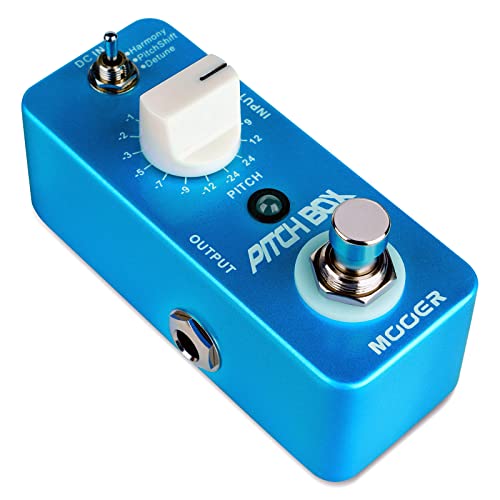
- Harmony, pitch shift, and detune modes
- Precise polyphonic pitch conversion
- Mini metal shell with true bypass
Best For: Players who want one compact pedal for octave-style shifting and broader pitch effects
Analog Low-End Specialist

- All-analog octave pedal
- 1 and 2 octaves below original
- True bypass metal chassis
Best For: Players who want warm, deep octave tones with simple analog operation
Flexible Digital Octave Shifter
Versatile Mini Octave/Pitch Shifter

- 7 shift types with 3 tone modes
- WET and DRY knobs for mix control
- True bypass in a compact aluminum build
Best For: Players who want multiple octave and detune voices in a small pedal
Vintage Octave Fuzz
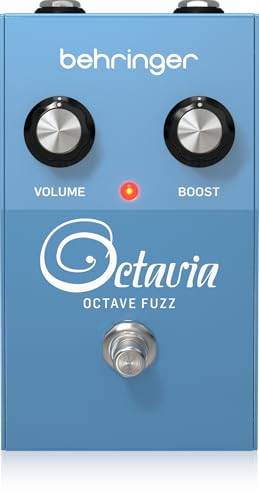
- Analog octave-up fuzz with 60s-inspired tone
- Simple Volume and Boost controls
- Dynamic response for single-coils and humbuckers
Best For: Players who want aggressive analog octave fuzz
Polyphonic Octave Layering
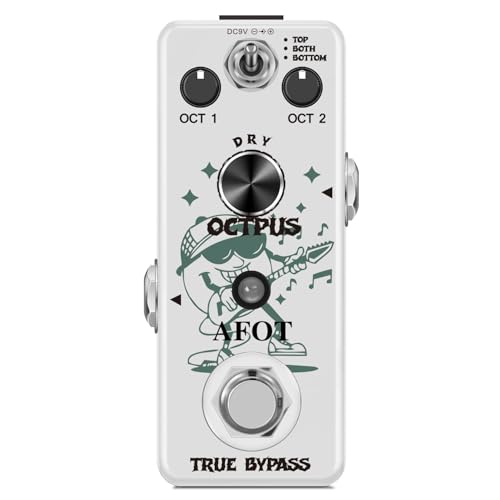
- Polyphonic tracking for notes and chords
- TOP, BOTH, and BOTTOM octave modes
- True bypass with independent level controls
Best For: Players who want a compact octave pedal for chords and lead work
Analog Classic Octave

- 100% analog monophonic octave design
- Blends dry signal with lower octave voices
- Compact true-bypass pedalboard-friendly size
Best For: Guitarists and bass players who want a small analog octave pedal for lower-octave sounds
Classic Octave Fuzz

- Dedicated octave-up footswitch for lead tones
- BC108 transistor fuzz with Fat/Bright voicing
- True bypass handmade USA build
Best For: Guitarists who want a handmade USA octave fuzz with simple controls and octave-up leads
Polyphonic Octave Mini

- 11 octave modes in a tiny metal enclosure
- Polyphonic digital tracking with preset save
- True bypass and budget-friendly value
Best For: Budget-minded players who want a compact digital octave pedal with multiple modes
Updated Polyphonic Pick – BOSS OC-5 Octave Pedal
If you want octave up pedals from a trusted name, the BOSS OC-5 is built as a polyphonic guitar/bass octave pedal with mono and poly modes. It also adds a dry direct output and a lowest-range setting in Poly mode, so you can shape octave parts for chords or single-note lines with more control.
Best For: Players who want a reliable, versatile octave pedal for guitar or bass with updated features and flexible tracking options.
Pros:
- Polyphonic guitar/bass design with Mono and Poly modes
- Dry Direct Output adds routing flexibility
- Lowest Range setting applies the octave effect only to the lowest note in a chord
- Industry-standard OC-5 platform with updated features
Cons:
- Runs on an AC adapter rather than battery power
- Not the smallest pedal in this roundup
Overall, the OC-5 is a practical pick when you want octave performance that handles both chordal playing and bass-friendly use. It focuses on control and versatility instead of novelty, which makes it easy to slot into a serious board.
Compact Customizable Pick – TC Electronic Sub 'N' Up Mini Octaver
For compact octave up pedals, the TC Electronic SUB ‘N’ UP MINI OCTAVER gives you an advanced polyphonic octave engine in an extra small enclosure. It also includes TonePrint-enabled technology and a monophonic mode that aims for a classic old-school octave pedal flavor, making it a flexible fit when pedalboard space is limited.
Best For: Players who need a tiny octave pedal with customizable tones and straightforward controls.
Pros:
- Extra small enclosure fits easily on crowded pedalboards
- Advanced polyphonic octave engine with TonePrint support
- Monophonic mode for a classic octave pedal flavor
- Simple controls keep operation easy
Cons:
- Requires a DC power supply
- Very small format may not suit players who prefer larger controls
This is a strong choice if you value size and customization equally. It keeps the footprint minimal while still offering modern octave-shifting tools and the option to build your own sounds with the editor software.
Versatile Pitch Tool – Mooer Drop Pitch Harmonizer MPS1
If you’re shopping octave up pedals with more than one pitch tool, the Mooer Drop Pitch Harmonizer combines harmony, pitch shift, and detune modes in a mini metal enclosure. Its pitch shifting is described as precise and polyphonic, and the pedal offers 16 optional parameters plus a ±2 octave range for flexible adjustment.
Best For: Players who want a compact pitch pedal for harmony effects, octave-style shifts, and detailed sound shaping.
Pros:
- Three modes: Harmony, Pitch Shift, and Detune
- Precise polyphonic pitch conversion
- ±2 octave range with 16 optional parameters
- Mini full-metal design with true bypass
Cons:
- AC adapter is not included
- Functions are broader than a simple one-knob octave pedal
The Mooer stands out if you want octave effects as part of a wider pitch toolbox. It is compact, versatile, and easy to place on a board, though players looking for a very basic octave-only pedal may not need all the extra modes.
Analog Low-End Specialist – TC Electronic Nether Octaver
The TC Electronic NETHER OCTAVER is a classic all-analog octave pedal built for adding 1 or 2 octaves below the original signal. If you want octave up pedals in a setup where warm low-end support matters, this one focuses on depth, bottom end, and a straightforward true-bypass signal path.
Best For: Players who want an analog octave pedal for warm, bass-heavy tones and simple operation.
Pros:
- All-analog circuit for a classic feel
- Offers 1 and 2 octaves below the original signal
- Adds warmth, depth, and bottom end
- True bypass and metal chassis
Cons:
- Designed around lower octave effects rather than octave-up sounds
- Battery-powered design may not suit every board setup
This pedal is a strong fit when your goal is a thick, supportive octave voice instead of a multi-mode pitch workstation. It keeps the focus on tonal weight and durability, which makes it easy to use in simple rigs.
Flexible Digital Octave Shifter – Versatile Mini Octave/Pitch Shifter
If you want octave up pedals that do more than one trick, the Donner Harmonic Square gives you a compact digital option with 7 shift types and 3 tone modes. It covers semitonal, octave, and detune sounds, so it can work as both a practical pitch tool and a creative texture pedal.
Best For: Players who want a mini pedal with multiple octave and detune voices in a simple true-bypass format.
Pros:
- 7 shift types and 3 tone modes create 21 sound options.
- Sharp, Flat, and Detune modes cover pitch up, pitch down, and adjustable detune.
- WET and DRY knobs make it easier to balance the effect and clean signal.
- Aluminum-alloy housing and true bypass add durability and a transparent signal path.
Cons:
- Requires a 9V DC adapter with 500mA minimum, and one is not included.
- Digital pitch-shifting design may be more complex than a simple one-knob octave pedal.
This is a strong pick if flexibility matters more than simplicity. The Donner works best for players who want to explore several octave up pedals sounds without stepping up to a larger multi-effect unit.
Vintage Octave Fuzz – Vintage Octave Fuzz Pedal
Behringer OCTAVIA OCTAVE FUZZ Vintage Octave Fuzz Pedal with Aggressive Tone and Octave Up Effect
Check Price On AmazonAmong octave up pedals, the Behringer OCTAVIA leans hard into vintage fuzz rather than clean pitch shifting. It is built around an all-analog circuit and is aimed at players who want the classic octave-up fuzz sound associated with 60s-inspired rock and blues tones.
Best For: Guitarists chasing aggressive analog octave fuzz with a simple control set.
Pros:
- Authentic 60s-style octave-up fuzz voicing with a legendary-inspired sound.
- 100% analog circuitry for rich, organic response.
- Simple Volume and Boost controls make dialing in quick.
- Designed to respond dynamically to both single-coil and humbucker pickups.
Cons:
- Focuses on fuzz and octave-up character rather than cleaner pitch-shift tones.
- Uses a 3.5 mm audio jack interface, so compatibility may require attention.
If you want the gritty side of octave effects, this pedal is a straightforward choice. Its sound profile is all about aggressive octave fuzz, so it suits players who want character and attitude more than precision shifting.
Polyphonic Octave Layering – Compact 3-Mode Octave Shifter
If you are comparing octave up pedals for chord-friendly tracking, this STRICH digital model is built around polyphonic octave shifting. Its TOP, BOTH, and BOTTOM modes make it easy to layer octaves in different directions, while the dedicated knobs give you direct control over dry and octave levels.
Best For: Players who want a compact polyphonic octave pedal for single notes and chords.
Pros:
- Polyphonic design handles single notes or complex chords with clarity.
- TOP, BOTH, and BOTTOM modes provide flexible octave layering.
- Three knobs let you balance dry signal and octave levels.
- True bypass and a compact aluminum build suit pedalboards well.
Cons:
- Power adapter is not included.
- Runs on battery power according to the listed details, which may not suit every setup.
This is a practical option if you want an octave pedal that stays usable across chords and lead lines. The STRICH focuses on flexibility and clean tracking rather than vintage fuzz character.
Analog Classic Octave – SONICAKE Octaver
If you want octave up pedals for a simple, compact setup, this SONICAKE analog octaver focuses on the basics: classic monophonic octave sound, quick response, and true bypass signal handling. It blends dry signal with one- and two-octave-down voices, so it is aimed more at straightforward octave textures than complex multi-mode effects.
Best For: Guitarists and bass players who want a small, affordable analog octave pedal for clean lower-octave sounds.
Pros:
- 100% analog monophonic octave design
- Creates blended one-octave-down and two-octaves-down tones
- True bypass helps preserve your dry signal
- Compact size is easy to fit on a pedalboard
Cons:
- Focused on lower octave sounds rather than octave-up effects
- Uses a 9V power supply that is not included
- Monophonic design may be less suited to complex chord work
This is a practical choice if you value analog feel and low-latency response over versatility. For players comparing octave up pedals, it stands apart by covering lower-register octave tones in a very small footprint.
Classic Octave Fuzz – Fulltone Ultimate Octave
Among octave up pedals, the Fulltone Ultimate Octave is built for players who want fuzz first and octave character second, with a dedicated octave-up footswitch for thick lead tones. The analog BC108 transistor fuzz, true bypass switching, and simple three-knob layout make it a straightforward pedal for classic octave-fuzz sounds.
Best For: Guitarists who want a handmade USA octave fuzz with easy controls and a dedicated octave-up switch.
Pros:
- Dedicated octave-up footswitch for lead tones
- BC108 transistor fuzz with singing sustain
- Fat/Bright switch adds two useful voicings
- True bypass 3PDT footswitch preserves signal when off
Cons:
- Primarily an octave fuzz, not a clean octave effect
- Only basic volume, fuzz, and tone controls
- Requires a 9V DC center-negative supply
This pedal makes sense if your goal is aggressive, vintage-style octave leads rather than subtle harmony effects. It is a strong fit for players who want a rugged, classic fuzz platform with an octave-up voice built in.
Polyphonic Octave Mini – Pure Octopus LEF-3806
If you are shopping for octave up pedals on a budget, the Pure Octopus LEF-3806 offers a wide range of octave settings in a tiny digital format. Its polyphonic design, 11 octave modes, preset saving, and true bypass make it a flexible option for players who want lots of sounds without a large footprint.
Best For: Budget-minded players who want a compact digital octave pedal with multiple modes and preset storage.
Pros:
- 11 different octave modes for a wide tonal range
- Polyphonic digital tracking with solid flexibility
- Preset save function adds convenience
- Mini metal enclosure with true bypass
Cons:
- 9V adapter is not included
- Digital feel may not suit players seeking analog response
- Compact controls may be less immediate than larger pedals
This is a strong value pick if you want lots of octave textures in a small, affordable unit. Its preset feature and broad mode selection make it one of the more versatile compact options in this group.
How We Picked These Octave Up Pedals
We focused on pedals that deliver usable octave-up tones with a practical mix of sound quality, tracking, and board-friendly design. For Octave Up Pedals, that means judging how well they handle single notes, chords, and dynamic playing without sounding brittle or losing clarity. We also looked at control layout, bypass type, size, and whether each pedal is better suited to subtle harmonics, aggressive fuzz, or a more modern pitch-shifted effect.
Quick Comparison: Which Type Fits Your Rig?
If you want the most traditional feel, analog and octave-fuzz styles tend to sound raw, thick, and expressive. If you need cleaner tracking and more flexible voicings, digital and polyphonic designs are usually the safer choice. Compact mini pedals are ideal for small boards, while larger enclosures often give you more immediate control and a more specialized sound. The best option is less about one “winner” and more about matching the pedal’s behavior to how you actually play.
Key Buying Factors for Octave Up Pedals
Tracking and Note Clarity
Good tracking is essential if you play fast lines, double stops, or chords. Some Octave Up Pedals sound best on single notes and become less precise when you stack intervals or play complex voicings. If you want modern utility, prioritize pedals known for cleaner pitch detection.
Tone Style
Decide whether you want a sharp, harmonically rich octave-up effect, a fuzzy vintage texture, or a more transparent pitch shift. Octave-fuzz pedals can be inspiring for solos and riff work, while polyphonic units usually suit players who want flexibility and less coloration.
Controls and Workflow
Simple controls are great for quick setup, but additional mode switches and blend options can make a pedal far more versatile. Think about whether you need fast stage-friendly operation or deeper sound shaping at home and in the studio.
Bypass, Size, and Power
True bypass can help preserve your signal when the effect is off, and compact enclosures are useful if space is tight. Make sure the pedal’s power requirements fit your board so you avoid surprises later.
Who Should Buy Which Octave Up Pedals?
Choose a classic octave-fuzz style if you want bold, character-heavy lead tones and don’t mind a more colored sound. Go with a polyphonic or digital option if you need cleaner tracking and more versatility across genres. If your board is small, a mini enclosure makes the most sense. Players who want a more vintage, organic response should lean toward analog designs, while those who want the widest range of usable tones should favor modern pitch engines.
In short, the best Octave Up Pedals are the ones that match your playing style, your board space, and the amount of character you want in the sound. Prioritize tracking, then tone, then convenience features, and you’ll end up with a pedal that actually gets used instead of just admired.