When you need freedom to move on stage, the right cable matters as much as the guitar itself. The best long guitar cables for stage should balance reach, low noise, and dependable durability.
This roundup focuses on practical options for live players who need solid signal, tough construction, and the right connector style for their pedalboard or amp setup.
Best 10 Long Guitar Cables for Stage Picks for 2026
Compact Road Cable
Ernie Ball Flex 20ft Orange Cable

- Ultra flexible and tangle-resistant
- 95% shielding helps reduce noise
- Compact connectors suit stage use
Best For: Players who want a flexible, easy-to-route 20-foot cable
Pro Routing Choice
D'Addario Classic 20ft Straight/Right Angle

- OFC conductors for low-capacitance signal
- 90% spiral shielding reduces handling noise
- Straight/right-angle ends help stage routing
Best For: Clean signal and flexible routing on pedalboard-heavy setups
Right-Angle Stage Saver
20ft Guitar Cable with TPE Jacket

- Right-angle plug helps protect guitar jacks
- 95% braided shield supports noise rejection
- Nylon jacket is rated for 15,000+ bends
Best For: Players who want jack protection and durable handling in a 20-foot cable
Premium Tweed Stage Cable
Fender Deluxe 15ft Straight/Angle
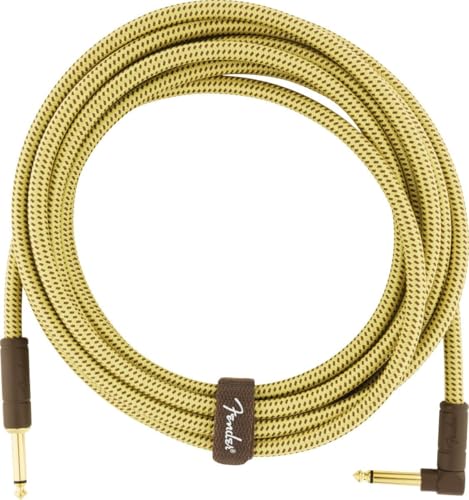
- 95% oxygen-free braided shielding
- 15-foot cable with straight/angle connectors
- Gold-plated connectors and strain relief
Best For: Players wanting a premium 15-foot stage cable
Freedom-First Braided Cable
20ft Right-Angle Instrument Cord

- 20-foot length for more movement
- Braided, tangle-resistant construction
- Right-angle jack on one end
Best For: Small-stage players who want extra reach
Compact Stage Utility Cable
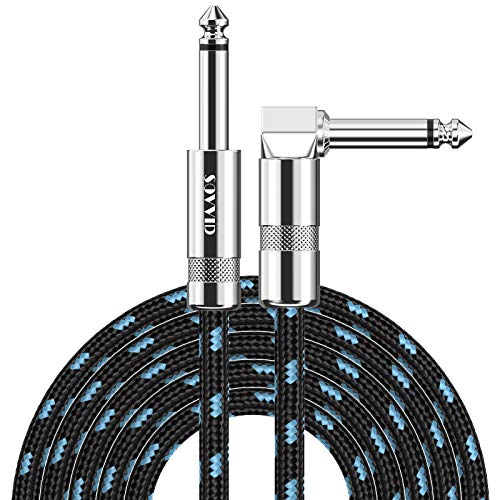
- Braided shield for noise rejection
- 15000+ bend lifespan nylon jacket
- Right-angle plug protects sockets
Best For: Compact setups and tighter stage spaces
Stage-Ready Tweed Durability
Braided Tweed 20ft Right-Angle Cable
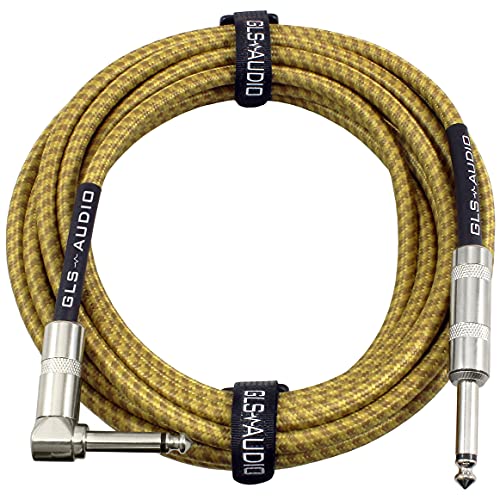
- 20-foot cable for stage reach
- Oxygen-free copper with low-capacitance design
- Flexible braided tweed jacket resists tangles
Best For: Players who want a durable 20-foot cable with a right-angle end
Quiet Stage Flexibility
New Bee 20ft Straight/Right-Angle Cable

- 20-foot cable for live setups
- 22AWG OFC conductors with double shielding
- Straight and right-angle metal connectors
Best For: Players who want a flexible 20-foot cable with noise rejection
Compact Pro Cable Pick
JSAUX 15ft Braided Right-Angle Cable

- 15-foot cable for tighter stage setups
- Oxygen-free copper with multiple shields
- Nylon braided build stays tangle free
Best For: Players who want a shorter braided stage cable with easy handling
Stage-Ready 50-Foot Performer – 50 ft Kevlar-Reinforced Guitar Cable
If you need long guitar cables for stage, this 50-foot option is built for the job with a 20AWG 99.99% OFC conductor, five-layer shielding, and a nylon braided jacket. It’s aimed at players who want a longer run without giving up a clean signal, and the Kevlar reinforcement plus anti-kinking design make it easier to trust during repeated setup, teardown, and coiling.
Best For: Guitarists and bass players who need a durable 50-foot stage cable with strong noise control.
Pros:
- 20AWG 99.99% OFC conductor is designed for lower resistance and lower capacitance.
- Five-layer shielding and over 95% OFC braided shield help deliver a noiseless signal.
- Kevlar reinforcement and nylon braid add durability and help resist kinking.
- Internal heat-shrink protection is designed to support solder joints and shielding.
Cons:
- 50-foot length is more than many players need for short runs.
- Round braided construction may take up more space than a compact cable.
This is a practical pick when stage distance and durability matter more than a lightweight minimal cable. Its feature set clearly leans toward dependable long-run performance and frequent gig use.
Compact Road Cable – Ernie Ball Flex 20ft Orange Cable
For players comparing long guitar cables for stage, this 20-foot Ernie Ball cable is the more compact choice when you want flexibility without overcommitting to extra length. It uses an ultra-flexible, tangle-resistant design, 95% shielding, and a compact connector profile, making it a straightforward stage cable for cleaner routing and easier handling.
Best For: Guitarists who want a flexible 20-foot cable with roadworthy construction and lower-noise performance.
Pros:
- Ultra flexible and tangle-resistant for easier stage setup.
- 95% shielding helps minimize noise and interference.
- Compact connector design supports a cleaner, less bulky connection.
- Limited lifetime warranty adds confidence for regular use.
Cons:
- 20-foot length may be short for wider stage layouts.
- Not as specialized for ultra-long runs as 50-foot options.
In practice, this is a good fit if you want a dependable, easy-to-manage cable and don’t need extreme reach. It prioritizes flexibility and signal cleanliness over maximum stage distance.
Pro Routing Choice – D'Addario Classic 20ft Straight/Right Angle
If your priority is smart stage routing rather than maximum cable length, this D’Addario Classic Series cable gives you a practical 20-foot option with straight/right-angle ends. The low-capacitance oxygen-free copper conductors and 90% spiral shielding are designed for clean signal transfer and reduced handling noise, which is especially useful when you’re moving around pedalboards and tight setups.
Best For: Players who want clean signal, durable connectors, and right-angle flexibility for stage routing.
Pros:
- Ultra-pure oxygen-free copper conductors support pure tone and low capacitance.
- 90% spiral shielding helps eliminate virtually all handling noise.
- Straight/right-angle design is useful for flexible stage and pedalboard routing.
- Single-molded strain relief plug is built for durable, worry-free use.
Cons:
- 20-foot length may not be enough for larger stage setups.
- 24 AWG gauge is lighter than the thicker options in this roundup.
This cable stands out when you want a proven, flexible layout solution with dependable noise reduction. It’s more about practical stage organization and clean sound than brute-force length.
Right-Angle Stage Saver – 20ft Guitar Cable with TPE Jacket
For players shopping long guitar cables for stage but still working within a 20-foot run, this cable focuses on practical protection and easy handling. The right-angle connector can reduce stress on guitar sockets, while the 22AWG oxygen-free-copper center conductor, 95% braided shield, and TPE insulation are aimed at stable transfer, noise rejection, and better durability during repeated use.
Best For: Guitarists and bass players who want a right-angle cable that helps protect jacks and handle stage wear.
Pros:
- Right-angle connector helps reduce stress on guitar sockets.
- 95% braided shield and TPE insulation are designed for better noise rejection.
- 22AWG oxygen-free-copper conductor supports stable signal transfer.
- Nylon jacket is tested for 15,000+ bends and resists twisting and tangling.
Cons:
- XLR listing in the supplied details appears inconsistent with the rest of the cable specs.
- 20-foot length may be too short for larger stage setups.
This is a sensible pick if connector protection is high on your list and you want a sturdy, easy-to-manage stage cable. It leans into durability and jack safety rather than extra-long reach.
Premium Tweed Stage Cable – Fender Deluxe 15ft Straight/Angle
Fender Deluxe Series Instrument Cable, Guitar Cable, Guitar Accessories, Straight/Angle, Tweed, 15ft
Check Price On AmazonIf you want long guitar cables for stage use with a more premium feel, this 15-foot Fender Deluxe cable is built for dependable signal transfer and reduced noise. The straight-to-angle ends, braided shielding, and kink-resistant tweed jacket make it a practical choice for players who want a durable cable that looks as polished as it performs.
Best For: Players who want a 15-foot stage cable with premium build quality and a classic tweed look.
Pros:
- 95% oxygen-free braided shielding for crystal-clear audio
- 20-gauge conductor for a strong signal path
- 24K gold-plated connectors that resist tarnish
- Custom molded ends add strain relief and durability
Cons:
- 15 feet may be shorter than some stage players prefer
- The tweed jacket may be more about style than compact storage
This is a solid pick if you prioritize construction quality, low-noise performance, and a right-angle end for better gear fit. It’s a well-rounded stage-ready cable, especially for players who value reliability and a premium finish.
Freedom-First Braided Cable – 20ft Right-Angle Instrument Cord
For long guitar cables for stage movement, this 20-foot braided instrument cord gives you extra room to walk around a home studio or small live venue without feeling boxed in. It’s aimed at players who want a tangle-resistant cable with a right-angle plug on one end and a clear, no-fuss signal path.
Best For: Guitarists and bass players who want extra reach for small-stage performance and rehearsals.
Pros:
- 20-foot length provides more freedom of movement
- Braided outer build is designed to be tangle resistant
- Right-angle jack on one end helps with tighter connections
- Built for stage or studio use with a focus on clear tone
Cons:
- The product notes emphasize small venues rather than large stages
- Braided styling may add bulk compared with simpler cords
This is a practical longer cable if your priority is reach and mobility rather than boutique extras. It focuses on everyday stage usefulness, with a design meant to hold up to regular plugging in and preserve clarity while you play.
Compact Stage Utility Cable – Sovvid 10ft Right Angle
This 10-foot instrument cable is a better fit when you need a shorter stage run with strong durability and noise rejection. It uses a right-angle connector, braided shield, and nylon jacket, making it a practical choice for players who want a stable cable for guitar, bass, pedals, or other 6.35mm instrument connections.
Best For: Players who want a rugged shorter cable for pedalboards, practice spaces, or tighter stage setups.
Pros:
- High-density OFC braided shield for better noise rejection
- 22AWG oxygen-free copper conductors for stable signal transfer
- Nylon jacket is rated for 15000+ bend lifespan testing
- Right-angle connector helps reduce stress on instrument sockets
Cons:
- 10 feet is not a true long-run stage cable
- The connector details are a bit inconsistent in the supplied notes
If your setup is compact, this cable offers a durable and well-protected option with a focus on noise rejection and strain reduction. It’s more of a space-saving stage utility cable than a long-distance run, but it does the essentials well.
Stage-Ready Tweed Durability – Braided Tweed 20ft Right-Angle Cable
If you need long guitar cables for stage, this 20-foot braided tweed option is built for dependable everyday use with bass, electric guitar, and other pro audio gear. The oxygen-free copper construction, low-capacitance design, and double-insulated shielding are aimed at keeping signal transfer clean while the flexible jacket helps the cable coil neatly between sets.
Best For: Guitarists and bass players who want a durable 20-foot stage cable with a right-angle end for easier routing.
Pros:
- 20-foot length gives solid reach for stage setups
- Oxygen-free copper and low-capacitance design for low-noise performance
- Flexible braided tweed jacket helps prevent twists and tangles
- Straight-to-right-angle layout can help with tighter jack placement
Cons:
- Single cable only, so no backup included
- Tweed cloth styling may not suit players who want a plain cable look
This is a practical pick if your priority is a sturdy, easy-to-manage stage cable with a classic braided build. It focuses on reliability and simple handling rather than extra features, which makes it a straightforward gigging option.
Quiet Stage Flexibility – New Bee 20ft Straight/Right-Angle Cable
For players shopping for long guitar cables for stage use, this 20-foot New Bee cable focuses on quiet operation and flexible handling. It uses 22AWG oxygen-free copper center conductors plus double shielding for noise rejection, and the straight-to-right-angle connector layout can make it easier to connect on crowded pedalboards or guitar stands.
Best For: Guitarists, bass players, and stage setups that need a flexible 20-foot cable with strong noise rejection.
Pros:
- 20-foot length works well for live performance spacing
- 22AWG oxygen-free copper and double shielding for quiet operation
- Includes straight and right-angle metal connectors for flexible routing
- Flexible design is easy to handle and disassemble for incidental repairs
Cons:
- Product details list the cable type as XLR, so buyers should double-check connector needs
- Only one cable is included
This cable stands out for its stage-friendly connector mix and emphasis on low-noise performance. If you want a simple 20-foot lead that should be easy to route around gear, it’s a solid practical option.
Compact Pro Cable Pick – JSAUX 15ft Braided Right-Angle Cable
If your stage rig needs a shorter but still practical lead, this 15-foot JSAUX cable offers a clean signal path in a tougher-feeling braided build. It uses oxygen-free copper, multiple insulator shields, and a nylon braided exterior to help reduce static, crackle, and tangling while keeping the cable easy to wrap after a set.
Best For: Guitarists and players who want a shorter 15-foot stage cable with a braided, tangle-free design.
Pros:
- 15-foot length is useful for tighter stage or practice setups
- Multiple insulator shields and oxygen-free copper help support crisp sound
- Nylon braided exterior is durable and tangle free
- Right-angle to straight layout can help with stage stand routing
Cons:
- Shorter than 20-foot options if you need extra stage reach
- Listed for indoor use in the supplied details
This is a sensible choice if you do not need a very long run and want a cable that is easier to manage on stage. It balances durability, noise control, and a compact length without adding complexity.
How We Picked These Long Guitar Cables for Stage
We prioritized stage-ready features that matter in real use: cable length, shielding quality, connector reliability, build durability, and flexibility under foot traffic. We also looked for options that fit common live setups, from straight-to-straight runs to straight-to-angle designs for tighter rigs.
Because Long Guitar Cables for Stage can affect tone more than shorter leads, we gave extra weight to models with stronger shielding and low-noise construction.
Quick Comparison
Shorter cables in the 10 to 15 foot range are usually best for compact pedalboards or small stages, while 20-foot and 50-foot options suit players who need more mobility or larger performance areas. Braided or reinforced jackets can help with stage wear, while right-angle connectors are often easier to route around guitars, pedals, and amps.
Key Buying Factors for Long Guitar Cables for Stage
Length Vs. Signal Needs
Choose the shortest cable that still gives you enough movement. Longer cables are convenient, but they can introduce more capacitance and potential high-end loss if the cable is not well made.
Connector Style
Straight connectors work well for simple amp connections, while right-angle plugs can reduce strain and keep your setup cleaner in tight spaces. Make sure the plug orientation matches your instrument and pedal layout.
Shielding and Noise Control
For live use, shielding is crucial. Good shielding helps reduce hum, buzz, and interference from stage lighting, power supplies, and wireless gear. This matters even more with Long Guitar Cables for Stage because the signal travels farther.
Durability and Flexibility
Look for reinforced jackets, braided exteriors, and strain relief at the connectors. A stage cable should coil easily, resist kinks, and survive repeated setup and teardown without becoming stiff or noisy.
Who Should Buy Which Long Guitar Cables for Stage?
If you play small clubs or rehearse in compact spaces, a 10- to 15-foot cable is often enough. If you need more movement in front of the amp or around pedals, 20 feet is a versatile sweet spot. Players working larger stages or long amp runs should consider a 50-foot option, especially if they value rugged construction and are willing to pair it with a well-planned signal chain.
In short, choose the longest cable that still fits your setup cleanly, then make sure the build quality supports the distance. That’s the best way to get dependable performance from Long Guitar Cables for Stage.