Right angle guitar cables are a simple upgrade that can make a big difference in comfort, durability, and stage organization. They help reduce strain where your cable meets the jack, especially on guitars with side-mounted outputs or tight pedalboard layouts.
Below, we focus on 10 options that balance sound, build quality, connector style, and real-world value so you can choose the best fit for your instrument and playing setup.
Best 10 Right Angle Guitar Cables Picks for 2026
Budget Tweed Utility
Amazon Basics 10ft Right-Angle Tweed Cable

- 23 AWG OFC conductor for clearer signal
- Braided tweed-cloth jacket for flexibility
- Straight-to-right-angle connectors reduce strain
Best For: Affordable everyday guitar, bass, or keyboard connections
Road-Ready Braided Pick
Ernie Ball 10ft Straight/Angle Cable

- 99.95% OFC copper resists corrosion
- Braided jacket helps prevent tangles
- Dual shielding supports clear tone
Best For: Players needing a durable, flexible stage cable
Heavy-Duty Rubber Build

- 8mm rubber outer covering adds durability
- Right-angle 1/4-inch connector saves space
- Lifetime guarantee included
Best For: Short guitar-to-amp runs where toughness matters
Value 2-Pack Choice
Cable Matters 2-Pack 6ft Right-Angle Cables

- Two braided 6-foot cables included
- Right-angle connector reduces strain
- OFC conductors help keep sound clean
Best For: Budget-conscious players who want a spare-ready cable pair
Stage-Ready Tweed
Fender Deluxe 10 ft Straight/Angle Cable

- Braided shielding for low-noise audio
- 20-gauge conductor with gold-plated connectors
- Kink-resistant tweed jacket with strain relief
Best For: Guitarists needing a durable 10-foot straight/angle cable
Kevlar Pro Build
AA AUDIO 10 ft Right Angle Cable

- 18 AWG OFC conductor with low resistance
- Kevlar reinforcement and heat-shrink protection
- Neutrik REAN gold-plated straight/right-angle connectors
Best For: Gigging players who want a reinforced right-angle cable
Long Reach Tweed
Braided 20 ft Straight/Angle Cable
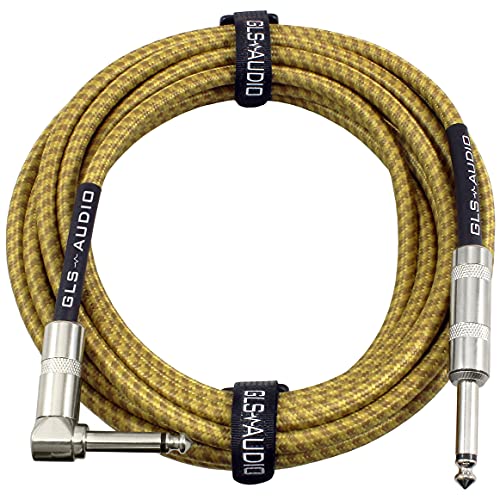
- 20-foot length for extra reach
- OFC conductor with low-capacitance shielding
- Braided tweed jacket for flexible coiling
Best For: Players needing a longer straight/angle instrument cable
Stage-Ready Pick
Fender Professional Series 10ft Straight/Angle

- Straight-to-angle design reduces twisting and kinking
- 95% oxygen-free spiral shielding helps cut handling noise
- Durable braided jacket with lifetime guarantee
Best For: Players who want a reliable stage-ready 10-foot cable
Everyday Utility Pick
JSAUX 10ft Right Angle to Straight Guitar Cable

- Nylon braided, tangle-free design with storage strap
- Oxygen-free copper and shielding aim for clean signal
- Works with guitar, bass, amps, pedals, and mixers
Best For: Players wanting a versatile 10-foot TS instrument cable
Heavy-Duty Value Pick
AA AUDIO Accessory 2-Pack 10ft Right Angle

- Kevlar-reinforced braided design resists wear and bending
- Five-layer shielding and OFC core target quiet signal
- Includes two 10-foot right angle cables
Best For: Players who want a rugged two-pack for frequent use
Budget Tweed Utility – Amazon Basics 10ft Right-Angle Tweed Cable
If you want right angle guitar cables with a classic look and straightforward performance, this Amazon Basics 10-foot option covers the essentials. It uses a straight-to-right-angle 1/4-inch design, OFC copper, and layered shielding to help deliver clear signal transfer while keeping interference down.
Best For: Players who want an affordable, flexible cable for electric guitar, bass, keyboard, or amp connections.
Pros:
- 23 AWG oxygen-free copper center conductor for improved signal clarity
- OFC spiral shield plus conductive PVC shield to help block outside interference
- Braided tweed-cloth outer jacket adds strength and flexibility
- Straight-to-right-angle connectors suit amps, PA systems, and instrument setups
Cons:
- Single 10-foot cable only, with no multi-pack value
- More utilitarian than premium-looking stage cables with heavier hardware
For a simple right-angle instrument cable that balances practicality and a distinctive tweed finish, this is a solid everyday pick. It focuses on core signal performance and durability rather than extras.
Road-Ready Braided Pick – Ernie Ball 10ft Straight/Angle Cable
Ernie Ball Braided Instrument Cable, Straight/Angle, 10ft, Neon Green/Black (P06077)
Check Price On AmazonErnie Ball’s braided instrument cable is a strong choice if you want right angle guitar cables with a roadworthy build and a flexible feel. The 10-foot straight/angle design uses 99.95% oxygen-free copper, dual shielding, and a braided exterior to support clear tone and easier handling.
Best For: Guitarists who want a durable stage cable with a tangle-resistant braided jacket.
Pros:
- 99.95% oxygen-free copper helps resist corrosion
- Dual shielding and dual conductors support clear tone and durability
- Braided exterior is flexible and tangle-resistant
- Limited lifetime warranty adds long-term confidence
Cons:
- Only available as a single 10-foot cable
- Bright neon green/black styling may not suit every setup
This cable leans into dependable construction and easy stage use. If you prioritize durability and a clean signal over minimalist looks, it fits well.
Heavy-Duty Rubber Build – Pig Hog 6ft Right-Angle Cable
Pig Hog PH6RR High Performance 8mm Right-Angle 1/4" Guitar Instrument Cable, 6 Feet
Check Price On AmazonIf you’re shopping for right angle guitar cables with a rugged feel, the Pig Hog PH6RR focuses on simple durability. It uses an 8mm high-quality rubber outer covering and a 1/4-inch right-angle connector design for connecting a guitar to an amp or other guitar gear.
Best For: Players who want a compact, tough-feeling cable for guitar-to-amp setups.
Pros:
- 8mm high-quality rubber outer covering for a sturdy build
- Right-angle 1/4-inch connector is practical for tight spaces
- 6-foot length works well for short pedalboard or amp runs
- Lifetime guarantee adds peace of mind
Cons:
- Only 6 feet long, so it may be too short for some setups
- Less feature-rich than braided, shield-heavy alternatives
For players who value a straightforward, heavy-duty cable in a compact length, this Pig Hog model gets the job done. It is geared toward basic reliability rather than extra flexibility or accessory features.
Value 2-Pack Choice – Cable Matters 2-Pack 6ft Right-Angle Cables
Cable Matters offers a practical two-cable bundle for anyone comparing right angle guitar cables for stage, studio, or home use. These 6-foot braided TS cables feature a straight-to-right-angle design, gold-plated metal connectors, and OFC conductors to support clean signal transfer with less cable clutter.
Best For: Players who want a cost-effective 2-pack for instruments, pedalboards, mixers, or audio interfaces.
Pros:
- Includes two 6-foot cables for better value or backup use
- Braided jacket resists tangling and is easy to coil
- Right-angle connector helps reduce strain and trip hazards
- OFC conductors and braided shielding help keep sound noise-free
Cons:
- 6-foot length may be limiting for larger stages
- Designed as a mono TS cable, so it is geared to standard instrument connections
This 2-pack is a smart option when you need flexible, everyday instrument cables without buying one at a time. The bundled value and practical connector layout make it easy to keep a spare on hand.
Stage-Ready Tweed – Fender Deluxe 10 ft Straight/Angle Cable
If you want right angle guitar cables that prioritize durability and clean signal transfer, this Fender Deluxe 10 ft option is a solid everyday pick. Its straight/angle layout helps with tighter jack placements, while the braided shielding, OFC conductor, and low-noise build are aimed at practical stage and practice use.
Best For: Players who want a rugged 10-foot cable with a right-angle end for reliable live or studio use.
Pros:
- 95% oxygen-free braided shielding for clearer audio and reduced noise
- 20-gauge conductor supports a strong signal path
- 24K gold-plated connectors resist tarnish
- Custom molded ends add strain relief and durability
Cons:
- 10-foot length may be short for some stage setups
- Only one connector end is angled, not both
- Tweed jacket may not suit players who prefer a slimmer cable
Overall, this is a practical right-angle cable for guitarists who value dependable construction and low-noise performance. The Fender name, braided shielding, and kink-resistant jacket make it easy to recommend for regular use.
Kevlar Pro Build – AA AUDIO 10 ft Right Angle Cable
Among right angle guitar cables, this AA AUDIO ACCESSORY model is built for players who care about rugged construction and consistent signal quality. It combines a straight-to-right-angle layout with Neutrik REAN gold-plated connectors, Kevlar reinforcement, and layered shielding for a cable that is clearly aimed at heavy use.
Best For: Players who want a reinforced 10-foot right-angle cable with pro-style hardware.
Pros:
- Neutrik REAN gold-plated connectors for broad compatibility
- 18 AWG 99.99% OFC conductor for lower resistance
- Kevlar reinforcement and heat-shrink protection add durability
- Five-layer shielding helps keep noise and interference low
Cons:
- More feature-heavy than a basic practice cable
- Neon green color may not appeal to everyone
- 10-foot length may be limiting for larger rigs
This is a strong choice if you want a sturdier instrument cable with premium-style components and a right-angle end. The combination of Kevlar reinforcement and low-noise shielding makes it especially appealing for frequent gigging.
Long Reach Tweed – Braided 20 ft Straight/Angle Cable
If you need right angle guitar cables with more reach, this 20-foot braided tweed option is built for flexible routing and easy coiling. It uses oxygen-free copper, double insulator shielding, and a straight-to-right-angle setup that works well for instruments and other 1/4-inch gear.
Best For: Players who need a longer cable run with a right-angle end for flexible stage or home setups.
Pros:
- 20-foot length gives more movement and placement options
- Oxygen-free copper and low-capacitance design support clean signal
- Double insulator shields help with isolation
- Braided tweed jacket adds durability and easier coiling
Cons:
- Longer cable can be less convenient for compact pedalboard setups
- Only one end is right-angle
- Heavier length may be more than some players need
For players who want a longer, flexible instrument lead, this cable covers the basics well. Its braided tweed build and low-noise design make it a sensible choice for stage use, rehearsal spaces, and general guitar or bass connections.
Stage-Ready Pick – Fender Professional Series 10ft Straight/Angle
If you want a dependable right angle guitar cable for live use, this Fender Professional Series option focuses on signal clarity and durability. The straight-to-angle layout helps reduce twisting and kinking, while the braided build and flexible shielding are meant to keep handling noise down during regular plug-and-play use.
Best For: Guitarists and bass players who want a durable 10-foot straight-to-angle cable for stage or practice setups.
Pros:
- Engineered to avoid twisting, kinking, and physical memory
- 95% oxygen-free spiral shielding helps reduce handling noise
- 8mm PVC jacket supports low-noise performance
- Nickel-plated connectors and a lifetime guarantee add confidence
Cons:
- Single cable only, so there is no multi-pack value
- 10-foot length may be limiting for larger pedalboard or stage runs
This is a solid pick if your priority is a straightforward, reliable cable built for performance use. It balances rugged construction with noise control, making it a practical option for players who want a dependable right angle guitar cable without extra complexity.
Everyday Utility Pick – JSAUX 10ft Right Angle to Straight Guitar Cable
This JSAUX right angle guitar cable is built around everyday usefulness: a thicker braided construction, oxygen-free copper, and multiple insulation layers aimed at cleaner signal transmission. The one right-angle plug and one straight plug make it a practical fit for guitar-to-amp setups, especially when you want a cable that routes neatly on stands or around gear.
Best For: Players who want a flexible 10-foot right angle-to-straight cable for electric guitar, bass, and other TS instrument setups.
Pros:
- Multiple insulator shields help reduce static and crackle
- Oxygen-free copper is designed for stable signal transmission
- Nylon braided jacket is tangle-free and includes a storage strap
- Compatible with guitars, bass, amps, pedals, mixers, and more
Cons:
- Unbalanced TS design means it is not the right choice for TRS use cases
- Only one cable is included
For a practical, no-fuss right angle guitar cable, this JSAUX model covers the basics well. It is especially appealing if you want broad instrument compatibility and a braided build that is easy to wrap and store after use.
Heavy-Duty Value Pick – AA AUDIO Accessory 2-Pack 10ft Right Angle
If you need a tougher right angle guitar cable, this AA AUDIO ACCESSORY 2-pack is built around durability and shielding. The Kevlar-reinforced nylon braided design, five-layer shielding, and 20 AWG 99.99% OFC core are all aimed at clean signal transfer and better resistance to wear over time.
Best For: Guitar players who want a two-pack of rugged 10-foot right angle cables with reinforced strain protection.
Pros:
- Kevlar reinforcement is designed to handle repeated bending
- Five-layer shielding supports a noiseless tone
- 20 AWG 99.99% OFC core aims for low signal loss
- Two-cable pack adds extra value and backup coverage
Cons:
- Bulkier reinforcement may be more than some minimalist setups need
- Sold as a 2-pack, which may be unnecessary if you only need one cable
This is the most hard-wearing option in the group and makes sense for players who put cables through frequent coiling, transport, and stage use. If your main concern is durability in a right angle guitar cable, the Kevlar-reinforced build is the standout feature.
How We Picked the Best Right Angle Guitar Cables
For this roundup, we prioritized practical buyer needs: connector quality, cable flexibility, shielding, strain relief, length, and whether the design suits live use, practice, or home recording. We also favored models with strong brand reputation and user-friendly construction, since Right Angle Guitar Cables often live in tight spaces where weak plugs or stiff jackets can fail early.
Quick Comparison: What Matters Most
Most buyers will narrow the list quickly by three things: length, connector orientation, and jacket style. A 6-foot cable is convenient for pedalboards and compact setups, while 10-foot options give more freedom on stage or in a rehearsal room. Braided or tweed-style jackets can improve handling and abrasion resistance, but the best choice is the one that routes cleanly without pulling on your instrument jack.
Key Buying Factors for Right Angle Guitar Cables
Connector Direction and Fit
Check whether you need a straight-to-angle cable or angle-to-angle design. Some guitars place the output jack on the front or side, and the wrong connector orientation can create unnecessary tension or awkward cable routing.
Build Quality and Noise Control
Look for solid metal plugs, good strain relief, and shielding that helps reject handling noise and interference. For stage use, quieter cables are often worth paying more for, especially if you run longer cable paths or use gain-heavy tones.
Jacket Durability
Thicker jackets and braided exteriors can stand up better to foot traffic and repeated coiling, but they may feel less flexible. If portability matters, choose a cable that balances toughness with easy routing.
Length and Rig Layout
Measure your actual path from guitar to amp or pedalboard, then add a little slack. Too short is frustrating; too long can add clutter and make cable management harder.
Who Should Buy Which Right Angle Guitar Cables?
Choose compact Right Angle Guitar Cables if you play through a pedalboard or need a low-profile connection at the instrument. Pick 10-foot models if you want more stage freedom, and favor braided or reinforced options if you travel often or gig regularly. Budget-conscious players can still find solid everyday performance, while touring musicians should lean toward cables with premium connectors and stronger strain relief.
In the end, the best cable is the one that fits your instrument, protects the jack, and matches how you actually play. If you value a cleaner setup and fewer connection headaches, a well-made right angle cable is an easy win.