Choosing the right cable can make a bigger difference than many players expect. With low capacitance guitar cables, you can help preserve brightness, reduce signal loss, and keep your rig sounding more open.
This roundup focuses on dependable options for players who want cleaner tone, solid shielding, and everyday durability for home, studio, or stage use.
Best 10 Low Capacitance Guitar Cables Picks for 2026
Ultra-Low Capacitance Stage Cable
20ft Ultra-Low Capacitance OFC Guitar Cord

- 18 pF/ft design helps keep tone articulate.
- Graphene + OFC shielding targets hum and RF noise.
- Braided jacket and IP67 plugs add durability.
Best For: Players wanting a long, noise-rejecting cable with clear tone
Fender Anti-Kink Cable
10ft Fender Professional Instrument Cord
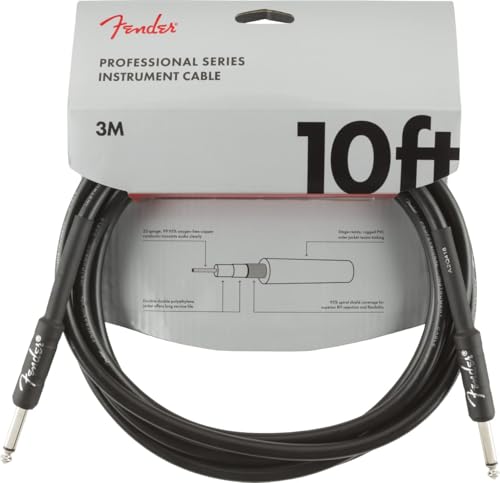
- Anti-kink design helps resist twisting and memory.
- 95% spiral shielding aims to cut handling noise.
- 22AWG conductor with nickel-plated connectors.
Best For: Players who want a flexible everyday Fender cable
Braided Tweed Low-Noise Cable
20ft Straight-to-Right-Angle Amp Cord
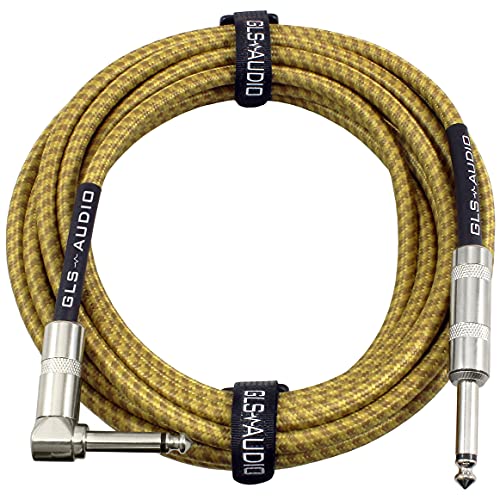
- Low-capacitance design with double insulation.
- Braided tweed jacket for durability and style.
- Straight-to-right-angle ends aid tight routing.
Best For: Players wanting a classic braided cable with practical routing
Pro-Grade Graphite Cable
10ft Low-Cap Dual-Shielded Guitar Lead

- 18 pF/ft graphite-based design targets low capacitance.
- 98% braided shielding and dual shield aim to cut EMI/RFI.
- Amphenol gold connectors add a premium hardware upgrade.
Best For: Tone-focused players wanting premium low-cap cable hardware
Kevlar-Reinforced Pro Pick
AA AUDIO ACCESSORY Pro Series 10 ft

- 18 AWG 99.99% OFC conductor
- Dual-layer shielding for low noise
- Kevlar-reinforced, gold-plated connectors
Best For: Players who want a rugged, low-noise instrument cable with lifetime support
Ultra-Low Capacitance Studio Choice

- 21 pF/ft ultra-low capacitance
- Four-shield design for interference control
- Neutrik gold-plated straight to angled connectors
Best For: Guitarists and bass players who want an ultra-low-capacitance cable with premium connector hardware
Flexible Pro-Grade Value

- 18 pF/ft ultra-low capacitance
- Graphite-based dual shielding
- Neutrik gold straight and angled TS connectors
Best For: Players who want a flexible, pro-grade low-capacitance cable with premium connectors
Studio-Grade Silent Pick

- Low-capacitance, noiseless design
- Gold-plated straight-to-angled connectors
- Flexible, tangle-free build
Best For: Players wanting a quiet premium cable for guitars, bass, and pedals
Versatile Stage Length
- Longest option in the group
- Low-capacitance, quiet signal path
- Flexible build with angled connector
Best For: Musicians needing more reach for stage, studio, or rehearsal use
Compact Pedalboard Lead

- Shortest option for tight setups
- Low-capacitance build for clean routing
- Flexible, tangle-free construction
Best For: Pedalboards and short studio runs where excess cable would get in the way
Ultra-Low Capacitance Stage Cable – 20ft Ultra-Low Capacitance OFC Guitar Cord
If you want low capacitance guitar cables that prioritize clarity over coloration, this 20-foot option is built to keep high frequencies intact on longer runs. Its 18 pF/ft design, dual shielding, and 22AWG OFC core make it a practical choice for players who run through pedals and want a clean, articulate signal.
Best For: Guitarists and bass players who need a long, noise-rejecting cable for stage or studio use.
Pros:
- 18 pF/ft ultra-low capacitance helps preserve sparkle and note definition.
- Graphene plus OFC dual shielding is designed to reduce hum and interference.
- 22AWG 99.99% OFC core supports balanced signal transmission over distance.
- Braided cotton-PET jacket and IP67 plug system add durability and strain relief.
Cons:
- At 20 feet, it may be more cable than some home setups need.
- The feature set is geared toward performance use, not a minimalist budget build.
This is a strong fit if your priority is clean tone and rugged construction in one cable. The combination of low capacitance, shielding, and reinforced connectors makes it especially appealing for noisy environments and longer signal paths.
Fender Anti-Kink Cable – 10ft Fender Professional Instrument Cord
Among low capacitance guitar cables, this Fender 10-foot model stands out for players who want a flexible everyday lead with reliable handling noise control. It uses a 22-gauge conductor, 95% oxygen-free spiral shielding, and an 8mm PVC jacket to help keep the signal clean while resisting twists and kinks.
Best For: Electric guitar players who want a dependable short-to-medium cable for regular practice, rehearsals, or gigs.
Pros:
- Anti-kink design helps prevent physical memory and twisting.
- 95% oxygen-free spiral shielding is aimed at reducing handling noise.
- 22-gauge conductor and sturdy nickel-plated connectors support consistent performance.
- 10-foot length is a versatile everyday size for many setups.
Cons:
- The listing emphasizes flexibility and noise control more than a specific capacitance figure.
- 10 feet may be short for larger stages or more spaced-out rigs.
This is a practical choice if you want Fender build quality in a cable that is easy to use and hard to tangle. It focuses on dependable performance and clean signal handling rather than extra-long reach or specialty construction.
Braided Tweed Low-Noise Cable – 20ft Straight-to-Right-Angle Amp Cord
If you are comparing low capacitance guitar cables for bass or electric guitar, this 20-foot braided tweed model is built for durability, flexible coiling, and low-noise performance. Its notes call out double insulator shields for maximum isolation and a low-capacitance design, making it a solid fit for players who want a classic-style cable with practical protection.
Best For: Guitarists and bassists who want a durable, low-noise cable with a right-angle end for flexible routing.
Pros:
- Low-capacitance design with double insulator shields for isolation.
- Oxygen-free copper construction supports dependable signal transfer.
- Braided tweed cloth jacket adds durability and classic styling.
- Straight-to-right-angle layout can help with tighter instrument setups.
Cons:
- The product details do not specify an exact capacitance value.
- At 20 feet, it may be longer than necessary for compact practice rigs.
This cable makes sense if you want a mix of vintage looks and modern low-noise functionality. It is geared toward players who value easy storage, flexible handling, and a right-angle connector for better cable management.
Pro-Grade Graphite Cable – 10ft Low-Cap Dual-Shielded Guitar Lead
For buyers focused on low capacitance guitar cables with premium hardware, this 10-foot WBC-PRO-Guitar cable is positioned as a high-end, pro-grade option. It combines an 18 pF/ft graphite-based design, dense braided shielding, and Amphenol gold TS connectors, which should appeal to players who want strong noise rejection and a compact stage-friendly length.
Best For: Tone-focused guitar, bass, keyboard, or mixer users who want premium connectors and very low capacitance.
Pros:
- 18 pF/ft low-cap design is billed as the lowest-capacitance pro-grade option in the market.
- Graphite-based dual shielding and 98% braided coverage target EMI and RFI reduction.
- 20AWG 99.99% OFC core uses 103 fine strands for flexibility and conductivity.
- Amphenol gold-plated connectors and professional soldering add a premium build.
Cons:
- 10 feet may be limiting for larger stages or spaced-out pedalboard setups.
- Its premium construction may be more cable than casual players need.
This is the most feature-packed option in the group for players who want low capacitance plus serious connector quality. It is especially attractive if you value a flexible, shielded cable that is built for demanding studio or stage use.
Kevlar-Reinforced Pro Pick – AA AUDIO ACCESSORY Pro Series 10 ft
If you want low capacitance guitar cables that also prioritize durability, this 10-foot AA AUDIO ACCESSORY Pro Series model is built for steady signal transfer and everyday reliability. It uses an 18 AWG 99.99% OFC conductor, gold-plated 1/4-inch connectors, and dual-layer shielding to help keep your tone clean with low noise.
Best For: Players who want a rugged, low-noise instrument cable with Kevlar reinforcement and lifetime support.
Pros:
- 18 AWG 99.99% OFC conductor is designed for lower resistance and lower capacitance.
- Dual-layer shielding combines aluminum foil and over 95% OFC braided shield for low noise.
- Kevlar reinforcement adds extra toughness for flexing and pulling.
- Gold-plated connectors help resist oxidation and maintain contact.
Cons:
- At 10 feet, it may be longer than some pedalboard or compact rig setups need.
- Premium construction may be more cable than casual players require.
Overall, this is a strong pick if you want a practical stage or practice cable that combines low-capacitance design with heavy-duty build quality. The lifetime warranty is an added plus for players who expect regular use.
Ultra-Low Capacitance Studio Choice – Gotham GAC-1 Ultra Pro 10 ft
For buyers comparing low capacitance guitar cables, this custom-made Gotham GAC-1 Ultra Pro stands out with a stated 21 pF/ft capacitance and a heavily shielded build. It pairs straight and angled Neutrik gold-plated TS connectors with a 10-foot assembly intended to reduce interference and microphonics in stage, studio, or home use.
Best For: Guitarists and bass players who want an ultra-low-capacitance cable with premium connector hardware.
Pros:
- 21 pF/ft capacitance is marketed as the world’s lowest capacitance audio cable.
- Four-shield design is built to help block electrical interference and microphonics.
- Neutrik gold-plated straight and angled TS connectors add a professional touch.
- Professionally soldered with a 4% silver solder blend and nitrogen-assisted process.
Cons:
- Premium, custom-built construction may be overkill for very basic rigs.
- At 10 feet, it’s not the best fit if you only need a short patch cable.
This is a compelling choice if your priority is squeezing every bit of performance from a high-end instrument signal path. Its combination of very low capacitance, dense shielding, and Neutrik hardware makes it especially appealing for discerning players.
Flexible Pro-Grade Value – WBC-PRO-Guitar 10 ft
If you’re shopping low capacitance guitar cables for a stage or studio setup, the WBC-PRO-Guitar focuses on very low 18 pF/ft capacitance, flexible handling, and strong shielding. Its 20 AWG graphite-based design, dense braided shield, and Neutrik gold TS connectors are aimed at keeping EMI and RFI under control while supporting a clean instrument signal.
Best For: Players who want a flexible, pro-grade low-capacitance cable with premium connectors and broad instrument compatibility.
Pros:
- 18 pF/ft capacitance is even lower than many competing guitar cables.
- Graphite-based, dual-shielded construction is designed to reduce EMI and RFI.
- 20 AWG OFC core with 103 fine strands supports flexibility and durability.
- Neutrik straight and angled gold TS connectors add reliable contact integrity.
Cons:
- Premium feature set may be more than a beginner needs.
- Its pro-oriented design may be best suited to serious guitar, bass, or instrument setups.
For players who want a technically strong cable without chasing boutique pricing, this model hits a useful balance. The combination of ultra-low capacitance, high shielding coverage, and flexible construction makes it a smart all-around option.
Studio-Grade Silent Pick – Gotham GAC-1 Ultra Pro, 10 ft
If you want low capacitance guitar cables that prioritize quiet operation and a clean signal path, this 10-foot Gotham GAC-1 Ultra Pro is built for exactly that kind of practical use. It uses Linear Crystal Oxygen Free copper, gold-plated straight-to-angled 1/4 inch connectors, and a flexible, tangle-free build that suits pedals, guitars, bass, keyboards, and other unbalanced mono instrument setups.
Best For: Players who want a premium, low-noise cable with a right-angle plug for everyday instrument and pedalboard use.
Pros:
- Low-capacitance design aimed at silent, clean signal transmission
- Gold-plated straight-to-angled 1/4 inch connectors
- Flexible, tangle-free construction for easier handling
- Compatible with electric guitar, bass, acoustic guitar, pedals, keyboards, and mixers
Cons:
- 10-foot length may be longer than some compact pedalboard setups need
- Single-cable format, so it is not a multi-pack option
Overall, this is a strong pick if you want a premium instrument cable with a quiet reputation, sturdy connector choices, and broad compatibility across common gear. The angled end is especially useful when space around jacks is tight.
Versatile Stage Length – Gotham GAC-1 Ultra Pro, 12 ft
For buyers comparing low capacitance guitar cables, this 12-foot Gotham GAC-1 Ultra Pro is the most flexible length in the group for stage or studio positioning. It keeps the same unbalanced mono instrument-cable design, LCOF copper construction, gold-plated straight-to-angled connectors, and flexible, tangle-free profile, making it a practical choice for instruments, pedals, keyboards, and mixing setups.
Best For: Players who want extra reach without giving up a premium, low-noise instrument cable.
Pros:
- 12-foot length gives more freedom for stage and recording setups
- Low-capacitance construction designed for clean signal transfer
- Gold-plated straight-to-angled 1/4 inch connectors
- Works with electric guitar, acoustic guitar, bass, pedals, keyboards, and mixers
Cons:
- Longer cable run can be more than some pedalboard-only rigs need
- Only one cable included
This version makes sense if you need more reach than a short patch-style lead but still want the same premium cable features. It is a straightforward, performance-focused option for musicians who value quiet operation and versatility.
Compact Pedalboard Lead – Gotham GAC-1 Ultra Pro, 3 ft
If your priority is short-run signal routing, this 3-foot Gotham GAC-1 Ultra Pro fits the low capacitance guitar cables category well for pedalboard and compact studio use. It keeps the same premium Gotham construction, LCOF copper, gold-plated straight-to-angled connectors, and unbalanced mono design, while the shorter length is useful for music production, live performance, and studio recording.
Best For: Guitarists and bass players who need a short, premium cable for pedals or tight setups.
Pros:
- 3-foot length is ideal for compact setups and short runs
- Low-capacitance design supports clean audio signal transmission
- Flexible and tangle-free for easier pedalboard routing
- Compatible with guitars, bass, pedals, keyboards, and mixers
Cons:
- Too short for players who need reach between distant gear
- Single-cable package limits flexibility if you need multiple leads
As a short instrument cable, this is the most space-saving option here and the easiest to place on a crowded board. Choose it when you want the same premium cable family but in a length that minimizes excess slack.
How We Picked These Low Capacitance Guitar Cables
We prioritized cables with clearly stated low capacitance ratings, strong conductor and shielding designs, and practical hardware choices such as straight or angled 1/4-inch plugs. We also looked for build quality details that matter in real use, including strain relief, anti-kink construction, and tangle resistance.
Because players use cables differently, we included a mix of lengths and styles so you can match the cable to a pedalboard, studio setup, or live rig without paying for features you do not need.
Quick Comparison: What Matters Most
For many guitarists, the biggest decision is not just price—it is whether a cable will stay quiet and protect high end over long runs. Shorter cables are often best for simple board-to-amp setups, while longer runs demand better shielding and lower capacitance to help retain clarity.
Connectors also matter. Straight plugs are versatile, angled ends can save space on crowded pedalboards, and gold-plated contacts may offer better corrosion resistance in humid or high-use environments.
Key Buying Factors for Low Capacitance Guitar Cables
Capacitance Rating
Lower capacitance generally helps reduce treble loss and keeps passive pickups sounding more lively. If tone preservation is your top priority, look for products that publish the rating instead of using vague marketing language.
Shielding and Noise Control
Good shielding helps reject hum, buzz, and handling noise. Dual-shielded or noise-rejecting designs are especially useful around pedals, dimmers, computers, and stage power.
Length and Signal Path
Use the shortest practical cable length for your setup. Longer cables can be perfectly usable, but they place more importance on both capacitance and shielding.
Flexibility and Durability
A cable should coil easily, resist kinks, and survive frequent plugging and unplugging. Braided jackets, Kevlar reinforcement, and anti-kink builds can help in mobile rigs.
Who Should Buy Which Low Capacitance Guitar Cables?
If you want the best all-around choice for a typical guitar or bass rig, start with a balanced low-capacitance cable that pairs solid shielding with a length that fits your setup. Players with passive single-coil guitars often benefit most from low-capacitance designs because they can help keep the top end clearer.
Studio players may prefer the most consistent, quiet cable with the best shielding, while gigging musicians should lean toward rugged construction and reliable connectors. If your pedalboard is tight, an angled connector can make routing easier. For minimal setups, a shorter run is often the smartest buy.
In short, the best Low Capacitance Guitar Cables are the ones that match your signal chain, your playing environment, and how much clarity you want to preserve from guitar to amp.