Choosing the right cable matters more in recording than many players expect. The best guitar cables for recording help keep noise low, preserve tone, and make sessions more reliable from the first take to the last.
Whether you need a rugged 1/4-inch cable for an amp or a USB option for direct recording, this roundup focuses on practical picks for clean signal, solid build quality, and everyday studio use.
Best 10 Guitar Cables for Recording Picks for 2026
Quiet Studio Value

- 22AWG oxygen-free-copper conductors
- Double shielding for noise rejection
- Straight and right-angle connectors
Best For: Budget-minded players recording in home studios
Durable All-Rounder

- Braided jacket resists tangles
- Dual shielding for clear tone
- Limited lifetime warranty
Best For: Players wanting a tough, flexible cable for recording and practice
Trusted Studio Standard
Fender Professional 10ft Cable
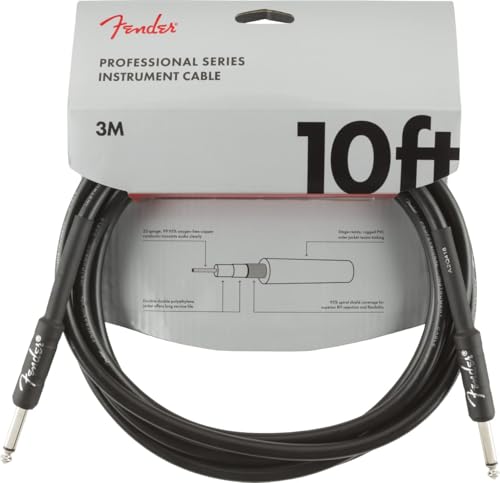
- Anti-kink design reduces twisting
- 95% spiral shielding for lower noise
- 22-gauge conductor with PVC jacket
Best For: Players wanting a dependable standard cable for recording
Heavy-Duty Dual-Pack
Guitar Cable 10 ft 2 Pack, Kevlar-Reinforced TS Cord

- Dual-layer shielding with 20AWG 99.99% OFC wire
- Kevlar reinforcement and heat-shrink protected solder joints
- Includes two 10-foot nylon-braided cables
Best For: Durable 10-foot recording and amp cables with a spare included
Right-Angle Pro Cable
JSAUX Guitar Cable 10 ft Right Angle to Straight

- Multiple shields to reduce static and crackle
- OFC core with nylon braid for stable, tangle-free use
- Right-angle to straight TS connector layout
Best For: Players who need a shielded right-angle TS cable for recording or stage routing
Reliable Budget 2-Pack
Cable Matters 2-Pack 1/4 Inch TS Guitar Cables

- 2-pack for backup or dual-use setups
- Braided shielding and OFC conductors
- 6-foot straight-to-straight design
Best For: budget-minded recording setups needing a spare cable
Tweed Right-Angle Pick
Amazon Basics 10-Foot Instrument Cable

- 10-foot cable with right-angle connector
- 23 AWG OFC conductor with shielding
- Braided tweed-cloth outer jacket
Best For: longer recording runs and tighter jack layouts
Feature-Rich Recording Pick
Aqdocvf 10ft Guitar Cable with Picks

- 10-foot cable with straight and right-angle ends
- Double shielding and braided nylon jacket
- Includes 3 random-color guitar picks
Best For: durable recording setups that value included extras
Quiet Studio Value – New Bee 10ft Low-Noise Cable
If you want guitar cables for recording that keep things simple and quiet, this New Bee 10ft cable is built around low-noise signal transfer and broad compatibility. The 22AWG oxygen-free-copper conductors, dual shielding, and flexible body make it a practical choice for home studios, pedal chains, and everyday instrument hookups.
Best For: Home studio players and musicians who need a low-noise, flexible 10-foot instrument cable for recording and general use.
Pros:
- 22AWG oxygen-free-copper center conductors help support clean signal transfer.
- High-density stranded copper double shield is designed for noise rejection.
- Straight and right-angle metal connectors add connection flexibility.
- Flexible build makes it easy to route in studio or stage setups.
Cons:
- Not a dedicated USB recording cable for direct computer recording.
- 10-foot length may be limiting for larger setups.
- General-purpose design, so it lacks specialized recording features beyond shielding.
Overall, this is a straightforward option if your priority is a quiet, dependable standard instrument cable. It focuses on signal cleanliness and versatility rather than extras, which is often exactly what recording setups need.
Durable All-Rounder – Ernie Ball Braided 10ft Cable
Ernie Ball Braided Instrument Cable, Straight/Angle, 10ft, Neon Green/Black (P06077)
Check Price On AmazonFor guitar cables for recording that also need to survive regular plugging, unplugging, and coiling, the Ernie Ball braided cable is built with durability in mind. Its braided exterior, dual shielding, and oxygen-free copper conductors are aimed at reliable tone and easy handling in studio or practice sessions.
Best For: Players who want a durable, tangle-resistant cable that feels dependable in both recording and everyday use.
Pros:
- 99.95% oxygen-free copper helps resist corrosion.
- Dual shielding and dual conductors support clear, reliable tone.
- Braided exterior is flexible and tangle-resistant.
- Limited lifetime warranty adds peace of mind.
Cons:
- Not specifically marketed as a direct USB recording cable.
- Only available in a 10-foot length in this listing.
- The braided jacket may be less minimalist than some studio-only cables.
This is a strong pick if you value roadworthy build quality but still want a cable suitable for recording sessions. It leans more toward rugged reliability than specialized studio features, which makes it easy to recommend for everyday players.
Direct USB Recording – USB Recording Guitar Cable
If you specifically need guitar cables for recording into a computer, this USB-to-1/4-inch cable is designed for direct digital capture. It supports 24bit/48kHz input and connects electric instruments to PC or Mac for a simple recording setup, while the braided cord and metal connectors are intended for regular use.
Best For: Players who want a simple USB recording cable for guitar, bass, or other compatible instruments into a computer.
Pros:
- Direct USB connection for recording to PC or Mac.
- Supports 24bit/48kHz input for digital recording.
- Braided cord and reinforced casing add durability.
- Compatible with common recording software listed in the notes.
Cons:
- Does not support reverse transmission for playback to speakers.
- Not compatible with Rocksmith gaming devices.
- May need a mixer if you want higher volume in some setups.
This cable stands out when the goal is fast, direct computer recording rather than a traditional amp chain. Just make sure your gear matches the listed compatibility limits, especially for keyboards and amplifiers.
Trusted Studio Standard – Fender Professional 10ft Cable
When you want guitar cables for recording with a trusted brand name and a straightforward analog setup, this Fender Professional cable is built for clean, low-noise use. Its anti-kink design, 95% oxygen-free spiral shielding, and 22-gauge conductor are aimed at reducing handling noise and keeping your signal stable.
Best For: Guitarists who want a flexible, low-noise 10-foot instrument cable for studio recording and everyday playing.
Pros:
- Anti-kink design helps prevent twisting and physical memory.
- 95% oxygen-free spiral shielding supports low handling noise.
- 22-gauge conductor and 8mm PVC jacket are built for durability and signal strength.
- Nickel-plated connectors add a sturdy, practical finish.
Cons:
- Not a USB interface cable for direct computer recording.
- Limited to a 10-foot length in this listing.
- Simple straight-cable design may not suit every routing need.
This is a dependable choice if you want a standard instrument cable with recording-friendly low-noise construction. It focuses on the essentials—clean signal, flexibility, and Fender’s familiar build quality.
USB-C Instrument Recording Cable – J&D USB C to 6.35 mm TS Guitar Audio Cable
If you want guitar cables for recording directly into a USB-C device, this J&D cable is built for instrument-to-device capture rather than general playback. The 1/4-inch TS end connects to guitars, basses, keyboards, and other 6.35 mm instruments, while the USB-C end is made for compatible phones, tablets, laptops, and desktops. It’s a simple plug-and-play option for recording sessions where you want a direct wired input.
Best For: Recording guitar, bass, or keyboard directly into USB-C phones, tablets, and computers.
Pros:
- Designed for one-way audio transfer from the 6.35 mm instrument end to USB-C devices
- High-purity oxygen-free copper, multiple shielding, and gold-plated connectors for cleaner signal capture
- Nylon-braided construction adds abrasion resistance for everyday use
- Compatible with a wide range of USB-C devices and many 1/4-inch instruments
Cons:
- Recording direction is limited to 6.35 mm end to USB-C end only
- For computer recording, the sound input needs to be set to the microphone
For mobile or computer-based recording, this is a practical direct-connection cable if your setup matches the USB-C workflow. It focuses on clean instrument capture and convenience rather than extra features.
Heavy-Duty Dual-Pack – Guitar Cable 10 ft 2 Pack, Kevlar-Reinforced TS Cord
For guitar cables for recording or amp use, this 10-foot two-pack is aimed at players who want a tougher TS instrument cable with noise control. It uses 20AWG 99.99% oxygen-free copper, dual-layer shielding, and Kevlar reinforcement to help reduce signal loss and improve everyday durability. The 1/4-inch male-to-male design suits electric guitar, bass, and amp connections.
Best For: Players who want durable 10-foot instrument cables with strong shielding for recording or amp setups.
Pros:
- Dual-layer shielding and >95% OFC braid for better noise protection
- 20AWG 99.99% oxygen-free copper conductor for lower resistance and clearer signal
- Kevlar reinforcement and heat-shrink protected solder joints for durability
- Two-pack includes flexible nylon-braided cables with a lifetime warranty
Cons:
- Only available as a 10-foot cable length in this set
- TS unbalanced design is meant for instrument/amp use, not balanced audio
This is a solid choice if you prioritize rugged construction and shielding over extra flexibility in length or format. The included two-pack also makes it easy to keep a spare in your recording or rehearsal bag.
Right-Angle Pro Cable – JSAUX Guitar Cable 10 ft Right Angle to Straight
If you’re comparing guitar cables for recording and stage-ready use, this JSAUX 10-foot cable is built around stable signal transmission and a tidy right-angle-to-straight layout. It uses oxygen-free copper, multiple insulator shields, and a nylon-braided outer layer to help reduce static, crackle, and tangling. The TS 1/4-inch ends make it suitable for electric guitar, bass, mandolin, and other compatible instruments or gear.
Best For: Guitarists who want a shielded 10-foot TS cable with a right-angle plug for cleaner routing.
Pros:
- Multiple insulator shields help reduce static and crackle
- Oxygen-free copper construction supports stable signal transmission
- Nylon-braided design is durable and tangle free
- Right-angle to straight plug layout can help with tight setups and stands
Cons:
- Unbalanced TS design is not the same as balanced TRS audio cable
- Length is fixed at 10 feet
This cable makes sense for players who want a straightforward, well-shielded instrument lead with a practical connector layout. It’s especially useful when your recording or practice setup benefits from a right-angle end.
Reliable Budget 2-Pack – Cable Matters 2-Pack 1/4 Inch TS Guitar Cables
If you need guitar cables for recording that keep your setup simple and affordable, this Cable Matters 2-pack is built for standard 1/4-inch TS connections. The braided shielding, OFC conductors, and gold-plated metal tips are aimed at cleaner signal transfer, while the 6-foot length works well for short studio runs, pedalboards, and practice spaces.
Best For: Players who want a basic, cost-effective two-cable pack for guitar, bass, keyboard, or pedalboard recording setups.
Pros:
- 2-pack gives you a spare cable for recording or live use
- Braid shielding and OFC conductors are designed to reduce EMI noise
- Flexible PVC jacket helps the cable lay flat and resist kinks
- Gold-plated tips and metal connectors add durability
Cons:
- 6-foot length may be short for larger studio layouts
- Straight-to-straight ends may be less convenient in tight pedal setups
Overall, this is a practical pick when you want dependable instrument cables without paying for extra features you may not need in the recording room.
Tweed Right-Angle Pick – Amazon Basics 10-Foot Instrument Cable
For guitar cables for recording that need a bit more reach and a practical right-angle connection, this Amazon Basics 10-foot cable is a straightforward option. It uses a 23 AWG OFC center conductor, spiral shielding, and a braided tweed-cloth jacket to support noise-free, high-fidelity performance while giving you a flexible cable for amp or PA hookups.
Best For: Players who want a longer, right-angle instrument cable for cleaner routing in recording or rehearsal setups.
Pros:
- 10-foot length offers more freedom than shorter studio cables
- Right-angle end can help with tighter jack clearance
- OFC conductor and shielding are meant to improve clarity and block interference
- Tweed-cloth jacket adds strength and flexibility
Cons:
- Single cable only, so there is no backup included
- Design is focused on standard instrument connections rather than specialized studio use
This is a solid all-purpose choice if you want a longer cable with a useful angled connector and a classic cloth-jacket build.
Feature-Rich Recording Pick – Aqdocvf 10ft Guitar Cable with Picks
If you want guitar cables for recording with a few extras, this Aqdocvf 10-foot cable combines a braided nylon jacket, double shielding, and gold-plated straight and right-angle connectors. The construction is aimed at quiet operation and durability, and the included three celluloid picks add immediate value if you need spares in the studio or on the go.
Best For: Players who want a durable 10-foot cable with right-angle flexibility and included picks.
Pros:
- 10-foot length suits many recording and practice setups
- Double shield and PVC insulation are designed for noise rejection
- Braided nylon jacket is tested for 16,000+ bends
- Includes 3 random-color picks in different thicknesses
Cons:
- Product details list broad compatibility, which may be more than some buyers need
- One cable only, despite the extra picks
Altogether, it stands out for durability and convenience if you want a recording-ready cable that comes with a useful bonus accessory.
How We Picked the Best Guitar Cables for Recording
We prioritized cables that suit real recording workflows: low-noise construction, dependable connectors, sensible lengths, and durability that holds up in home studios or repeated setup changes. For USB models, we looked for straightforward direct-to-device recording compatibility and common sample-rate support. For standard instrument cables, we favored options with shielding, strong strain relief, and flexible jackets that resist tangling.
Quick Comparison: What Matters Most
Not every cable serves the same role. Standard TS instrument cables are best for amps, interfaces, and pedals, while USB guitar cables are aimed at direct digital recording. Shorter cables can reduce clutter and sometimes help keep noise down, while 10-foot options offer more movement and easier placement around a desk, amp, or pedalboard. If you move gear often, build quality may matter more than features.
Key Buying Factors for Guitar Cables for Recording
Shielding and Noise Control
Good shielding helps reduce hum, buzz, and interference, especially in rooms with computers, lighting, and other electronics. If your recording space is crowded, this should be near the top of your list.
Connector Type
Choose straight, right-angle, or angled ends based on your setup. Right-angle plugs can be useful on guitars with side-mounted jacks or tight pedalboard layouts, while straight plugs are simple and universally compatible.
Cable Length
Longer cables add convenience, but they can also increase the chance of signal loss or cable clutter. For most home recording setups, 6 to 10 feet is a practical range.
Build Quality
Look for reinforced stress points, durable jackets, and dependable soldering or molded ends. In Guitar Cables for Recording, a cable that stays consistent over time is often more valuable than one with flashy extras.
Direct Recording Compatibility
If you want to plug straight into a computer, tablet, or phone, a USB recording cable may be the simplest choice. If you use an audio interface or amp, a traditional 1/4-inch TS cable is usually the better fit.
Who Should Buy Which Guitar Cables for Recording?
Home recording beginners should usually start with a dependable standard instrument cable and an interface. Players who want quick, direct capture for demos or mobile setups may prefer a USB cable. If you track often, move between rooms, or share gear, choose a tougher braided or reinforced option. For the cleanest and most flexible setup, match the cable to your source, your interface, and the distance between them rather than buying by price alone.