Great delay pedals do more than add repeats—they can widen your guitar sound, create rhythmic depth, and turn a simple part into something cinematic.
In this roundup, we focus on stereo delay pedals that balance tone, control, and real-world usability for studio players, gigging musicians, and ambient builders alike.
Best 10 Stereo Delay Pedals Picks for 2026
Dual-Delay Ambient Workhorse
NUX Duotime Stereo Delay Pedal

- Five delay modes including Verb Delay
- True stereo dual-delay with separate controls
- Built-in 40-second stereo looper
Best For: Players who want a feature-rich stereo delay with looping
Simple Three-Mode Builder
Walrus Audio Fundamental Series Delay

- Digital, analog, and reverse delay modes
- Simple Time, Feedback, and Mix controls
- Includes quarter, dotted 8th, and 8th divisions
Best For: Players who want a straightforward delay with core tones
Feature-Rich Legacy Delay
TC Electronic Flashback 2 Delay

- TonePrint technology for flexible delay sounds
- MASH footswitch adds expressive control
- Compact design with a shimmery, ethereal profile
Best For: Players who want compact, tweakable delay with expressive control
Compact Analog-Style Classic
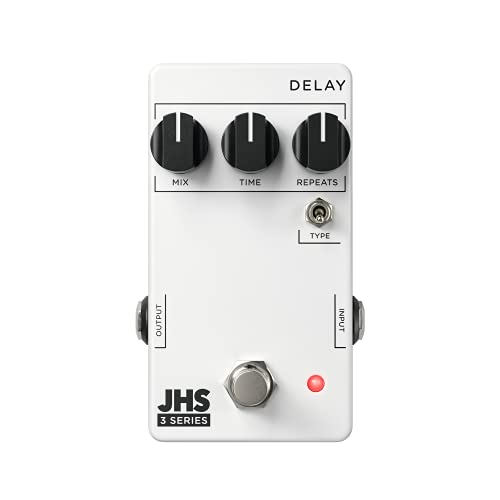
- 80 ms to 800 ms of delay time
- Digital or analog voicing via Type toggle
- Low 71 mA power draw
Best For: Players who want a simple delay with classic voicing
Editor’s Pick

- 11 delay modes, including shimmer, mod, and looper
- Stereo output and tap tempo support
- Looper records up to 40 seconds with overdub
Best For: Players who want a versatile stereo delay with lots of mode options
Most Straightforward

- Three modes: Delay, Reverse, and Analog
- EQ, MIX, Tone, and Modulation controls
- Chorus, Vibrato, and notation interval toggles
Best For: Players who want a simple delay pedal with useful core modes
Classic Workhorse

- Updated version of the industry-standard DD-3
- Tap tempo via onboard switch or external footswitch
- Direct output for separate dry and wet amps
Best For: Players who want a dependable delay with fast setup and dry/wet routing
Tape Delay
VSN Analog Tape Delay with Stereo Delay and Reverb Boost

- Grainy tape-style delay with warm, husky tone
- Five controls plus filter switch and boost
- True bypass with parameter storage
Best For: Warm tape-style delay with simple hands-on control
Vintage Echo
Boss RE-2 Space Echo Stereo Delay and Reverb

- Tape delay and spring reverb in one pedal
- Stereo signal patch support plus tap tempo
- Expression-pedal input for live adjustments
Best For: Vintage Space Echo delay and reverb with stereo control
Digital Tape Feel
Rowin RE-01 Stereo Output Delay Pedal

- Tape-delay texture with warm, rich tone
- Stereo output for wider routing options
- Super buffer circuit adds reliability
Best For: Compact stereo-output delay with vintage warmth
Dual-Delay Ambient Workhorse – NUX Duotime Stereo Delay Pedal
If you’re comparing stereo delay pedals for rich rhythmic repeats and spacious ambient sounds, the NUX Duotime is built to cover a lot of ground. It offers five delay modes, true stereo dual-delay control, tap tempo with subdivision options, and a built-in 40-second looper for extra layering.
Best For: Players who want a versatile stereo delay pedal with deep stereo control and a looper.
Pros:
- Five delay modes: Analog, Tape Echo, Digi, Modulation, and Verb Delay
- True stereo dual-delay engine with independent Time and Repeat controls
- Tap tempo plus subdivision syncing for live, rhythm-tight parts
- 40-second stereo looper with REC, PLAY, DUB, UNDO, and REDO
Cons:
- Requires 300 mA, so power planning matters
- Does not include a power adapter
- More features may be more than needed for simple slapback use
The Duotime stands out if you want one pedal that can move from short delays to long ambient textures. Its stereo engine and loop function make it especially appealing for players who like to build layered parts.
Simple Three-Mode Builder – Walrus Audio Fundamental Series Delay
For guitarists shopping stereo delay pedals, the Walrus Audio Fundamental Series Delay keeps the control set focused and practical. With Time, Feedback, and Mix controls plus digital, analog, and reverse modes, it covers core delay jobs without adding a complicated layout.
Best For: Players who want a straightforward delay pedal with useful core modes.
Pros:
- Three delay modes: digital, analog, and reverse
- Simple Time, Feedback, and Mix control layout
- Rhythmic division options: quarter, dotted 8th, and 8th
- Limited lifetime warranty
Cons:
- No stereo-specific features are listed in the supplied notes
- More limited than multi-mode or dual-engine delay pedals
- Basic control set may not suit players wanting deep sound shaping
This is a good pick if you want an easy-to-use delay that gets the essentials right. It focuses on usable sounds and simple operation rather than packing in extra extras.
Feature-Rich Legacy Delay – TC Electronic Flashback 2 Delay
If you want one of the more flexible stereo delay pedals in a compact format, the TC Electronic Flashback 2 is an easy one to consider. It combines the brand’s delay legacy with TonePrint technology and the MASH footswitch for touch-responsive control.
Best For: Players who want a compact delay pedal with TonePrint flexibility and expressive control.
Pros:
- TC Electronic delay platform with TonePrint technology
- MASH footswitch adds touch-responsive expression-style control
- Compact stompbox design that saves pedalboard space
- Shimmery, ethereal sound profile for atmospheric delay tones
Cons:
- Supplied notes do not list specific delay modes or subdivisions
- More advanced features may take some setup time
- Battery-powered info is listed, but power details may still need checking for your rig
The Flashback 2 is a strong choice if you want a pedal that balances compact size with expressive control. Its TonePrint support and MASH footswitch make it especially appealing for players who like to tweak sounds.
Compact Analog-Style Classic – JHS Pedals 3 Series Delay
Among stereo delay pedals, the JHS Pedals 3 Series Delay is a simple option that focuses on classic delay sounds rather than extra features. It offers 80 ms to 800 ms of delay time, a Type toggle for digital-voiced or analog-voiced sounds, and runaway repeats in analog mode when pushed hard.
Best For: Players who want a compact delay pedal with easy controls and classic voicing options.
Pros:
- 80 ms to 800 ms of delay time covers slapback through ambient washes
- Type toggle switches between clearer digital and darker analog voicings
- Analog mode can deliver classic bucket-brigade runaway repeats
- Low 71 mA current draw keeps power needs modest
Cons:
- Single-mode approach is less flexible than multi-effect delay pedals
- No stereo-specific features are listed in the supplied notes
- Requires a 9V DC negative-center supply
This pedal is a good fit if you want simple delay controls and a familiar sound palette. It keeps the focus on usable tones and compact operation rather than complex routing or deep editing.
Editor’s Pick – BOSS DD-8 Digital Delay
BOSS DD-8 Digital Delay Guitar Effects Pedal | Diverse Sonic Range, Maximum Delay Power
Check Price On AmazonIf you want one of the most flexible stereo delay pedals in a compact format, the BOSS DD-8 covers a lot of ground. It gives you 11 modes, including digital, vintage, shimmer, mod, looper, and newer options like Warm, +RV, and GLT, so it can handle straightforward repeats or more character-driven delay textures.
Best For: Players who want a versatile delay pedal with stereo output and lots of mode options in a compact BOSS format.
Pros:
- 11 delay modes cover basic, ambient, rhythmic, and looper uses
- Stereo audio output supports wider signal routing
- Looper offers up to 40 seconds of recording with overdub capability
- Tap tempo input allows up to 10 seconds of delay time
Cons:
- Many modes may be more than you need if you only want a simple delay
- Requires 300 mA, which is higher than some basic pedals
The DD-8 is a strong pick if you want a delay pedal that can stay practical for everyday use while still offering plenty of sound-shaping options. Its mix of stereo operation, looper features, and new delay types makes it one of the more capable compact choices here.
Most Straightforward – JHS Flight Delay
The JHS Flight Delay keeps things focused with three essential delay voices: Delay, Reverse, and Analog. For players comparing stereo delay pedals, this is the kind of stompbox that makes setup fast, while the EQ, MIX, Tone, and Modulation controls give you enough control to shape the repeats without getting buried in extra features.
Best For: Guitarists who want a simple delay pedal with a small set of useful modes and easy tone shaping.
Pros:
- Three modes cover Delay, Reverse, and Analog sounds
- EQ and MIX controls help dial in the repeat balance
- Chorus and Vibrato toggles add extra modulation choices
- Notation interval toggle adds another performance option
Cons:
- Fewer modes than more feature-heavy delay pedals
- Not designed around a looper feature set
This pedal is a practical choice if you value quick results over deep editing. It gives you the core delay sounds most players reach for, plus a few useful extras, in a compact and easy-to-use layout.
Classic Workhorse – BOSS DD-3T Delay Pedal
The BOSS DD-3T is an updated version of the long-running DD-3, built for fast sound creation and straightforward operation. In a roundup of stereo delay pedals, it stands out for players who want a reliable digital delay with tap tempo, a short loop setting, and a direct output for splitting dry and wet sounds to separate amps.
Best For: Players who want a fast, dependable delay pedal with classic BOSS workflow and dry/wet output routing.
Pros:
- Updated version of the industry-standard DD-3
- Delay time ranges from 12.5 to 800 ms for quick setup
- Tap tempo works with the onboard switch or an external footswitch
- Direct output supports separate dry and wet amp routing
Cons:
- Fewer creative modes than multi-voiced delay pedals
- Delay range is more focused than the more expansive DD-8
If you want a no-nonsense delay pedal that is easy to dial in, the DD-3T fits that role well. Its direct output and simple controls make it especially appealing for players who prefer speed and consistency over a large feature list.
Tape Delay – VSN Analog Tape Delay with Stereo Delay and Reverb Boost
VSN Analog Tape Delay Pedal with Stereo Delay Effects and Reverb Boost, True Bypass
Check Price On AmazonIf you want stereo delay pedals with a warm, grainy character, this VSN analog tape-delay unit is built for vintage-style echo and a reverb-like wash. It combines delay, filter modulation, and a boost section in a straightforward format, making it a practical choice for players who want nostalgic textures without a complicated layout.
Best For: Players who want warm tape-style delay with simple hands-on control and a reverb-like edge.
Pros:
- Grainy tape-delay sound with a warm, husky tone
- Five controls plus a filter switch for shaping repeats and mix
- True bypass footswitch with mode switching and parameter storage
- Compact aluminum shell designed for carrying and regular use
Cons:
- Power adapter is not included
- Requires the correct 9V DC center-negative supply to avoid noise
This is a solid pick if you value character over complexity. The stereo delay pedals market includes plenty of digital options, but this one stands out for its tape-style warmth, built-in boost, and easy operation.
Vintage Echo – Boss RE-2 Space Echo Stereo Delay and Reverb
Among stereo delay pedals, the Boss RE-2 is aimed at players who want tape-delay and spring-reverb flavor in a compact format. It includes stereo signal patch support, tap tempo, and expression-pedal input, so it fits well in a modern rig while keeping the classic Space Echo feel.
Best For: Guitarists who want vintage Space Echo delay and reverb with stereo capability and tap-tempo control.
Pros:
- Combines tape delay and spring reverb effects
- Stereo signal patch support for wider setup options
- Tap tempo and expression-pedal input for live control
- Warm, vintage sound profile in a compact pedal
Cons:
- Higher-feature pedal may be more than players need for basic delay use
- Runs on corded power rather than battery
If you want a familiar Boss take on the Space Echo sound, this pedal is an easy recommendation. It balances classic character with useful performance features, which makes it one of the more stage-friendly stereo delay pedals in this group.
Digital Tape Feel – Rowin RE-01 Stereo Output Delay Pedal
If you’re comparing stereo delay pedals on a smaller budget, the Rowin RE-01 focuses on tape-delay texture and a vintage warm tone in a compact enclosure. Its stereo output and super buffer circuit make it appealing for players who want a practical delay pedal with a nostalgic feel and added protection.
Best For: Players who want a compact stereo-output delay with vintage warmth and simple portability.
Pros:
- Grainy tape-delay texture with a warm, rich sound profile
- Stereo output for broader signal routing
- Super buffer circuit for protection and reliability
- Compact, lightweight metal-and-plastic design
Cons:
- No detailed control layout is provided in the supplied notes
- Requires a 9V DC power connection
The RE-01 is a straightforward option if you want tape-delay style without a bulky footprint. It won’t try to do everything, but it does target the core needs of players shopping for stereo delay pedals with a warm, vintage-leaning voice.
How We Picked These Stereo Delay Pedals
We looked for pedals that deliver convincing stereo output, useful delay ranges, and controls that make sense in real playing situations. Priority also went to models with strong tonal flexibility, durable enclosures, and features that suit both live use and home recording.
Because not every player needs the same thing, the list includes digital workhorses, tape-voiced options, and more characterful ambient choices. That makes it easier to compare Stereo Delay Pedals by sound and workflow instead of brand alone.
Quick Comparison: What Stands Out
If you want clean and precise repeats, the BOSS DD-8 and DD-3T are strong candidates. For more creative control and modern features, the TC Electronic Flashback 2 and NUX Duotime offer broader sound design options. Players chasing vintage warmth and movement may prefer the Boss RE-2 Space Echo or analog/tape-inspired choices. Simpler pedals like the Walrus Audio Fundamental Delay and JHS 3 Series Delay suit users who want straightforward operation without a steep learning curve.
Key Buying Factors for Stereo Delay Pedals
Delay Character
Start by deciding whether you want pristine digital repeats, darker analog-style trails, or tape-like modulation and grit. The tonal personality matters as much as the delay time.
Stereo Routing and Control
Check whether the pedal offers true stereo input/output, ping-pong behavior, or widened modulation. If you run dual amps, stereo imaging can be a major part of the payoff.
Tap Tempo, Presets, and Expression Support
These features are especially valuable for live players. Tap tempo keeps repeats locked to the song, while presets and expression control help you switch sounds fast.
Size, Power, and Simplicity
Smaller pedals are easier to fit on crowded boards, but larger units often provide more options. If you prefer quick setup, a minimalist layout may be better than deep menus.
Who Should Buy Which Stereo Delay Pedals?
Choose a versatile digital model if you need one pedal for many genres, especially at gigs. Pick a tape- or echo-inspired unit if you want character, movement, and vintage feel. If you are building a first board, straightforward Stereo Delay Pedals with fewer controls can be the easiest way to get great sounds fast. For ambient or experimental players, feature-rich delays with longer times and modulation will usually offer the most creative headroom.
Ultimately, the best choice depends on whether you value clarity, texture, or flexibility. Matching the pedal to your rig and playing style will matter more than chasing the most features on paper.