Delay pedals with reverse mode can turn a standard guitar tone into something cinematic, spacious, or strangely hypnotic. They are a smart choice if you want classic repeats, ambient swells, and more experimental textures from one pedal.
In this roundup, we focus on versatile options for studio players, gigging guitarists, and anyone who wants reverse delay without giving up dependable tap tempo, stereo routing, or easy onboard controls.
Best 10 Delay Pedals with Reverse Mode Picks for 2026
Multi-Mode Budget Option
Donner Echo Square 7-Mode Delay
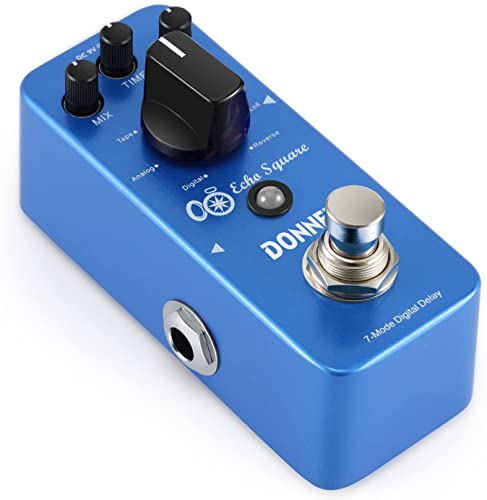
- 7 delay modes, including reverse
- Simple 3-knob control layout
- True bypass in a mini aluminum enclosure
Best For: Affordable, compact delay with reverse mode
Classic Reverse Voice
Danelectro BAC-1 Talk Back Reverse Delay

- Dedicated reverse delay pedal
- Warm, violin-like, organ-like tone
- Simple mix, speed, and repeat dials
Best For: Players who want a focused reverse delay sound
Feature-Packed Stereo Choice
Klowra Everlast Stereo Delay with Reverse

- Nine delay engines, including reverse
- Stereo I/O with ping-pong mode
- Expression pedal and footswitch support
Best For: Flexible stereo delay with advanced control
Premium Compact Standard

- Eleven delay modes plus looper
- Stereo output and tap tempo support
- Compact premium BOSS build
Best For: Versatile compact delay with looper features
Ambient Reverse Delay Combo
Flamma FS22 Stereo Delay & Reverb Combo
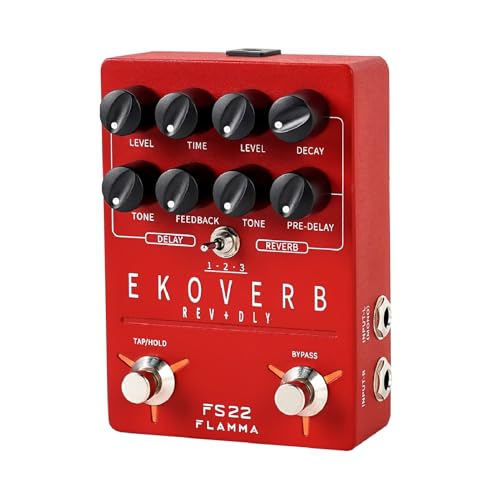
- Reverse Delay/Swell Reverb combo included
- Tap Tempo and Freeze for ambient layers
- Stereo/mono I/O with true bypass
Best For: Ambient players wanting reverse delay plus reverb in one pedal
Multi-Mode Reverse Delay

- Nine modes including Reverse and Analog
- Compact aluminum housing for pedalboards
- True bypass with simple 3-knob control
Best For: Players who want a compact multi-mode delay with reverse
Buffer Delay Reverb Option

- Digital delay plus plate reverb in one unit
- Tap Tempo and Trail for live playing
- Buffer bypass helps keep the signal pristine
Best For: Players seeking a simple delay/reverb pedal with live features
Triple-Mode Tap Delay
Donner Tap Delay with Reverse Mode

- Analog, digital, and reverse delay modes
- Tap tempo for quick time changes
- Simple Level, Feedback, and Delay controls
Best For: players who want a simple reverse-delay pedal with tap tempo
8-Mode Ambient Delay

- Eight delay modes including Reverse Echo
- 5-minute looper works with delay at once
- Tap tempo and 4-knob control layout
Best For: ambient players who want reverse delay plus looping
9-Mode Pro Delay

- Nine modes including reverse, tape, and lo-fi
- 32-bit DSP with up to 3000ms delay
- Tap tempo plus buffered bypass
Best For: guitarists who want versatile reverse delay with modern features
Multi-Mode Budget Option – Donner Echo Square 7-Mode Delay
If you want delay pedals with reverse mode on a budget, the Donner Echo Square gives you seven sounds in one compact box, including digital, analog, tape, mod, sweep, lofi, and reverse. Its simple three-knob layout makes it easy to dial in the mix, delay time, and feedback without slowing down your setup.
Best For: Players who want an affordable, small-delay pedal with multiple textures and an easy-to-use reverse mode.
Pros:
- Includes seven delay modes, including reverse
- Three knobs keep adjustment straightforward
- True bypass helps preserve your dry tone
- Mini aluminum alloy housing is pedalboard-friendly
Cons:
- Power adapter is not included
- Maximum delay time tops out at 838 ms
This is a practical pick if you want a compact, multi-mode delay that covers classic sounds and experimental reverse tones without adding complexity. It is best suited to players who value versatility and portability over deep feature sets.
Classic Reverse Voice – Danelectro BAC-1 Talk Back Reverse Delay
The Danelectro BAC-1 is a focused choice if you specifically want delay pedals with reverse mode and a warm, vocal-style character. With mix, speed, and repeat controls, it keeps the workflow simple while aiming for violin-like and organ-like textures.
Best For: Guitarists who want a straightforward reverse delay with a warm, expressive tone.
Pros:
- Dedicated reverse delay design
- Warm, violin-like, and organ-like tonal character
- Simple mix, speed, and repeat controls
- Very low power draw at 10 mA
Cons:
- Fewer controls than multi-mode delay pedals
- Only one listed effect type
This pedal is a strong fit if your main goal is the reverse-delay sound itself rather than a wide menu of effects. Its simplicity makes it easy to set up and use for expressive, atmospheric parts.
Feature-Packed Stereo Choice – Klowra Everlast Stereo Delay with Reverse
Among delay pedals with reverse mode, the Klowra Everlast stands out for its nine delay engines, stereo I/O, and expression-pedal support. It covers reverse along with tape, analog, swell, granule, crystal, sweeper, mod, and digital-style textures, so it works well if you want one pedal to handle both standard and more experimental sounds.
Best For: Players who want a flexible stereo delay with reverse mode and deeper control options.
Pros:
- Nine delay engines including reverse
- Stereo I/O with ping-pong capability
- Supports external footswitch and expression pedal control
- True bypass and buffered bypass are both available
Cons:
- More complex than a basic delay pedal
- Requires a 9V DC center-negative power supply; adapter not included
This is the most feature-rich option in the group, especially if you want reverse delay plus stereo width and hands-on control. It is better suited to players who want a modern, multi-function delay rather than a simple set-and-forget unit.
Premium Compact Standard – BOSS DD-8 Digital Delay
BOSS DD-8 Digital Delay Guitar Effects Pedal | Diverse Sonic Range, Maximum Delay Power
Check Price On AmazonThe BOSS DD-8 is a premium compact delay pedal for players who want a polished, versatile unit with a wide range of modes. While it is not built around a reverse-only layout, it does include eleven modes, making it a strong choice if you want a high-end delay pedal for broader experimentation alongside your core sounds.
Best For: Guitarists who want a compact, versatile BOSS delay with multiple modes and looper capability.
Pros:
- Eleven delay modes for broad tonal coverage
- Includes looper functions with up to 40 seconds of recording
- Tap tempo input supports longer delay times
- Stereo output for flexible routing
Cons:
- Reverse mode is not listed among the supplied features
- Higher power draw than simpler compact delays
This is the most refined all-rounder in the roundup, especially if you want a trusted compact delay with extra performance features. If your priority is specifically reverse mode, the other pedals here are the more direct match.
Ambient Reverse Delay Combo – Flamma FS22 Stereo Delay & Reverb Combo
If you want delay pedals with reverse mode that also cover spacious reverb textures, the FLAMMA FS22 is built for that exact workflow. Its three combo presets include Reverse Delay/Swell Reverb, plus two other delay-and-reverb pairings, so it can move from ambient wash to more traditional echoes without a lot of setup.
Best For: Players who want a reverse-delay option plus reverb in one stereo/mono pedal.
Pros:
- Includes a Reverse Delay/Swell Reverb combo alongside two other delay/reverb pairings.
- Dedicated Tap Tempo footswitch and Freeze function for infinite sustain-style textures.
- Trail On and true bypass help effects fade naturally while keeping the signal path clean.
- Stereo/mono I/O and dual footswitches give it a flexible live layout.
Cons:
- Requires 9V DC center-negative power, and the notes recommend an isolated supply.
- It is a delay/reverb combo pedal rather than a dedicated multi-mode delay unit.
The FS22 is a practical pick if you want reverse-delay sounds with added ambient control, especially in a stereo-capable setup. Its Freeze and trail features make it more useful for layered parts than a simple basic delay.
Multi-Mode Reverse Delay – M-VAVE Elemental Delay Purple
Among delay pedals with reverse mode, the M-VAVE Elemental Delay stands out for giving you nine selectable delay voices in a compact format. The reverse setting sits alongside Digital, Analog, Dual, Duck, Trem, dTape, ICE, Pattern, and Lo-Fi modes, so it works well if you want one small pedal that can cover straightforward repeats and more experimental textures.
Best For: Guitarists who want a compact delay pedal with reverse mode and lots of mode options.
Pros:
- Offers nine delay modes, including Reverse, Digital, Analog, dTape, ICE, Pattern, and Lo-Fi.
- Simple 3-knob control layout makes it quick to dial in time, feedback, and level.
- True bypass helps preserve your guitar’s original tone when the pedal is off.
- Small aluminum housing is designed to fit crowded pedalboards easily.
Cons:
- 9V DC adapter is not included.
- Reverse mode is one of many options, so it is not a dedicated reverse-only pedal.
If you need a versatile delay that can move from standard sounds to reverse textures without taking up much board space, this is an easy one to slot in. The mode list is broad enough for both practical playing and more creative parts.
Buffer Delay Reverb Option – SONICAKE Levitate
The SONICAKE Levitate is a straightforward 2-in-1 choice for players shopping delay pedals with reverse mode alternatives in the same category of atmospheric effects. It focuses on digital delay and plate reverb, with up to 2000ms of delay time, tap tempo, and trail behavior that makes it easier to use on stage or in ambient parts.
Best For: Players who want a simple delay-and-reverb pedal with tap tempo and buffer bypass.
Pros:
- Combines digital delay and plate reverb in one pedal.
- Up to 2000ms delay time supports longer ambient echoes.
- Tap Tempo and Trail features are useful for live use.
- Buffer bypass is designed to keep the sound pristine.
Cons:
- Does not include a reverse delay mode in the supplied specs.
- 9V center-negative power supply is required and not included.
While this model is not a reverse-delay pedal, it is a useful option if your priority is clean delay/reverb layering with live-friendly control. The buffer circuit and tap tempo make it a practical utility pedal for many rigs.
Triple-Mode Tap Delay – Donner Tap Delay with Reverse Mode
Donner Tap Delay Guitar Effect Pedal, 3 Delay Modes Digital Reverse Analogue with Tap Tempo Control
Check Price On AmazonIf you want one of the more straightforward delay pedals with reverse mode, the Donner Tap Delay keeps things simple with analog, digital, and reverse voices plus tap tempo control. The front-panel Level, Feedback, and Delay knobs make it easy to dial in anything from classic echo to thicker ambient repeats without menu diving.
Best For: Players who want an easy-to-use delay pedal with reverse mode, tap tempo, and basic tone shaping in a compact setup.
Pros:
- Includes analog, digital, and reverse delay modes
- Tap tempo makes delay time changes quick on the fly
- Level, Feedback, and Delay knobs keep control simple
- Buffered bypass and LED status indicator add practical stage use
Cons:
- Requires a 9V DC adapter, which is not included
- Limited to the core controls listed in the notes
Overall, this is a solid pick if reverse delay is just one part of your sound and you want a pedal that covers the essentials cleanly. It leans more practical than feature-packed, which makes it easy to fit into a working board.
8-Mode Ambient Delay – JOYO Aquarius Reverse Echo
Among delay pedals with reverse mode, the JOYO Aquarius stands out for sheer variety, giving you eight delay effects including Reverse Echo, Galaxy, Tape Echo, Analog, and more. It also adds a 5-minute looper that can run at the same time as the delay, so you can build layers and textures without switching pedals.
Best For: Players who want a multi-mode reverse delay pedal with looping and a wide range of ambient textures.
Pros:
- Eight delay modes, including Reverse Echo and Galaxy
- Delay and 5-minute looper can be used simultaneously
- Tap tempo is built in for rhythmic control
- Rugged aluminum alloy chassis for road use
Cons:
- Requires a 9V DC center-negative adapter, not included
- No battery compartment
- More modes means a little more setup than a basic delay pedal
This is a strong choice if you want reverse delay as part of a bigger ambient toolkit. The looper, multiple voicings, and flexible control layout make it a versatile pedal for experimentation.
9-Mode Pro Delay – LEKATO EP-04 Reverse Delay
If you need delay pedals with reverse mode and a wider sound palette, the LEKATO EP-04 gives you nine pro delay modes with tape, lo-fi, dTAP, reverse, and other studio-style textures. Its 32-bit DSP and 3000ms delay range are aimed at players who want clean repeats, degraded effects, and ambient washes from one pedal.
Best For: Guitarists who want a modern reverse delay pedal with multiple textures, tap tempo, and flexible power options.
Pros:
- Nine delay modes, including reverse, lo-fi, and tape styles
- 32-bit DSP with up to 3000ms delay time
- Tap tempo footswitch for rhythmic precision
- Buffered bypass helps preserve the dry signal
Cons:
- Requires 9V DC power or USB-C power
- Control set is focused on core shaping, not deep editing
For players who want a modern take on reverse delay without giving up cleaner tones, this one is easy to recommend. It covers classic and experimental delay sounds while staying simple enough for quick adjustments.
How We Picked the Best Delay Pedals with Reverse Mode
We looked for pedals that make reverse delay genuinely usable, not just a hidden bonus feature. Priority went to sound quality, mode variety, tap tempo performance, stereo or mono flexibility, bypass behavior, and how easy the controls are to use on a pedalboard.
We also favored models that cover more than one job, since many players want a delay that can handle classic echo, lo-fi textures, modulation, and ambient layers alongside reverse mode.
Quick Comparison
If you want straightforward live control, look for a pedal with dedicated tap tempo and a clear mode layout. If you want wider soundscapes, stereo inputs and outputs can make a big difference. For players who stack effects or run clean ambient rigs, reverse delay combined with shimmer, reverb, or lo-fi modes can add a lot of value.
Key Buying Factors for Delay Pedals with Reverse Mode
Reverse Sound Character
Not all reverse delays sound the same. Some are subtle and smooth, while others are more pronounced and glitchy. Choose based on whether you want a background texture or a dramatic reverse-swell effect.
Control and Timing
Tap tempo is especially useful if you play with a band or need repeat times that match song tempo. Ramp or expression support can also help you move from rhythmic delay to ambient washes in real time.
Feature Set
Many Delay Pedals with Reverse Mode also include tape, analog, modulation, or lo-fi voices. Those extra modes are worth considering if you want one pedal that can cover multiple styles instead of just one effect.
Routing and Bypass
Stereo operation is helpful for ambient rigs and recording. True bypass or well-implemented buffered bypass matters too, especially if your pedalboard is large and you want to preserve tone when the effect is off.
Who Should Buy Which Delay Pedals with Reverse Mode?
Choose a simple, dedicated reverse-delay pedal if you want one specific sound and fast setup. Choose a multi-mode delay if you want the most value and flexibility for live shows or home recording. If you play ambient, shoegaze, post-rock, or experimental parts, a stereo model with reverse and reverb can be especially useful.
For players who want the safest all-around purchase, the best approach is to balance sound quality with usability. The strongest Delay Pedals with Reverse Mode are the ones that inspire creativity while still fitting naturally into your signal chain.