If you want aggressive bass tone without losing clarity, the right high-gain distortion pedal can add punch, grind, and definition in one move.
This roundup focuses on pedals that work especially well for heavy rhythms, modern metal, and thick low-end drive while helping your bass stay present in the mix.
Best 10 High Gain Bass Distortion Pedals Picks for 2026
Ultra-Tight Metal Grind
TC Electronic FANGS METAL DISTORTION

- Ultra-thick, high-gain distortion
- Mid-frequency selector for tone shaping
- Separate gain, treble, bass, and volume controls
Best For: Tight modern metal distortion with flexible EQ control
Analog Fuzz-Distortion Hybrid
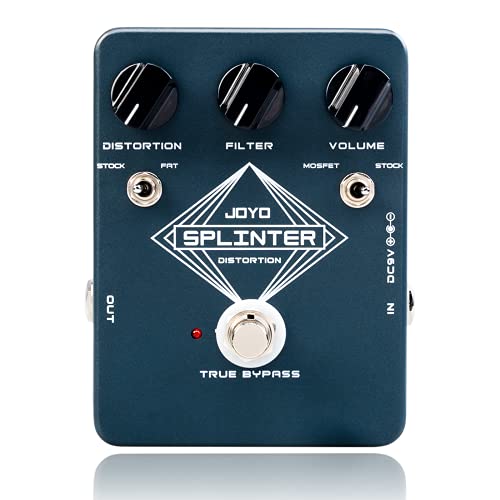
- All-analog fuzz and distortion hybrid
- FAT and MOSFET toggles add voicing options
- Filter knob shapes bright or dark tones
Best For: Versatile gain tones from crunchy breakup to saturated fuzz
Precision Metal Attack

- Super high-gain distortion for metal
- 3-band EQ with sweepable mids
- Switchable noise gate for tight riffing
Best For: Tight, gated metal tones with detailed EQ shaping
Low-End Grind With Blend

- Blend control keeps low end intact
- Mid boost and gain boost switches add punch
- Four voicings from two independent toggles
Best For: Bass overdrive that preserves clarity while adding grit
Osmium Heavy-Gain Bass Crusher
Caline CP-501 Osmium High Gain Distortion

- High-gain distortion for rock, metal, thrash, and djent
- Simple Level, Tone, and Dist controls
- True bypass with aluminum-alloy casing
Best For: Bass players who want a straightforward, rugged high-gain distortion pedal
Inferno Metal Bass Attack
EX Inferno Death Metal Distortion

- Three selectable distortion modes
- Level, Tone, and Distortion knobs
- True-bypass mini pedal with rugged build
Best For: Metal and hard rock players who want multiple high-gain textures in a compact pedal
Versatile High-Gain Bass Shaper
JOYO JF-04 High Gain Distortion

- Wide gain range from crunch to heavy metal
- Treble and Mid EQ controls
- True bypass with analog circuit response
Best For: Players who want a flexible distortion pedal with simple EQ shaping
High-Gain Crunch Choice
Donner Morpher Mini Distortion

- Three distortion modes: Natural, Tight, and Classic Crunch
- High-gain voice suited to hair metal, glam metal, and pop metal
- True bypass and aluminum-alloy build
Best For: Players wanting a compact high-gain pedal for crunchy rhythms and lead tones
Compact Amp-Like Drive
RVONE High Gain Distortion Pedal

- Analog circuit tuned for vintage amp breakup tones
- Gain range moves from edge-of-breakup to high-gain saturation
- Lightweight aluminum housing for stage and studio use
Best For: Players wanting a compact analog distortion pedal for flexible rhythm and lead work
Ultra-Tight Metal Grind – TC Electronic FANGS METAL DISTORTION
TC Electronic FANGS METAL DISTORTION Ultra-Thick, High Gain Distortion with Super Tight Response
Check Price On AmazonIf you want high gain bass distortion pedals or guitar distortion with a fast, tight feel, the TC Electronic FANGS METAL DISTORTION is built for aggressive modern tones. Its ultra-thick gain structure, mid-frequency selector, and dedicated gain, volume, treble, and bass controls make it easy to dial in everything from controlled crunch to heavy metal saturation.
Best For: Players who want a tight, high-gain distortion with flexible EQ shaping and a focused metal response.
Pros:
- Ultra-thick, high-gain distortion with a super tight response
- Mid-frequency selector helps shape the pedal around your mix
- Separate gain, volume, treble, and bass controls for detailed tone control
- Versatile sound profile that ranges from tight to heavy distortion
Cons:
- Battery or power supply is not included
- Voicing is aimed squarely at metal-style gain rather than subtle breakup
For players chasing a focused, high-gain sound, this pedal offers straightforward control and a strong tonal foundation. It is a practical choice if you need distortion that stays tight under heavier settings.
Analog Fuzz-Distortion Hybrid – JOYO SPLINTER JF-21
The JOYO SPLINTER JF-21 is a strong fit if you’re shopping high gain bass distortion pedals or guitar pedals that can move from edge-of-breakup grit to full, saturated fuzz. Its all-analog circuit, FAT and MOSFET toggles, and Distortion/Filter/Volume controls give you a lot of range without complicating the layout.
Best For: Players who want a versatile analog distortion that can cover crunch, fuzz, and aggressive rhythm tones.
Pros:
- All-analog design with a thick fuzz-and-distortion hybrid voice
- FAT switch adds low-end weight for fuller riffs and solos
- MOSFET toggle changes clipping character for softer or more aggressive response
- Filter knob makes it easy to darken or brighten the top end
Cons:
- OP-amp swapping requires opening the pedal and voids the warranty
- Power supply and battery are not included
This pedal stands out for flexibility: it can be set up for tighter grit, vintage-style compression, or rawer saturation. If you want one analog box that covers a lot of dirt territory, it is an easy one to shortlist.
Precision Metal Attack – MXR Fullbore Metal Distortion
The MXR Fullbore Metal Distortion is made for players who want high gain bass distortion pedals or guitar pedals with serious tightness and control. With super high-gain output, a 3-band EQ with sweepable mids, and a switchable noise gate, it is designed to handle fast, syncopated metal riffing cleanly.
Best For: Metal players who need a tight, gated distortion with detailed mid control.
Pros:
- Super high-gain distortion with a focused metal voicing
- 3-band EQ and sweepable mid frequencies for precise shaping
- Switchable noise gate helps keep stops and chugs tight
- Internal gate trigger control lets you fine-tune sensitivity
Cons:
- Primarily aimed at metal and extreme gain sounds
- Included accessories are limited to the pedal and cable
If your priority is aggressive riff clarity, this pedal is built around exactly that use case. The combination of EQ flexibility and gating makes it especially practical for high-gain rhythm work.
Low-End Grind With Blend – JOYO DOUBLE THRUSTER R-28
The JOYO DOUBLE THRUSTER R-28 is a smart choice if you are comparing high gain bass distortion pedals and want to keep your low end intact. Its blend control lets you mix clean and overdriven signals, while the mid boost and gain boost switches add extra punch and saturation when you need more presence.
Best For: Bass players who want dirt without losing low-end clarity.
Pros:
- Blend control preserves clean bass while adding grit
- Mid boost helps bass cut through dense mixes
- Gain boost adds extra saturation and body
- Four voicing combinations from two independent toggle switches
Cons:
- Requires a 9V DC adapter; battery operation is not supported
- Higher-current design is best used with a regulated isolated supply
This pedal is especially practical for players who want overdrive that still feels like bass, not just a filtered guitar sound. The blend and boost options make it easy to move from light edge to heavier grind.
Osmium Heavy-Gain Bass Crusher – Caline CP-501 Osmium High Gain Distortion
If you want high gain bass distortion pedals that go hard without complicating your setup, the Caline Osmium CP-501 keeps things simple: Level, Tone, and Dist give you quick control over aggressive distortion tones. Its true-bypass design and aluminum-alloy casing make it a practical pick for players who need a straightforward drive box for rock, metal, thrash, djent, and similar styles.
Best For: Bass players who want a simple, rugged high-gain distortion pedal with fast tone shaping.
Pros:
- High-gain voicing aimed at rock, metal, thrash, and djent.
- Simple 3-knob layout for fast adjustment.
- True bypass with LED indicator.
- Aluminum-alloy enclosure for durability.
Cons:
- Power adapter is not included.
- Controls are basic compared with more feature-rich pedals.
Overall, this is a no-fuss distortion pedal for players who mainly want a strong, heavy sound and don’t need extra routing or mode options. It’s a solid fit if your priority is quick dialing and sturdy construction.
Inferno Metal Bass Attack – EX Inferno Death Metal Distortion
Among high gain bass distortion pedals, the EX Inferno stands out for its three-mode toggle that lets you move between Raw, Brutal, and Inferno sounds. With Level, Tone, and Distortion knobs plus true-bypass analog circuitry, it’s built for players chasing aggressive, heavy distortion and a pedalboard-friendly mini format.
Best For: Players who want a compact, metal-focused distortion pedal with mode switching for different gain textures.
Pros:
- Three distortion modes: Raw, Brutal, and Inferno.
- Level, Tone, and Distortion controls for precise shaping.
- True-bypass analog circuitry.
- Rugged mini enclosure with top-mounted jacks.
Cons:
- Power adapter is not included.
- Voicing is geared heavily toward metal and hard rock.
This is a strong option if you want a compact pedal that can cover multiple aggressive tones without taking much space. The mode switch makes it more flexible than a single-voicing distortion box, while still staying focused on high-gain use.
Versatile High-Gain Bass Shaper – JOYO JF-04 High Gain Distortion
If you’re comparing high gain bass distortion pedals and want one that covers a wide range, the JOYO JF-04 is built to move from classic rock crunch to heavy metal saturation. Its analog circuit, true bypass design, and Treble/Mid EQ controls make it a practical choice for shaping a more tailored distorted bass tone.
Best For: Players who want a versatile distortion pedal with EQ control for everything from crunch to heavy metal tones.
Pros:
- Wide gain range from subtle crunch to heavy metal distortion.
- Treble and Mid controls for tone shaping.
- True bypass and analog circuit response.
- Rugged aluminum-alloy construction.
Cons:
- Power supply or battery is not included.
- Only two EQ controls, so it’s less flexible than more advanced distortion pedals.
For players who want one distortion pedal that can handle a lot of ground, the JF-04 is the most flexible of the three. It’s especially appealing if you value straightforward EQ control and an analog response that reacts naturally to your playing.
High-Gain Crunch Choice – Donner Morpher Mini Distortion
If you want one of the more approachable high gain bass distortion pedals for gritty rock textures, the Donner Morpher is built around a high-gain voice with three modes that lean toward natural, tight, and classic crunch. Its analog distortion character and true bypass design make it a practical pick when you want aggressive gain without giving up a clean signal path.
Best For: Players who want a compact, high-gain distortion pedal for crunchy rhythms, lead parts, and hair-metal style tones.
Pros:
- High-gain distortion sound with a character described as a crossover between MI Crunch Box and Suhr Riot
- Three distortion modes add flexibility for shredding and riffing
- True bypass helps preserve the signal when the pedal is off
- Durable aluminum-alloy housing with clear indicator lights
Cons:
- Power supply is not included
- Requires a 9V DC center-negative adapter with at least 500mA for optimal performance
Overall, the Morpher is a straightforward choice if you want a compact pedal that focuses on high-gain distortion and usable mode switching rather than extra features. It fits best on boards where classic crunch and metal-leaning tones matter most.
Boosted Modern Tightness – SONICAKE Thump Distortion Pedal
The SONICAKE Thump is a strong fit if you’re comparing high gain bass distortion pedals and want tight, defined drive with extra control. Its pure analog circuit, two tone modes, and independently switchable boost and noise gate make it useful when you need heavier distortion that stays clear and manageable.
Best For: Guitarists and bass players who want modern, noise-controlled high-gain distortion with flexible tone shaping.
Pros:
- Pure analog high-gain circuit with tight, defined response
- Independent boost and noise gate can be used separately or together
- Two tone modes, Modern and Vintage, cover heavier styles like metal and djent
- 3-band EQ and dedicated control knobs give detailed shaping
Cons:
- Power supply is not included
- Requires a 9V center-negative regular pedal power supply
For players who want distortion that can stay precise under gain, the Thump offers more control than a basic dirt box. The boost and gate section makes it especially practical for heavier setups where clean note separation matters.
Compact Amp-Like Drive – RVONE High Gain Distortion Pedal
The RVONE is a practical option if you want high gain bass distortion pedals in a compact, stage-friendly format with an amp-like feel. Its analog circuit is tuned for vintage amplifier breakup and can move from bluesy edge-of-breakup warmth to high-gain saturation while keeping note clarity intact.
Best For: Players who want a small analog distortion pedal for flexible rhythm, lead, and studio use.
Pros:
- Analog circuit aims for vintage amp breakup and natural distortion texture
- Dynamic range covers edge-of-breakup tones through high-gain saturation
- Simple knob layout makes tone changes quick on stage
- Lightweight aluminum housing is built for gigging and portability
Cons:
- Power supply is not included
- Needs a standard 9V center-negative adapter for proper operation
Because it emphasizes note clarity and flexible gain range, the RVONE works well for players who want one distortion pedal to cover multiple roles. It is especially appealing if you prefer a compact, no-frills design for practice, recording, and live rigs.
How We Picked These High Gain Bass Distortion Pedals
We prioritized pedals that offer strong distortion at usable gain levels, solid low-end retention, and controls that help bass players avoid a thin or fizzy sound. We also looked for features that matter in real-world use, such as blend options, EQ shaping, noise control, and reliable bypass behavior.
Because bass distortion can quickly overwhelm the fundamental note, pedals that keep attack tight and preserve the low end scored higher than those that only deliver extreme saturation.
Quick Comparison: What Matters Most
Some High Gain Bass Distortion Pedals are built for maximum aggression, while others aim for better definition and mix control. Blend circuits, mid boost, and dedicated EQ are especially helpful if you need your clean low end to stay intact under heavy drive. If your style leans toward modern metal or drop-tuned bass, a tighter pedal with noise management will usually be the safest choice.
Key Buying Factors for High Gain Bass Distortion Pedals
Low-End Preservation
Look for pedals that keep the fundamental bass frequencies strong. A great distortion tone is useless if it removes the weight that makes bass feel powerful.
Blend and EQ Controls
A clean blend helps you mix in clarity and punch, while EQ knobs let you correct harsh highs or add mids for better note definition. These are some of the most useful features on High Gain Bass Distortion Pedals.
Noise Control and Tightness
High-gain circuits can add hiss, especially with boosted top end or aggressive gain settings. Noise gates, tight response, and well-voiced gain ranges can make a big difference for recording and live use.
Output and Versatility
Check whether the pedal can push your amp or interface strongly enough for your setup. If you play more than one style, a distortion with multiple voicings or boost options will usually give you more value.
Who Should Buy Which High Gain Bass Distortion Pedals?
Players who want the heaviest possible tone should focus on pedals with strong gain, tight low end, and useful filtering or boost modes. Bassists who need more note clarity in dense mixes should look for blend controls and flexible EQ. If you play in a cover band, worship setting, or studio session environment, a more versatile pedal will usually be easier to dial in than an extreme one-trick distortion.
In short, the best choice depends on how much saturation you want and how much clean low end you need to keep. The strongest High Gain Bass Distortion Pedals balance both.