Finding the right bass distortion means balancing grit with low-end clarity. The best compact bass distortion pedals add edge, sustain, and character without turning your line into a muddy mess.
Below, we’ve narrowed the field to 10 options that suit players who want a smaller footprint, practical controls, and tones that work for rehearsal, recording, and live use.
Best 10 Compact Bass Distortion Pedals Picks for 2026
Gnarly Classic Pick

- Aggressive, biting, wide-open distortion
- Separate dry and wet level controls
- Compact analog pedal with 9V power
Best For: Bassists who want raw, classic-style grit with clean blend control
Low-End Shaper

- Bass-specific overdrive to hard distortion
- Two-band EQ plus clean/dirty balance
- Supports four- and five-string basses
Best For: Players who need flexible bass distortion with EQ control
Fuzz With Low-End Rescue
Electro-Harmonix Bass Big Muff Pi

- Russian Big Muff-inspired bass fuzz
- Dry mix and bass boost switches
- Sustain, tone, and volume controls
Best For: Bass players who want thick fuzz without losing low-end support
Mini Modern Ripper
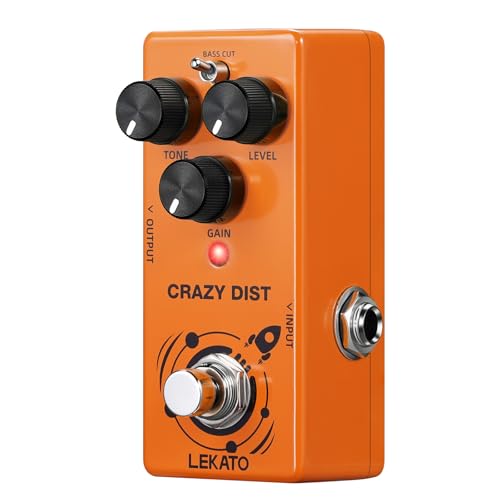
- Tiny 2" x 2" pedalboard footprint
- True bypass analog distortion
- Two-mode layout with 9V DC power
Best For: Players needing a very small distortion pedal and a tighter tone
Studio-Grade Low-End Control
Electro-Harmonix Deluxe Bass Big Muff Pi

- Blend control mixes clean and distorted signals.
- Crossover section helps keep lows focused.
- Three outputs add useful routing options.
Best For: Bassists who want distortion with flexible low-end control.
Classic Simple Drive

- Hard-edged attack stays clear at high gain.
- Tone control offers a wide sound range.
- Can also work as a booster at low settings.
Best For: Players who want a classic, simple distortion pedal.
Flexible Blend Overdrive

- Blend control keeps low-end clarity intact.
- Mid Boost and Gain Boost add voicing options.
- Four-knob layout is quick to dial in.
Best For: Bassists who want versatile overdrive with clean blend control.
Classic Plexi-Style Distortion
VSN Plexion Bright/Normal Compact Pedal

- Two modes: Bright and Normal.
- Simple 3-knob control layout.
- True bypass with metal housing.
Best For: Bass players who want a compact plexi-inspired distortion with simple controls.
Compact Metal Crunch
STRICH WARCRY 2-Mode Metal Distortion

- EXTREME and CLASSIC distortion modes.
- Compact cigar-box style enclosure.
- True bypass with Vol/Gain/Tone controls.
Best For: Bassists who want a compact, metal-focused distortion pedal with simple controls.
Gnarly Classic Pick – MXR Bass Distortion
If you want a compact bass distortion pedal with a classic, aggressive voice, the MXR Bass Distortion is built for that job. It uses a distortion circuit known for a nasty, wide-open sound, and the separate dry and wet level controls make it easier to keep your low end present while adding grit.
Best For: Players who want biting bass distortion with control over how much clean signal stays in the mix.
Pros:
- Classic-inspired circuit with an aggressive, gnarly sound profile
- Separate dry and wet level controls for signal blending
- Compact 5.5″ x 4.4″ footprint
- Analog 9V pedal with simple knob-based control
Cons:
- Voicing is intentionally harsh rather than subtle
- No advanced EQ section listed beyond the level controls
For bassists chasing raw character in a compact package, this pedal keeps the setup straightforward while still giving you a useful way to balance clean low end against distortion.
Low-End Shaper – BOSS ODB-3 Bass Overdrive
The BOSS ODB-3 is a practical choice if you want compact bass distortion pedals that can move from mild drive to harder distortion without losing control. Its onboard two-band EQ and balance knob make it especially useful for shaping bass tone and blending clean and overdriven signals.
Best For: Bass players who want flexible drive, strong low-end emphasis, and simple tone shaping.
Pros:
- Designed specifically for bass with four- and five-string support
- Balance knob blends dry and overdriven signals
- Onboard two-band equalizer for tone shaping
- Can act as a mild overdrive or hard distortion
Cons:
- Voicing is heavy and may be too intense for subtle breakup
- Larger than some mini pedals in this roundup
If you need a reliable bass-specific dirt pedal that still works like a flexible tone tool, the ODB-3 stands out for control and low-frequency focus.
Fuzz With Low-End Rescue – Electro-Harmonix Bass Big Muff Pi
The Electro-Harmonix Bass Big Muff Pi is a strong pick for players who want compact bass distortion pedals with a fuzzier edge. It gives you sustain, tone, and volume controls, plus a dry switch and bass boost EQ switch to help keep the low end intact when the tone gets brighter.
Best For: Bassists who want Big Muff-style fuzz with built-in ways to preserve low frequencies.
Pros:
- Based on the Russian Big Muff for a recognizable fuzz character
- Dry switch mixes clean bass back into the distorted signal
- Bass boost EQ switch helps recover low frequencies
- Includes a 9V battery
Cons:
- Fuzz voicing may be more extreme than some players want for light drive
- Battery-powered design may not suit every board setup
For bassists who want thick, sustaining dirt and a practical way to keep the fundamentals from disappearing, this pedal offers a well-known formula with useful low-end safeguards.
Mini Modern Ripper – LEKATO Mini Distortion Pedal
The LEKATO Mini Distortion Pedal is a compact option for players who want a small analog dirt box with true bypass and a simple two-mode layout. It is described as having a mid-high focused sound profile with reduced bass, so it makes sense for bassists only if you want a tighter, more forward distortion character.
Best For: Players who prioritize a tiny footprint and a tighter distortion voice over deep bass emphasis.
Pros:
- Very small 2″ x 2″ footprint for crowded pedalboards
- Analog distortion with true bypass circuit
- Simple two-mode design for quick switching
- Runs on standard 9V DC power
Cons:
- Sound profile is described as mid-high focused with reduced bass
- Power adapter and cables are not included
As a compact pedal, it’s appealing for space-saving setups, but the supplied notes make clear that its voicing is not especially bass-forward. That makes it a more selective choice for bass distortion use.
Studio-Grade Low-End Control – Electro-Harmonix Deluxe Bass Big Muff Pi
If you want compact bass distortion pedals that can add grit without trashing your low end, the Deluxe Bass Big Muff Pi is built around control. Its Blend, crossover section, and multiple outputs make it easy to shape a bass tone that stays focused while still delivering plenty of drive.
Best For: Bass players who want distortion with flexible low-end preservation and output routing.
Pros:
- Blend control lets you mix clean and distorted signals to taste.
- Foot-switchable crossover with variable low-pass and high-pass filtering helps sculpt the sound.
- Three outputs, including effect out, buffered dry out, and XLR DI out, add routing flexibility.
- Tough compact die-cast chassis is practical for pedalboards.
Cons:
- More controls mean a little more setup time than a simple one-knob distortion.
- Focus is on bass-specific shaping, so it may feel more specialized than a basic pedal.
This is a strong choice if you want distortion that can stay clear in the low end while still sounding bright and cutting on top. The extra filtering and output options make it especially useful for players who need versatility on stage or in the studio.
Classic Simple Drive – BOSS DS-1 Distortion
The BOSS DS-1 is a straightforward option among compact bass distortion pedals if you want a familiar, hard-edged drive and easy operation. It offers a wide tone range and stays clear even at higher distortion settings, which can make it useful when you want grit without losing definition.
Best For: Players who want a simple, classic distortion sound with easy tone shaping.
Pros:
- Hard-edged attack stays clear even at maximum distortion settings.
- Works as a booster at low distortion settings.
- Unique tone control offers a wide range of sound shaping.
- Doesn’t mask the character of different instruments and pickups.
Cons:
- It is a general distortion pedal rather than a bass-specific design.
- No blend or crossover controls for preserving low-end separately.
If you want a tried-and-true distortion with a simple control set, the DS-1 remains appealing. It’s best suited to players who value its classic attack and broad tonal range more than bass-focused feature extras.
Flexible Blend Overdrive – JOYO DOUBLE THRUSTER R-28
For players comparing compact bass distortion pedals, the JOYO DOUBLE THRUSTER R-28 stands out for its blend control and dual boost switches. It’s designed to keep low-end punch intact while adding grit, with enough tone-shaping to move from subtle edge-of-breakup drive to heavier saturation.
Best For: Bassists who want flexible overdrive with clean blend and extra voicing options.
Pros:
- Blend knob mixes clean bass and overdriven signals to preserve low-end clarity.
- Mid Boost and Gain Boost switches provide four voicing combinations.
- Four-knob layout makes tone, blend, volume, and gain easy to dial in.
- Rugged all-metal chassis with ambient LED lighting for pedalboard-friendly use.
Cons:
- Requires 9V DC adapter power; battery operation is not supported.
- High-gain settings may benefit from a regulated, isolated supply for quiet performance.
The DOUBLE THRUSTER is a practical pick if you want a compact pedal that can cover light drive and more aggressive saturation without losing your foundation. Its blend control and switchable boosts make it especially useful for bassists who like to fine-tune their gain structure.
Classic Plexi-Style Distortion – VSN Plexion Bright/Normal Compact Pedal
If you want compact bass distortion pedals that lean into classic rock character, this VSN Plexion gives you two simple voicings to work with: Bright and Normal. The Bright mode pushes toward classic rock through late-’80s and early-’90s style gain, while the Normal mode is described as full-bodied and usable even when not heavily distorted. Its three-knob layout keeps setup straightforward for quick dialing on a bass board.
Best For: Bass players who want a small, plexi-inspired distortion with easy tone shaping and two usable gain flavors.
Pros:
- Bright and Normal modes offer two distinct distortion characters.
- Three-knob control layout makes gain, tone, and volume adjustments simple.
- True bypass helps keep the signal transparent when disengaged.
- Full metal zinc-alloy shell adds durability in a compact enclosure.
Cons:
- Power adapter is not included.
- Only basic control options, so it is less flexible than multi-mode pedals.
Overall, this is a practical choice if you want a compact bass distortion pedal with classic amp-style flavor and a minimal learning curve. It focuses on straightforward tones rather than deep customization.
Dual-Channel Versatility – SONICAKE King of Twins Dual-Channel Drive
Among compact bass distortion pedals, the SONICAKE King of Twins stands out for offering two channels and three modes per channel, giving you a wide range of practical gain textures in one analog pedal. You can run overdrive, boost, or distortion on each side, or stack the channels for more push. That makes it a strong fit if you want one pedal to cover both subtle bass enhancement and heavier drive.
Best For: Players who want a flexible dual-channel bass drive pedal with multiple gain combinations in a compact format.
Pros:
- Dual-channel design allows separate use or stacked gain.
- Three modes per channel create six tone combinations.
- Pure analog circuit is aimed at natural, musical response.
- True bypass helps preserve the original signal when off.
Cons:
- Item dimensions are larger than some other compact pedals.
- Detailed control set may take more time to dial in.
This is a versatile option if you need more than a single-distortion voice from a small pedalboard footprint. Its strength is flexibility, not simplicity.
Compact Metal Crunch – STRICH WARCRY 2-Mode Metal Distortion
If your search for compact bass distortion pedals is focused on heavier textures, the STRICH WARCRY is built around two high-gain voices: EXTREME and CLASSIC. It is aimed at 80s metal, nu metal, and industrial-style grind, with a Vol/Gain/Tone control set for shaping intensity and brightness. The cigar-box style enclosure also makes it easy to carry for gigs.
Best For: Bass players looking for a compact, metal-leaning distortion with simple tone shaping and vintage styling.
Pros:
- Two distortion modes cover EXTREME and CLASSIC tones.
- Wide gain range suits gritty rock and metal sounds.
- Compact cigar-box design is easy to transport.
- True bypass and LED status light add practical stage use.
Cons:
- Requires a 9V DC adapter that is not included.
- More specialized toward metal sounds than broader all-purpose drive.
For players who want aggressive distortion in a small enclosure, this pedal keeps the focus on heavy tones and easy operation. It is a straightforward choice when the goal is crunch, roar, and bite.
How We Picked These Compact Bass Distortion Pedals
We focused on pedals that are genuinely small enough for crowded boards, while still offering useful gain-shaping features for bass. Priority went to models with blend controls, tone shaping, mode switches, and reputations for preserving low end. We also considered bypass style, power requirements, and how practical each pedal is for modern bass rigs.
Quick Comparison: What Matters Most
Among Compact Bass Distortion Pedals, the biggest differences usually come down to low-end retention, gain character, and control layout. Some pedals lean toward fuzzier, more saturated tones; others are tighter and better for punchy rock or metal. A blend control can be especially valuable if you need to keep the clean fundamental under heavier distortion.
Key Buying Factors for Compact Bass Distortion Pedals
Low-End Preservation
Bass distortion should thicken your tone without stripping away the note foundation. Look for pedals that offer clean blend, bass-focused voicing, or EQ controls if you play in a band mix.
Type of Distortion
Overdrive, distortion, and fuzz each behave differently. Overdrive is usually more transparent and dynamic, distortion brings more bite and compression, and fuzz delivers the most aggressive, textured sound. Choose the style that fits your genre and playing attack.
Control Range and Modes
For Compact Bass Distortion Pedals, a smaller enclosure doesn’t have to mean limited flexibility. Two-mode designs, mid boost, tone shaping, and gain controls can help a single pedal cover multiple sounds.
Board Space and Connectivity
Measure your pedalboard before buying. If space is tight, compact enclosures and top-mounted jacks can make routing easier. Also check whether the pedal uses standard 9V power and whether it plays nicely with your existing supply.
Who Should Buy Which Compact Bass Distortion Pedals?
Players wanting a simple, reliable always-on edge should look for tighter overdrive-style options. Bassists who need heavier modern grind or metal tones will usually prefer distortion pedals with more gain and stronger EQ shaping. If you switch between clean support and aggressive drive within a set, choose one of the Compact Bass Distortion Pedals with blend, boost, or dual-mode flexibility.
For fuzz lovers, a dedicated bass fuzz can be the better fit when you want thick sustain and a more vintage or massive voice. For the most versatile setup, pick a pedal that can handle both subtle breakup and heavier saturation so you can cover more songs without adding extra boxes.