Great bass recordings start with a direct tone that sits well in the mix and still feels alive. The right DI pedal can give you clean capture, subtle grit, amp-style color, or all three in one box.
Below, we’ve narrowed the field to ten standout options for players who want reliable bass DI pedals for recording, whether the goal is a transparent studio signal or a more characterful front end.
Best 10 Bass Di Pedals for Recording Picks for 2026
Direct Recording Preamp
Behringer V-Tone BDI21 Bass DI for recording

- Amp modeler, preamp, and DI box in one
- Compact direct-recording pedal format
- Runs on a 9V battery
Best For: Home recording and simple direct bass setups
Studio DI With Drive
MXR Bass D.I.+ recording DI pedal

- Distortion, blend, and gain controls
- 3-band EQ plus color knob
- Phantom power support
Best For: Recording bassists who want drive and EQ control
Mic'd Tube Simulator
JOYO D53 bass overdrive DI for recording

- Mic'd tube bass amp simulation
- Analog cabinet emulation circuitry
- XLR DI plus parallel 1/4" out
Best For: Recording bassists chasing amp-like tube character
Fuzz Recording Pedal
Electro-Harmonix Bass Big Muff Pi fuzz pedal

- Classic bass fuzz with sustain and tone controls
- Dry switch blends clean bass back in
- Bass boost EQ helps preserve low end
Best For: Recording heavy bass fuzz with controlled low end
Portable Multi-Effects Practice Rig
LEKATO Bass Multi Effects Pedal

- 9 amp modes and 8 IR cabinet models
- Supports third-party IR files via USB
- Built-in battery plus headphone and recording support
Best For: Bassists who want a portable all-in-one pedal for practice and simple recording
Studio-Ready Preamp DI
JOYO MONOMYTH R-26 Bass Preamp & DI

- Balanced XLR DI out with ground lift
- 6-band EQ plus Blend, Voice, Level, and Drive
- Cab sim on the XLR output for direct recording
Best For: Bassists who need a preamp/DI for direct recording and detailed tone shaping
Feature-Packed Practice Processor
Zoom B1X FOUR Bass Multi-Effects Processor
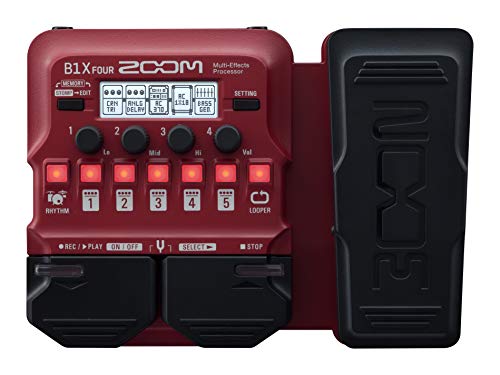
- 70+ effects with 9 amp models
- Expression pedal for real-time control
- Looper and 68 rhythm patterns built in
Best For: Bassists who want a multi-effects processor for practice and recording sketches
Vintage Tube Tone
Darkglass Vintage Microtubes Bass Overdrive

- Warm, tube-like overdrive with no harshness
- Blend, Era, Level, and Drive controls
- Downloadable cab models help recording use
Best For: Recording players who want vintage bass drive with flexible tone shaping
Direct-Out Flexibility
EarthQuaker Devices Scrolls Bass Preamp

- XLR direct out for recording setups
- Parallel out and ground lift improve routing
- Built-in EQ, preamp, and drive sections
Best For: Players needing a recording-ready bass preamp with direct-out options
Heavy Definition Drive
Darkglass Microtubes B3K V2 Bass Overdrive

- Powerful overdrive with a defined bass sound
- Blend, grunt, tone, and mid boost controls
- Compact pedalboard-friendly design
Best For: Bassists who want punchy overdrive with clear low-end definition
Direct Recording Preamp – Behringer V-Tone BDI21 Bass DI for recording
If you’re looking for bass DI pedals for recording, the Behringer V-Tone BDI21 is built around that exact job: amp modeling, direct recording, and DI output in one compact pedal. It’s a straightforward option for players who want an all-in-one way to shape bass tone before hitting an interface or recorder.
Best For: Bassists who want a budget-friendly amp-modeling DI for home recording and simple direct setups.
Pros:
- Combines bass amp modeling, direct recording preamp, and DI box functions.
- Compact pedal format makes it easy to fit into a recording rig.
- Powered by a 9V battery, so it can work as a simple standalone tool.
Cons:
- Single battery power may be less convenient than a dedicated power supply setup.
- Feature set is focused on utility, not on extensive tone-shaping controls.
The BDI21 is a practical pick when your priority is getting a recorded bass signal quickly with basic amp-style shaping and DI convenience in one box.
Studio DI With Drive – MXR Bass D.I.+ recording DI pedal
For bass DI pedals for recording, the MXR Bass D.I.+ stands out as a more fully featured channel strip style option. It adds distortion, a blend control, a color knob, 3-band EQ, and phantom power, which makes it a strong choice when you want to shape the bass sound before the track is printed.
Best For: Bass players who want a recording DI with EQ, drive, and flexible tone control.
Pros:
- Distortion channel with gain, volume, and blend controls.
- 3-band EQ and color knob for broader tone shaping.
- Phantom power support adds flexibility in recording setups.
- Includes power supply and cable.
Cons:
- More controls can be overkill if you only need a basic clean DI.
- It is a more involved pedal than a simple plug-and-play direct box.
This is a strong recording-focused bass DI when you want one pedal to cover clean tone, edge, and EQ without adding extra studio gear.
Mic'd Tube Simulator – JOYO D53 bass overdrive DI for recording
If your search for bass DI pedals for recording is really about capturing an amp-like studio sound, the JOYO D53 is aimed right at that use case. It simulates a mic’d classic tube bass amp, includes analog cabinet emulation, and gives you both XLR DI output and a parallel 1/4″ out for routing lows to another amp.
Best For: Bass players who want mic’d amp character and DI flexibility for recording.
Pros:
- Designed to capture the sound of a mic’d classic tube bass amp.
- Built-in analog cabinet emulation circuitry for recording use.
- XLR output supports direct recording and pro recording setups.
- Parallel 1/4″ output lets you send pure lows to a stage amp.
Cons:
- Focuses on overdrive and amp simulation rather than clean DI simplicity.
- Specific tone controls may be more specialized than some players need.
The D53 is a compelling choice when you want your recorded bass tone to feel like a mic’d amp rather than a plain direct signal.
Fuzz Recording Pedal – Electro-Harmonix Bass Big Muff Pi fuzz pedal
Among bass DI pedals for recording, the Electro-Harmonix Bass Big Muff Pi is the most clearly voiced for fuzz and heavy distortion rather than clean direct tone. Its sustain, tone, and volume controls, plus the dry switch and bass boost EQ switch, make it useful when you want to keep low end intact while layering in aggressive fuzz.
Best For: Bassists who want a recording fuzz pedal with low-end preservation tools.
Pros:
- Sustain, tone, and volume controls for classic fuzz shaping.
- Dry switch blends in clean bass with the distorted signal.
- Bass boost EQ switch helps restore low frequencies at brighter tone settings.
- Includes a 9V battery.
Cons:
- More of a fuzz pedal than a general-purpose DI/preamp.
- Battery-powered design may be less convenient in some recording rigs.
This pedal makes sense if your recording needs lean toward fuzz character and you want built-in options to keep the bass foundation from disappearing.
Portable Multi-Effects Practice Rig – LEKATO Bass Multi Effects Pedal
If you want bass di pedals for recording that also double as a compact practice setup, the LEKATO unit gives you a lot in one box. It combines amp modeling, IR loading, onboard effects, and direct recording support, making it useful for players who want to sketch tones at home without a bigger rig.
Best For: Bassists who want a portable all-in-one pedal for practice, tone shaping, and simple recording.
Pros:
- 9 amp modes and 8 IR cabinet models for broad tone options
- Supports third-party IR files through the included USB workflow
- Built-in battery helps make it easy to use away from the wall
- 3.5mm headphone output and PC/phone recording support for home use
Cons:
- Recording setup depends on the included cable and connected device
- The compact all-in-one layout may feel less focused than a dedicated preamp/DI
Overall, this is a flexible choice if you want a lightweight recording and practice pedal that covers a lot of ground. It is especially appealing when you want amp-style processing, IRs, and battery power in a single bass effects unit.
Studio-Ready Preamp DI – JOYO MONOMYTH R-26 Bass Preamp & DI
For bass di pedals for recording, the JOYO MONOMYTH R-26 is built around direct-connect convenience. Its 6-band graphic EQ, cab sim on the XLR output, and balanced DI design make it a practical front end for an audio interface, mixer, or PA when you want controlled tone without relying on an amp.
Best For: Bassists who need a preamp/DI for direct recording, live output, and detailed tone shaping.
Pros:
- Balanced XLR DI output with ground lift for direct connection
- 6-band graphic EQ for precise bass tone shaping
- Blend, Voice, Level, and Drive controls for flexible overdrive tones
- Cab sim is included on the XLR DI output for more amp-like direct sound
Cons:
- Cab sim is only active on the XLR DI output, not the 1/4-inch or headphone outputs
- Requires a 9V DC adapter; battery operation is not supported
This pedal makes sense if your priority is a clean, recording-friendly direct signal with enough shaping to cover everything from subtle warmth to heavier drive. It is less of a multi-effects box and more of a focused preamp/DI solution.
Feature-Packed Practice Processor – Zoom B1X FOUR Bass Multi-Effects Processor
If you’re comparing bass di pedals for recording and also want a broad practice tool, the Zoom B1X FOUR brings a lot of utility. With 70+ effects, amp models, looper, rhythm patterns, and an expression pedal, it is aimed at players who want to build parts, test ideas, and shape tones without extra gear.
Best For: Bassists who want a multi-effects processor for practice, experimentation, and recording sketches.
Pros:
- 70+ built-in effects and 9 amp models for wide tone coverage
- Expression pedal adds real-time control over volume, wah, delay, pitch, and more
- Built-in looper and 68 rhythm patterns support practice and songwriting
- Can run up to five effects simultaneously in any order
Cons:
- It is more of a multi-effects processor than a dedicated DI/preamp
- The added feature set may be more than you need for a simple recording chain
For players who want one pedal that can cover practice, sound design, and basic recording workflows, this Zoom is the most feature-heavy option here. It is best when versatility matters more than a stripped-down direct signal path.
Vintage Tube Tone – Darkglass Vintage Microtubes Bass Overdrive
If you want bass di pedals for recording that can add warm, vintage-style drive without losing definition, the Darkglass Vintage Microtubes is built for that job. Its Blend, Era, Level, and Drive controls make it easy to shape everything from subtle grit to more aggressive overdrive, and the downloadable cab models add flexibility in the studio.
Best For: Players who want natural-sounding overdrive for recording rock or metal bass parts with flexible tone shaping.
Pros:
- Warm, tube-like overdrive that stays natural and avoids harshness
- Blend, Era, Level, and Drive controls offer detailed tone shaping
- Downloadable cab models support recording use
- Compact, durable design fits easily on a pedalboard
Cons:
- Focused on overdrive rather than a full preamp feature set
- May be more drive-focused than players wanting clean EQ control
Overall, this is a strong recording-friendly bass overdrive if you want vintage character with enough control to dial in a useful studio sound. It’s especially appealing when consistency, simplicity, and a natural low-end response matter.
Direct-Out Flexibility – EarthQuaker Devices Scrolls Bass Preamp
The EarthQuaker Devices Scrolls is a practical choice for bass di pedals for recording when you want preamp features and direct-output routing in one box. With EQ, drive, XLR direct out, parallel out, and a ground lift, it’s set up for studio-style connections and clean signal management.
Best For: Bassists who need a recording-ready preamp pedal with direct out and flexible output routing.
Pros:
- XLR direct out is useful for recording setups
- Parallel out adds routing flexibility
- Ground lift can help manage noise issues
- Preamp, EQ, and drive functions in one pedal
Cons:
- More of a preamp tool than a dedicated overdrive pedal
- Heavier than the compact drive-focused options here
If your priority is a bass recording pedal that can go direct and handle practical studio routing, Scrolls stands out as the most connection-focused option in this group. It suits players who want utility and control more than a simple dirt box.
Heavy Definition Drive – Darkglass Microtubes B3K V2 Bass Overdrive
For bass di pedals for recording that deliver focused drive and easy control, the Darkglass Microtubes B3K V2 is a strong pick. It offers powerful overdrive, a blend knob, grunt switch, tone control, and mid boost, so you can keep low end intact while shaping presence and punch for tracked bass parts.
Best For: Bassists who want a compact overdrive pedal with defined low end and straightforward tone controls for recording or live use.
Pros:
- Powerful overdrive with a warm, rich, heavy bass profile
- Blend control helps mix clean and overdriven signals
- Grunt switch adds significant low-end boost
- Mid boost and tone control improve clarity and presence
Cons:
- Not designed as a direct-out recording preamp
- Requires a regulated 9V DC adapter and does not use batteries
This pedal is a good fit if you want a straightforward way to add recorded bass tracks with definition, thickness, and a modern drive character. It keeps the controls simple while still offering enough flexibility to shape a mix-ready tone.
How We Picked the Best Bass Di Pedals for Recording
We focused on pedals that make sense in a recording workflow: solid DI output, usable tone shaping, dependable bypass behavior, and enough flexibility to track different bass parts without extra gear. We also favored models that can serve more than one role, such as preamp, overdrive, amp modeler, or multi-effects unit.
Quick Comparison
If you want the simplest path to a finished track, choose a pedal with DI out and cab simulation. If you want more mix control, look for blend, EQ, and gain staging. If you need maximum flexibility, a multi-effects unit can cover direct tone, modulation, and practice tools in one setup.
Key Buying Factors for Bass Di Pedals for Recording
Clean Signal Quality
A recording DI should deliver a low-noise, stable signal with enough headroom to handle active pickups and aggressive playing. This matters even more if you plan to record with compression later.
Tone-Shaping Options
Look for EQ bands, blend controls, drive circuits, or voicing switches. These tools help you tighten low end, add midrange presence, or keep the attack clear when the bass needs to cut through dense arrangements.
Cab Sim and Amp Modeling
Cab simulation can make direct tracks feel more natural and less sterile. For modern recording, this is one of the most useful features because it helps the bass sound closer to an amp without adding mics or room noise.
Recording Workflow
Easy-to-use XLR out, ground lift options, and straightforward bypass modes all improve the session experience. If you switch between clean and driven parts often, consider pedals with separate level controls or blend paths.
Who Should Buy Which Bass Di Pedals for Recording?
Choose a transparent DI if you want to capture your bass as cleanly as possible and shape it later in the DAW. Choose a preamp/drive pedal if you want a more finished sound on the way in. Choose a multi-effects processor if you need recording flexibility, practice features, and multiple tones from a single unit. Among Bass Di Pedals for Recording, the best choice is the one that matches how you build tracks: pure capture, polished color, or broad sonic versatility.