Traveling with a metronome makes it easier to maintain timing during lessons, rehearsals, auditions, and hotel-room practice. The best portable models balance accurate tempo control with a compact design, clear sound, and dependable battery life.
This roundup compares 10 metronomes for travel, from established compact digital units to rechargeable tuner combinations and a traditional mechanical option. Use the guide below to match features, portability, and playing needs.
Best 10 Metronomes for Travel Picks for 2026
Rugged Practice Pick

- Compact, rugged design for travel
- Visual assistance and odd-meter support
- Headphone jack and auto power-off
Best For: Travelers focused on versatile rhythm practice
All-in-One Travel Tool
KLIQ MetroPitch Digital Metronome & Tuner

- Metronome, tuner, and tone generator
- 30–250 BPM with tap tempo
- Pouch and two AAA batteries included
Best For: Multi-instrument musicians on the go
Simple Lightweight Choice

- Only 35 grams
- High-contrast LCD display
- Clock function and volume control
Best For: Lightweight, uncomplicated travel practice
Rechargeable Vocal-Count Option
LEKATO Rechargeable 3-in-1 Metronome Tuner
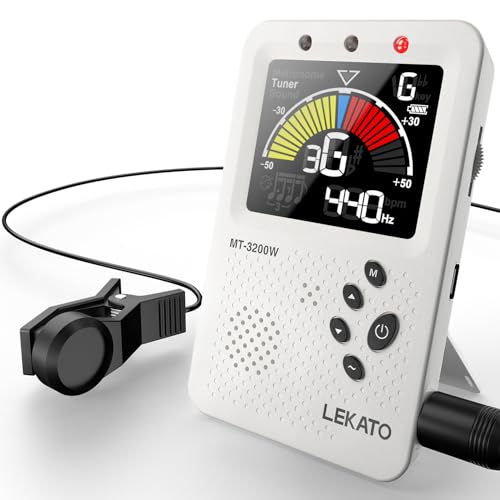
- Tuner, metronome, and tone generator
- Human voice beats with 30–250 BPM range
- Rechargeable battery and headphone output
Best For: Feature-rich practice while traveling
Classic Wind-Up Pick

- Battery-free wind-up operation
- Audible click and bell tone
- 40–208 BPM with selectable beats
Best For: Travelers seeking a traditional, battery-free metronome
Pocket Practice Multitool
Flatsons MT-41 Rechargeable Metronome

- Metronome, tuner, and tone generator
- Lightweight 2.82-ounce design
- Rechargeable with color LCD display
Best For: Traveling musicians who need rhythm practice and tuning
Large-Display Choice
EX-GEAR Rechargeable Metronome

- Bright color LCD with beat accents
- USB-C rechargeable battery
- Five tones plus headphone output
Best For: Travelers wanting visible controls and flexible private practice
Travel-Ready 3-in-1 Pick

- Combines metronome, tuner, and tone generator
- Over six hours of rechargeable use
- Headphone output and folding stand
Best For: Travel musicians who want rhythm practice and tuning in one device
Classic Compact Choice

- Human voice or electronic beats
- More than eight hours of rechargeable use
- Palm-sized with headphone output
Best For: Beginners and travelers wanting vocal counting and private practice
Smallest Clip-On Option

- Mini clip-on design for easy carrying
- 30–280 BPM with tap tempo
- Adjustable volume and headphone output
Best For: Traveling students who need an especially small practice metronome
Rugged Practice Pick – BOSS Dr. Beat DB-30
For musicians comparing metronomes for travel, the BOSS Dr. Beat DB-30 offers a portable, ruggedly built option with visual practice assistance and play-along patterns. Its compact 5.2-by-3.45-inch body and included lithium battery make it convenient to pack for lessons, rehearsals, or practice away from home.
Best For: Travelers who want visual timing support, odd-time-signature practice, and a durable standalone metronome.
Pros:
- Portable, rugged construction for travel use
- Visual practice assistance and support for odd time signatures
- Includes a headphone jack and auto power-off function
- Offers fun play-along patterns
Cons:
- Functions as a metronome rather than a combined tuner and tone generator
- Uses a replaceable lithium metal battery
The DB-30 is a strong choice when dependable rhythm practice matters more than having multiple musical tools in one device. Its headphone jack and automatic shutoff add useful convenience in shared or travel settings.
All-in-One Travel Tool – KLIQ MetroPitch Digital Metronome & Tuner
The KLIQ MetroPitch is a practical choice among metronomes for travel because it combines a metronome, chromatic tuner, and tone generator in a pocket-sized device. Its padded carrying pouch, two AAA batteries, and 3.17-ounce weight help keep a mobile practice setup simple.
Best For: Guitar, violin, ukulele, brass, and woodwind players who want tuning and rhythm functions in one travel-ready unit.
Pros:
- Combines metronome, chromatic tuner, and tone generator
- Offers 30–250 BPM, tap tempo, and beat subdivisions
- Wide A0–C8 tuning range with pitch calibration from 410–490Hz
- Includes a padded pouch and two AAA batteries
Cons:
- Requires AAA batteries rather than a rechargeable battery
- Its compact controls may be less spacious than those on larger units
MetroPitch stands out for reducing the number of accessories musicians need to carry. The jog dial and broad tuning range make it a flexible companion for practice sessions involving several instruments.
Simple Lightweight Choice – Seiko DM51B Digital Metronome
For shoppers seeking straightforward metronomes for travel, the Seiko DM51B keeps the focus on essential timing practice. It weighs just 35 grams and includes a high-contrast LCD, clock function, and easy volume control for portable everyday use.
Best For: Musicians who prefer a lightweight digital metronome with clear display information and uncomplicated controls.
Pros:
- Very light 35-gram design
- High-contrast LCD supports easy viewing
- Includes a clock function and easy volume control
- Suitable for indoor and outdoor use
Cons:
- Does not include the tuner and tone-generator functions found on some combination devices
- No carrying case or additional included components are specified
The DM51B is best suited to buyers who want a compact, focused timing tool rather than an all-in-one practice device. Its light weight and readable LCD make it especially easy to add to a music bag.
Rechargeable Vocal-Count Option – LEKATO Rechargeable 3-in-1 Metronome Tuner
The LEKATO Rechargeable Metronome Tuner is a versatile option for metronomes for travel, combining rhythm practice, tuning, and tone generation in a pocket-sized device. Its rechargeable lithium battery, folding kickstand, color LCD, and headphone output are useful for musicians practicing in different environments.
Best For: Players who want rechargeable convenience, vocal beat counting, and tuner functionality for guitar, bass, violin, or ukulele practice.
Pros:
- Combines tuner, metronome, and tone generator
- Provides 30–250 BPM, tap tempo, and 0–6 beats per measure
- Human voice beat function supports counted practice
- Rechargeable battery, color LCD, folding kickstand, and headphone output
Cons:
- Weighs 5.3 ounces, making it heavier than the Seiko DM51B
- Requires charging rather than a simple battery swap
- Its broader feature set may be more than needed for basic metronome use
LEKATO is a compelling travel companion when flexibility and reduced battery replacement matter. The adjustable volume, speaker, microphone and input detection, and headphone connection give it practical range for solo practice.
Classic Wind-Up Pick – Ueteto Mechanical Metronome
For musicians who prefer a traditional approach, the Ueteto is a practical choice among metronomes for travel when you do not want to depend on disposable batteries. Its wind-up mechanism provides an audible click and bell tone for practicing piano, violin, guitar, bass, drums, and other instruments.
Best For: Travelers who want a battery-free mechanical metronome with a loud, familiar beat.
Pros:
- Wind-up operation requires no batteries.
- Audible click and bell help maintain rhythm while reading music.
- Offers 40–208 BPM and beat selections of 0, 2, 3, 4, and 6.
- Metal body is designed for durability.
Cons:
- At 1.2 pounds, it is heavier than the digital options here.
- A full wind lasts at least 18 minutes, depending on tempo.
- The mechanical design may take more setup than a digital model.
The Ueteto suits players who value tactile controls and a strong acoustic beat. Its heavier metal construction is less convenient for lightweight packing, but the lack of batteries can be useful on trips.
Pocket Practice Multitool – Flatsons MT-41 Rechargeable Metronome
The Flatsons MT-41 is a strong option among metronomes for travel because its pocket-sized design combines rhythm practice, tuning, and tone generation. The rechargeable unit weighs 2.82 ounces and fits easily in a guitar bag or instrument case.
Best For: Musicians who want a lightweight rechargeable metronome with built-in tuning functions.
Pros:
- Combines a metronome, tuner, and tone generator in one device.
- Rechargeable battery avoids disposable battery changes.
- Compact 4.25-by-0.64-by-2.6-inch design is easy to pack.
- Color LCD and dual-color LED beat indicator improve visibility.
Cons:
- Requires a nonstandard rechargeable battery and USB charging.
- Its supplied notes do not specify the metronome’s tempo range.
- It is designed primarily for instrument tuning and practice rather than a purely mechanical experience.
For frequent travelers, the MT-41’s low weight and three-in-one functionality make it especially convenient. It is a versatile practice companion for guitar, bass, ukulele, violin, and chromatic tuning.
Large-Display Choice – EX-GEAR Rechargeable Metronome
The EX-GEAR is a convenient pick among metronomes for travel when clear controls and flexible sound options matter. Its rechargeable USB-C battery, large color LCD, and 5.3-ounce weight make it portable while still offering a broad range of rhythm features.
Best For: Musicians who want a highly visible display, private-practice audio options, and varied rhythm settings.
Pros:
- USB-C rechargeable lithium-ion battery eliminates routine battery swaps.
- Large color LCD displays tempo, beats, and accented beats clearly.
- Supports a broad tempo range, numerous beat patterns, and complex time signatures.
- Offers five beat tones, volume control, a speaker, and headphone output.
Cons:
- Its supplied notes describe the tempo range as typically around 30 to 250+ BPM rather than giving a single exact range.
- The 5.79-by-2.64-by-1.57-inch body is larger than a pocket-sized tuner-style unit.
- It depends on charging rather than offering battery-free operation.
The EX-GEAR is well suited to varied practice environments, from shared spaces to darker rooms, thanks to its bright display and headphone support. It offers more sound and rhythm customization than a basic metronome while remaining travel-friendly.
Travel-Ready 3-in-1 Pick – Rechargeable Metronome Tuner
For musicians seeking metronomes for travel, the Linrax MT2 is a versatile pocket-sized option that combines a metronome, chromatic tuner, and tone generator. Its rechargeable battery, color display, headphone output, and folding stand make it practical for practice sessions away from home.
Best For: Travelers who want one compact device for rhythm practice, tuning, and reference tones across multiple instruments.
Pros:
- Combines metronome, tuner, and tone generator functions.
- Supports more than six hours of use after a 1.5-hour charge.
- Offers 30–260 BPM, 10 beats, eight rhythm patterns, tap tempo, and voice beats.
- Includes microphone, clip pickup, and 1/4-inch input tuning options.
Cons:
- Its extra functions may be unnecessary if you only need a basic metronome.
- Rechargeable operation requires keeping the device charged during longer trips.
The MT2 is the strongest all-in-one choice here for travel musicians who also need tuning support. It provides broad instrument compatibility without requiring separate accessories for core practice tasks.
Classic Compact Choice – SDREAM Rechargeable Metronome
The SDREAM digital metronome is a compact choice for metronomes for travel, pairing a pyramid-inspired design with rechargeable power and a clear LCD display. Its human-voice or electronic beats, simple controls, and headphone jack suit practice in different settings.
Best For: Beginners and musicians who want a palm-sized metronome with vocal counting and private headphone practice.
Pros:
- Provides human English voice beats or standard electronic beats.
- Includes 10 beat patterns and adjustable tempo from 40–208 BPM.
- Rechargeable Type-C operation lasts more than eight hours.
- Compact design fits in a pocket or instrument bag.
Cons:
- Its tempo range is narrower than some competing options in this roundup.
- The plastic body may feel less substantial than a traditional mechanical metronome.
SDREAM balances familiar styling with convenient modern features. It is especially appealing for portable practice when long battery life and human voice counting matter more than tuning functions.
Smallest Clip-On Option – LEKATO M65 Metronome
For highly portable metronomes for travel, the LEKATO M65 stands out with a mini clip-on design that is smaller than an adult’s palm. It offers a color LCD, tap tempo, adjustable volume, rechargeable USB power, and a headphone output for flexible practice.
Best For: Students and traveling players who prioritize minimal size, easy attachment, and straightforward rhythm practice.
Pros:
- Very small clip-on design includes a lanyard hole for carrying.
- Offers 30–280 BPM, tap tempo, varied rhythms, and 10 beat sounds.
- Settings can be saved automatically when the unit is turned off.
- Includes adjustable volume and a 3.5mm headphone output.
Cons:
- Battery life is approximately four to five hours at medium volume.
- It focuses on metronome functions rather than adding a tuner or tone generator.
The M65 is the most space-conscious pick in this group. Its clip and lanyard-ready design make it easy to keep with an instrument, while the wide tempo range gives it useful flexibility for practice.
How We Picked These Metronomes for Travel
We focused on the features that matter when a metronome leaves the practice room: compact size, low carrying weight, readable displays, flexible volume control, and reliable power. We also included different formats so shoppers can compare digital, rechargeable, clip-on, tuner-equipped, and mechanical designs.
Tempo range and adjustment controls are important, but travel use also favors products that are quick to set up and easy to hear without disturbing others. Models with tuning, tone-generation, voice counting, or instrument support can replace extra accessories, while simple units may be preferable for musicians who want fewer controls and less bulk.
Quick Comparison
| Type | Best For | Main Advantage | Potential Trade-Off |
|---|---|---|---|
| Compact digital | General practice | Small, precise, and easy to operate | May need replaceable batteries |
| Rechargeable digital | Frequent travelers | Convenient USB charging and added functions | Requires charging before a trip |
| Metronome and tuner | String and wind players | Combines two practice tools | More controls to learn |
| Mechanical | Acoustic practice | No electronics or charging | Usually larger and less travel-friendly |
| Clip-on | Minimal luggage | Very portable and easy to position | May have a smaller display or speaker |
Key Buying Factors for Metronomes for Travel
Size, Weight, and Protection
Choose a unit that fits easily in an instrument case, backpack, or accessory pouch. A protective case or a sturdy body is useful when the metronome will share space with cables, music stands, and other gear.
Power and Battery Life
Rechargeable models reduce the need to carry spare batteries, but they should be charged before departure. Battery-powered models can be more convenient on long trips if replacement batteries are readily available. Check whether charging uses a common USB connection.
Audibility and Control
A clear click, adjustable volume, and visual beat indicators help in noisy practice spaces. Human-voice counting can be useful for beginners or complex subdivisions, while a headphone output may be preferable for quiet practice if available.
Extra Functions
A built-in tuner, tone generator, tap-tempo control, or multiple rhythm patterns can make one device more useful. However, do not pay for features you will not use if a simpler metronome offers faster setup and better portability.
Who Should Buy Which Metronomes for Travel?
Choose a compact digital model if you want dependable tempo practice with minimal luggage. Choose a rechargeable metronome-tuner if you play guitar, bass, ukulele, violin, or another instrument that benefits from tuning on the go. Choose a clip-on design when space is extremely limited or you want the metronome close to your instrument.
Choose a model with a large LCD screen if you practice in varied lighting or prefer visual beat tracking. Choose a mechanical metronome if you value an acoustic pulse and do not want to manage batteries, accepting its greater size and weight. For most travelers, the best overall fit will be a compact rechargeable unit with adjustable volume, a readable display, and controls that can be operated quickly.