Consistent timing is central to playing bass with a drummer, backing track, or recording. The right metronome can make slow practice, groove development, and speed building more controlled without distracting from your instrument.
We selected 10 metronomes for bass guitars that combine clear beats, useful tempo ranges, practical tuning features, and convenient power options. This guide explains what separates them and how to choose the best fit for your practice routine.
Best 10 Metronomes for Bass Guitars Picks for 2026
Best All-Around Pick
Donner DMT-01 3-in-1 Metronome Tuner

- Metronome, tuner, and tone generator in one unit
- 30–260 BPM range with eight rhythms
- Large LCD with angled viewing design
Best For: Bassists wanting an adaptable practice and tuning companion
Best for Vocal Count-In Practice
LEKATO Rechargeable Metronome Tuner

- Adds a human-voice beat function and tap tempo
- Rechargeable battery with headphone output
- Includes tuner, tone generator, and pickup clip
Best For: Bassists seeking guided and quiet practice options
Best Traditional Choice
Mechanical Wood-Grain Metronome

- Wind-up design needs no batteries
- Metal movement with 40–208 BPM range
- Selectable 0, 2, 3, 4, and 6 beats
Best For: Beginners and home practice with a classic pendulum beat
Best Portable Rechargeable Pick

- Rechargeable pocket-sized design
- Three pickup methods, including direct cable input
- 30–250 BPM with eight rhythms and headphone output
Best For: Traveling bassists needing flexible connectivity
Rechargeable Practice Pick
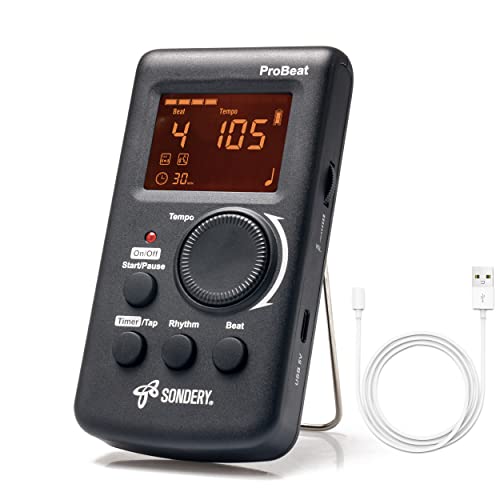
- 40–208 BPM with rotary-dial control
- Vocal counting, LED tempo cue, and 10 patterns
- Rechargeable with headphone output and timer
Best For: Bassists wanting clear visual and vocal practice cues
All-in-One Bass Tool
Flatsons MT-41 Metronome Tuner

- Metronome, tuner, and tone generator in one
- Supports bass and chromatic tuning
- Rechargeable pocket-sized design with color display
Best For: Bassists seeking rhythm and tuning functions together
Vocal Counting Choice

- Human voice or electronic beat options
- 40–208 BPM with 10 rhythm patterns
- Type-C rechargeable with headphone output
Best For: Players who learn timing with vocal counting
Best Pocket Metro-Tuner

- 3-in-1 metronome, tuner, and tone generator
- 30–260 BPM with tap tempo and vocal counting
- Rechargeable, compact, and bass-compatible
Best For: Bassists wanting a portable all-in-one practice device
Best Display and Tuning Accuracy
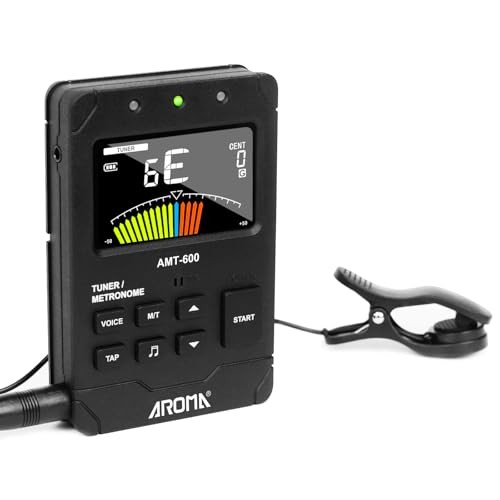
- ±0.5 cent tuning accuracy with bass mode
- 30–260 BPM, 10 beat patterns, and 8 rhythms
- HD adaptive-backlight display with headphone support
Best For: Bassists seeking precise tuning and an easy-to-read screen
Best Rhythm Training Features

- Trainer mode provides microphone-based rhythm feedback
- 30–280 BPM with tempo detection and blind beat testing
- Bass tuning, headphone output, and rechargeable battery
Best For: Bassists focused on interactive timing and rhythm improvement
Best All-Around Pick – Donner DMT-01 3-in-1 Metronome Tuner
For players comparing metronomes for bass guitars, the Donner DMT-01 is a versatile practice and performance tool. It combines a metronome, chromatic tuner, and tone generator, with a 30–260 BPM range, eight rhythms, and a large angled display.
Best For: Bassists who want one compact device for timing, tuning, and reference tones.
Pros:
- Combines metronome, tuner, and tone generator functions.
- Offers a broad 30–260 BPM range and eight rhythm options.
- Clip tuner provides stated accuracy of ±0.5 cent.
- Large LCD and 45-degree bracket design support easy viewing.
Cons:
- Uses a replaceable AAA battery rather than a rechargeable battery.
- Its features may be more extensive than needed for players seeking only a metronome.
The DMT-01 is a practical choice when bass practice involves both steady tempo work and regular tuning checks. Its wide tempo range and straightforward jog-dial control make it adaptable for lessons, rehearsals, and home practice.
Best for Vocal Count-In Practice – LEKATO Rechargeable Metronome Tuner
The LEKATO is a strong option among metronomes for bass guitars when audible guidance and flexible practice controls matter. Its digital metronome includes a human-voice beat function, tap tempo, adjustable volume, and a 30–250 BPM range, while the rechargeable design avoids frequent battery replacement.
Best For: Bassists who appreciate vocal beat guidance, headphone practice, and rechargeable convenience.
Pros:
- Combines tuner, metronome, and tone generator functions.
- Human-voice beat option can make timing easier to follow.
- Includes tap tempo, adjustable volume, headphone output, and a folding kickstand.
- Built-in rechargeable lithium battery supports extended use.
Cons:
- The vocal metronome requires pressing the designated button to control it.
- Its 30–250 BPM range is slightly narrower than some competing models.
With its color display, pickup clip, headphone connection, and rechargeable battery, the LEKATO is suited to bassists who want a feature-rich unit for focused sessions. It is particularly useful when practicing quietly or learning parts with a more noticeable beat.
Best Traditional Choice – Mechanical Wood-Grain Metronome
This mechanical model offers a simple alternative to electronic metronomes for bass guitars. Its metal movement delivers a traditional audible beat, while the 40–208 BPM range and selectable 0, 2, 3, 4, and 6 beats cover common practice needs.
Best For: Beginners and players who prefer a wind-up metronome with simple physical controls.
Pros:
- Metal movement is designed for long-term use and stable performance.
- Traditional wind-up operation requires no batteries.
- Provides selectable beat groupings for varied rhythm practice.
- Works with bass, guitar, piano, violin, drums, and other instruments.
Cons:
- Its 40–208 BPM range is narrower than the digital alternatives here.
- It does not provide digital tuning, tone-generation, or headphone features.
- At about 1.12 pounds, it is less portable than pocket-sized electronic units.
The wood-grain mechanical design is a good fit for a dedicated practice space, especially for musicians building a foundational sense of pulse. Choose it over a digital unit if a visible pendulum and straightforward wind-up routine are more appealing than multifunction features.
Best Portable Rechargeable Pick – Wegrower 3-in-1 Metronome
The Wegrower combines portability and connectivity for bassists comparing metronomes for bass guitars. This pocket-sized rechargeable unit offers a metronome, tuner, and tone generator, with microphone, clip, and direct cable pickup options plus a 30–250 BPM tempo range.
Best For: Bassists who want a compact rechargeable unit with multiple tuning and practice connections.
Pros:
- Supports microphone, included clip, and direct guitar-cable pickup.
- Combines tuner, metronome, and tone generator functions.
- Offers 30–250 BPM, 0–9 beats, and eight rhythms.
- Rechargeable battery, headphone jack, and large color LCD aid flexible practice.
Cons:
- Requires USB charging instead of a replaceable battery.
- Its compact controls and display may be less substantial than a full-size unit.
The Wegrower stands out when a bass player needs one lightweight device for lessons, rehearsals, and travel. Its multiple pickup methods provide useful flexibility, while the headphone jack and adjustable volume support more private practice sessions.
Rechargeable Practice Pick – Sondery ProBeat Metronome
For bassists comparing metronomes for bass guitars, the Sondery ProBeat emphasizes quick control and clear feedback. Its rotary dial covers 40–208 BPM, while the color display, top LED, vocal counting, and multiple sounds make rhythm practice easy to follow.
Best For: Bass players who want a rechargeable metronome with vocal counting, visual tempo feedback, and headphone practice.
Pros:
- Fast tempo, beat, and rhythm adjustment through buttons and a rotary dial.
- Offers vocal counting, three digital sounds, and 10 beat patterns.
- Includes a 3.5mm headphone jack, timer settings, and a rechargeable battery.
- Compact 0.26-pound design is convenient for instrument bags.
Cons:
- Its tempo range ends at 208 BPM.
- The body is primarily plastic.
The ProBeat is a practical all-rounder for bass practice, particularly if you value audible and visual timing cues. The tap function and selectable practice timer add useful flexibility for structured sessions.
All-in-One Bass Tool – Flatsons MT-41 Metronome Tuner
The Flatsons MT-41 is a useful choice among metronomes for bass guitars because it combines rhythm practice with tuning and tone generation. Its rechargeable, pocket-sized design is suited to home practice, lessons, studio work, and travel.
Best For: Bassists who want one compact device for metronome practice, chromatic tuning, and tone generation.
Pros:
- Combines a metronome, tuner, and tone generator in one device.
- Supports bass, guitar, ukulele, violin, and chromatic tuning.
- Offers A4 calibration from 430–450 Hz.
- Color LCD and dual-color LED indicator make settings and beats easy to see.
Cons:
- The supplied notes do not specify a tempo range or beat-pattern count.
- It uses a nonstandard rechargeable battery.
Choose the MT-41 if minimizing gear matters as much as keeping time. Its tuner functions are especially convenient for bass players who want to tune and practice without carrying separate devices.
Vocal Counting Choice – SDREAM Rechargeable Metronome
For bassists looking at metronomes for bass guitars, the SDREAM digital metronome pairs a classic pyramid-inspired design with modern controls. It provides human English voice beats or electronic beats, 10 rhythm patterns, and speed adjustment from 40–208 BPM.
Best For: Beginners and musicians who prefer vocal counting, adjustable volume, and headphone-supported practice.
Pros:
- Provides both human voice counting and electronic metronome beats.
- Includes 10 beat patterns and button-based tempo controls.
- Rechargeable Type-C design runs for more than eight hours according to the supplied notes.
- Has adjustable instrument volume and a 3.5mm headphone jack.
Cons:
- The supplied notes do not mention a tuner function.
- Its stated tempo range is limited to 40–208 BPM.
The SDREAM stands out for bass practice that benefits from spoken beat guidance. Its rechargeable operation, headphone output, and compact form make it a flexible option for quiet practice at home or away.
Best Pocket Metro-Tuner – Sondery MetroTune
For players comparing metronomes for bass guitars, the Sondery MetroTune is a compact 3-in-1 option that combines a metronome, tuner, and tone generator. Its 30–260 BPM range, tap tempo, bass tuning mode, and included pickup cord make it practical for everyday practice.
Best For: Bassists who want a small rechargeable practice tool with vocal counting, multiple rhythm options, and both microphone and cable-based tuning.
Pros:
- Combines metronome, tuner, and tone generator in one pocket-size device.
- Offers 30–260 BPM, tap tempo, beats from 0 to 9, and eight rhythms.
- Includes a bass tuning mode, pickup cord, headphone output, volume wheel, and folding stand.
- Rechargeable battery and color LCD with LED indicator support portable practice.
Cons:
- The metronome tempo range tops out at 260 BPM, lower than some competing models.
- Its plastic body may be less rugged than a heavier-duty practice unit.
The MetroTune is a versatile choice when space and convenience matter. Its vocal counting and broad instrument support add flexibility, while the included pickup cord is particularly useful for tuning bass in noisy environments.
Best Display and Tuning Accuracy – Aroma AMT-600
The Aroma AMT-600 stands out among metronomes for bass guitars with its large HD color screen, five tuning modes, and stated tuning accuracy of ±0.5 cent. It also provides 30–260 BPM, customizable beat and rhythm settings, and rechargeable operation for focused practice.
Best For: Bassists who prioritize clear screen visibility, precise tuning, headphone practice, and one device that also supports other string and wind instruments.
Pros:
- Combines a metronome, tuner, and tone generator with a rechargeable 600mAh battery.
- Provides 30–260 BPM, 10 beat patterns, eight rhythm modes, and English voice prompts.
- Supports bass tuning, microphone or pickup input, and ±0.5 cent tuning accuracy.
- Large adaptive-backlight VA color display and rear stand improve visibility.
Cons:
- Charging requires a USB-A to USB-C cable; a USB-C to USB-C cable should not be used.
- The feature-rich interface may be more than players seeking a simple metronome need.
With its adaptive display and precise tuner, the AMT-600 is well suited to structured bass practice. Its rhythm customization and tone generator also make it useful for timing work and pitch training beyond basic tempo keeping.
Best Rhythm Training Features – Donner DBM-100
For bassists looking beyond basic click tracks, the Donner DBM-100 adds trainer features that make it an interesting pick among metronomes for bass guitars. Its microphone-based rhythm feedback, tempo detection button, 30–280 BPM range, and bass tuning mode support both timing development and routine setup.
Best For: Players who want interactive rhythm practice, quick tempo measurement, and a rechargeable 3-in-1 metronome-tuner for several instruments.
Pros:
- Trainer rhythm mode uses microphone detection and light feedback to assess timing.
- Blind beat testing and tempo detection can add variety to practice sessions.
- Offers 30–280 BPM, beats from 0 to 9, adjustable volume, and headphone output.
- Includes bass tuning mode, adjustable 430–450Hz pitch, and a bright full-angle display.
Cons:
- A USB-C charging cable is not included.
- The stated pitch-adjustment range begins at 430Hz, narrower than models offering 410Hz.
- Trainer feedback depends on the microphone detecting the played sound accurately.
The DBM-100 is the strongest fit here for players who want practice feedback rather than a conventional metronome alone. Its higher 280 BPM ceiling and tempo detection are useful additions, though buyers should plan to supply their own charging cable.
How We Picked the Best Metronomes for Bass Guitars
We focused on features that matter during real bass practice: dependable tempo accuracy, audible beat projection, readable displays, useful rhythm settings, and straightforward controls. Rechargeable models were evaluated for convenience, while mechanical options were included for players who prefer a simple, battery-free design.
Because several selections also include tuners or tone generators, we considered whether those extra functions are genuinely useful for bassists rather than treating feature count as a deciding factor. Vocal counting, trainer modes, and adjustable accents can be particularly helpful when learning subdivisions or increasing speed gradually.
Quick Comparison
- Best for portability: Rechargeable digital models with compact bodies and built-in displays.
- Best for one-device practice: 3-in-1 units combining metronome, chromatic tuner, and tone generator.
- Best for audible counting: Models with human-voice or vocal-counting functions.
- Best for simplicity: Mechanical metronomes with a visible pendulum and no charging requirements.
- Best for structured progress: Units with trainer, rhythm, or subdivision modes.
Key Buying Factors for Metronomes for Bass Guitars
Volume and Sound Clarity
A bass-friendly metronome must remain audible over unplugged practice and moderate amplifier volume. Look for adjustable volume, a strong speaker, headphone support, or a sound choice that cuts through low-frequency notes without becoming harsh.
Tempo Range and Rhythm Control
A broad tempo range supports both slow subdivision work and faster technique practice. Adjustable accents, multiple beat patterns, and subdivision settings help you practice syncopation, eighth notes, sixteenth notes, and odd-feel rhythms more precisely.
Display and Controls
A clear LCD is useful when checking tempo at a glance, especially during standing practice. Large buttons or a simple dial make it easier to change BPM without interrupting your playing.
Power and Portability
Rechargeable models reduce the need for disposable batteries and are convenient for lessons, rehearsals, and travel. Check charging time and battery life if you plan to practice away from an outlet. Mechanical models avoid charging altogether but are generally less compact and offer fewer rhythmic features.
Tuner and Extra Functions
A built-in chromatic tuner can simplify setup, while a tone generator may help with ear training. These extras are valuable when they are easy to access; they should not outweigh beat clarity and reliable timing.
Who Should Buy Which Metronomes for Bass Guitars?
Choose a rechargeable digital model if you want portability, a bright display, and flexible rhythm settings. Choose a vocal-counting metronome if spoken subdivisions help you internalize difficult passages. Choose a 3-in-1 metronome tuner if you want one compact practice tool for tuning and timing. Choose a mechanical model if you value visual pendulum motion, tactile operation, and independence from batteries. For most bassists, the best choice is the model whose sound remains clear at practice volume and whose controls encourage regular, measurable tempo work.