Consistent timing is one of the fastest ways to improve electric guitar technique, whether you are building speed, tightening riffs, or practicing with a backing track. The right metronome makes focused repetition easier without adding unnecessary setup.
These 10 picks cover rechargeable digital units, combination tuner-metronomes, audible voice-counting models, and options designed for multiple instruments. Use the guide below to match features, controls, and display visibility to your practice routine.
Best 10 Metronomes for Electric Guitars Picks for 2026
Best Visual Practice Pick
Sondery ProBeat Rechargeable Metronome
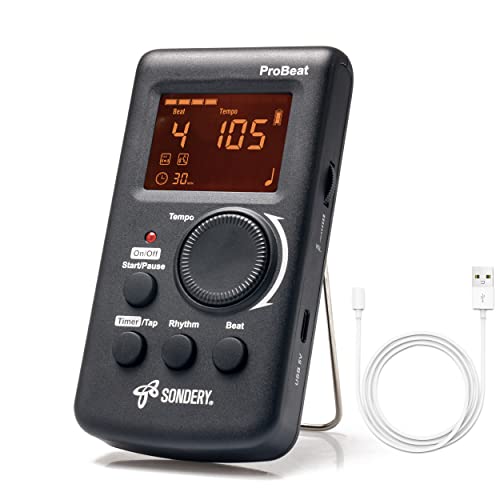
- Color screen and flashing LED tempo indicator
- Vocal counting, tap tempo, and 10 beat patterns
- Rechargeable battery with headphone output and timer
Best For: Guitarists wanting clear visual and audible practice guidance
Best All-in-One Tool
Wegrower Rechargeable Metronome Tuner

- Metronome, tuner, and tone generator in one unit
- 30–250 BPM with eight rhythms and adjustable volume
- Supports clip, microphone, and direct cable pickup
Best For: Electric guitarists seeking one compact practice accessory
Best for Quiet Practice
Ueteto Rechargeable Digital Metronome
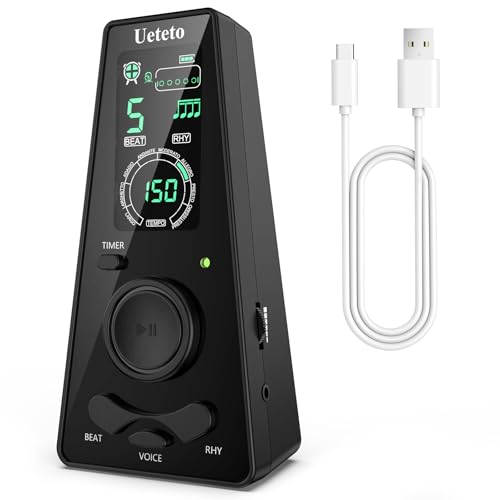
- 3.5mm headphone output for private practice
- Nine rhythms, 10 beat settings, and vocal counting
- About two-hour charging time with up to 16 hours of use
Best For: Guitarists practicing quietly with headphones
Best Vocal-Count Combo
LEKATO Rechargeable Metronome Tuner
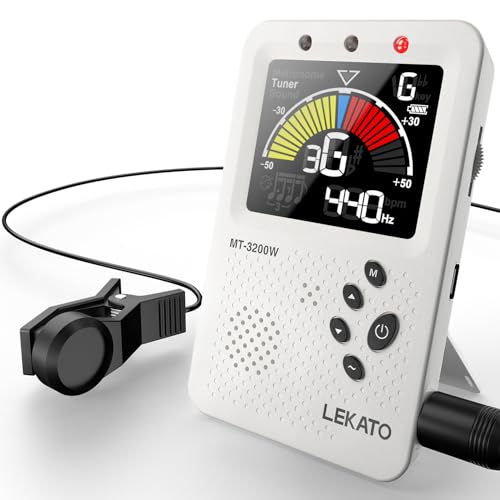
- Metronome, tuner, and tone generator combination
- Vocal beats, tap tempo, and 30–250 BPM range
- Color display, headphone output, and folding kickstand
Best For: Guitarists wanting vocal counting plus tuning functions
Best All-in-One Pick

- Combines metronome, tuner, and tone generator
- 30–260 BPM with eight rhythms
- ±0.5-cent tuning accuracy
Best For: Guitarists wanting one device for timing, tuning, and pitch reference
Best for Everyday Use
SDREAM Rechargeable Digital Metronome

- Human-voice and electronic beat options
- Rechargeable with over eight hours of use
- Headphone jack for quieter practice
Best For: Players who prefer vocal counting or headphone-supported sessions
Best for Noisy Rooms

- Corded pickup supports tuning in noisy spaces
- 30–260 BPM with eight rhythms
- Metronome, tuner, and tone generator in one
Best For: Guitarists balancing precise tuning with flexible rhythm practice
Best Rechargeable All-in-One

- Metronome, tuner, and tone generator in one unit
- 30–260 BPM with tap tempo and eight rhythms
- Rechargeable USB-C power with pickup and headphone support
Best For: Electric guitarists wanting a portable rechargeable practice tool
Best for Clear Visual Feedback

- Backlit angled LCD with LED and audible rhythm cues
- 30–260 BPM, 10 beat patterns, and eight rhythms
- Headphone jack and adjustable volume for quiet practice
Best For: Players who want readable feedback and silent practice options
Best Traditional-Style Option

- Pendulum-simulating metronome with 30–230 BPM range
- Dedicated guitar and bass tuning modes
- 1/4-inch input, headphone output, and large LCD
Best For: Players wanting a focused 2-in-1 practice device
Best Visual Practice Pick – Sondery ProBeat Rechargeable Metronome
For guitarists seeking metronomes for electric guitars, the Sondery ProBeat offers straightforward controls, a readable color screen, and a flashing LED tempo indicator. Its rotary dial covers 40–208 BPM, while vocal counting, tap tempo, and multiple beat patterns support varied practice routines.
Best For: Guitarists who want clear visual and audible timing cues with customizable practice sessions.
Pros:
- Color display and top LED make the tempo easy to follow.
- Includes vocal counting, three digital sounds, tap tempo, and 10 beat patterns.
- Rechargeable battery, 3.5mm headphone output, and timer settings from 15 to 60 minutes.
Cons:
- Its 40–208 BPM range is narrower than some competing models.
- It does not include a built-in tuner or tone generator.
The ProBeat is a practical choice when visual feedback and guided practice features matter more than instrument-tuning functions. Its compact rechargeable design also fits easily in a guitar bag.
Best All-in-One Tool – Wegrower Rechargeable Metronome Tuner
The Wegrower combines a metronome, tuner, and tone generator in one pocket-sized unit, making it a versatile option among metronomes for electric guitars. Its tempo range reaches 30–250 BPM, and it supports microphone, clip, and direct guitar-cable pickup methods.
Best For: Electric guitarists who want timing practice and tuning functions in a single rechargeable device.
Pros:
- Combines metronome, tuner, and tone generator.
- Supports direct cable pickup, microphone pickup, and the included clip.
- Offers adjustable volume, headphone output, an LCD color screen, and LED indicator.
Cons:
- The multifunction design may be more than users need for basic metronome practice.
- The supplied notes do not specify a continuous battery-runtime figure.
With broad tuning coverage from A0–C8 and adjustable reference tuning from 430–450 Hz, the Wegrower is especially useful for players who prefer fewer separate accessories in their practice setup.
Best for Quiet Practice – Ueteto Rechargeable Digital Metronome
The Ueteto is a compact rechargeable option for players comparing metronomes for electric guitars, with a 40–208 BPM range, nine rhythm patterns, and 10 beat settings. Its 3.5mm headphone jack and adjustable output make it suitable for focused practice without relying only on the built-in speaker.
Best For: Guitarists who need headphone-friendly practice, simple controls, and a visible tempo indicator.
Pros:
- Headphone output supports quiet practice and monitoring.
- Includes volume control, vocal counting, nine rhythms, and 10 beat settings.
- Charges in about two hours and provides up to 16 hours of continuous use according to the supplied notes.
Cons:
- It does not include a tuner or tone generator.
- Its tempo range is less extensive than models starting at 30 BPM and reaching 250 BPM.
The Ueteto focuses on practical timing work rather than multifunction features. A center wheel, flashing LED, rechargeable battery, and headphone jack make it a convenient fit for everyday guitar-bag use.
Best Vocal-Count Combo – LEKATO Rechargeable Metronome Tuner
The LEKATO combines vocal-count metronome functions with tuning and tone generation, giving electric guitarists a broad practice toolkit in a compact rechargeable unit. It covers 30–250 BPM, supports tap tempo and up to six beats per measure, and includes both input and headphone connections.
Best For: Guitarists who want vocal counting, tuning flexibility, and a portable all-in-one practice device.
Pros:
- Combines tuner, metronome, and tone generator.
- Offers vocal beats, tap tempo, 30–250 BPM, and 0–6 beats per measure.
- Large color display, adjustable volume, LED indicator, headphone output, and folding kickstand improve usability.
Cons:
- The supplied notes indicate that vocal metronome control requires pressing a dedicated button.
- It has fewer maximum beat settings than some alternatives offering up to nine or 10.
For players who benefit from hearing counted beats while also needing accurate tuning, the LEKATO is a well-rounded choice. Its rechargeable battery and folding kickstand add convenience for practice, lessons, or gigs.
Best All-in-One Pick – Donner DMT-01 Metronome Tuner
For guitarists comparing metronomes for electric guitars, the Donner DMT-01 is a versatile practice tool that combines timing, tuning, and reference-pitch functions. Its 30–260 BPM range, eight rhythms, and clear angled display make it practical for both practice and performance.
Best For: Electric guitarists who want a tuner, metronome, and tone generator in one device.
Pros:
- Combines a metronome, chromatic tuner, and tone generator.
- Offers 30–260 BPM, 0–9 beats per measure, and eight rhythms.
- Provides tuning accuracy of ±0.5 cent with a sensitive clip.
- Large LCD and 45-degree bracket improve viewing.
Cons:
- Requires one AAA battery.
- Its broad instrument support may be more functionality than some players need.
The DMT-01 is a strong choice when you want one compact practice companion rather than a standalone metronome. The jog dial and broad tempo range also make it easy to adjust during structured guitar work.
Best for Everyday Use – SDREAM Rechargeable Digital Metronome
Among metronomes for electric guitars, the SDREAM digital model stands out for its rechargeable design, human-voice counting option, and headphone jack. It covers 40–208 BPM and includes 10 beat patterns for guided practice across different musical exercises.
Best For: Beginners and musicians who want vocal counting and headphone-based practice.
Pros:
- Offers both human English voice beats and electronic beats.
- Includes 10 beat patterns and button-based tempo controls.
- Rechargeable via Type-C and operates for more than eight hours.
- 3.5mm headphone jack supports more private practice.
Cons:
- Its 40–208 BPM range is narrower than some competing models.
- It is a metronome rather than a combined tuner and tone generator.
The SDREAM is especially useful when clear counting helps reinforce timing or when you need to practice without filling the room with clicks. Its compact, 0.29-pound design is also convenient for carrying in a guitar bag.
Best for Noisy Rooms – WINGO 3-in-1 Metro-Tuner
The WINGO combines a metronome, tuner, and tone generator for guitarists seeking a focused practice tool. Its corded pickup is designed for reliable tuning in noisy environments, while the 30–260 BPM range and eight rhythms support varied electric-guitar exercises.
Best For: Guitarists who need dependable clipped tuning alongside flexible tempo practice.
Pros:
- Combines metronome, tuner, and tone generator.
- Offers 30–260 BPM, eight rhythms, and adjustable volume.
- Tunes from A0 to C8 with ±0.5-cent accuracy.
- Corded pickup helps maintain reliable tuning in noisy settings.
Cons:
- Requires two AAA batteries.
- The corded pickup is less streamlined than a fully integrated clip design.
Choose the WINGO when tuning reliability matters as much as timing, particularly in louder practice spaces. Adjustable calibration from 430–450 Hz adds useful flexibility for players working with different reference pitches.
Best Rechargeable All-in-One – Sondery MetroTune
For players seeking metronomes for electric guitars, the Sondery MetroTune is a versatile pocket-sized option that combines a metronome, tuner, and tone generator. Its broad tempo range, tap tempo, pickup support, and rechargeable battery make it practical for guitar practice at home or on the go.
Best For: Electric guitarists who want a rechargeable, multi-function practice tool with vocal counting and flexible tuning options.
Pros:
- Combines metronome, tuner, and tone generator in one compact device.
- Offers 30–260 BPM, tap tempo, beats from 0–9, and eight rhythm styles.
- Supports electric guitar tuning through its enclosed pickup cord and includes a headphone output.
- Rechargeable USB-C battery and color LCD screen suit portable practice.
Cons:
- Its plastic body may not feel as substantial as larger dedicated practice equipment.
- The many modes and controls may take some time to learn.
The MetroTune stands out when convenience and flexibility matter. Vocal counting, a jog dial, adjustable volume, and a folding kickstand give it useful practice-focused features beyond a basic metronome.
Best for Clear Visual Feedback – Ulumac Aroma AMT-560
The Ulumac Aroma AMT-560 is a compact choice for electric guitarists comparing metronomes for electric guitars with tuning and reference-tone features. Its angled backlit display, adjustable volume, and headphone jack make rhythm practice easier to follow in different environments.
Best For: Guitarists who prioritize an easy-to-read display, multiple rhythm patterns, and silent practice capability.
Pros:
- Combines a digital metronome, chromatic tuner, and tone generator.
- Provides 30–260 BPM, 10 beat patterns, and eight rhythm styles.
- Large 45° angled LCD, LED indicators, and audible cues provide multiple feedback options.
- Adjustable volume and a headphone jack support quiet practice.
Cons:
- Uses two AAA batteries rather than a rechargeable battery.
- The supplied notes specify that it is not suitable for piano tuning.
- Its plastic construction may be less rugged than a metal-bodied device.
With its readable display and broad rhythm selection, the AMT-560 is well suited to structured practice. It also covers common guitar and bass tuning needs while adding a tone generator for ear training.
Best Traditional-Style Option – Cecilio 92-D Metronome Tuner
The Cecilio 92-D combines a chromatic tuner with a pendulum-simulating metronome, making it a straightforward option among metronomes for electric guitars. Its 1/4-inch input connects directly to an instrument, while the headphone output supports quieter practice.
Best For: Guitarists who prefer a simple 2-in-1 tuner and metronome with traditional pendulum-style timing.
Pros:
- Combines a chromatic tuner with a pendulum-simulating metronome.
- Offers a 30–230 BPM tempo range for timing practice.
- Includes dedicated guitar and bass tuning modes, plus violin and cello/viola modes.
- Features 1/4-inch instrument input, 3.5mm headphone output, and a large LCD.
Cons:
- Its tempo range is narrower than the other listed options.
- It is a 2-in-1 unit and does not include the tone-generator functionality described for the other products.
- Runs on two AAA zinc-carbon batteries rather than rechargeable power.
The 92-D is a focused choice for players who do not need numerous rhythm styles or extra modes. Its direct instrument connection, dedicated guitar settings, and pendulum-style timing keep the feature set practical and familiar.
How We Picked the Best Metronomes for Electric Guitars
We focused on practical features that matter during guitar practice: dependable tempo control, clear beat indication, audible volume, readable displays, and useful timing subdivisions. Combination models were also considered for players who want tuning and metronome functions in one compact device.
Rechargeable designs can reduce battery costs and are convenient for regular practice, while voice-counting functions may help players internalize subdivisions. Because these products support several instruments, we also looked for flexible tuning modes and controls that make sense for electric guitarists.
Quick Comparison
| Feature | Why It Matters |
|---|---|
| Rechargeable battery | Convenient for frequent practice and travel |
| Built-in tuner | Combines two common practice tools in one device |
| Voice counting | Makes subdivisions easier to hear and follow |
| High-visibility LCD | Helps you monitor tempo and beat information quickly |
| Multiple instrument modes | Useful for guitar, bass, and other instruments |
Key Buying Factors for Metronomes for Electric Guitars
Tempo Range and Beat Control
Choose a model with a broad tempo range and adjustable beats or subdivisions if you practice everything from slow chord changes to fast alternate picking. Flexible settings are more valuable than a large number of preset rhythms.
Sound, Volume, and Counting Style
Electric guitars can be loud, especially through an amplifier, so the metronome needs a clear click or strong audible count. Voice-counting models can be particularly useful for syncopated parts, odd accents, and subdivision work. If you practice quietly, prioritize a clear speaker and easy volume adjustment.
Tuner and Tone-Generator Functions
A built-in chromatic tuner is helpful when you want to tune before a session without carrying another device. Tone generation can support ear training, but it is less essential if you already use a tuner pedal or tuner app.
Display and Power
Look for an LCD that remains readable under your usual lighting. Rechargeable models suit frequent users, while replaceable-battery units may be preferable for backup readiness or extended travel. Check charging needs and controls before choosing.
Who Should Buy Which Metronomes for Electric Guitars?
Choose a rechargeable metronome if you practice often and want to avoid replacing batteries. Choose a tuner-metronome combination if you want a compact setup for practice, rehearsals, or travel. Choose voice counting if you are learning subdivisions or struggle to feel the spaces between clicks.
Players who already own a tuner should prioritize click clarity, volume, and quick tempo adjustments instead of paying extra for redundant tuning features. For beginners, a straightforward display and simple controls are usually more important than advanced functions. Whichever model you select, use it consistently: start slowly, increase tempo in small steps, and only raise the speed when your timing and technique remain controlled.