If you want a thicker bass tone, synth-style textures, or an easy way to add more weight without losing definition, an octave pedal can make a big difference.
Below, we’ve rounded up the best octave pedals for bass guitar in 2026, focusing on sound quality, tracking, controls, and real-world value for stage and studio use.
Best 10 Octave Pedals for Bass Guitar Picks for 2026
Organic Analog Headroom
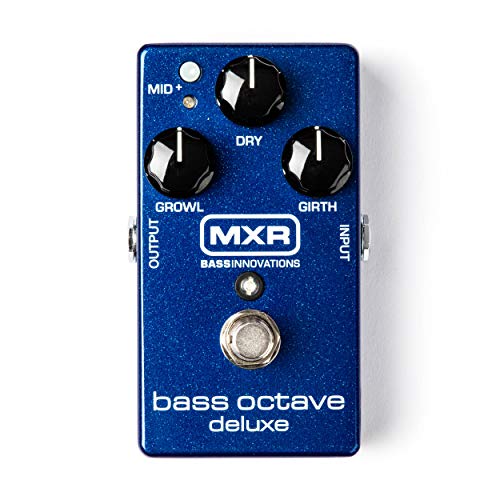
- Constant Headroom Technology helps with tracking
- Two independent octave voices
- Mid+ switch adds selectable midrange boost
Best For: bass players who want an analog octave with extra headroom
Industry-Standard Poly Octave

- Poly and mono modes for flexible octave use
- Dry direct output for separate routing
- Lowest Range setting targets the lowest note in chords
Best For: bass players who want a versatile, updated octave pedal
Vintage Mini Sub-Bass

- Warm analog sub-bass sound profile
- Superior tracking with cleaner headroom
- Mini enclosure for pedalboard-friendly size
Best For: bass players who want a compact analog octave with vintage character
Full-Feature Octave Bundle

- Clean tracking with no latency
- Vintage and enhanced Poly modes
- Includes cable, patch cable, picks, and cloth
Best For: bass players who want the OC-5 plus useful accessories
Dual-Channel Octave/Fuzz Bass Pedal
JOYO GLOAM R-29 Bass Sub Octave & Fuzz

- Independent octave and fuzz footswitches
- 7 controls plus dry/wet blending
- Two fuzz modes with tone-frequency switch
Best For: Players who want octave depth and fuzz in one bass pedal
All-in-One Bass Multi-Effects Preamp
SONICAKE Boom Ave Octave Preamp Pedal
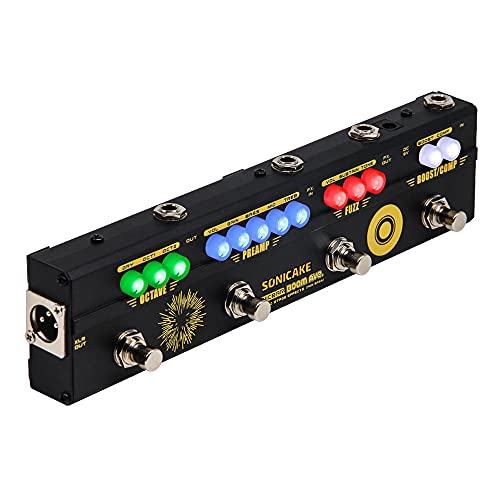
- Octave, preamp, compressor, boost, and fuzz
- Analog 3-band EQ with Ampeg-style voicing
- XLR output plus FX loop for routing flexibility
Best For: Bassists who want octave and preamp features in one compact unit
Digital Pitch-Shift Octave Mini Pedal
Donner Harmonic Square Octave Pedal

- Seven shift types with three tone modes
- Wet and dry knobs for easy blending
- Compact metal build with true bypass
Best For: Bass and guitar players who want a compact pitch-shift octave pedal
Analog Classic Octaver

- 100% analog monophonic octave circuit
- Blends dry signal with 1- and 2-octave-down tones
- True bypass; compact size for guitar and bass
Best For: Bassists who want a compact analog octave pedal for simple low-end layering
Polyphonic Mode Shifter
STRICH Digital Octave Mini Pedal
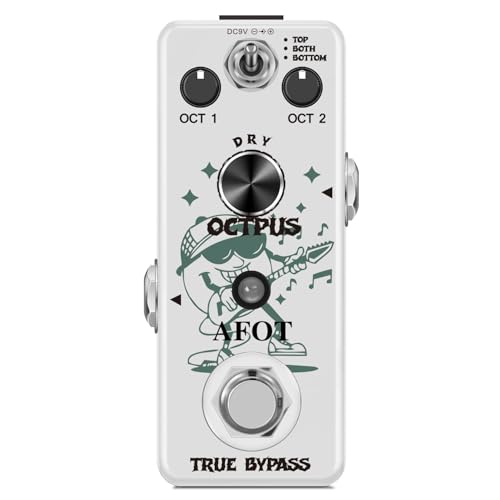
- Polyphonic shifting for single notes or chords
- TOP, BOTH, and BOTTOM octave modes
- Three knobs plus true bypass in a mini build
Best For: Bassists and guitarists wanting a compact digital octave pedal with flexible mode control
Budget Multi-Mode Octave

- 11 octave modes for a wide tonal range
- Compact metal housing with true bypass
- Can produce deep bass and organ-like textures
Best For: Players who want an affordable octave pedal with lots of sound options
Organic Analog Headroom – MXR Bass Octave Deluxe
If you want octave pedals for bass guitar with a more natural, analog feel, the MXR Bass Octave Deluxe is built around organic tone and strong tracking. Its Constant Headroom Technology helps keep the response clean, while the two independent octave voices give you flexible low-end layering without getting complicated.
Best For: Bass players who want an analog octave sound with extra headroom and tonal shaping.
Pros:
- Constant Headroom Technology for exceptional headroom and tracking
- Two independent octave voices for more control over your sub-octave blend
- Mid+ switch adds a user-selected midrange boost
- True bypass and organic analog tone
Cons:
- Runs on 18 volts, so it may need specific power planning
- No bundled accessories are listed
Overall, this pedal suits players who want a refined analog octave with a little extra EQ shaping built in. It keeps the focus on clean tracking and a warm bass-friendly voice.
Industry-Standard Poly Octave – BOSS OC-5
The BOSS OC-5 is a strong choice if you are shopping octave pedals for bass guitar and want a modern update to a classic design. It combines polyphonic and mono modes, plus a dry direct output, so you can shape everything from single-note sub-octaves to fuller chord-friendly textures.
Best For: Bass players who want a versatile, updated octave pedal with classic BOSS feel.
Pros:
- Polyphonic and mono modes for flexible playing styles
- Dry direct output for routing dry and effect signals separately
- Lowest Range setting applies the effect to only the lowest note in a chord
- Industry-standard octave pedal with enhanced features
Cons:
- Requires an AC adapter for power
- Only basic knob-based control layout is listed
For bassists who need dependable octave tracking and practical routing options, the OC-5 covers a lot of ground in one pedal. Its range controls and updated engine make it easy to dial in bass-friendly sounds quickly.
Vintage Mini Sub-Bass – MXR Vintage Bass Octave
If you prefer a compact option in octave pedals for bass guitar, the MXR Vintage Bass Octave focuses on warm analog sub-bass with a smaller footprint. It updates a classic-style circuit with better tracking and cleaner headroom, making it a practical pick for players who want vintage flavor without giving up modern usability.
Best For: Bass players who want a warm, compact analog octave with improved tracking.
Pros:
- Warm analog sub-bass sound profile
- Superior tracking with cleaner headroom
- Mini format saves pedalboard space
- Includes an adapter in the box
Cons:
- Only the listed controls are minimal
- No multi-voice or routing features are noted
This pedal is a straightforward choice when you want classic sub-octave character in a smaller enclosure. It is best for players who value simplicity, portability, and a warm bass octave voice.
Full-Feature Octave Bundle – Boss OC-5 Bundle
For shoppers comparing octave pedals for bass guitar, this BOSS OC-5 bundle adds the pedal plus useful accessories in one purchase. The pedal itself offers clean tracking, classic Vintage mode, and an enhanced Poly mode, while the included cables and cloth make it a more complete setup out of the box.
Best For: Bass players who want the OC-5 with accessories included for a ready-to-use bundle.
Pros:
- New tracking engine delivers clean, accurate performance with no latency
- Vintage mode captures the OC-2-style mono sound
- Enhanced Poly mode supports chords and lets you isolate the lowest note
- Bundle includes instrument cable, patch cable, picks, and polishing cloth
Cons:
- Bundle may be more than you need if you only want the pedal
- Uses a knob-based control layout rather than deeper presets
This bundle is a good fit if you want a feature-rich octave pedal and some essentials in the same box. It keeps the core OC-5 functionality intact while adding convenience for setup and maintenance.
Dual-Channel Octave/Fuzz Bass Pedal – JOYO GLOAM R-29 Bass Sub Octave & Fuzz
If you want octave pedals for bass guitar that can do more than just add low-end weight, the JOYO GLOAM R-29 is built around a dual-channel octave-and-fuzz layout. Its Sub Octave circuit runs alongside the fuzz section, with separate footswitches and a dry/wet control set that makes it easier to balance clarity, depth, and grit.
Best For: Bass players who want an octave-plus-fuzz pedal with hands-on control and two fuzz voicings.
Pros:
- Independent Sub Octave and Fuzz footswitches for quick control
- 7-knob layout with dry volume, dry tone, sub octave, gain, fuzz, low, and hi EQ
- Two fuzz modes plus a dry tone frequency switch for broader tone shaping
- Metal alloy build with ambient LED lighting and true bypass-style switching
Cons:
- Octave-only tones require the fuzz knob to be turned down while both channels are active
- Needs a 9V DC adapter and does not support battery operation
- Fuzz circuit may benefit from an isolated power supply for quieter performance
This is a strong choice if you want a bass pedal that can cover octave depth and fuzz texture in one box. The flexible controls make it especially useful for players who like to fine-tune their low end rather than rely on a fixed preset sound.
All-in-One Bass Multi-Effects Preamp – SONICAKE Boom Ave Octave Preamp Pedal
For bass players comparing octave pedals for bass guitar with more all-in-one utility, the SONICAKE Boom Ave combines octave, preamp, compressor, boost, and fuzz in a single pedal. Its octave module adds one- and two-octave-lower notes with the direct signal, making it useful when you want thickened bass lines without building a large board.
Best For: Bassists who want a compact multi-effects pedal with octave, preamp, and DI-style output options.
Pros:
- Octave module adds one and two octaves lower with the direct signal
- Analog preamp with 3-band EQ for a classic Ampeg-style tone
- Includes compressor, boost, fuzz, FX loop, and XLR output
- Ships with a 9V power supply
Cons:
- High-fret tracking can be tricky according to the supplied notes
- More of a multi-effects unit than a dedicated octave pedal
- Compact controls may feel crowded for players who prefer single-function pedals
This pedal makes sense if you need several core bass tones in one box and value practical routing extras like XLR and FX loop support. It is less specialized than a dedicated octave pedal, but it covers a lot of ground for gigging or direct-recording setups.
Digital Pitch-Shift Octave Mini Pedal – Donner Harmonic Square Octave Pedal
If you’re shopping for octave pedals for bass guitar and want a small digital pitch-shifter, the Donner Harmonic Square focuses on octave and detune-style sounds rather than analog warmth. With seven shift types and three tone modes, it gives you a practical range of octave, pitch-up, pitch-down, and detuned effects in a compact enclosure.
Best For: Players who want a mini octave/pitch-shift pedal with multiple tuning-style variations.
Pros:
- Seven shift types and three tone modes for 21 sound options
- Sharp, Flat, and Detune settings expand pitch-shift flexibility
- Wet and dry knobs make blending straightforward
- Aluminium-alloy build with true bypass and LED status indicator
Cons:
- Requires a 9V DC adapter with at least 500mA, not included
- Digital pitch-shift design may not suit players seeking an analog octave feel
- More focused on pitch effects than on bass-specific tone shaping
This is a sensible pick if you want a simple, compact octave-style pedal with a lot of pitch variation. It works best for players who value flexibility and a small footprint over a more dedicated bass octave voice.
Analog Classic Octaver – SONICAKE Octave Guitar Pedal
If you want octave pedals for bass guitar with a simple, analog feel, this SONICAKE octaver is built around a 100% analog monophonic circuit that blends octave tones with your dry signal. It’s compact, true bypass, and aimed at players who want basic lower-octave support without a lot of menu diving.
Best For: Bassists who want a compact analog octave pedal for straightforward low-end layering.
Pros:
- 100% analog monophonic octave design
- Blends dry signal with one-octave and two-octave-down sounds
- True bypass keeps the signal path clean
- Designed for both guitar and bass
Cons:
- Monophonic design may be less flexible than polyphonic models
- Power supply is included in the notes, but the pedal still relies on a 9V center-negative setup
- No advanced mode selection or preset options
For players focused on a classic octave effect rather than a multi-mode sound palette, this is a practical low-profile option. Its strength is in keeping the setup simple while still offering usable lower-octave textures for bass.
Polyphonic Mode Shifter – STRICH Digital Octave Mini Pedal
Among octave pedals for bass guitar, this digital mini unit stands out for its polyphonic handling and three octave-lane modes. It’s designed to keep chords and single notes clear, while the TOP, BOTH, and BOTTOM settings give you more control over how the octave sits in your signal.
Best For: Bassists and guitarists who want a compact digital octave pedal with flexible mode options.
Pros:
- Polyphonic octave shifting handles single notes or chords
- Three modes: TOP, BOTH, and BOTTOM
- Three knobs for dry and octave level control
- True bypass helps preserve the signal path
Cons:
- Power supply is not included
- Digital operation may not appeal to players who prefer analog circuits
- Listed as guitar-focused, so bass-specific use is not the main emphasis
If you want more flexibility than a basic one-setting octaver, this pedal offers a lot in a small package. The polyphonic design and mode selection make it a good fit for players experimenting with layered octave textures.
Budget Multi-Mode Octave – Rowin Pure Octopus LEF-3806
If you’re comparing octave pedals for bass guitar on a budget, this Rowin Pure Octopus is built around a wide range of digital octave settings. The notes point to tones from high organ-like sounds to deep bass notes, with solid tracking and a tiny footprint that makes it easy to fit on a crowded board.
Best For: Players who want an affordable, compact octave pedal with a broad sound range.
Pros:
- 11 different octave modes for broad tonal options
- Can reach deep bass notes as well as higher organ-like tones
- True bypass helps minimize tone loss
- Mini metal housing is easy to carry and place on a board
Cons:
- Power supply is not included
- Digital pedal may not suit players looking for an analog feel
- Feature set is broad, so it may take time to dial in a preferred sound
This is a strong value pick if you want variety without spending much or giving up pedalboard space. Its mix of multiple modes, preset capability, and compact construction makes it especially practical for experimentation.
How We Picked These Octave Pedals for Bass Guitar
We focused on pedals that make sense for bass players first: solid low-end tracking, useful dry blend controls, dependable bypass behavior, and layouts that are practical on a pedalboard. We also looked at whether each pedal is better suited to subtle reinforcement, aggressive octave tones, or multi-effect flexibility.
Because Octave Pedals for Bass Guitar can behave very differently depending on pickup type, playing style, and note range, we favored models with controls that help maintain clarity and avoid muddy sub-bass buildup.
Quick Comparison: What to Expect
Some pedals in this roundup are straightforward octave units built for clean, focused bass reinforcement. Others add fuzz, pitch-shifting variations, or multi-effect processing for players who want more than a single octave sound. In general, analog-style units tend to feel organic and immediate, while digital pedals usually offer more modes, tighter tracking, and broader tonal options.
Key Buying Factors for Octave Pedals for Bass Guitar
Tracking and Note Clarity
Fast, accurate tracking matters most if you play walking lines, syncopated riffs, or higher-register parts. A good pedal should follow your attack without glitching or disappearing on sustained notes.
Dry/Wet Blend
A blend control is one of the most useful features for bass. It lets you keep your original low end intact while layering the octave beneath it, which helps prevent the sound from getting thin or too processed.
Polyphonic Vs. Monophonic Design
Polyphonic pedals are usually better if you play chords, double-stops, or complex passages. Monophonic designs often excel at classic single-note octave tones and can feel smoother or more natural for traditional bass lines.
Mode Options and Tone Shaping
Extra modes such as sub-octave, upper octave, fuzz, detune, or harmonic variations give you more flexibility. If you only need one reliable octave sound, simplicity may be better than a feature-heavy layout.
Power, Size, and Live Use
Compact pedals save space, but bigger enclosures may offer easier control access. Make sure the pedal matches your board layout, power setup, and footswitch needs before buying.
Who Should Buy Which Octave Pedals for Bass Guitar?
If you want a classic, bass-first octave sound, look at straightforward octave pedals with strong blend and tracking. If you play modern styles, worship, metal, funk, or experimental music, a polyphonic or multi-effect option may be the better fit.
Players who want plug-and-play simplicity should favor the most streamlined designs. Bassists who like to shape textures, stack fuzz, or build synth-like tones will get more value from pedals with extra controls and mode switching. In short, the best Octave Pedals for Bass Guitar are the ones that match your playing style, not just the biggest feature list.