EQ pedals can do far more than add volume or cut harshness. On a pedalboard, they help you fine-tune your sound, shape your mids, and adapt to different guitars, amps, and rooms.
This roundup of the best eq pedals for pedalboards in 2026 focuses on reliable, easy-to-use graphic equalizers that suit both subtle correction and more detailed tone control.
Best 10 Eq Pedals for Pedalboards Picks for 2026
Classic 7-Band Graphic EQ

- 7 guitar-optimized bands from 100 Hz to 6.4 kHz
- ±15 dB boost/cut plus level slider
- Compact BOSS pedalboard-friendly format
Best For: players who want a simple, compact graphic EQ for guitar
High-Visibility Six-Band EQ
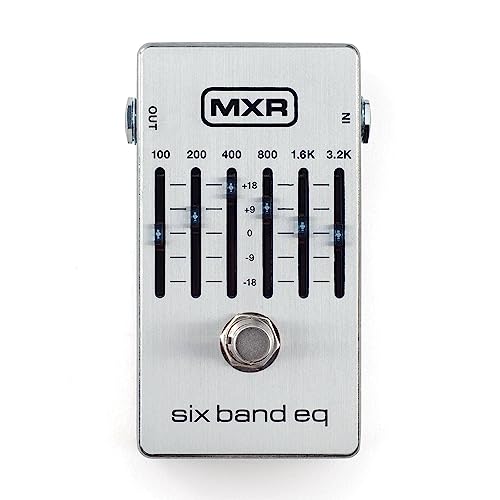
- Six bands with up to ±18 dB cut or boost
- LEDs stay visible in bright light
- True bypass and low noise floor
Best For: gigging players who want a readable, low-noise EQ
Budget 6-Band Tone Shaper

- Six guitar-optimized bands with ±18 dB control
- Illuminated sliders and center detent
- True bypass in a rugged aluminum chassis
Best For: budget-minded players who want an easy-to-read EQ for live use
Expanded 10-Band Control
MXR Ten Band EQ Guitar Effects Pedal

- 10 bands for more detailed frequency shaping
- 18-volt operation for increased headroom
- Two outputs and true bypass
Best For: players who want the most detailed EQ control and extra routing flexibility
Compact 10-Band Graphic EQ

- 10-band graphic EQ for guitar and bass
- ±15 dB control on each band
- True bypass with aluminum-alloy housing
Best For: Compact, no-frills tone shaping on guitar or bass
Classic 10-Band Slider EQ

- 100% analog 10-band equalizer
- 11 sliders for fast tone shaping
- True bypass circuit for clean signal path
Best For: Affordable, easy-to-read EQ control on a pedalboard
High-Control 10-Band EQ

- 31.25Hz-16kHz 10-band graphic EQ
- Independent volume slider for level matching
- LED-backlit sliders and true bypass
Best For: Detailed tone shaping with easy on-stage visibility
Bass Graphic EQ

- Seven-band control for bass shaping
- Full-range response for 5- and 6-string basses
- Boost or cut with the level control
Best For: Bass players needing a straightforward pedalboard EQ
Wide-Range EQ

- 10 bands from 31.25Hz to 16kHz
- ±12dB control per band
- True bypass with independent output volume
Best For: Guitar and bass players who want detailed tone shaping
Portable EQ

- Ten bands plus a master band
- 31.25Hz to 16kHz frequency coverage
- True bypass in a compact aluminum shell
Best For: Players needing a durable, travel-friendly pedalboard EQ
Classic 7-Band Graphic EQ – BOSS GE-7 Equalizer
If you want one of the most straightforward eq pedals for pedalboards, the BOSS GE-7 is built around guitar-friendly 7-band control with a simple slider layout. It covers 100 Hz through 6.4 kHz, giving you a practical way to tighten lows, shape mids, and add presence without overcomplicating your setup.
Best For: Guitarists who want a compact, easy-to-use graphic EQ with familiar BOSS reliability.
Pros:
- 7 bands tuned for guitar, from 100 Hz to 6.4 kHz
- ±15 dB boost/cut per band for flexible tone shaping
- Level slider helps with volume balancing or clean boost
- Compact footprint for tighter boards
Cons:
- Only 7 bands, so it is less detailed than larger EQ pedals
- Designed specifically around guitar frequencies, which may be limiting for broader uses
The GE-7 is a strong pick if you need a practical EQ pedal that is easy to dial in and simple to fit on a crowded board. Its focused frequency range and compact format make it a dependable utility pedal for everyday tone correction.
High-Visibility Six-Band EQ – MXR Six Band EQ
The MXR Six Band EQ is a practical option for eq pedals for pedalboards when you want clear control without a lot of extra complexity. It offers six frequencies with up to ±18 dB of cut or boost, plus LEDs that stay easy to see even in direct sunlight.
Best For: Players who want a compact EQ with strong adjustment range and bright, readable sliders.
Pros:
- Six-band EQ with up to ±18 dB cut or boost
- LEDs improve visibility on bright stages
- Low noise floor for cleaner operation
- True bypass switching
Cons:
- Fewer bands than 10-band EQ options
- Battery-powered spec may not suit every board setup
This pedal is a good fit if visibility and simplicity matter as much as tone control. It gives you a solid amount of shaping power in a streamlined format that works well on gigging boards.
Budget 6-Band Tone Shaper – JOYO 6-Band EQ Guitar Pedal
For players comparing eq pedals for pedalboards, the JOYO JF-11 gives you a compact 6-band layout with guitar-optimized frequencies from 100 Hz to 3.2 kHz. Each slider offers ±18 dB of cut or boost, so it can handle everything from subtle cleanup to more dramatic tone reshaping.
Best For: Budget-conscious players who want an illuminated, true-bypass EQ pedal with strong tone-shaping range.
Pros:
- Six guitar-focused bands with ±18 dB per slider
- Illuminated sliders make adjustments easier on dark stages
- Center detent helps you find neutral quickly
- True bypass keeps the signal path clean when off
Cons:
- Power supply is not included
- Limited to 3.2 kHz on the high end
The JF-11 is a sensible choice if you want useful EQ control without paying for a more complex unit. Its illuminated sliders and straightforward layout make it especially convenient for live use and quick adjustments.
Expanded 10-Band Control – MXR Ten Band EQ Guitar Effects Pedal
If you need more detailed control from eq pedals for pedalboards, the MXR Ten Band EQ stands out with 10 adjustable frequencies and up to ±12 dB of cut or boost. Its 18-volt operation also provides increased headroom, while the dual outputs add routing flexibility.
Best For: Players who want deeper EQ shaping and extra routing options in a true-bypass pedal.
Pros:
- 10 bands for more precise tone shaping
- 18-volt operation for increased headroom
- Two outputs for separate signal chains
- LEDs and true bypass support live use
Cons:
- Larger footprint than smaller EQ pedals
- ±12 dB range is less extreme than some 6-band units
This is the most feature-rich pedal in the group for players who want finer control across a wider frequency range. It is a strong fit for boards where space is available and routing flexibility matters.
Compact 10-Band Graphic EQ – Donner EQ Pedal
Donner EQ Pedal, 10 Band Equalizer Pedal, EQ Seeker for Guitar and Bass True Bypass
Check Price On AmazonIf you want one of the more straightforward eq pedals for pedalboards, the Donner EQ Seeker gives you a compact 10-band graphic layout with ±15 dB control on each band. It’s aimed at players who need quick tone shaping for guitar or bass without a complicated setup, and the true bypass design helps keep the signal transparent when the pedal is off.
Best For: Players who want a compact, true-bypass 10-band EQ for simple tone shaping on guitar or bass.
Pros:
- 10-band graphic EQ covers a wide range of tone shaping.
- ±15 dB adjustment per band gives plenty of control.
- True bypass is designed to keep the signal intact when disengaged.
- Durable aluminum-alloy construction suits pedalboard use.
Cons:
- Power adapter is not included.
- Best suited to players comfortable working with sliders rather than simple knobs.
Overall, this is a practical budget-friendly EQ pedal for pedalboards if you want broad frequency control in a compact format. It focuses on core tone shaping and road-ready construction rather than extra features.
Classic 10-Band Slider EQ – SONICAKE EQ Equalizer
The SONICAKE EQ Equalizer is a practical pick if you want eq pedals for pedalboards with a simple 10-band layout and quick slider access. Its analog design offers ±15 dB gain range per band, and the true bypass circuit is meant to keep the clean signal path intact when you’re not using it.
Best For: Players who want an affordable analog 10-band EQ with easy slider control.
Pros:
- 100% analog 10-band EQ for familiar tone shaping.
- ±15 dB gain range per band offers useful flexibility.
- 11 sliders make adjustments fast and visual.
- True bypass helps preserve the clean signal path.
Cons:
- Power supply is not included.
- Smaller footprint may feel tight for players who prefer larger slider spacing.
For straightforward equalization without extra complexity, this pedal keeps the feature set focused and practical. It’s a solid option when you want a compact board-friendly EQ that’s easy to dial in on the fly.
High-Control 10-Band EQ – JOYO R-12 Band Controller
For players comparing eq pedals for pedalboards, the JOYO R-12 stands out with 10 carefully chosen bands from 31.25Hz to 16kHz plus a separate master volume slider. That makes it useful when you want detailed frequency shaping and an easy way to match levels or add a clean boost without changing your EQ settings.
Best For: Guitarists and bass players who want detailed EQ control with an independent volume slider.
Pros:
- 10-band EQ covers deep lows through high treble.
- Independent volume slider can match level or add a clean boost.
- LED-backlit sliders help visibility on dark stages.
- True bypass and aluminum-alloy housing suit pedalboard use.
Cons:
- Requires a 9V DC adapter, which is not included.
- Users need an isolated, regulated supply for the cleanest performance.
This is the most feature-rich option in the group if you value precision and stage visibility. It’s built for players who want their EQ pedal to do more than just flatten or boost a few bands.
Bass Graphic EQ – Bass EQ Workhorse
If you need eq pedals for pedalboards that are built around bass, the BOSS GEB-7 is a straightforward option with a full-range response and seven bands to shape your low end. It is also a practical choice for electric-acoustic bass setups, and the level control lets you use it as either a boost or cut pedal depending on the song.
Best For: Bass players who want a simple, reliable graphic EQ for live pedalboards.
Pros:
- Seven-band EQ gives broad control over bass tone.
- Full-range response works even for five- and six-string basses.
- Can function as a boost or cut pedal with the level control knob.
- Useful for electric-acoustic bass applications.
Cons:
- Designed specifically for bass, so it is less versatile for general guitar EQ needs.
- Uses a basic knob-based control layout rather than sliders.
This is a practical pedalboard EQ when you want bass-focused shaping without extra complexity. The GEB-7 is best suited to players who want dependable tone control and a familiar Boss format.
Wide-Range EQ – Compact 10-Band Blue EQ
For eq pedals for pedalboards that need flexible tone shaping, the EROK 10-band EQ gives you a wide frequency range from 31.25Hz to 16kHz with independent gain or attenuation on each band. It is built for both bass and guitar, and the separate output volume control makes it easier to match levels in a live rig.
Best For: Guitar and bass players who want a compact, transparent 10-band EQ with broad coverage.
Pros:
- Independent 10-band EQ covers 31.25Hz to 16kHz.
- ±12dB boost/cut range on each band.
- Independent output volume adjustment helps manage overall level.
- True bypass design aims for transparent signal handling.
Cons:
- Power adapter is not included.
- Sliders and controls may take more pedalboard space than simpler EQ pedals.
This pedal makes sense if you want more detailed control than a basic graphic EQ and need coverage for both guitar and bass. Its compact metal build and true bypass design make it a practical fit for an active board.
Portable EQ – Portable 10-Band Equalizer
STRICH 10-Band EQ Pedal for Guitar & Bass, ±12dB per Band | 10 frequency bands from 31.25Hz to 16kHz
Check Price On AmazonIf you are comparing eq pedals for pedalboards and want a compact 10-band option, the STRICH EQ Pedal offers broad frequency coverage from 31.25Hz to 16kHz with a master band and quick-setting points. It is built from aluminum alloy, uses true bypass, and is intended for both guitar and bass use.
Best For: Players who want a durable, travel-friendly EQ pedal with simple band-by-band control.
Pros:
- Ten independent frequency bands plus a master band.
- ±12dB gain/attenuation range for each band.
- True bypass supports clean signal transmission.
- Compact aluminum alloy build is made for portability and durability.
Cons:
- Requires a 9V DC adapter that is not included.
- Slider-based layout may not suit players who prefer knob-only pedals.
The STRICH is a solid choice if you want a small but detailed equalizer that can handle both stage and travel use. Its wide range and true bypass design make it an easy fit for many pedalboard setups.
How We Picked the Best Eq Pedals for Pedalboards
We looked for pedals that are practical on real boards: clear frequency bands, usable gain range, solid bypass behavior, and layouts that are easy to read on stage. We also favored models that offer enough flexibility for both tone cleanup and creative shaping without making setup complicated.
Quick Comparison for Eq Pedals for Pedalboards
Some players want a simple 6- or 7-band pedal for fast fixes, while others prefer 10-band designs for finer control over low end, mids, and top-end sparkle. Guitar-focused options usually center on the most useful midrange frequencies, while bass-friendly models extend lower to better manage rumble and punch.
More Bands Vs. Simpler Control
A 10-band pedal gives you more precision, but a 6- or 7-band unit can be easier to dial in quickly. If you already know the problem you want to solve, more bands help. If you want straightforward tone shaping, fewer sliders may be the better fit.
Key Buying Factors for Eq Pedals for Pedalboards
Start with frequency range. Guitar players often benefit from mid-focused bands, while bass players usually need deeper low-frequency coverage. Next, check whether the pedal offers enough boost and cut for your needs; ±12dB or ±18dB is common and useful for correcting room issues or pushing an amp.
Slider visibility matters too. Illuminated markings can help on dark stages, and a compact footprint is important on crowded boards. True bypass is also worth considering if you want minimal signal coloring when the pedal is off. Finally, think about whether you want the EQ to be used always-on for tone shaping or only as a problem-solving tool for certain songs, venues, or guitars.
Who Should Buy Which Eq Pedals for Pedalboards?
If you want simple, dependable tone control, a 6- or 7-band pedal is often the easiest choice. If you need surgical precision for a detailed rig, a 10-band model is a better match. Bass players should prioritize units with lower frequency coverage and enough output control to preserve punch. Players using multiple guitars or switching between clean and driven sounds will get the most value from Eq Pedals for Pedalboards that can quickly adapt to different setups.
In short, choose the narrowest, most practical pedal that solves your main tonal problem. That approach keeps your board efficient while still giving you the flexibility to fix issues fast.