Graphic EQ pedals for guitar are one of the fastest ways to shape your tone, fix room-specific problems, and fine-tune how your rig sits in a mix.
From compact 6-band options to flexible 10-band models, this roundup focuses on pedals that offer practical control for live players, recording setups, and everyday pedalboards.
Best 10 Graphic Eq Pedals for Guitar Picks for 2026
Classic 7-Band Workhorse

- 7 guitar-optimized bands
- ±15 dB boost/cut per band
- Compact pedalboard-friendly design
Best For: Guitarists who want a simple, proven EQ for everyday tone shaping
High-Visibility Six-Band
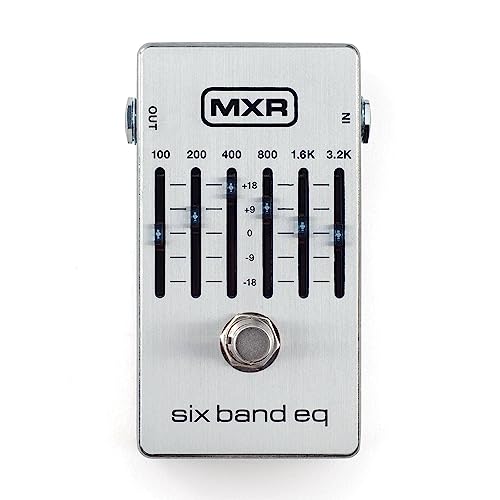
- Six frequencies with ±18 dB range
- LEDs stay visible in bright light
- Low-noise, true-bypass design
Best For: Players who want a simple EQ with strong visibility on stage
Advanced Dual-Channel Editor

- Dual 10-band EQs
- Stereo, parallel, and series modes
- Insert function for external effects
Best For: Players with complex rigs who need flexible, high-definition EQ control
Ten-Band Performance Booster

- 10-band EQ for detailed shaping
- 18-volt operation for extra headroom
- Two outputs for separate signal chains
Best For: Guitarists who want detailed EQ control and split-chain flexibility
Most Flexible Tone Shaper
JOYO 10-Band Graphic EQ for Guitar & Bass

- 10-band EQ spans 31.25Hz to 16kHz.
- Independent volume slider adds clean boost control.
- True bypass and LED sliders suit live use.
Best For: Players who want broad, precise EQ control for guitar or bass.
Best Simple Analog Choice
SONICAKE 10-Band Analog EQ Pedal

- 100% analog 10-band equalizer.
- ±15dB per band for quick shaping.
- True bypass keeps the signal clean.
Best For: Players who want a simple, classic EQ pedal for fast adjustments.
Compact Road-Ready Option
Donner EQ Seeker 10-Band Equalizer Pedal

- 10-band graphic EQ with ±15dB range.
- Compact aluminum-alloy build for durability.
- True bypass keeps the signal transparent.
Best For: Players who want a durable, compact EQ pedal for everyday use.
Compact 7-Band Tone Shaper
EX 7 Band EQ Equalizer Mini Guitar Pedal

- 7 sliders from 63Hz to 5kHz
- True bypass with low-noise design
- Mini metal body with level knob
Best For: Compact tone correction and simple live boosts
Stage-Ready 6-Band EQ

- Six guitar-optimized bands with ±18dB control
- Illuminated sliders and center detent
- True bypass in a rugged aluminum chassis
Best For: Live players who want visible, surgical tone shaping
Detailed 10-Band Control

- 10 bands from 31.25Hz to 16kHz
- Low-noise true bypass operation
- Compact metal body with top jacks
Best For: Detailed tone shaping for guitar, bass, and studio use
Classic 7-Band Workhorse – BOSS GE-7 7-Band Graphic EQ
If you want graphic eq pedals for guitar that keep things simple and practical, the BOSS GE-7 is a straightforward option. Its 7 guitar-optimized bands and level slider make it easy to shape mids, tighten the lows, or add a clean volume lift without adding extra complexity.
Best For: Guitarists who want a compact, easy-to-use EQ with familiar 7-band control.
Pros:
- 7 guitar-friendly bands: 100 Hz, 200 Hz, 400 Hz, 800 Hz, 1.6 kHz, 3.2 kHz, and 6.4 kHz
- ±15 dB boost/cut per band for broad tone shaping
- Level slider for overall volume balancing or boost
- Compact footprint that fits well on crowded pedalboards
Cons:
- Less detailed than higher-band graphic EQ options
- No advanced routing or digital processing features
The GE-7 is a solid pick if you want a pedal that focuses on core EQ duties and stays easy to dial in. It’s especially appealing for players who prefer a pedalboard-friendly format and a proven layout over extra features.
High-Visibility Six-Band – MXR Six Band EQ
For players comparing graphic eq pedals for guitar, the MXR Six Band EQ offers a focused set of controls with a low-noise design. It gives you cut or boost across six frequencies and keeps the sliders easy to see, even in bright light.
Best For: Guitarists who want a clean, compact EQ with very visible controls.
Pros:
- Six selectable frequencies with up to ±18 dB adjustment
- LEDs improve visibility in direct sunlight
- Low noise floor supports cleaner signal shaping
- True bypass switching helps preserve your signal when disengaged
Cons:
- Fewer bands than 7- or 10-band alternatives
- Less flexible for very detailed frequency sculpting
This model makes sense if you value simplicity, visibility, and strong boost/cut range more than a dense control set. It’s a practical choice for players who want an EQ pedal that stays easy to read on stage.
Advanced Dual-Channel Editor – BOSS EQ-200 Graphic Equalizer
If you need more control from graphic eq pedals for guitar, the BOSS EQ-200 is built for detailed shaping and flexible routing. Its dual 10-band design, selectable frequency ranges, and insert function make it a strong fit for more complex rigs.
Best For: Guitarists who want a highly flexible EQ with advanced routing and stereo options.
Pros:
- Dual 10-band EQs with stereo, parallel, or series operation
- Three selectable frequency ranges for broader tonal coverage
- Insert function lets you process external effects with pre and/or post shaping
- 32-bit AD/DA and 96 kHz sampling for high-definition processing
Cons:
- More complex than a basic EQ pedal
- Higher current draw than simpler analog options
The EQ-200 is aimed at players who need more than standard tone trimming and want a powerful tool for modern pedalboards. If your setup benefits from routing flexibility and detailed control, this one stands out.
Ten-Band Performance Booster – MXR Ten Band EQ
Among graphic eq pedals for guitar, the MXR Ten Band EQ is the most detailed option in this group for shaping multiple parts of your signal. With 10 bands, LED visibility, and 18-volt operation, it’s designed for players who want more control and extra headroom.
Best For: Guitarists who want fine-grained EQ shaping and extra output flexibility.
Pros:
- 10 adjustable frequencies for detailed tone shaping
- Up to ±12 dB cut/boost per band
- 18-volt operation provides increased headroom
- Two outputs support two separate signal chains
Cons:
- Larger footprint than simpler EQ pedals
- Less boost/cut range per band than some alternatives
This is a strong choice when you want more bands to work with and the option to split your signal chain. It suits players who prefer detailed control and a pedal that can handle more demanding setups.
Most Flexible Tone Shaper – JOYO 10-Band Graphic EQ for Guitar & Bass
If you want graphic eq pedals for guitar that can make real, audible changes, the JOYO R-12 gives you a full 10-band layout from 31.25Hz to 16kHz. It’s built for detailed tone shaping, whether you want to tighten lows, pull out muddy mids, or add top-end clarity, and the independent volume slider makes it useful as both an EQ and a clean level boost.
Best For: Players who want broad frequency control for guitar, bass, or synth-style tone shaping.
Pros:
- 10 sliders cover a wide range from sub-bass to high treble.
- Independent master volume can match level or add boost for solos.
- True bypass helps preserve your signal when the pedal is off.
- LED-backlit sliders make settings easier to see on dark stages.
Cons:
- Requires a 9V DC center-negative adapter, which is not included.
- Some noise issues may depend on using proper isolated power.
- Best results may take some time to dial in across all ten bands.
This is the most flexible option here if you want surgical control and don’t mind spending time shaping the curve. The JOYO stands out for its wide frequency span and volume control, making it a practical choice for players who want one pedal to handle both tone correction and boost duties.
Best Simple Analog Choice – SONICAKE 10-Band Analog EQ Pedal
Among graphic eq pedals for guitar, the SONICAKE EQ Equalizer keeps things straightforward with a classic 10-band analog layout and ±15dB adjustment per band. It’s aimed at quick tone shaping, so you can make fast changes to your EQ curve without a complicated interface, while true bypass keeps the signal path clean when it’s disengaged.
Best For: Players who want a simple analog EQ pedal for fast tone adjustments.
Pros:
- 100% analog 10-band equalizer with classic graphic EQ control.
- ±15dB adjustment range gives useful cut-and-boost flexibility.
- True bypass helps maintain a clean signal path.
- Compact and practical for general instrument use.
Cons:
- Power adapter is not included.
- Uses a regular 9V center-negative supply only.
- Less feature-heavy than models with dedicated volume or lighting extras.
This pedal makes sense if your main goal is straightforward EQ shaping rather than extra features. The SONICAKE focuses on the essentials: analog operation, clear slider control, and enough adjustment range to fine-tune a guitar or other instrument quickly.
Compact Road-Ready Option – Donner EQ Seeker 10-Band Equalizer Pedal
Donner EQ Pedal, 10 Band Equalizer Pedal, EQ Seeker for Guitar and Bass True Bypass
Check Price On AmazonThe Donner EQ Seeker is a compact option in the world of graphic eq pedals for guitar, offering a fully functional 10-band graphic equalizer with a ±15dB range for each band. It’s designed for practical tone shaping across different styles, and the all-aluminum build plus true bypass make it a solid pick for regular pedalboard use.
Best For: Guitarists and bass players who want a durable, compact EQ pedal with broad tone control.
Pros:
- 10-band graphic EQ gives broad control over the frequency curve.
- ±15dB boost/cut range allows meaningful tone correction.
- True bypass helps preserve transparency when off.
- Durable aluminum-alloy construction supports road use.
Cons:
- Power adapter is not included.
- Uses 9V power and draws 100mA, so it needs proper supply planning.
- No special extras like a dedicated boost slider or LED slider lighting.
If you want a no-frills EQ pedal that still feels sturdy, the Donner is easy to recommend. It combines the standard 10-band format with a compact, durable enclosure, making it a sensible everyday tool for players who need dependable frequency control.
Compact 7-Band Tone Shaper – EX 7 Band EQ Equalizer Mini Guitar Pedal
If you want graphic eq pedals for guitar that make quick, practical tone fixes, this compact 7-band option is built for simple sound shaping. With sliders covering 63Hz to 5kHz and a dedicated level control, it gives you enough range to clean up muddy lows, add brightness, or lift mids without taking over your board.
Best For: Players who want a small, easy-to-use EQ for live tone tweaks, clean boosts, and basic pedalboard correction.
Pros:
- 7 adjustable bands with ±15dB boost/cut for broad tone control
- True bypass helps keep the signal unchanged when the pedal is off
- Compact metal mini enclosure fits crowded pedalboards
- Dedicated level knob makes volume balancing and solo boosts easier
Cons:
- Uses a standard 9V DC adapter, but one is not included
- Smaller 7-band layout offers less granular control than larger EQs
Overall, this is a straightforward EQ pedal for players who want dependable tone shaping in a tiny footprint. It focuses on the essentials: practical frequency control, true bypass operation, and easy stage use.
Stage-Ready 6-Band EQ – JOYO 6-Band EQ Guitar Pedal
Among graphic eq pedals for guitar, this 6-band unit is aimed at players who want precise control with a very usable frequency layout. Its guitar-optimized bands from 100Hz to 3.2kHz and ±18dB range make it useful for tightening muddy rigs, reshaping drive pedals, or pushing solos forward in the mix.
Best For: Guitarists who want a well-voiced EQ for stage adjustments, gain shaping, and straightforward tone cleanup.
Pros:
- Six guitar-focused bands are easy to work with on the fly
- Illuminated sliders improve visibility on dark stages
- Center detent helps you quickly find the neutral position
- True bypass keeps the signal path clean when disengaged
Cons:
- Power supply is not included
- Smaller band count may not satisfy users who want deeper frequency slicing
This pedal is a practical pick if you want a no-nonsense EQ that is easy to read and easy to dial in. It balances strong boost/cut range with a layout that suits both live use and tone experimentation.
Detailed 10-Band Control – RVONE 10-Band Equalizer Pedal
If you need graphic eq pedals for guitar with more detailed control, this 10-band design gives you wider frequency shaping from 31.25Hz to 16kHz. It is built for players who want to tame harsh highs, tighten bass, or use the level control as a boost while keeping the signal chain compact and quiet.
Best For: Players who want broader EQ control for stage, studio, and pedalboard use without a large footprint.
Pros:
- 10 independent bands provide more detailed tone shaping
- True bypass helps preserve the guitar’s natural resonance
- Low-noise circuitry is designed for quiet operation with high-gain rigs
- Compact chassis with top-mounted jacks saves pedalboard space
Cons:
- Adapter is not included
- 10-band layout may be more than casual users need
This pedal stands out if you want more frequency control than a basic 6- or 7-band unit can offer. It is especially appealing for players who move between guitar, bass, and studio-style tone shaping and want one EQ to handle multiple jobs.
How We Picked These Graphic Eq Pedals for Guitar
We focused on EQ range, slider layout, ease of use, noise performance, true bypass or switching quality, and how well each pedal fits common guitar rigs. We also favored models with useful guitar-centered frequency choices, since not every equalizer is equally effective for guitar shaping.
Quick Comparison
In general, fewer bands are simpler and faster to dial in, while 10-band pedals offer finer control over problem frequencies and overall tone sculpting. Compact pedals work well for basic boosts and corrective EQ, while larger units suit players who want more detailed control, stereo options, or broader frequency coverage.
Key Buying Factors for Graphic Eq Pedals for Guitar
Number of Bands
Choose 6 or 7 bands if you want quick, intuitive adjustments. Pick 10 bands if you need more precision for cutting mud, taming harsh highs, or compensating for different amps and venues.
Frequency Range and Guitar Voicing
Look for frequencies that match guitar fundamentals and upper harmonics. A pedal that starts too low or spreads bands too broadly may be less useful for guitar than one with guitar-optimized center points.
Boost, Cut, and Output Control
A good EQ should let you both boost and cut effectively. An output level slider or volume control is especially helpful if you want to use the pedal as a clean boost or to balance signal loss from other effects.
Noise, Bypass, and Build Quality
EQ pedals can raise hiss if they are poorly designed or if you push multiple bands hard. True bypass, solid sliders, and stable enclosures matter, especially for live use and pedalboards that see regular transport.
Size and Power Needs
Compact models save space, while larger pedals may offer more control but take up valuable board real estate. Check the power requirements and whether the pedal’s footprint fits your setup before buying.
Who Should Buy Which Graphic Eq Pedals for Guitar?
If you want simple correction and fast setup changes, a 6- or 7-band pedal is usually the best starting point. If you need surgical tone shaping, studio-style control, or more flexibility across multiple guitars and amps, a 10-band model is a better fit. Players with small pedalboards should prioritize compact designs, while gigging musicians may prefer pedals with visible sliders, strong output control, and low-noise operation.
For most buyers, the best choice comes down to how much control you want versus how much space you can spare. Match the EQ pedal to your rig, and you’ll get a more responsive, mix-ready tone with less trial and error.