Finding the right wireless in-ear monitor system can make a band sound tighter, clearer, and far easier to mix on stage. The best setups reduce stage volume, improve timing, and give each player a more controlled personal mix.
Below, we’ve rounded up 10 options for different budgets, band sizes, and live-use needs, with a focus on practical performance factors like latency, range, monitoring style, and receiver count.
Best 10 Wireless in Ear Monitor Systems for Bands Picks for 2026
Compact 2.4GHz Starter Pick
LEKATO MS-1 Wireless IEM System
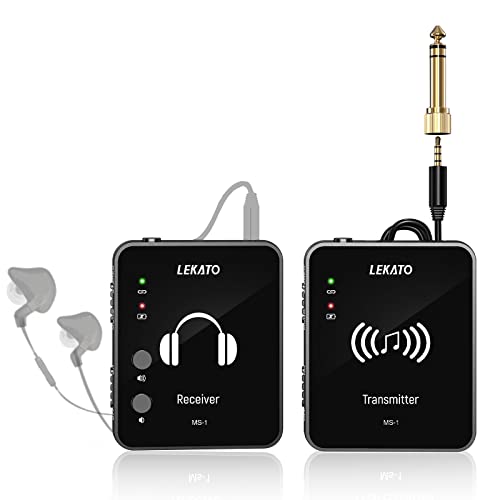
- One transmitter works with multiple receivers
- Auto-pairing keeps setup simple
- True stereo with low-latency 2.4GHz audio
Best For: Small bands and rehearsal setups needing an easy wireless IEM system
Rack-Ready Multi-Mix Choice
Phenyx Pro PTM-33-4B 4-Channel IEM

- Four-channel transmitter with loop outputs
- Supports four standalone mono mixes
- Rackmount-friendly UHF system for live use
Best For: Bands and worship teams needing multiple mono mixes in a rackable package
Pro UHF Starter Set
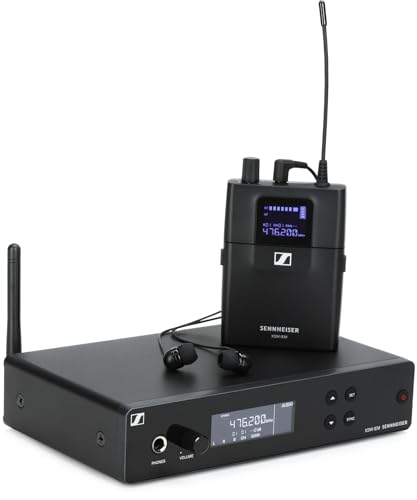
- Professional UHF wireless connection
- Focus mode plus EQ and limiter
- Manual or preset frequency control
Best For: Performers wanting a dependable UHF starter system with mix control
Low-Latency Upgrade Pick

- Mono latency rated under 4.5 ms
- One transmitter to up to 4 receivers
- 6-8 hour battery with LED indicators
Best For: Small bands and singers wanting a compact low-latency IEM system
Rack-Mount Mono Group Set
Phenyx Pro PTM-11-4B Mono IEM System

- UHF 900MHz system with 50 selectable frequencies
- Includes 4 bodypacks for shared band monitoring
- Metal half-rack transmitter with 164 ft range
Best For: Bands and live teams needing a mono IEM system with multiple receivers
Rechargeable Portable Duo
LEKATO MS-20 Portable 2.4G IEM System

- Rechargeable system with charging case and up to 30 hours runtime
- 2.4GHz setup with auto-pairing and OTG support
- One transmitter can send to up to 10 receiver pairs
Best For: Bands that want a portable rechargeable IEM system for rehearsals and gigs
Long-Range Four-Pack
UHF IME-4000 4-Pack Mono Wireless IEM

- UHF mono system with PLL technology and limiter circuitry
- Four bodypacks, four earphones, and IR sync setup
- Up to 330 ft open-space coverage with 2x40 frequencies
Best For: Bands needing long-range mono monitoring with four receivers
Compact 2.4GHz Pick
Wireless IEM for Small to Mid-Size Bands

- Auto-pairing for quick setup
- Less than 5 ms latency
- 10-12 hour rechargeable battery
Best For: Bands needing a simple plug-and-play 2.4GHz monitor system
Multi-Pack UHF Workhorse
4-Bodypack Wireless IEM System

- Includes 4 bodypack receivers
- UHF design helps reduce interference
- Up to 300 ft stated range
Best For: Bands needing one system for several performers
Stereo UHF Pro Pick
Wireless IEM with Rackmount Flexibility

- True stereo/mono monitoring
- EQ, balance, limiter, and lock controls
- Up to 5 systems can run together
Best For: Bands wanting stereo monitoring with more mix control
Compact 2.4GHz Starter Pick – LEKATO MS-1 Wireless IEM System
If you want wireless in ear monitor systems for bands without a complicated setup, the LEKATO MS-1 is built around simplicity. It supports one transmitter to multiple receivers, auto-pairing, and true stereo transmission, making it a practical choice for rehearsals, small gigs, churches, and studio use.
Best For: Small and medium bands that want an easy, low-latency wireless IEM setup with multiple receivers.
Pros:
- Supports up to 6 sets working at the same time with one transmitter
- Auto-pairing keeps setup quick and straightforward
- True stereo transmission with a one-key stereo/mono switch
- 2.4GHz design offers low noise, low latency, and 20Hz-20KHz response
Cons:
- Battery life is rated at just over 5 hours
- Open-area range is listed at 100 feet
- Stereo performance depends on using a stereo source and stereo cable
Overall, the MS-1 is an approachable wireless IEM option for bands that value fast setup and stereo monitoring over advanced rack features. It looks especially strong for regular rehearsals and smaller stages.
Rack-Ready Multi-Mix Choice – Phenyx Pro PTM-33-4B 4-Channel IEM
The Phenyx Pro PTM-33-4B is aimed at bands that need a more structured wireless in ear monitor system for bands with multiple performers. Its integrated monitor station, 4-channel layout, and loop outputs are designed to handle four independent mixes from a single mixer setup.
Best For: Four-member bands, worship teams, and live crews that want multiple mono mixes from a rack-friendly system.
Pros:
- 4-channel transmitter supports four separate left/right input groups
- Up to 4 standalone mixes with no delay in sound
- UHF design with 140-164 ft line-of-sight range
- Rackmount kit and 42cm format make it tour-friendly
Cons:
- Mono monitoring only, not stereo
- Requires four auxiliary jacks on the mixer for diversified monitoring
- Range can be affected by thick walls, glass, and metal blocks
If your priority is separate mixes and a clean stage workflow, this system is more capable than basic entry-level IEM kits. It is especially appealing when you want a rackable monitor station for regular live use.
Pro UHF Starter Set – Sennheiser XSW-IEM A Band
For buyers comparing wireless in ear monitor systems for bands, the Sennheiser XSW-IEM A Band stands out as a professional UHF starter set with flexible control options. It offers easy frequency presets or manual control, plus a focus mode, EQ, and limiter for shaping your personal monitor mix.
Best For: Players who want a reliable UHF in-ear monitoring starter set with more control over their mix.
Pros:
- Reliable professional UHF wireless connection
- Flexible audio modes with presets or manual control
- Focus mode helps balance a personal mix
- EQ and limiter add useful monitoring tools
Cons:
- Single starter set includes one unit, not a multi-receiver bundle
- Battery life is listed at 6 hours
- Not water resistant
This is a solid pick if you want a more polished monitoring experience than basic budget systems can offer. The feature set leans toward performers who want dependable wireless monitoring with finer control.
Low-Latency Upgrade Pick – LEKATO MS-02 Wireless IEM
The LEKATO MS-02 is a compact wireless in ear monitor system for bands that want lower latency and a simpler one-to-many setup. With mono/stereo switching, auto-pairing, and LED battery/volume indicators, it is designed for rehearsals, singers, and small stage monitoring.
Best For: Small bands, singers, and rehearsal setups that want a lightweight wireless IEM with lower latency.
Pros:
- Upgraded latency is listed as under 4.5 ms in mono mode
- Supports one transmitter to up to 4 receivers
- 6-8 hours of battery life with LED status indicators
- Mono/stereo switching and one-touch mute add flexibility
Cons:
- Earbuds are not included and must be purchased separately
- Open-area range is listed at 100 feet
- More suited to small or medium setups than larger stage systems
For users who want a lighter, updated alternative in the wireless IEM category, the MS-02 adds useful usability upgrades without complicating the setup. It is a sensible choice for daily practice and compact live rigs.
Rack-Mount Mono Group Set – Phenyx Pro PTM-11-4B Mono IEM System
If you’re comparing wireless in ear monitor systems for bands, this Phenyx Pro unit is built for players who want a simple mono monitor mix with solid stage utility. It uses UHF 900MHz transmission, offers 50 selectable frequencies, and includes four bodypacks, making it a practical fit for small to mid-sized band setups that need one transmitter feeding multiple performers.
Best For: Bands, church teams, and live performers who want a stable mono IEM setup with four bodypacks and rack-friendly hardware.
Pros:
- Mono monitoring helps avoid phase issues and keeps the mix clear and focused.
- Separate left/right inputs plus pass-through line out add routing flexibility.
- Four bodypacks and 164 ft range make it useful for shared band monitoring.
- Metal transmitter, half-rack design, and carry case improve durability and portability.
Cons:
- Mono-only monitoring may not suit users specifically looking for stereo IEM mixes.
- Range can drop with thick walls, glass, or metal blockages.
Overall, this is a straightforward stage monitor package for groups that value reliability, easy setup, and multiple receivers in one box. It’s especially appealing if your band wants a practical wired-free monitoring solution without extra complexity.
Rechargeable Portable Duo – LEKATO MS-20 Portable 2.4G IEM System
For musicians shopping wireless in ear monitor systems for bands, this LEKATO setup stands out for portability and long battery life. It’s a 2.4GHz IEM system with one transmitter and two receivers, auto-pairing, OTG support, and a charging case that extends total use time to 30 hours, which is handy for rehearsals, gigs, and travel.
Best For: Bands, singers, and rehearsal rooms that want a compact rechargeable IEM system with easy setup and long runtime.
Pros:
- Charging case and rechargeable design deliver up to 30 hours of use time.
- OTG support lets you connect directly to smartphones and USB-C devices.
- Auto-pairing keeps setup simple for quick band practice or performances.
- Supports one transmitter to many receivers, with up to 10 pairs of devices.
Cons:
- Earphones are not included, so you’ll need your own in-ear monitors.
- 2.4GHz wireless may not be the best fit for every stage environment.
In practical terms, this is a flexible option for bands that prioritize convenience, easy pairing, and a rechargeable carrying case. It’s a strong pick when you want a compact monitoring system that is easy to move between studio, rehearsal, and live use.
Long-Range Four-Pack – UHF IME-4000 4-Pack Mono Wireless IEM
If your priority is coverage and multiple receivers, this wireless in ear monitor system for bands is built around a UHF mono design with four bodypacks and a claimed 330 ft open-space range. It uses PLL technology, 2×40 preset frequencies in the 520 MHz to 580 MHz range, and IR sync to help simplify setup across live performance and broadcast-style monitoring.
Best For: Live bands, church teams, and stage crews that need a long-range mono IEM package with four receivers.
Pros:
- 330 ft open-space range gives performers more freedom to move.
- 2×40 preset frequencies and IR sync make channel setup easier.
- Limiter circuitry and PLL technology are designed to reduce distortion and interference.
- Includes four bodypacks, four earphones, and a metal transmitter.
Cons:
- Mono monitoring only, so it won’t suit users who want stereo IEM sound.
- Performance can be affected by thick walls, glass, and metal blocks.
This is a solid choice when you need a larger-monitor package with simple operation and long range. For bands that want stable mono monitoring and multiple receivers in one box, it offers a practical stage-ready layout.
Compact 2.4GHz Pick – Wireless IEM for Small to Mid-Size Bands
If you want wireless in ear monitor systems for bands that are easy to deploy, this 2.4GHz set is built around simple setup and low-latency monitoring. It offers auto-pairing, stereo/mono switching, and a stated 164 ft range, making it a practical option for rehearsals, club gigs, and portable live rigs.
Best For: Bands and performers who want a plug-and-play 2.4GHz IEM setup with quick setup and lightweight portability.
Pros:
- Auto-pairing keeps setup straightforward for fast changeovers.
- Less than 5 ms latency and 107 dB signal-to-noise ratio support clear monitoring.
- Supports up to 10 channels without cross-interference, according to the notes.
- Rechargeable battery is rated for about 10-12 hours of use.
Cons:
- 2.4GHz systems can be a less traditional choice than UHF for some bands.
- Only one receiver and one transmitter are included.
- Not water resistant, so it needs normal stage-care handling.
This is a strong fit if you value convenience, portable hardware, and quick wireless monitoring over a more expanded multi-pack system. For bands that need a simple starter IEM rig, it covers the basics cleanly.
Multi-Pack UHF Workhorse – 4-Bodypack Wireless IEM System
For wireless in ear monitor systems for bands that need to cover multiple players at once, this UHF package stands out with four bodypack receivers and a stated 300 ft range. The 902-928 MHz design, adjustable frequencies, and built-in limiter make it a practical stage-monitoring option when you want steadier reception and fewer interference concerns.
Best For: Bands, rehearsal spaces, and stage crews that need a multi-receiver UHF IEM setup for several performers.
Pros:
- Includes 4 bodypack receivers, making it better suited to full-band monitoring.
- UHF circuitry is designed to avoid the interference issues associated with some 2.4GHz setups.
- Stated 300 ft coverage gives it strong flexibility on stage or in larger spaces.
- Rackmount kit and metal transmitter add a more pro-focused setup.
Cons:
- System is described as 2 channel, so routing is less flexible than some larger-format options.
- It uses a more complex rack-style setup than compact entry-level units.
- Best results depend on proper frequency planning across multiple systems.
This model makes sense when your priority is serving multiple band members from one system. It leans toward practical, durable stage use rather than ultra-minimal portability.
Stereo UHF Pro Pick – Wireless IEM with Rackmount Flexibility
This wireless in ear monitor system for bands is aimed at players who want stereo detail, stage reliability, and more control over their monitor mix. The 900MHz UHF band, selectable frequencies, and 160 ft operating range make it a solid choice for rehearsals, worship teams, live gigs, and studio work where clean monitoring matters.
Best For: Performers and bands that want a stereo UHF IEM system with adjustable monitoring tools and pro-style mounting options.
Pros:
- True stereo/mono monitoring gives you flexibility for different performance needs.
- EQ, balance, limiter, and lock functions add useful control.
- Tunable frequencies support multiset operation with up to 5 systems.
- Metal transmitter, rackmount kit, and carrying case suit more professional setups.
Cons:
- Only one bodypack receiver is included.
- 160 ft range is shorter than some larger-coverage systems.
- More features may mean a slightly steeper setup than basic plug-and-play models.
Overall, this is the most feature-rich option in the group for users who want more control over their monitor mix. It balances stage-ready construction with enough flexibility for different monitoring situations.
How We Picked the Best Wireless in Ear Monitor Systems for Bands
We focused on Wireless in Ear Monitor Systems for Bands that offer dependable stage performance, straightforward setup, and enough flexibility for rehearsals, gigs, and regular touring use. Priority went to systems with low-latency transmission, stable connectivity, useful receiver/bodypack options, and gear that fits common band workflows.
We also considered whether a system is better suited to small clubs, church teams, rehearsal spaces, or higher-demand live setups where rack-mount hardware and UHF operation matter more.
Quick Comparison
In general, 2.4GHz systems are often simpler and more affordable, making them a good fit for smaller bands and practice environments. UHF systems usually offer stronger control, more channel flexibility, and better scalability for larger groups or noisier RF environments. Stereo systems give players more mix detail, while mono systems can be easier to manage and sometimes more reliable for everyday stage use.
Key Buying Factors for Wireless in Ear Monitor Systems for Bands
Latency and Stability
Low latency is essential so vocals and instruments stay locked in time. For bands, even small delays can make playing feel off, especially for drummers, singers, and rhythm players.
Mono Vs. Stereo
Mono is often the practical default for live band monitoring because it is simpler to mix and more forgiving across different listening positions. Stereo can be worth it if your players want panning, extra separation, or a more detailed personal mix.
Band Size and Receiver Count
Make sure the system matches your actual lineup. Some kits are ideal for one or two performers, while others are designed to support multiple bodypacks or receivers at once.
Frequency Band and Environment
For Wireless in Ear Monitor Systems for Bands, frequency choice matters. UHF models can be a better fit where interference is a concern, while 2.4GHz systems can be convenient if you want easier setup and lighter gear requirements.
Range, Build, and Power
Check real-world operating range, battery life, charging options, and build quality. Metal receivers, rack-mounted transmitters, and charging cases can improve reliability and convenience for frequent use.
Who Should Buy Which Wireless in Ear Monitor Systems for Bands?
If you’re in a small band, rehearsal room, or church team, a simpler 2.4GHz stereo or mono system may be the best value. If you play larger stages, deal with crowded wireless environments, or need multiple performers on separate bodypacks, a UHF rack-mount system is usually the smarter long-term investment. Choose the setup that best matches your mix needs, number of users, and how often you perform live.