Choosing the right in-ear monitoring setup can make rehearsals cleaner, live mixes easier, and performances more consistent. If you need a wireless in ear monitor system with multiple receivers, the best options balance sound quality, range, battery life, and easy pairing.
This roundup focuses on systems that fit real-world band and stage use, from compact 2.4GHz kits to more flexible UHF options for musicians who need dependable monitoring across several receivers.
Best 10 Wireless in Ear Monitor System with Multiple Receivers Picks for 2026
One-to-Many 2.4GHz Stereo IEM for Small Gigs
LEKATO MS-1 Wireless In Ear Monitor System
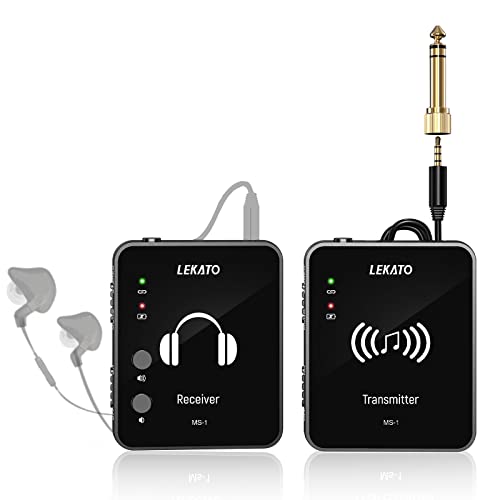
- One transmitter to multiple receivers
- Auto-pairing with stereo/mono switching
- Up to 6 sets, 100 ft range
Best For: Small bands, churches, and rehearsal setups
Tour-Ready UHF Alternative for Simple Monitoring
Xvive U4 Wireless in-Ear Monitor System Set
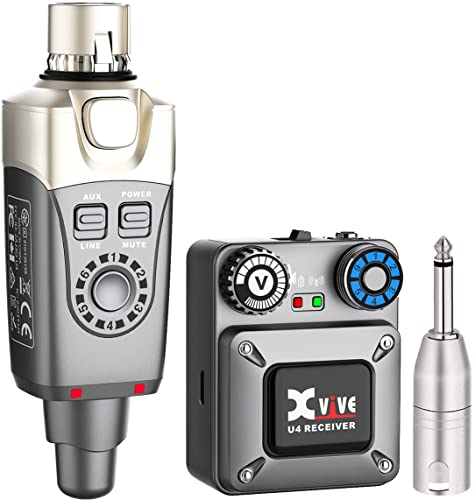
- Less than 5ms latency
- Over 90 ft working range
- 6 channels and rechargeable batteries
Best For: Small clubs, touring performers, and quick stage setups
Low-Latency Stereo IEM for Multi-Performer Use
LEKATO MS-02 Upgraded Wireless In Ear Monitor System

- One transmitter to multiple receivers
- Low latency with 24-bit/48kHz audio
- 6-8 hour battery life and one-touch mute
Best For: Small bands and singers needing easy multi-receiver monitoring
Rack-Ready 4-Channel UHF Monitor Station
Phenyx Pro PTM-33-4B Wireless IEM

- 4-channel station with loop outputs
- Up to 4 standalone mixes
- Rackmount kit and 4 bodypacks included
Best For: Four-person bands and church monitoring teams
Entry-Level Practice IEM

- Low latency under 5ms
- 48kHz/16bit audio clarity
- 8+ hour battery life
Best For: Guitar beginners and solo practice users
Stage-Ready UHF Monitor

- 900MHz UHF with up to 5 systems
- Stereo/mono plus EQ and limiter controls
- 160 ft stable operating range
Best For: Stage, studio, and speech users needing flexible monitoring
Multi-Receiver Portable IEM

- One transmitter to multiple receivers
- 30-hour battery life with case
- OTG support for phone playback
Best For: Bands and mobile performers needing multi-receiver monitoring
Mono Stage Clarity
Phenyx Pro PTM-11 UHF Mono IEM

- Mono monitoring reduces phase issues.
- UHF system supports up to 5 setups together.
- 164 ft range with metal transmitter build.
Best For: Church teams and live performers needing stable mono monitoring.
Stereo Flex Monitor

- 192kHz audio with less than 6ms latency.
- 2.4 GHz auto channel selection helps reduce interference.
- Lightweight receiver with up to 10 hours of battery life.
Best For: Bands and studio users wanting a lightweight stereo monitor.
Four-Pack Stage Coverage

- Includes 4 bodypack receivers and earphones.
- IR sync simplifies multi-receiver setup.
- UHF PLL design supports stable zero-latency monitoring.
Best For: Teams needing a bundled multi-receiver IEM setup.
One-to-Many 2.4GHz Stereo IEM for Small Gigs – LEKATO MS-1 Wireless In Ear Monitor System
If you need a wireless in ear monitor system with multiple receivers for rehearsal or small-stage use, the LEKATO MS-1 is built around simple one-to-many monitoring. It supports stereo transmission, auto-pairing, and up to 6 sets working simultaneously, making it a practical option for bands, churches, studios, and other compact performance setups.
Best For: Bands, churches, and small gig setups that want simple one-to-many stereo monitoring.
Pros:
- Supports one transmitter to multiple receivers, with up to 6 sets working at once
- Auto-pairing makes setup quick and straightforward
- True stereo transmission with a one-key stereo/mono input switch
- 2.4GHz wireless design with low latency, 24-bit/48kHz audio, and up to 100 ft range
Cons:
- Listed battery life is about 5 hours, so longer events may need a recharge plan
- Performance depends on using a stereo source and stereo cable for stereo mode
Overall, the MS-1 focuses on convenience and flexible multi-receiver monitoring rather than advanced rack features. It is a solid fit if you want an easy-to-use system that keeps rehearsal and small live setups organized.
Tour-Ready UHF Alternative for Simple Monitoring – Xvive U4 Wireless in-Ear Monitor System Set
The Xvive U4 is a straightforward wireless in ear monitor system with multiple receivers support in a compact, ready-to-go package. Its 2.4GHz design, sub-5ms latency, and over-90-foot range make it a practical choice for performers who want a simple personal or team monitor setup without extra complexity.
Best For: Performers who want a compact, low-latency monitor system for small clubs, venues, or touring use.
Pros:
- Less than 5ms latency for distraction-free monitoring
- Works on 6 channels for flexible wireless operation
- Over 90 ft range suits small venues and stage use
- Rechargeable transmitter and receiver both offer up to 5 hours of battery life
Cons:
- Battery life is limited to around 5 hours
- Bundle includes one receiver, so additional receivers would need separate planning
For users who value speed, portability, and easy setup, the U4 is a dependable monitoring solution. It is especially appealing when you need a simple system that can travel easily and stay responsive on stage.
Low-Latency Stereo IEM for Multi-Performer Use – LEKATO MS-02 Upgraded Wireless In Ear Monitor System
The LEKATO MS-02 is a wireless in ear monitor system with multiple receivers support designed for small bands, singers, studios, and stage practice. It offers upgraded low latency, one transmitter to many receivers, and a compact clip-on receiver, so it fits well when you need a practical monitor solution that keeps performers connected without cables.
Best For: Small-to-medium performance groups that want stereo monitoring with simple multi-receiver pairing.
Pros:
- Supports one transmitter to multiple receivers, up to 4 pairs of devices
- Upgraded mono mode latency under 4.5ms with 24-bit/48kHz audio
- Battery life reaches about 6-8 hours, longer than the earlier model
- LED indicators show battery level and volume, plus a one-touch mute function
Cons:
- Earbuds are not included and must be purchased separately
- Maximum supported receiver count is lower than some larger systems
The MS-02 is a strong choice if you want a compact monitor system with easy pairing and better runtime than many basic entry-level options. It keeps setup simple while adding useful control features for rehearsal and live use.
Rack-Ready 4-Channel UHF Monitor Station – Phenyx Pro PTM-33-4B Wireless IEM
If you want a wireless in ear monitor system with multiple receivers for a full band or worship team, the Phenyx Pro PTM-33-4B is built for that job. Its 4-channel UHF design, integrated monitor station, and support for up to 4 separate mixes make it a stronger fit for larger stage monitoring needs than basic clip-on systems.
Best For: Four-person bands, church teams, and stage crews needing rack-friendly multi-mix monitoring.
Pros:
- 4-channel monitor station with left/right inputs and loop outputs
- Supports up to 4 standalone mixes for separate performers
- UHF operation with 140-164 ft interference-free line-of-sight range
- Rackmount-friendly design includes antenna kit and 4 bodypack receivers
Cons:
- Mono monitoring only, so it is not a stereo IEM system
- Best range depends on clear line of sight and avoiding thick walls or metal blocks
For teams that need organized monitoring across several performers, the PTM-33-4B offers a more complete stage-ready approach. It is especially useful when rack integration and multiple mixes matter as much as wireless convenience.
Entry-Level Practice IEM – JOYO JW-07 2.4G Wireless IEM
If you want a wireless in ear monitor system with multiple receivers for solo practice or small-group monitoring, the JOYO JW-07 is aimed at players who want simple setup, low latency, and clear audio. It uses 2.4GHz wireless transmission with automatic pairing, 48kHz/16bit clarity, and a compact transmitter-and-receiver design built for practice, studio, guitar, DJ, and live use.
Best For: Guitar players, beginners, and performers who need an easy wireless monitor for practice and small setups.
Pros:
- Low latency under 5ms for real-time monitoring and practice feedback
- 48kHz/16bit audio for clear sound in a compact 2.4GHz system
- 8+ hour built-in battery supports extended practice sessions
- 12 channel banks across 4 groups for flexible use with multiple instruments
Cons:
- One transmitter is not supported to connect multiple receivers
- Open-space range is listed at 40-60 ft, so it is better for close-to-mid distances
Overall, this is a straightforward choice if you mainly need reliable personal monitoring rather than a multi-receiver stage system. The low-latency tuning and anti-interference design make it appealing for practice-focused users, but the single-receiver limitation is important to note.
Stage-Ready UHF Monitor – Phenyx Pro PTM-10 Stereo IEM
The Phenyx Pro PTM-10 is a wireless in ear monitor system with multiple receivers in mind for small multi-system setups, thanks to its tunable frequencies and wide compatibility with stage, studio, lecture, and exhibit use. It runs on a 900MHz UHF band, offers stereo or mono monitoring, and provides up to 160 ft of stable transmission for performers who want dependable monitoring without 2.4GHz congestion.
Best For: Performers, speakers, and production users who want a rugged UHF monitor with flexible stereo control.
Pros:
- 900MHz UHF operation helps avoid the congestion often seen in 2.4GHz systems
- Tunable 89 frequencies support multiset operation with up to 5 systems simultaneously
- Stereo/mono modes plus EQ, balance, limiter, pad, and lock functions add control
- Metal transmitter, rackmount kit, and carrying case suit professional use
Cons:
- Includes one bodypack receiver in the box, so additional receivers are not part of the base package
- UHF setup is more professional and may be less plug-and-play than simpler portable systems
As a live and studio monitor, this model stands out for its feature set and stable UHF performance. It is a stronger fit when you want flexible monitoring controls and can benefit from the ability to run multiple systems on stage.
Multi-Receiver Portable IEM – LEKATO MS-20 Charging System
The LEKATO MS-20 is a wireless in ear monitor system with multiple receivers support built around portability, long battery life, and simple pairing. Its 2.4GHz wireless design includes one transmitter and two receivers, with support for one transmitter sending to multiple receivers, OTG input for phones and USB-C devices, and a compact charging case that makes it easy to carry for rehearsals, church, studio work, and live shows.
Best For: Bands, singers, and mobile performers who want a compact monitor system that can feed multiple receivers.
Pros:
- Supports one transmitter to multiple receivers, with up to 10 pairs of devices
- 30-hour usage time with the charging case for extended sessions
- OTG support works with smartphones and USB-C devices for quick playback
- 150 ft open-area range and low-noise, low-latency monitoring
Cons:
- Earphones are not included
- Open-area range is best suited to typical stage or rehearsal distances, not long-distance applications
This model is the most clearly aligned with users who need a wireless in ear monitor system with multiple receivers, especially when portability matters. The charging case, OTG support, and multi-receiver capability make it practical for modern rehearsal and performance workflows.
Mono Stage Clarity – Phenyx Pro PTM-11 UHF Mono IEM
If you want a wireless in ear monitor system with multiple receivers support built around simple, stable monitoring, the Phenyx Pro PTM-11 is a practical mono option. Its UHF design, 50 selectable frequencies, and zero-latency monitoring are aimed at keeping stage sound clear and focused, while the separate outputs help the signal pass through without affecting the original audio path.
Best For: Church teams, conference hosts, broadcasters, and live performers who want dependable mono monitoring with room to expand.
Pros:
- Mono monitoring helps avoid phase issues and keeps audio focused.
- UHF operation offers 50 selectable frequencies and up to 5 systems working together.
- 164 ft operating range supports free movement on stage.
- Metal transmitter, half-rack design, and carry case add durability and portability.
Cons:
- Includes only one bodypack receiver in the box.
- Mono sound is less flexible than stereo monitoring for some users.
- Longer-distance use is affected by thick walls, glass, and metal blocks.
Overall, the PTM-11 is a straightforward choice if you prioritize clean mono monitoring, reliable UHF performance, and a system that can support multiple receivers in a larger setup.
Stereo Flex Monitor – Donner CV-3 2.4G Stereo IEM
The Donner CV-3 is a wireless in ear monitor system with multiple receivers support in a compact, stereo-focused design. It uses a 2.4 GHz connection, automatic channel finding, and under-6ms latency to deliver clear monitoring for rehearsals and live work, while the color screen makes receiver status easier to check in real time.
Best For: Musicians, bands, and studio users who want a lightweight stereo IEM with easy monitoring feedback.
Pros:
- 192kHz sampling and 110dB SNR support detailed audio.
- Less than 6ms latency keeps monitoring nearly real time.
- 2.4 GHz system auto-selects the clearest channel to reduce interference.
- Lightweight zinc alloy receiver and 10-hour battery life improve portability.
Cons:
- 100 ft range is shorter than some UHF systems.
- Designed around one receiver unit rather than a bundled multi-pack.
- Wireless performance depends on the 2.4 GHz environment.
In practical use, the CV-3 stands out for users who want a compact stereo monitor with low latency, clear display feedback, and broad compatibility with mixers, PA systems, instruments, and more.
Four-Pack Stage Coverage – UHF Mono IEM 4-Pack System
If you need a wireless in ear monitor system with multiple receivers right out of the box, this 4-pack UHF mono system is built for larger stage setups. It includes one transmitter and four bodypack receivers, plus IR sync for quick pairing, making it a strong fit for groups that want straightforward monitoring across several people.
Best For: Bands, church teams, sound engineers, and MCs who need a bundled multi-receiver IEM system.
Pros:
- Includes 4 bodypack receivers and 4 in-ear earphones.
- UHF PLL design and limiter circuitry help reduce interference and distortion.
- IR sync makes connecting multiple receivers quick and simple.
- Up to 330 ft open-space coverage supports freer movement on stage.
Cons:
- Mono monitoring may not suit users who prefer stereo mixes.
- Open-space range can drop with thick walls, glass, or metal blocks.
- ABS bodypack receivers are practical, but less premium than metal units.
For teams that want multiple receivers included and a clean mono monitoring setup, this package is one of the most practical options in the roundup. The combination of UHF stability, long range, and easy receiver setup makes it especially useful for shared stage use.
How We Picked the Best Wireless in Ear Monitor System with Multiple Receivers
We focused on systems that make sense for musicians, worship teams, and small production setups using a Wireless in Ear Monitor System with Multiple Receivers. Priority factors included stereo or mono signal quality, latency, transmission range, ease of setup, receiver durability, and whether the system supports practical one-to-many monitoring.
We also considered whether each option is better suited to simple rehearsal use, touring, or fixed-stage applications, since the right choice depends heavily on how many performers need monitoring and how far they move on stage.
Quick Comparison: What Matters Most
For fast decision-making, compare the systems by frequency type, receiver count, and monitoring style. 2.4GHz models are often simpler to use and convenient for smaller stages, while UHF systems usually offer more control, broader configurability, and better flexibility in crowded RF environments. Stereo is preferable for detailed mixes, but mono can be more reliable and easier to manage across multiple receivers.
Key Buying Factors for a Wireless in Ear Monitor System with Multiple Receivers
Receiver Count and Expansion
Check how many receivers are included and whether the transmitter can support additional bodypacks or receivers later. If you expect the band to grow, look for one-to-many capability and straightforward pairing.
Latency and Stability
Low latency is essential for keeping performance natural, especially for drummers and vocalists. A stable connection matters just as much; dropouts or lag can be more distracting than slightly modest audio specs.
Stereo Vs. Mono
Stereo gives performers more separation and spatial detail, while mono is often simpler and can be more robust for basic monitoring. If your mixes are already well balanced at the console, mono may be enough for many players.
Battery Life and Charging
Long rehearsals and multiple services demand strong battery performance. Charging cases and longer runtime reduce downtime and make multi-receiver systems easier to manage between sets.
Range, Frequency, and Venue Conditions
Choose a system based on your actual venue size and wireless environment. UHF can be a strong choice when you need more frequency flexibility, while 2.4GHz systems can work very well in smaller, less congested setups.
Who Should Buy Which Wireless in Ear Monitor System with Multiple Receivers?
If you want the simplest setup for rehearsals or compact stages, a 2.4GHz kit is often the easiest place to start. If you need more reliable control for live shows, larger bands, or more demanding venues, a UHF system is usually the better fit.
For teams that need a Wireless in Ear Monitor System with Multiple Receivers, the best choice is the one that matches your mix style, stage size, and the number of performers who need consistent monitoring night after night.