If your studio rack is turning into a cable maze, the right patch bay can simplify everything. It helps you reroute outboard gear, interfaces, and monitor paths without constantly reaching behind equipment.
Below, we’ve rounded up 10 of the best options for patch bays for home studios, including balanced TRS and TT choices plus a few useful cable picks to complete the setup.
Best 10 Patch Bays for Home Studios Picks for 2026
Flexible 48-Point TRS Patchbay
Behringer Ultrapatch Pro PX3000

- 48-point balanced TRS patchbay
- Four operating modes for flexible routing
- Rugged build to reduce cable clutter
Best For: Home studios needing a configurable, affordable routing hub
Gold-Plated Rack Patchbay
Black Lion Audio PBR TRS Patchbay

- 48-point patchbay with 96 gold-plated TRS connectors
- Normal and half-normal operation
- Stainless steel enclosure with 2-year warranty
Best For: Home studios wanting a rugged, premium TRS patchbay
Balanced 48-Point Toggle Patch Bay
Samson S-Patch Plus 48-Point Patch Bay

- 48 balanced channels with 1/4-inch connections
- Normal, half-normal, and thru modes
- 1U rack-mountable with front-panel toggles
Best For: Home studios needing a simple, reliable balanced patchbay
96-Point TT/DB-25 Lighting Patchbay
Black Lion Audio PBR TT LIT 96-Point Patchbay

- 96-point patchbay with gold-plated TT construction
- 12 DB-25 ports and 96 TT connectors
- Customizable LED displays for Mac and Windows
Best For: DAW-based studios needing dense routing and visual channel labeling
Multi-Color Balanced Patch Leads
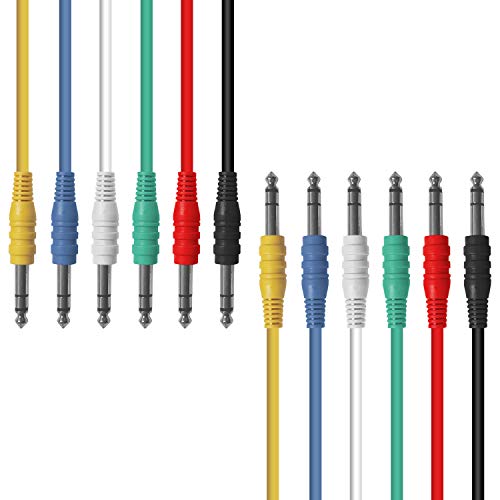
- 3-foot balanced TRS patch cables
- 6-pack with multi-color identification
- OFC conductors and spiral shields
Best For: Short, color-coded patching in home studios
Rack-Mount Balanced Patch Bay
ART Pro Audio P48 48-Point Patch Bay

- 48-point balanced patch bay
- 19-inch rack-mount installation
- Fully shielded to organize cables
Best For: Rack-based studios needing a high-capacity patch bay
Modular TRS Patchbay Module

- 8-point modular TRS patchbay
- Compact steel enclosure
- Works with mixers and outboard gear
Best For: Small studios needing a compact balanced module
Balanced Routing Pick
Art Pro Audio TPatch 8-Point Balanced Patch Bay
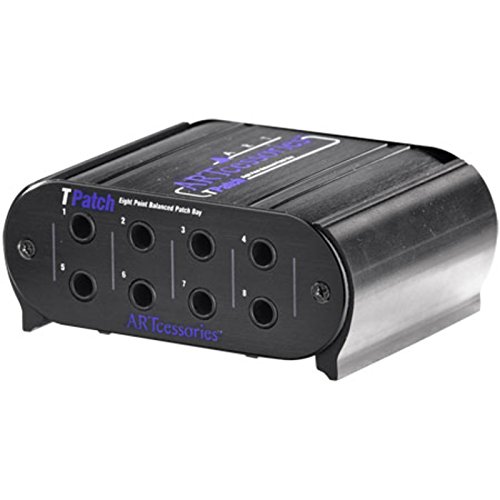
- Eight balanced direct signal points
- Four linked input/output pairs
- Half-normal and normal modes
Best For: Home studios needing compact balanced TRS routing
Color-Coded Cable Pack
AxcessAbles 5ft Multicolor TRS Patch Cables, 6-Pack

- Six balanced TRS-to-TRS cables
- Multicolor set helps identify routes
- OFC conductors with spiral shielding
Best For: Organizing patchbay and outboard gear in a home studio
Short-Run Patch Lead Pick
AxcessAbles 1.5ft Multicolor TRS Patch Cables, 6-Pack
- Short 1.5-foot length for tight racks
- Six multicolor balanced patch leads
- Nickel-plated plugs with OFC conductors
Best For: Compact home studio patchbay runs and short rack connections
Flexible 48-Point TRS Patchbay – Behringer Ultrapatch Pro PX3000
Behringer ULTRAPATCH PRO PX3000 Multi-Functional 48-Point 3-Mode Balanced Patchbay
Check Price On AmazonIf you want one of the more adaptable patch bays for home studios, the Behringer Ultrapatch Pro PX3000 gives you a straightforward way to reduce cable clutter and reroute gear without constantly reaching behind your rack. Its selectable operating modes make it useful for a range of common studio wiring jobs, especially when you need the option to change how channels behave over time.
Best For: Home studio owners who want a budget-friendly, highly configurable 48-point patchbay for TRS-based setups.
Pros:
- 48-point balanced TRS patchbay with selectable Parallel, Half-normalled, Normalled, and Open modes
- Designed to eliminate cable clutter and keep studio wiring more organized
- Uses high-quality components and rugged construction for long service life
- Supports TRS, TS, XLR, and MIDI connectivity per the supplied details
Cons:
- Limited to 5 volts direct current in the supplied specifications
- May be more patchbay than needed for very small setups
Overall, the PX3000 stands out if flexibility matters more than bells and whistles. For home studios that need a practical, rack-friendly routing hub, it offers a lot of control in a simple 48-point format.
Gold-Plated Rack Patchbay – Black Lion Audio PBR TRS Patchbay
For home studios that want a cleaner, more premium-feeling patching solution, the Black Lion Audio PBR TRS Patchbay focuses on solid construction and gold-plated connections. It gives you a straightforward 48-point layout with normal and half-normal operation, making it a practical choice for organized signal routing in a studio rack.
Best For: Studio users who want a durable, stainless-steel 48-point TRS patchbay with gold-plated connectors.
Pros:
- 48-point patchbay with 96 gold-plated TRS connectors
- Supports normal and half-normal audio output modes
- Stainless steel enclosure for sturdy rack use
- Backed by a 2-year warranty
Cons:
- No switchable thru mode listed in the supplied details
- Heavier than some simpler patchbay options at 4.3 pounds
The PBR TRS is a strong fit if you value build quality and simple, dependable routing over extra routing modes. It keeps the design focused, which can be ideal in a home studio where you just want solid patching that stays out of the way.
Balanced 48-Point Toggle Patch Bay – Samson S-Patch Plus 48-Point Patch Bay
Samson S-Patch Plus Balanced 48-Point 1/4" Patch Bay | 1/4 Inch Phone Connections
Check Price On AmazonThe Samson S-Patch Plus is a classic choice among patch bays for home studios because it gives you a central, fully balanced place to manage 48 channels of 1/4-inch connections. Its front-panel toggle switches make it easy to choose between normalled, half-normalled, and thru operation, which is helpful when you want quick changes without reaching behind your gear.
Best For: Home studios that want a balanced, rack-mountable patchbay with simple switchable routing modes.
Pros:
- Fully balanced 48-channel patchbay with 1/4-inch front and rear connections
- Miniature toggle switches for Normal, Half-normal, and Thru operation
- 1U, 19-inch rack-mountable design for tidy studio integration
- Built to provide a clean signal path and reliable operation
Cons:
- Uses 1/4-inch phone connectors only, so it may not suit every connection type
- More basic than digital or LED-enhanced patchbay options
If you want a straightforward patchbay that does the core job well, the S-Patch Plus is easy to recommend. It is especially useful in smaller studio racks where clarity, signal routing, and quick access matter more than advanced features.
96-Point TT/DB-25 Lighting Patchbay – Black Lion Audio PBR TT LIT 96-Point Patchbay
Among patch bays for home studios, the Black Lion Audio PBR TT LIT is aimed at users who need a high-density setup with modern organization features. It combines 96 TT connectors, 12 DB-25 ports, and customizable LED displays, which can make a complex routing layout easier to track when you are managing many channels in a DAW-centric studio.
Best For: Computer-based studios that need a dense TT/DB-25 patchbay with visual labeling support.
Pros:
- 96-point patchbay with gold-plated construction
- Includes 96 TT connectors and 12 DB-25 ports
- Customizable LED displays for macOS and Windows
- Supports DAW software on both macOS and Windows
Cons:
- Heavier and more specialized than standard 1/4-inch patchbays
- Likely excessive for simple, low-channel home studio setups
This model makes the most sense when your studio routing has outgrown basic patching and needs clearer channel organization. If you work in a PC- or Mac-based environment with a lot of connections, the LED labeling feature is a meaningful convenience.
Multi-Color Balanced Patch Leads – AxcessAbles 3ft TRS 6-Pack
For patch bays for home studios, these AxcessAbles 3ft TRS-to-TRS cables are a straightforward way to keep short balanced runs tidy. The 6-pack gives you a multi-color set for quick identification, and the balanced design is suited to routing outboard gear cleanly in a compact setup.
Best For: Home studio users who want short, balanced patch cables for patch bays and outboard gear.
Pros:
- 3-foot balanced TRS-to-TRS cables suit short patch bay connections.
- Multi-color pack makes it easier to trace gear at a glance.
- OFC conductors and spiral shields are designed for signal clarity and EMI/RFI rejection.
- Nickel-plated plugs add ruggedness for frequent re-patching.
Cons:
- Only useful for setups that need 1/4-inch TRS connections.
- Short length is ideal for patching, but not for longer runs.
These cables are a practical add-on if you already have a patch bay and want short, durable leads with clear color coding. They are geared toward outboard routing rather than general-purpose long cable runs.
Rack-Mount Balanced Patch Bay – ART Pro Audio P48 48-Point Patch Bay
The ART Pro Audio P48 is a 48-point balanced patch bay built for organizing signal routing in patch bays for home studios and larger rigs. Its rack-mount, fully shielded design is aimed at reducing cable clutter while helping protect connectors from repeated wear.
Best For: Studio owners who want a rack-mounted 48-point patch bay to tidy up frequent routing changes.
Pros:
- 48-point balanced patch bay provides plenty of routing capacity.
- Rack-mount format fits a standard 19-inch installation.
- Fully shielded design helps keep the setup organized.
- Intended to reduce wear and tear on equipment connectors.
Cons:
- Designed as a rack unit, so it may not suit very small desktop setups.
- Specific connection style is tied to its patch bay layout, so it is less flexible than loose cables.
This is a solid choice if your priority is centralizing lots of connections into one accessible rack unit. It makes the most sense in setups where cable management and connector preservation matter as much as raw patching capacity.
Modular TRS Patchbay Module – Hosa MHB-350 8-Point Patchbay
The Hosa MHB-350 is an 8-point modular 1/4-inch TRS patchbay module for keeping small signal paths manageable in patch bays for home studios. It is aimed at mixers, recorders, and outboard gear, making it a practical option when you want a compact balanced patching module rather than a full-size rack bay.
Best For: Smaller studios that need a compact 8-point balanced patchbay module.
Pros:
- 8-point modular patchbay format keeps the system compact.
- Uses 1/4-inch TRS balanced connections.
- Compatible with mixers, recorders, and outboard gear with matching connectors.
- Steel enclosure adds a sturdy feel for studio use.
Cons:
- Only 8 points, so it is better for smaller routing needs.
- Modular design may not replace a larger all-in-one patch bay.
If you only need a modest number of balanced connections, this module keeps things simple and contained. It is best viewed as a focused routing tool for compact studio setups rather than a full patching center.
Balanced Routing Pick – Art Pro Audio TPatch 8-Point Balanced Patch Bay
If you’re comparing patch bays for home studios, the Art Pro Audio TPatch is a straightforward way to keep balanced connections organized. It gives you eight points of balanced direct signal routing with four linked input/output pairs, plus switchable half-normal and normal modes for flexible patching through type connections.
Best For: Home studio users who want a compact balanced patch bay for routing outboard gear and DAW-connected signals.
Pros:
- Eight balanced direct signal points for organized routing
- Four linked input/output pairs support practical studio setups
- Switchable half-normal and normal modes add flexibility
- Rugged extruded aluminum case for durable use
Cons:
- Only provides 8 channels, so larger setups may need more than one unit
- Uses 1/4-inch TRS connections, so it is aimed at balanced gear
Overall, this is a simple, durable patch bay option for users who want balanced TRS routing without extra complexity. Its value is strongest when your studio is built around direct, line-level connections and you want a neat way to re-route gear.
Color-Coded Cable Pack – AxcessAbles 5ft Multicolor TRS Patch Cables, 6-Pack
When you’re shopping for patch bays for home studios, the cables matter just as much as the bay itself. This 6-pack of 5-foot AxcessAbles balanced TRS-to-TRS patch cables is built for outboard gear and patchbay use, with multi-color identification, nickel-plated plugs, OFC conductors, and spiral shields for signal transfer and interference rejection.
Best For: Home studio owners who need a color-coded balanced cable pack for patchbay and outboard connections.
Pros:
- Six multicolor balanced TRS cables for easier routing
- OFC conductors and spiral shields support signal clarity and flexibility
- Nickel-plated plugs are designed for rugged durability
- Built for outboard gear, patchbay gear, and home studio use
Cons:
- 5-foot length may be longer than needed for tightly packed racks
- TRS-to-TRS only, so it is limited to balanced 1/4-inch connections
This pack makes patchbay wiring easier to manage if you value clear color-coding and balanced connections. It’s a practical companion for small and mid-size studio patching where reliability and organization matter.
Short-Run Patch Lead Pick – AxcessAbles 1.5ft Multicolor TRS Patch Cables, 6-Pack
For patch bays for home studios, short cables can help keep layouts neat and reduce unnecessary slack. The AxcessAbles 1.5-foot TRS-to-TRS 6-pack is made for outboard gear and patchbay studio use, and it includes the same balanced-style features as the longer set: multicolor jackets, nickel-plated plugs, OFC conductors, and spiral shielding.
Best For: Studio setups that need short balanced patch cables for dense patchbay or rack installations.
Pros:
- 1.5-foot length is better for tight patchbay runs
- Six multicolor cables make routing easier to follow
- Nickel-plated plugs and OFC conductors support durability and signal clarity
- Spiral shields help with EMI and RFI rejection
Cons:
- Short length is not ideal if your gear is spaced far apart
- TRS-to-TRS format is limited to balanced 1/4-inch connections
If your studio is compact, this shorter cable pack can be a better fit than longer patch leads. It is aimed at clean, efficient cable management around patchbays and external effects.
How We Picked the Best Patch Bays for Home Studios
We focused on practical patching needs for small and midsize studios: balanced connectivity, reliable build quality, clear labeling, and formats that work with common home-studio gear. We also looked for options that support clean signal routing, easy expansion, and straightforward installation.
Quick Comparison
For most users, a standard 48-point TRS patch bay is the easiest starting point. If you run a larger rack or want a more premium studio setup, a TT/DB-25 model offers denser connectivity and better long-term scalability. Cable packs are also worth considering if you need to complete or tidy up the rear of the rack.
Key Buying Factors for Patch Bays for Home Studios
Connector Type
Choose TRS if you want the most common and affordable balanced solution. TT and DB-25 formats are better suited to more advanced studios with higher channel counts and tighter rack space.
Normaling Options
Look for full-normal, half-normal, and thru modes if you want flexibility. These determine how signals flow when nothing is patched in, which can affect tracking, monitoring, and outboard routing.
Build and Signal Handling
Balanced patch bays are usually the safest choice for preserving signal integrity in a home studio. Metal chassis, sturdy jacks, and clear labeling help reduce noise, wear, and setup mistakes over time.
System Size
Match the patch bay to your actual gear count. A compact 8-point module may suit a small desktop rig, while a 48-point or 96-point bay makes more sense for racks with multiple compressors, EQs, and interfaces.
Matching Cables
Don’t overlook cabling. Short, well-made TRS patch cables can keep your rack organized and reduce clutter behind gear, especially in tight home-studio spaces.
Who Should Buy Which Patch Bays for Home Studios?
If you’re just starting out, a balanced TRS patch bay is usually the best balance of price, simplicity, and usefulness. If you already own several outboard units and want a cleaner, more expandable workflow, step up to a higher-density or TT-based model. If your main goal is organization, a matching set of short patch cables can make a big difference even before you add more hardware.
In short, the best Patch Bays for Home Studios are the ones that fit your routing habits today while leaving room for the gear you plan to add next.