Patch bays can make live rigs faster, cleaner, and far easier to troubleshoot. If your setup moves between rehearsals, stages, and rack systems, the right bay reduces cable clutter and helps you re-route signals without digging behind gear.
In this roundup, we focus on practical options for live sound workflows, from compact XLR panels to balanced TRS patching and multi-point bays built for more complex racks.
Best 10 Patch Bays for Live Sound Picks for 2026
Rack-Ready XLR Routing

- 32 XLR connectors in a 1U rack format
- Fully shielded black all-steel enclosure
- Reliable PCB wiring with reversible rack ears
Best For: Live sound racks and balanced XLR patching
Flexible Hybrid Routing
Black Lion Audio PBR TRS-BT Patchbay

- 46-point TRS patchbay with 94 gold-plated connectors
- Bluetooth support for phones, laptops, and tablets
- Aluminum build with 2-year warranty
Best For: Hybrid audio setups needing TRS patching and Bluetooth
Short Balanced Link Cables
2-Pack XLR Female-to-Female Patch Cables

- 1-foot balanced XLR cables for short runs
- Triple-layer shielding to reduce noise
- Locking zinc alloy connectors for secure connections
Best For: Short XLR links between patch points and rack gear
Multi-Mode Balanced Routing
Behringer Ultrapatch Pro PX3000

- 48-point balanced TRS patchbay
- Selectable parallel, half-normalled, normalled, or open modes
- Rugged build designed to reduce cable clutter
Best For: Flexible rack routing with multiple patching modes
Live-Sound XLR Simplifier

- 16-point patchbay with 32 gold-plated XLR connectors
- Built for audio signal routing in live sound studios
- Compact aluminum body with easy-patch connectors
Best For: Simple XLR patching in live sound rigs
Rack-Mount Routing Pick
ART Pro Audio P48 Balanced Patch Bay

- 48-point balanced patch bay in a 19-inch rack size
- Fully shielded and built to reduce connector wear
- Works for live sound, PA, AV, and studio routing
Best For: Rack-mounted live sound and PA routing
Modular Tour-Grade Option
AA AUDIO ACCESSORY AP16 XLR Patchbay

- Modular 4-channel blocks with 4/8/12/16-channel setup
- 24K gold-plated pins and dual-layer PCB design
- Full-steel chassis with reversible rack ears
Best For: Flexible, rugged live sound routing across multiple zones
Balanced Rack Routing
Art Pro Audio TPatch Balanced 8-Point Patch Bay
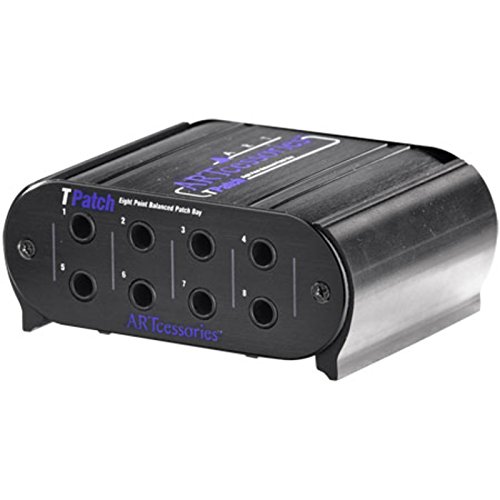
- Eight balanced direct signal points.
- Four linked input/output pairs.
- Switchable half-normal and normal modes.
Best For: Balanced rack routing in live sound and studio setups
XLR Panel Mount Pair
SZLliyxs No-Solder XLR Pass-Through 2-Pack

- No-solder XLR pass-through setup.
- Built for stage boxes, patch panels, and floor boxes.
- Buckle lock design supports stable connections.
Best For: Live sound stage boxes and XLR panel installations
Short XLR Patch Leads
6-Inch Self-Locking XLR Patch Cables, 2-Pack

- 6-inch length for tight rack routing.
- Double-shielded OFC construction.
- Self-locking XLR connectors for secure fits.
Best For: Compact balanced XLR patching in live sound racks
Rack-Ready XLR Routing – ART P16 XLR Balanced Patchbay
If you want a straightforward option for patch bays for live sound, the ART P16 focuses on simple XLR-to-XLR routing in a rugged 1U rack format. Its fully shielded steel enclosure and reliable PCB wiring make it a practical choice when you need dependable connections in a compact front-and-rear patchbay layout.
Best For: Live sound rigs, rack-mounted XLR patching, and users who want a durable, no-frills balanced connection hub.
Pros:
- 32 XLR connectors with 16 female on the front and 16 male on the rear
- 1U 19-inch rack mount with reversible rack ears
- Fully shielded black all-steel enclosure for protection
- Reliable PCB wiring for consistent connections
Cons:
- Limited to XLR connectivity
- No switching modes or advanced routing options listed
- Best suited to balanced XLR workflows rather than mixed-format setups
The P16 is a solid fit when you need clean XLR organization without extra complexity. For live sound work, it makes rack patching more orderly while keeping the signal path centered on balanced connections.
Flexible Hybrid Routing – Black Lion Audio PBR TRS-BT Patchbay
For patch bays for live sound or studio setups that need more than basic routing, the Black Lion Audio PBR TRS-BT adds 46-point TRS patching plus Bluetooth connectivity. That makes it useful when you want to integrate portable devices into an audio workflow while still keeping balanced 1/4-inch patching organized.
Best For: Engineers and creators who want a TRS patchbay with Bluetooth for flexible studio or live-audio integration.
Pros:
- 46-point patchbay with 94 gold-plated TRS connectors
- Bluetooth connectivity for smartphones, laptops, and tablets
- Built for professional audio production and studio setup use
- Aluminum outer material with a 2-year warranty
Cons:
- Centered on 1/4-inch TRS rather than XLR
- Bluetooth may be unnecessary for simple rack-only setups
- Details provided do not specify switching modes or normalization options
This is the most feature-rich option here if your workflow benefits from portable-device integration. It keeps balanced TRS patching at the core while adding modern connectivity for hybrid setups.
Short Balanced Link Cables – 2-Pack XLR Female-to-Female Patch Cables
While not a patch bay itself, these short balanced XLR patch cables are useful alongside patch bays for live sound when you need a compact, interference-resistant link between gear. The 1-foot length, triple shielding, and locking connectors are aimed at keeping short runs neat in racks, mixers, and stage setups.
Best For: Short balanced XLR connections in live sound racks, studio patching, and compact mixer setups.
Pros:
- Balanced OFC construction for interference-free audio
- Triple-layer shielding to help block EMI/RFI noise
- 1-foot length keeps patch runs tidy in tight spaces
- Zinc alloy locking connectors help prevent accidental disconnects
Cons:
- Not an actual patch bay
- Female-to-female XLR only, so it fits specific cable runs
- Short length limits use to close-range connections
These are a practical add-on if your rack or live rig needs short, clean XLR links between patch points. They work best as a companion to patchbay hardware rather than a replacement for it.
Multi-Mode Balanced Routing – Behringer Ultrapatch Pro PX3000
Behringer ULTRAPATCH PRO PX3000 Multi-Functional 48-Point 3-Mode Balanced Patchbay
Check Price On AmazonIf you need patch bays for live sound with more routing control, the Behringer PX3000 stands out for its selectable operating modes and 48-point balanced layout. It is designed to reduce cable clutter while letting each channel be set for parallel, half-normalled, normalled, or open operation.
Best For: Users who want flexible balanced patch routing with multiple operating modes in an indoor rack setup.
Pros:
- 48-point balanced patchbay for organized routing
- Each channel can be set to parallel, half-normalled, normalled, or open
- Built with high-quality components and rugged construction
- Designed to cut down on cable clutter in studio or rack environments
Cons:
- TRS-focused rather than XLR-focused
- Indoor-use product only, based on the supplied details
- Heavier than simpler rack patch solutions at 3.9 pounds
The PX3000 is the most configurable patchbay in this group, making it a strong choice when routing flexibility matters more than simplicity. For live sound or studio racks that need selectable signal behavior, it offers a practical balance of control and durability.
Live-Sound XLR Simplifier – Black Lion Audio PBR XLR
If you’re shopping for patch bays for live sound, the Black Lion Audio PBR XLR is built around straightforward XLR routing with 16 points and 32 gold-plated XLR connectors. It’s aimed at audio signal routing in recording or live sound studios, with easy patching and high-quality connectors in a compact aluminum unit.
Best For: Live sound setups that need simple XLR patching with durable, gold-plated connections.
Pros:
- 16-point patchbay with 32 gold-plated XLR connectors
- Designed for audio signal routing in recording or live sound studios
- Easy-patch design with high-quality connectors
- Compact aluminum build with a 2-year warranty
Cons:
- XLR-only design limits connection flexibility
- No extra routing features are listed beyond basic patching
For buyers who want a simple, purpose-built XLR patchbay, this model focuses on clean signal routing and durable connector hardware. It makes the most sense when your live sound workflow is already centered on XLR gear.
Rack-Mount Routing Pick – ART Pro Audio P48 Balanced Patch Bay
Among patch bays for live sound, the ART Pro Audio P48 is a 48-point balanced patch bay made for organized signal routing in a standard 19-inch rack. It is fully shielded and intended to help reduce connector wear while handling use in professional audio, PA, AV, and live sound setups.
Best For: Rack-mounted live sound and PA systems that need a fully shielded balanced patch bay.
Pros:
- 48-point balanced patch bay in a 19-inch rack format
- Fully shielded design for organized routing
- Built to reduce wear and tear on audio connectors
- Suited to professional recording, PA, AV, and live sound uses
Cons:
- Heavy on routing capacity, but the listing does not specify advanced configuration options
- Steel rack unit may be more than you need for small setups
This is a practical choice when your priority is lots of balanced XLR routing in a rackable format. For live sound operators who want to keep wiring tidy and connector wear down, it covers the essentials well.
Modular Tour-Grade Option – AA AUDIO ACCESSORY AP16 XLR Patchbay
If you need patch bays for live sound with more flexibility, the AA AUDIO ACCESSORY AP16 stands out for its factory-assembled modular blocks. It offers 4/8/12/16-channel configuration options, 24K gold-plated XLR pins, and a full-steel chassis designed for studio racks and live performance environments.
Best For: Live sound setups that benefit from modular channel assignment and rugged rack hardware.
Pros:
- Factory-assembled in 4-channel modular blocks for flexible setup
- Can be configured as 4, 8, 12, or 16 channels
- 24K gold-plated XLR pins for corrosion resistance and stable transmission
- Full-steel chassis and reversible rack ears for rack integration
Cons:
- More complex than a fixed-layout patchbay
- Best suited to users who want to assign and manage separate zones
This model is the most adaptable of the group if your live sound workflow changes often or spans multiple zones. The modular design and rack-friendly hardware make it a strong fit for users who value configuration flexibility and durability.
Balanced Rack Routing – Art Pro Audio TPatch Balanced 8-Point Patch Bay
If you need patch bays for live sound that keep balanced lines organized, the Art Pro Audio TPatch is built for simple rack integration. It offers eight balanced direct signal points with four linked input/output pairs, plus switchable half-normal and normal operation for flexible routing in a live or studio rig.
Best For: Rack-mounted balanced signal routing for live sound, DAW, and studio setups.
Pros:
- Eight balanced points for managing multiple direct signals.
- Four linked input/output pairs for organized routing.
- Switchable half-normal and normal modes add patching flexibility.
- Rugged extruded aluminum case suits frequent use.
Cons:
- Uses 1/4-inch TRS connectors, so it is best matched to balanced line-level gear.
- Limited to eight channels, which may be small for larger rigs.
This is a straightforward choice if you want a compact balanced patch bay with practical routing modes and a durable enclosure. It focuses on clean signal management rather than extra features, which makes it easy to fit into a live sound rack.
XLR Panel Mount Pair – SZLliyxs No-Solder XLR Pass-Through 2-Pack
For patch bays for live sound that need fast wall, floor, or stage-box installation, these XLR pass-through connectors are a practical no-solder option. The 2-foot male-to-female D-type setup is made for panel mounting, with a buckle lock design to help keep connections stable during use.
Best For: Stage boxes, patch panels, and live-sound installations that need simple XLR pass-through wiring.
Pros:
- No-solder pass-through design simplifies installation.
- Works with stage boxes, patch panels, floor boxes, and wall panels.
- Buckle lock design helps prevent accidental unplugging.
- PVC cable and coated connector housing are built for durability.
Cons:
- Only 2 feet long, so it is intended for close panel connections.
- Designed around XLR installations, not general-purpose patching.
This is a solid fit when the priority is quick XLR panel mounting rather than a traditional rack patch bay. It is especially useful for live sound installations where you want reliable pass-through connections with minimal wiring effort.
Short XLR Patch Leads – 6-Inch Self-Locking XLR Patch Cables, 2-Pack
If your patch bays for live sound need short, clean interconnects, these 6-inch XLR cables are made for tight rack and bay layouts. They use OFC conductors, double shielding, and self-locking connectors, which makes them a practical option when you want balanced routing with extra noise rejection.
Best For: Short balanced XLR connections in patch bays, racks, mixers, and live sound setups.
Pros:
- 6-inch length is ideal for compact patch bay and rack connections.
- Double shielding and OFC conductors are designed for noise reduction.
- Self-locking connectors help prevent accidental disconnects.
- Compatible with mixers, patch bays, preamps, speaker systems, and DMX lighting.
Cons:
- Very short length limits use to close-proximity connections.
- Best suited to balanced XLR gear, not unbalanced setups.
This cable pair makes sense when you need dependable short runs between gear and want to keep the patch field neat. The locking XLR ends and double-shielded build are useful touches for live performance and rack-mounted signal routing.
How We Picked These Patch Bays for Live Sound
We looked for models that fit real live-audio use: balanced signal handling, durable connectors, rack-friendly formats, and layouts that make routing easy under pressure. We also considered how well each option supports fast swaps, cleaner stage management, and dependable signal integrity in busy systems.
Quick Comparison
For simple front-of-rack access, XLR pass-through and XLR-balanced panels are usually the most straightforward choice. For more flexible routing, a TRS-balanced bay or a multi-function 48-point unit gives you more patching options. If you need quick field service and minimal setup time, choose a layout that matches your existing cable type so you are not constantly adapting between connector styles.
Key Buying Factors for Patch Bays for Live Sound
Connector Type
Match the bay to the rest of your system. XLR bays work well for microphone lines and fixed stage connections, while TRS bays are often better for line-level routing and gear inserts.
Balanced Signal Support
For live sound, balanced connections help reduce noise over longer cable runs. Make sure the patch bay is designed for balanced operation if you plan to carry microphones, console sends, returns, or other pro-audio signals.
Channel Count and Layout
Smaller racks may only need 8 or 16 points. Larger production rigs benefit from 48-point bays or modular panels that keep inputs and outputs organized by zone, instrument, or device.
Build Quality and Accessibility
Live environments demand hardware that can handle repeated plugging, unplugging, and transport. Look for sturdy jacks, solid mounting, clear labeling, and a format that lets you patch quickly without confusion.
Who Should Buy Which Patch Bays for Live Sound?
If you run a compact live rig, choose a straightforward XLR patch panel or pass-through cable solution for speed and simplicity. If you need flexible routing between processors, mixers, and outboard gear, a balanced TRS bay is the better fit. If you manage a larger venue, portable rack, or multi-stage setup, a higher-density bay is usually worth it because it keeps patching organized and reduces setup errors.
Ultimately, the best Patch Bays for Live Sound are the ones that match your connector standard, keep your signal path balanced, and make changes easy when the show clock is running.