For small bands, a good patch bay can turn messy backline rerouting into a fast, repeatable setup. It helps you connect outboard gear, interfaces, and stage pieces without constantly reaching behind racks.
This roundup focuses on patch bays for small bands that balance value, reliability, and ease of use—so you can spend less time troubleshooting and more time playing.
Best 10 Patch Bays for Small Bands Picks for 2026
Balanced Studio Hub
Samson S-Patch Plus 48-Point Patch Bay

- 48 balanced TRS patch points
- Normalled, half-normalled, or thru modes
- 1U rack mount with front access
Best For: Small studios and band rigs needing flexible balanced routing
Gold-Contact Rack Patchbay
Black Lion Audio PBR TRS3 Patchbay

- 48-point patchbay with 96 gold-plated TRS connectors
- 3-way mode switch for routing flexibility
- Built for studio and production setups
Best For: Project studios wanting a premium TRS patchbay
Flexible All-Rounder
Behringer Ultrapatch Pro PX3000

- 48-point balanced patchbay
- Selectable parallel, half-normalled, normalled, and open modes
- Rugged build to reduce cable clutter
Best For: Home studios and bands needing flexible, organized routing
Portable Device Bridge
Black Lion Audio PBR-TRS BT Patchbay

- 46-point patchbay with 94 gold-plated TRS connectors
- Bluetooth connectivity for portable devices
- Made for professional studio workflows
Best For: Bands integrating smartphones, laptops, or tablets into a patchbay setup
Compact Balanced XLR Patchbay

- 32 XLR connectors with 16 front and 16 rear
- 1U, 19-inch rackmount format
- Fully shielded all-steel enclosure
Best For: Small bands needing an XLR-only rack patch point
Pro TT/DB-25 Routing Bay

- 64-point TT to DB-25 patchbay
- Portable design for remote recording
- Stainless steel enclosure with 2-year warranty
Best For: Bands and small studios needing dense professional routing
Shielded 48-Point XLR Bay

- 48 balanced XLR points
- Fully shielded 19-inch rackmount
- For studio, live sound, and PA use
Best For: Small bands wanting a compact XLR patch bay with more capacity
Compact 8-Point Balanced Module
Hosa MHB-350 8-Point TRS Patchbay

- 8-point modular 1/4-inch TRS balanced patchbay
- Works with mixers, recorders, and outboard gear
- Steel enclosure with limited lifetime warranty
Best For: small-band rigs needing simple balanced patch routing
Switchable Studio Router
ART Pro Audio TPatch Balanced Patch Bay
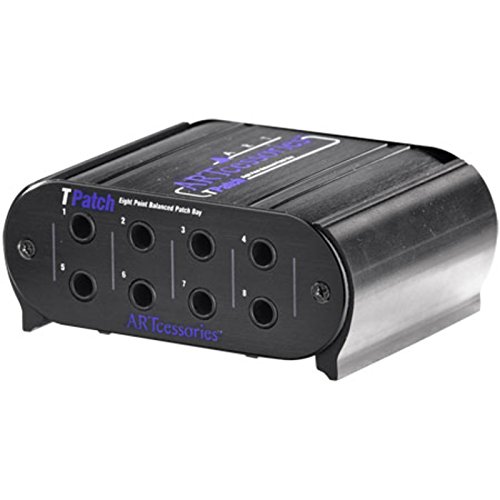
- Eight balanced points with four linked pairs
- Switchable half-normal and normal modes
- Rugged extruded aluminum case
Best For: small studios that need flexible balanced routing
Modular XLR Rack Panel
AA Audio Accessory AP16 XLR Patchbay

- Factory-assembled modular blocks, no PCB cutting
- Configurable for 4, 8, 12, or 16 channels
- Full-steel chassis with reversible rack ears
Best For: small bands needing configurable XLR rack routing
Balanced Studio Hub – Samson S-Patch Plus 48-Point Patch Bay
Samson S-Patch Plus Balanced 48-Point 1/4" Patch Bay | 1/4 Inch Phone Connections
Check Price On AmazonFor small bands building a cleaner recording or rehearsal setup, patch bays for small bands can save time every session by keeping connections at the front of the rack. The Samson S-Patch Plus gives you 48 balanced points with normalled, half-normalled, or thru routing, so you can reorganize outboard gear without constantly reaching behind your mixer.
Best For: Small studios and band rigs that want a straightforward balanced TRS patchbay with flexible routing options.
Pros:
- 48-point fully balanced design with 1/4-inch TRS front and rear connections
- Mini toggle switches let each channel run normalled, half-normalled, or thru
- 1U rack-mountable format helps keep a compact setup organized
- Front-panel access reduces the need to reach behind gear
Cons:
- Only uses 1/4-inch TRS connections, so it is not a universal format solution
- Routing flexibility is strong, but setup still depends on how your rack is wired
Overall, the S-Patch Plus is a practical pick if you want reliable balanced signal handling and an easy way to clean up a small band’s studio workflow. Its strength is simple, central access rather than extra features.
Gold-Contact Rack Patchbay – Black Lion Audio PBR TRS3 Patchbay
If you are comparing patch bays for small bands and want a higher-end TRS option, the Black Lion Audio PBR TRS3 keeps the signal path organized with 48 points and 96 gold-plated TRS connectors. Its 3-way mode switch gives you the routing flexibility to match different studio layouts without making the back of the rack harder to manage.
Best For: Small bands and project studios that want a premium TRS patchbay with gold-plated connectors and flexible routing.
Pros:
- 48-point design with 96 gold-plated TRS connectors
- 3-way mode switch adds flexible routing control
- Compatible with guitar, microphone, speaker, XLR, and computer setups
- Designed for studio and audio-production workflows
Cons:
- Only TRS connectivity is listed, so it may not suit every patching format
- Premium connector design may be more than a basic rehearsal rig needs
The PBR TRS3 is a strong fit when you want a well-built patchbay that stays focused on clean, flexible TRS routing. It is aimed at organized studio use rather than being a simple utility box.
Flexible All-Rounder – Behringer Ultrapatch Pro PX3000
Behringer ULTRAPATCH PRO PX3000 Multi-Functional 48-Point 3-Mode Balanced Patchbay
Check Price On AmazonFor small bands trying to tame cable clutter, patch bays for small bands work best when they offer simple switching and broad compatibility. The Behringer Ultrapatch Pro PX3000 is a 48-point balanced patchbay with selectable parallel, half-normalled, normalled, and open functions, giving you a lot of control over how your studio gear is connected.
Best For: Bands and home studios that want a versatile, affordable-style 48-point patchbay with multiple operating modes.
Pros:
- 48-point balanced patchbay with flexible operating modes
- Each channel can be set to parallel, half-normalled, normalled, or open
- Built with high-quality components and rugged construction
- Designed to reduce cable clutter and keep the rack organized
Cons:
- More complex mode options may take extra time to configure
- Heavier than some simpler rack patch solutions
The PX3000 is a practical choice if you want maximum routing options without moving up to a more specialized patching system. It focuses on utility, flexibility, and rack cleanup.
Portable Device Bridge – Black Lion Audio PBR-TRS BT Patchbay
When patch bays for small bands need to cover both studio gear and portable devices, the Black Lion Audio PBR-TRS BT stands out with Bluetooth connectivity in a 46-point patchbay. It uses 94 gold-plated TRS connectors and is aimed at professional audio production setups that also need to integrate smartphones, laptops, and tablets.
Best For: Small bands and studio users who want Bluetooth integration alongside a TRS patchbay.
Pros:
- 46-point patchbay with 94 gold-plated TRS connectors
- Bluetooth connectivity for portable device integration
- Compatible with smartphones, laptops, and tablets
- Built for professional audio production and studio workflow use
Cons:
- Smaller point count than the other 48-point patch bays in this roundup
- Bluetooth may be unnecessary if you only need traditional rack patching
This model is the most specialized option here, especially if your workflow includes portable devices. It is less about standard rack-only routing and more about bridging modern playback or capture sources into a studio setup.
Compact Balanced XLR Patchbay – ART P16 XLR Balanced Patchbay
If you’re comparing patch bays for small bands, the ART P16 is a straightforward way to keep XLR wiring tidy in a rack. It uses reliable PCB wiring, a fully shielded steel enclosure, and a 1U 19-inch format, so it fits neatly into compact live or rehearsal rigs where durability matters.
Best For: Small bands that want a simple, rackmount XLR patch point for keeping connections organized.
Pros:
- 32 XLR connectors provide 16 front and 16 rear connections.
- 19-inch, 1U rackmount design saves space in small setups.
- Fully shielded all-steel enclosure adds durability.
- Reversible rack ears make installation more flexible.
Cons:
- XLR-only format limits it to XLR-based signal routing.
- Not as flexible as multi-format patchbays with other connector types.
The P16 is a practical choice when you want a dependable, no-frills XLR patchbay that keeps a small band’s rack wiring easier to manage. The 3-year warranty is also a nice confidence boost for regular studio or live use.
Pro TT/DB-25 Routing Bay – Switchcraft Studio Patch 6425
For small bands that need a more pro-style signal routing setup, this Switchcraft patch bay is built around a 64-point TT-to-DB-25 layout. Its portable packaging and support for mobile or remote recording make it a stronger fit when your workflow moves between rooms, rehearsals, or locations.
Best For: Bands or small studios that want a high-point-count patch bay for professional or mobile audio setups.
Pros:
- 64-point TT to DB-25 design offers dense routing capability.
- Portable and suited to mobile or remote recording.
- Stainless steel enclosure adds a sturdy feel.
- Includes a 2-year warranty.
Cons:
- TT/DB-25 format is more specialized than simple XLR patching.
- Higher-end routing setup may be more than a very basic band rig needs.
This is the most flexible option in the group if your small band wants a serious patching hub and expects to expand or move between recording environments. It’s best viewed as a professional routing solution rather than a beginner-friendly convenience piece.
Shielded 48-Point XLR Bay – ART Pro Audio P48
Among patch bays for small bands, the ART P48 stands out as a simple rack-friendly option for organizing XLR connections without taking up much space. It’s fully shielded, uses a 19-inch rack format, and is aimed at professional or home recording studios, live sound, PA, AV, and home theatre applications.
Best For: Small bands that want a compact, shielded XLR patch bay for studio or live signal organization.
Pros:
- 48 balanced points provide plenty of XLR routing capacity.
- Fully shielded 19-inch rack design helps protect connections.
- Useful for professional and home recording, live sound, and PA setups.
- Helps organize cables and reduce wear on equipment connectors.
Cons:
- Limited to XLR-style connectivity.
- Does not offer the multi-format flexibility of TT or DB-25 systems.
If your band mainly works with XLR gear, this is the most versatile of the XLR-focused options here because of its 48-point layout. It’s a practical space-saver for keeping a small band’s rack or studio connections cleaner and easier to manage.
Compact 8-Point Balanced Module – Hosa MHB-350 8-Point TRS Patchbay
If you’re building patch bays for small bands, the Hosa MHB-350 is a straightforward way to keep a compact rack or desk setup organized. This 8-point modular 1/4-inch TRS patchbay is aimed at mixers, recorders, and outboard gear that already use balanced connections, making it a practical choice for simple signal routing.
Best For: Small-band rigs that need a basic balanced TRS patch point in a compact setup.
Pros:
- 8-point modular 1/4-inch TRS balanced design
- Compatible with mixers, recorders, and outboard gear with matching connectors
- Steel enclosure for a sturdier rack-style build
- Limited lifetime warranty
Cons:
- Single-line operation only
- Limited to 8 points, so it may be too small for expanding systems
Overall, the MHB-350 is best if you want a no-frills balanced patchbay module for a smaller studio or rehearsal rig. Its simple layout and durable steel enclosure make it easy to slot into a basic band workflow.
Switchable Studio Router – ART Pro Audio TPatch Balanced Patch Bay
For patch bays for small bands, the ART Pro Audio TPatch adds more routing flexibility than a basic fixed bay. It offers eight balanced points with four linked input/output pairs, plus switchable half-normal and normal modes, which makes it useful when you want cleaner signal flow in a compact DAW or hardware setup.
Best For: Small-band studios that want switchable routing options for balanced analog gear.
Pros:
- Eight balanced points with four linked input/output pairs
- Switchable half-normal and normal modes
- 1/4-inch TRS phone jack connectors
- Rugged extruded aluminum case
Cons:
- Only 8 channels, so it is still a compact solution
- Designed around balanced direct signals, not a broad format mix
In practical terms, this is a solid pick if you need a small patchbay that can adapt to different routing preferences. The switchable modes and linked pairs give it more flexibility than entry-level models while keeping the footprint modest.
Modular XLR Rack Panel – AA Audio Accessory AP16 XLR Patchbay
If your patch bays for small bands need to handle XLR lines cleanly, the AA AUDIO ACCESSORY AP16 is built for modular rack routing. It comes as four independent blocks, supports 4/8/12/16 channels, and is designed to avoid the cutting and modification steps common on traditional patchbays.
Best For: Bands and small studios that want a configurable XLR-balanced patch panel with easy maintenance.
Pros:
- Factory-assembled modular blocks with no PCB cutting required
- Configurable for 4, 8, 12, or 16 channels
- 24K gold-plated XLR pins for corrosion resistance
- Full-steel chassis with reversible rack ears
Cons:
- Uses XLR format, so it is not a general TRS patchbay
- Heavier and more rack-focused than a simple tabletop solution
For a small-band rack that needs organized XLR routing, this model stands out for its modular design and maintenance-friendly layout. It makes the most sense when you want scalable channel count and solid physical construction in one panel.
How We Picked the Best Patch Bays for Small Bands
We focused on Patch Bays for Small Bands that make sense for compact rehearsal rooms, project studios, and gigging rigs. Priority went to balanced connectivity, practical channel counts, clear labeling, and formats that fit common small-band setups without adding unnecessary complexity.
We also favored options that help reduce wear on gear, support flexible routing, and work well with mixers, interfaces, outboard processors, keyboards, and stage snakes.
Quick Comparison
In general, TT and TRS patch bays are best when you want flexible routing in a rack or studio setup, while XLR-based panels are a better fit for mic-heavy systems and stage connections. Smaller 8-point modules can be useful for minimal rigs, but most bands will find 16- to 48-point formats more practical for growth.
Key Buying Factors for Patch Bays for Small Bands
Connection Type
Match the bay to the gear you already use. TRS is the most versatile for balanced line-level routing, XLR works well for microphones and stage audio, and TT/DB25 systems are better for more permanent studio-style installations.
Channel Count and Expandability
Choose enough ports for your current setup plus a little headroom. Small bands often outgrow tiny bays quickly once they add compressors, effects, additional mics, or multiple monitor feeds.
Balanced Signal Handling
For cleaner audio and better noise rejection, balanced designs are usually the safest choice. That matters especially when cable runs get longer or your rehearsal space shares power with other gear.
Routing Modes
Some patch bays offer multiple modes, such as normalled, half-normalled, or thru operation. These options can save time by letting you decide which connections are automatic and which are manually patched.
Build Quality and Maintenance
Look for solid jacks, readable labeling, and a format that will hold up to frequent plugging and unplugging. For small bands, reliability matters more than fancy features.
Who Should Buy Which Patch Bays for Small Bands?
If you want a straightforward all-purpose setup, a balanced TRS patch bay is often the best starting point. Bands with mainly mic-level or stage-snake needs may prefer XLR patch panels, while studio-minded groups with larger rigs may benefit from TT or DB25 options.
If your setup is compact, an 8-point or 16-point bay may be enough. If you patch multiple instruments, processors, and interface channels, a 48-point or 64-point system gives more flexibility and room to grow.
For most small bands, the best choice is the one that fits your current workflow and leaves a clear path for expansion later.