Great solos need more than gain. The right distortion pedal helps your lead lines sing, sustain longer, and stay clear in a busy mix.
Below, we’ve rounded up 10 strong options for players who want focused lead tone, flexible EQ, and the right amount of bite for stage or studio use.
Best 10 Distortion Pedals for Solos Picks for 2026
Classic Benchmark Distortion

- Clear attack for cutting solos
- Works as a boost at lower gain
- Wide tone control range
Best For: Classic lead tones with simple control
Rough-Edge Lead Drive

- Great for arena rock leads
- Boosts solos with extra kick
- Nails warm overdrive to distortion
Best For: Aggressive lead tones and solo boosts
High-Gain Solo Machine

- Thick, tight high-gain distortion
- Smooth sustain for solos
- Works at any volume level
Best For: Metal leads and saturated sustain
Modern Metal Voicing

- Three voicings for flexible tones
- 3-band EQ shapes solos and rhythm
- Bright mode helps solos cut
Best For: Modern metal players who want tonal control
Vintage-Voiced Mini Distortion
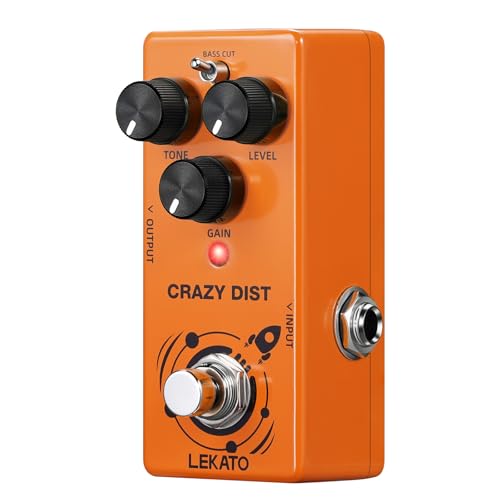
- Classic-inspired analog grit with cleaner definition
- DIST mode adds warm saturation and singing sustain
- True bypass and mini size suit compact boards
Best For: Compact vintage-style lead tones and rock solos
High-Gain Lead Machine

- Wide gain range from crunch to high-gain distortion
- Treble and Mid EQ help shape cutting solo tones
- Analog circuit and metal housing support live use
Best For: Players needing versatile lead distortion from rock to metal
Switchable Solo Voices
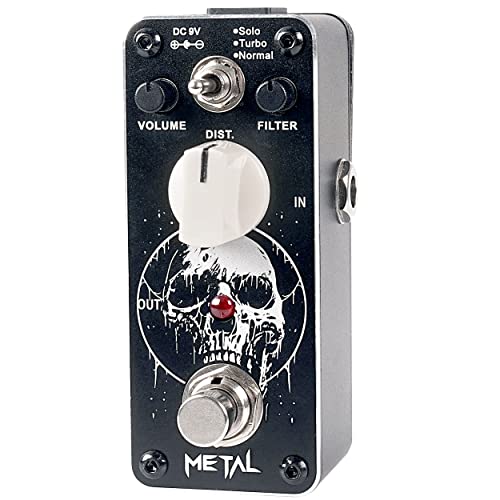
- Three modes: Solo, Turbo, and Normal
- Warm, smooth vintage-leaning distortion sound
- True bypass in a compact aluminum build
Best For: Lead players who want easy mode switching in a mini pedal
Compact Analog Lead Distortion
RVONE High Gain Distortion Pedal

- Analog circuit tuned for vintage amp breakup
- Covers edge-of-breakup through high-gain saturation
- Lightweight aluminum build for stage and studio
Best For: Players who want a compact analog pedal for expressive solos and flexible gain.
Three-Mode Shred Distortion
Donner Morpher Mini Distortion

- Three modes: Natural, Tight, and Classic Crunch
- High-gain voice suits shredding and riffing
- True bypass and aluminum-alloy construction
Best For: Players wanting an 80s-metal style pedal with multiple lead voicings.
Extreme Metal Solo Distortion

- Three modes: Raw, Brutal, and Inferno
- Level, Tone, and Distortion knobs for shaping
- Rugged die-cast build with true bypass
Best For: Metal and hard rock players needing compact, high-gain lead control.
Classic Benchmark Distortion – BOSS DS-1 Distortion
BOSS DS-1 Distortion Compact Distortion Pedal | Delivering hard-edged attack and smooth sustain
Check Price On AmazonIf you want one of the most recognizable distortion pedals for solos, the BOSS DS-1 is a straightforward choice with hard-edged attack and smooth sustain. It keeps notes clear at high distortion settings and can also work as a boost at lower settings, making it a flexible option for lead players who want definition.
Best For: Players who want a classic distortion sound that stays clear for cutting solos and can double as a boost.
Pros:
- Hard-edged attack stays clear even at maximum distortion
- Works well as a booster at low distortion settings
- Wide tone control range for shaping different sounds
- Doesn’t mask the character of different guitars and pickups
Cons:
- Basic control layout may feel limited for players wanting deeper EQ options
- Voicing is geared toward a classic sound rather than modern high-gain styles
The DS-1 is a dependable, familiar distortion choice if you want an iconic pedal that can handle lead work without getting muddy. It’s especially appealing for players who value simplicity and a proven sound.
Rough-Edge Lead Drive – Pro Co RAT2
The Pro Co RAT2 is a strong pick if you’re shopping for distortion pedals for solos with an arena-rock edge. It’s described as nailing the sweet spot between clean amp sparkle and warm overdrive, and it can also be used as a boost when you need an extra kick for leads.
Best For: Guitarists who want an aggressive lead distortion that can also push solos forward as a boost.
Pros:
- Excels at arena rock rhythm tones and soaring leads
- Captures the transition from clean sparkle to warm overdrive
- Can be used as a boost for solos
Cons:
- Doesn’t include the broader EQ shaping options found on more feature-heavy pedals
- Voicing is aimed at a specific gritty character rather than ultra-clean transparency
For players who want a proven distortion with enough bite for leads and enough push for solos, the RAT2 stays relevant for good reason. It’s a practical choice when you want one pedal to cover both core distortion and a solo lift.
High-Gain Solo Machine – Boss MT-2 Metal Zone
The Boss MT-2 Metal Zone is built for thick, tight distortion with smooth sustain, which makes it a serious option among distortion pedals for solos. Its dual-stage gain circuit and high-gain voice are aimed at massive sounds that stay strong at any volume level.
Best For: Metal players and lead guitarists who want thick, saturated distortion with singing sustain.
Pros:
- Dual-stage gain circuit creates thick, tight distortion
- Smooth, singing sustain supports lead playing
- Easy to get massive sounds at any volume level
- Works for heavy rhythms and soaring solos in other genres
Cons:
- High-gain character is tailored to metal styles
- May be more pedal than needed if you only want light crunch
If your priority is saturated lead tone with plenty of sustain, the MT-2 delivers a focused high-gain voice. It’s best suited to players who want bold metal distortion that can still carry solos clearly.
Modern Metal Voicing – JOYO Dark Flame R-17
The JOYO Dark Flame R-17 is a modern high-gain option for players looking at distortion pedals for solos in heavier styles. With three voicings and a 3-band EQ, it gives you enough control to shape a cutting lead tone, from the Bright mode’s articulate highs to the Dark mode’s heavier low end.
Best For: Players who want flexible modern metal distortion with EQ control for shaping solo tone.
Pros:
- Three voicings offer Dark, Bright, and balanced options
- 3-band EQ makes it easy to sculpt lead and rhythm tones
- Bright mode is designed for cutting solos
- True bypass helps preserve tone when the pedal is off
Cons:
- Requires a 9V DC adapter; no battery compartment
- Best results depend on a regulated, isolated power supply at high gain
This is a good fit if you want modern high-gain versatility rather than a one-voicing distortion. The extra EQ and voicing options make it easier to tailor the pedal to fast, articulate solo work.
Vintage-Voiced Mini Distortion – LEKATO Analog Two-Mode Pedal
If you want distortion pedals for solos with a classic feel, this LEKATO mini unit leans into warm, analog saturation and a tighter, punchier response. Its DIST mode is built around singing sustain and rich harmonic overtones, which makes it a practical choice for lead tones that need to stand out without losing clarity.
Best For: Players who want a compact, vintage-inspired distortion for rock solos and expressive rhythm work.
Pros:
- Pure analog distortion with a classic-inspired tone and improved clarity
- DIST mode emphasizes warm saturation, sustain, and harmonic overtones for solos
- True bypass helps keep your clean signal unchanged when the pedal is off
- Mini footprint is easy to fit on crowded pedalboards
Cons:
- Power adapter and cables are not included
- Single 9V DC setup may be less flexible than multi-power options
- Voicing is mid-high focused with reduced bass, which may not suit every rig
This is a straightforward option if you want vintage-style distortion with enough clarity for lead playing. It is less about extreme versatility and more about delivering a focused, familiar rock voice in a small enclosure.
High-Gain Lead Machine – JOYO JF-04 Distortion
Among distortion pedals for solos, the JOYO JF-04 stands out for players who want everything from a bluesy crunch to heavy, high-gain saturation. Its analog circuit and full-range EQ give you enough control to shape lead tones that can cut through a mix, whether you prefer thicker mids or a more scooped, aggressive sound.
Best For: Guitarists looking for a versatile distortion pedal that can cover classic rock leads through modern metal.
Pros:
- Wide gain range covers subtle breakup to heavy distortion
- Treble and Mid controls make lead-tone shaping more precise
- Analog response reacts to picking dynamics and volume changes
- All-metal housing is built for regular pedalboard use
Cons:
- Power supply or battery is not included
- Heavier footprint than a mini pedal
- May be more distortion than needed for players wanting only light crunch
If you need one distortion pedal that can move from classic rock to metal, this is the most flexible option in the group. The EQ controls help it adapt to different rigs, making it a strong pick for lead players who want more tone-shaping control.
Switchable Solo Voices – Sondery Metal Distortion Mini
If you’re shopping for distortion pedals for solos and want more than one flavor of gain, the Sondery Metal Distortion gives you Solo, Turbo, and Normal modes in a compact pedal. Its warm, smooth, wide-range vintage distortion sound is aimed at lead players who want easy switching between different textures without giving up true bypass operation.
Best For: Solo players who want a mini distortion pedal with multiple mode options and a vintage-leaning tone.
Pros:
- Three modes let you switch between Solo, Turbo, and Normal sounds
- Warm, smooth distortion is tuned for vintage-style playing
- True bypass switching helps preserve your dry tone when off
- Mini aluminum-alloy build keeps it portable and sturdy
Cons:
- AC adapter is not included
- Requires 9V DC with internal negative/external positive polarity
- Smaller control set may limit deep tone shaping
This pedal is a good fit if you want simple mode switching for solo work and prefer a smoother, older-school distortion character. It is especially appealing for players who value compact size and straightforward operation over extensive controls.
Compact Analog Lead Distortion – RVONE High Gain Distortion Pedal
If you want distortion pedals for solos that can move from edge-of-breakup warmth to sustained lead tones, the RVONE High Gain Distortion Pedal is built for that job. Its analog circuit is tuned to mimic vintage amp breakup without digital artifacts, while the simple knob layout makes it easier to shift from crunchy rhythm to singing solo sounds on the fly.
Best For: Guitarists who want a compact analog distortion pedal for expressive lead lines and flexible gain levels.
Pros:
- Analog circuit aims for vintage-style breakup and distortion textures
- Dynamic range covers bluesy edge-of-breakup tones through high-gain saturation
- Simple knob controls make mid-performance tone changes straightforward
- Lightweight aluminum housing is suited to stage and studio use
Cons:
- Power supply is not included
- Requires a standard 9V DC center-negative adapter for proper operation
This is a practical pick if you value clear note definition and a compact footprint over extra features. It is especially appealing for players who want one pedal to handle practice, recording, and live lead work with consistent character.
Three-Mode Shred Distortion – Donner Morpher Mini Distortion
Among distortion pedals for solos, the Donner Morpher stands out for players who want a high-gain voice with multiple flavors on tap. Its three modes — Natural, Tight, and Classic Crunch — give you a wide dynamic range and high definition that works for shredding, riffing, and lead parts with a harder edge.
Best For: Guitarists chasing an 80s-metal style distortion with easy mode switching for solos and riff work.
Pros:
- Three distortion modes expand tone options for different lead styles
- High-gain voicing is described as a crossover between Crunch Box and Suhr Riot
- True bypass helps keep the signal transparent when the pedal is off
- All-aluminum-alloy build adds durability in a mini format
Cons:
- Power supply is not included
- Needs a 9V DC center-negative adapter with at least 500mA current
This pedal makes sense if your leads lean toward glam, pop metal, or fast high-gain playing. The three-mode design gives it enough flexibility to cover different solo textures without making the control layout complicated.
Extreme Metal Solo Distortion – EX Inferno Death Metal Pedal
If your priority is aggressive distortion pedals for solos, the EX Inferno is aimed squarely at metal and hard rock players. It offers three modes — Raw, Brutal, and Inferno — plus Level, Tone, and Distortion controls so you can push into searing lead tones or tighter, punchier heavy sounds.
Best For: Metal and hard rock guitarists who want a compact high-gain pedal with strong solo-focused control.
Pros:
- Three toggle modes provide multiple high-gain voices for solos and rhythm
- Level, Tone, and Distortion knobs allow detailed sound shaping
- True-bypass analog circuitry helps avoid tone loss when disengaged
- Rugged die-cast build and top-mounted jacks suit tight pedalboards
Cons:
- Power adapter is not included
- Requires a 9V DC negative-tip supply
This is the heaviest-hitting option in the group, and it is best if you want a pedal designed around extreme gain rather than subtle breakup. The compact layout and mode switch make it practical for live use, especially when you need fast access to different lead textures.
How We Picked These Distortion Pedals for Solos
We focused on pedals that can deliver the qualities lead players actually use: sustain, note separation, responsive gain, and enough EQ control to shape a solo voice without getting lost in the band mix. We also looked for practical features such as true bypass, compact enclosures, and mode switches that expand the pedal’s range.
Because Distortion Pedals for Solos are often used differently than rhythm pedals, we gave extra weight to clarity at higher gain settings, midrange presence, and how well each design can cut through drums and bass.
Quick Comparison: What to Expect
Some pedals here lean classic and open, while others are built for tighter modern lead tones. Broadly, the shortlist covers three needs: vintage-style distortion for expressive blues-rock and hard rock leads, versatile mid-gain pedals for all-purpose soloing, and high-gain options for metal and aggressive sustain.
If you want one pedal to handle many styles, look for wider EQ shaping and multiple modes. If you mainly want a solo boost in a dense mix, prioritize strong midrange control and articulate attack over sheer gain.
Key Buying Factors for Distortion Pedals for Solos
Gain Structure and Sustain
A good solo pedal should compress just enough to help notes hold, but not so much that fast runs turn mushy. Look for smooth gain taper and clear sustain at moderate settings.
EQ and Midrange Presence
Mids matter for lead work. A pedal with effective bass, mid, and treble shaping is usually easier to fit into a live mix than one with only a basic tone knob.
Noise and Articulation
Higher gain often brings noise. For solos, you want a pedal that stays articulate when pushed, especially on bends, vibrato, and legato phrasing.
Mode Switching and Versatility
Multiple voicings can be useful if you need one pedal for both rhythm and lead. Modes that add brightness, warmth, or extra gain can help tailor the sound to different guitars and amps.
Who Should Buy Which Distortion Pedals for Solos?
If you want classic, recognizable lead tones, choose a distortion pedal with a broad tonal range and smoother response. If you need tighter modern metal lead sounds, go for a high-gain model with strong EQ control and a focused low end. Players who cover multiple genres should favor versatile pedals with mode switching and a full-range EQ, while minimalist setups benefit from compact pedals that are easy to dial in quickly.
For most guitarists shopping for Distortion Pedals for Solos, the best choice is the one that matches your amp, your pickup output, and the amount of cut you need in real-world playing. Start with the tonal character you want, then narrow by EQ flexibility and gain behavior.