Choosing among digital pianos for advanced players means looking past beginner-friendly extras and focusing on touch response, sound quality, pedal support, and real-world playability.
This roundup highlights 10 strong options for demanding pianists, from portable stage pianos to home consoles and space-saving grand-style models.
Best 10 Digital Pianos for Advanced Players Picks for 2026
Pro Stage All-Rounder

- PHA-4 hammer-action keys with Ivory Feel
- Over 3000 onboard sounds plus SuperNATURAL piano expansion
- Built-in speakers, USB audio/MIDI, and compact stage design
Best For: advanced players needing a portable stage piano with broad sounds
Feature-Rich Home Performer
Yamaha DGX-670B 88-Key Weighted Digital Piano
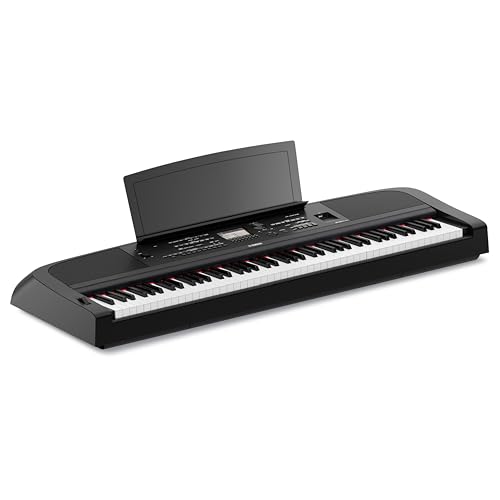
- Weighted 88-key action with CFX concert grand sampling
- 630 voices and 263 accompaniment styles
- Built-in speakers, mic input, and learning features
Best For: players who want a versatile weighted piano for practice and performance
Flagship Controller Piano
Roland RD-2000 EX Premium Digital Stage Piano

- Two sound engines with V-Piano modeling
- Nine sliders and eight encoder knobs for control
- Pre-installed German Concert and Essential Upright expansions
Best For: advanced players who want premium sound engines and deep control
Elegant Console Home Piano
Casio Privia PX-870 Weighted Console Digital Piano

- Tri-Sensor II scaled hammer action with textured keys
- AiR sound engine with resonance and key-off detail
- 40W 4-speaker system plus learning features
Best For: home players wanting a realistic console piano with strong built-in sound
Compact Grand Presence

- Low-profile grand design with premium Roland piano tech
- 88-note hammer-action keyboard with Ivory Feel materials
- Bluetooth audio/MIDI and Roland Piano App support
Best For: Advanced players wanting a space-saving grand-style digital piano
Portable Premium Touch

- Weighted keyboard action with acoustic-style response
- CFX Full Concert Grand voice and 192-note polyphony
- Smart Pianist and Rec’n’Share app compatibility
Best For: Advanced players who need a portable weighted piano with a grand voice
Simple Weighted Value

- Weighted, touch-sensitive keys for expressive playing
- 10 Voices with Yamaha grand piano sound
- Simple one-button operation and Dual Mode layering
Best For: Budget-minded players who want a straightforward weighted digital piano
Smart Practice Pick
Donner DDP-95 88-Key Weighted Digital Piano

- 88 weighted keys with 16-level touch sensitivity
- 610 tones, 600 rhythms, and 100 demo songs
- LCD, recording, Bluetooth, and USB-MIDI support
Best For: Players who want a feature-rich weighted piano for practice and creativity
Home Upright Favorite

- Yamaha CFX concert grand sound with resonance detail
- GHS weighted keys and 3-pedal upright design
- Bench included plus Bluetooth Audio/MIDI connectivity
Best For: Pianists who want a realistic home upright with a complete setup
Value Practice Choice
Donner DEP-20 Weighted Digital Piano

- 88 hammer-action keys with adjustable touch response
- 128-note polyphony and 238 tones
- Includes stand, 3 pedals, and recording features
Best For: Players who want an affordable weighted piano for practice and arranging
Pro Stage All-Rounder – Roland RD-88 EX Stage Piano
For digital pianos for advanced players, the Roland RD-88 EX stands out as a compact stage board with serious sound depth and performance flexibility. Its SuperNATURAL piano engine, expanded sound set, and PHA-4 hammer-action keys make it a practical pick for players who want expressive control on stage and in rehearsal.
Best For: Advanced players who want a lightweight stage piano with strong acoustic piano feel and a huge built-in sound palette.
Pros:
- PHA-4 88-note hammer-action keyboard with Ivory Feel for responsive playability.
- SuperNATURAL Acoustic Piano 3 expansion plus ZEN-Core sounds with over 3000 onboard tones.
- Onboard stereo speakers, built-in rhythms, and USB audio/MIDI for flexible use.
- Light, durable design with DP-10 damper pedal included.
Cons:
- Not as feature-dense as Roland’s higher-end RD-2000 EX for deep controller work.
- Stage-focused layout may be less ideal than a console piano for home-only setups.
Overall, the RD-88 EX is a strong choice if you want advanced touch, broad sounds, and easy transport in one performance-ready instrument.
Feature-Rich Home Performer – Yamaha DGX-670B 88-Key Weighted Digital Piano
When shopping for digital pianos for advanced players who also want extra performance tools, the Yamaha DGX-670B offers weighted action, flagship-style grand piano sampling, and a wide set of accompaniment features. It is especially practical for players who want to practice, arrange, and perform without adding a lot of extra gear.
Best For: Players who want a weighted digital piano with band-style accompaniment, learning tools, and built-in speaker support.
Pros:
- Weighted 88-key action that plays heavier in the low keys and lighter in the high keys.
- CFX Stereo Sampling reproduces Yamaha’s flagship CFX concert grand sound.
- 630 Voices and 263 automatic accompaniment styles add plenty of versatility.
- Built-in speakers, microphone input, and learning features make it useful for practice and performance.
Cons:
- Furniture stand is sold separately, so the setup is not fully complete out of the box.
- Less focused on pure stage-piano control than dedicated performance models.
In short, the DGX-670B is a flexible option if you want a weighted piano feel with more creative features than a basic home digital piano.
Flagship Controller Piano – Roland RD-2000 EX Premium Digital Stage Piano
Among digital pianos for advanced players, the Roland RD-2000 EX is the most feature-forward stage option here, built around two independent sound engines and hands-on control. Its V-Piano modeling, SuperNATURAL engine, and extensive sliders and knobs make it a strong fit for players who need a serious performance instrument.
Best For: Advanced keyboardists who want premium stage-piano sound engines and deep real-time control.
Pros:
- Two independent sound engines for layered performance flexibility.
- Advanced V-Piano modeling with two pre-installed expansion titles.
- SuperNATURAL engine with 128-voice polyphony for electric pianos and more.
- Nine sliders and eight encoder knobs provide excellent hands-on control.
Cons:
- At 62 pounds, it is not as easy to move as lighter stage pianos.
- More specialized than a general-purpose home digital piano.
If you want a premium stage piano with workstation-style control and detailed tone shaping, the RD-2000 EX is the most advanced performer-focused pick in this group.
Elegant Console Home Piano – Casio Privia PX-870 Weighted Console Digital Piano
For digital pianos for advanced players who prefer a console-style instrument, the Casio Privia PX-870 delivers an authentic touch, detailed grand-piano sound, and a powerful built-in speaker system. Its Tri-Sensor II action and AiR sound source make it a practical choice for serious home practice.
Best For: Pianists who want a refined console digital piano with strong resonance, immersive speakers, and quiet practice features.
Pros:
- Tri-Sensor II Scaled Hammer Action with simulated ebony and ivory textures.
- AiR Sound Source adds damper resonance, string resonance, key-off simulation, and mechanical sounds.
- 40W 4-speaker sound projection fills a room with rich audio.
- Duet Mode, dual headphone jacks, MIDI recorder, and Concert Play support learning and practice.
Cons:
- Console design is less portable than stage-piano models.
- Focused on home use rather than advanced onboard controls for live work.
The PX-870 is a strong pick if your priority is realistic piano feel in a stylish, room-filling home instrument.
Compact Grand Presence – Roland GP-3 Low-Profile Grand
If you want digital pianos for advanced players that also make a visual statement, the Roland GP-3 stands out with its low-profile grand design and premium Roland piano technologies. It pairs authentic hammer-action touch with immersive onboard sound, plus Bluetooth and app support for practice, recording, and MIDI use.
Best For: Advanced players who want a compact grand-style digital piano with premium touch and modern connectivity.
Pros:
- 88-note hammer-action keyboard with escapement and Ivory Feel materials
- Custom stereo speaker system for immersive sound
- Bluetooth audio/MIDI plus deep Roland Piano App integration
- Sustain, soft, and sostenuto pedals with half-pedal support
Cons:
- Large baby-grand footprint compared with portable slab pianos
- Not as travel-friendly as lighter stage models
The GP-3 is a strong fit if you want a refined playing experience without giving up modern convenience. Its combination of grand-style touch, onboard recording, and connected features makes it a serious home instrument for committed pianists.
Portable Premium Touch – Yamaha P225 Weighted 88-Key
For shoppers comparing digital pianos for advanced players, the Yamaha P225 offers a practical balance of weighted feel, portable design, and flagship-inspired sound. Its CFX concert grand voice, 192-note polyphony, and app compatibility make it a solid choice for focused practice and everyday playing.
Best For: Players who want a portable weighted digital piano with a strong grand-piano voice and simple setup.
Pros:
- Weighted keyboard action that mirrors acoustic piano response
- Yamaha CFX Full Concert Grand voice with rich resonance
- 192-note polyphony for more demanding playing
- Works with Smart Pianist and Rec’n’Share apps
Cons:
- Portable design means fewer built-in premium features than a larger home console
- Includes a sustain foot switch, not a full three-pedal unit
The P225 is a straightforward, capable digital piano for players who value feel and portability over extra furniture-style features. It should suit advanced users who want dependable practice support and a realistic grand sound in a compact format.
Simple Weighted Value – Yamaha P71 Essential 88-Key
The Yamaha P71 is a no-frills option in digital pianos for advanced players who mainly want weighted action and a clean playing experience. With touch-sensitive keys, 10 Voices, Dual Mode layering, and a simple one-button layout, it keeps the focus on performance rather than menus.
Best For: Players who want an affordable weighted digital piano with straightforward controls and essential sounds.
Pros:
- Weighted, touch-sensitive keys for expressive playing
- 10 Voices including Yamaha grand piano tones
- Dual Mode lets you layer two sounds together
- Simple one-button operation keeps setup easy
Cons:
- Fewer Voices and features than higher-end models
- Basic included sustain pedal rather than a more advanced pedal setup
The P71 makes sense if you want a dependable weighted keyboard without extra complexity. It is best viewed as a practical, budget-friendly instrument for focused playing and regular home use.
Smart Practice Pick – Donner DDP-95 88-Key Weighted Digital Piano
If you’re comparing digital pianos for advanced players, the Donner DDP-95 stands out as a practice-oriented option with a fully weighted 88-key keyboard, 16-level touch sensitivity, and a broad sound library. It leans more toward flexible learning and idea-building than pure premium realism, but it still gives you the core tools needed for serious daily playing and composition.
Best For: Players who want a feature-packed weighted piano for practice, recording, and experimentation.
Pros:
- 88 fully weighted keys with 16-level touch sensitivity for nuanced dynamics.
- 610 tones and 600 rhythms provide a wide palette for arranging and practice.
- 4.3″ LCD, recording, and playback make it easier to review and refine performances.
- Bluetooth and USB-MIDI support add flexibility for connected use.
Cons:
- Listed as a beginner model, so it may not match higher-end stage pianos for realism.
- Its strengths are more feature variety than premium acoustic-style refinement.
For advanced players who value versatility, the DDP-95 offers a lot to work with in a single instrument. It makes the most sense if you want a weighted keyboard that supports practice, creativity, and basic production without moving into a higher price tier.
Home Upright Favorite – Yamaha Arius YDP-146B
For shoppers focused on digital pianos for advanced players, the Yamaha Arius YDP-146B is the most traditional home-style choice in this group. Its GHS weighted action, Yamaha CFX concert grand sound, and 3-pedal setup make it a strong fit when you want a more acoustic-inspired playing experience for technique work and long practice sessions.
Best For: Pianists who want an upright-style digital piano with realistic touch and a complete home setup.
Pros:
- Yamaha CFX concert grand sound with damper and string resonance.
- GHS weighted action supports proper finger strength and technique.
- Includes a 3-pedal unit and bench for a complete home arrangement.
- Bluetooth Audio/MIDI and dual headphone jacks add modern convenience.
Cons:
- Designed as a home upright, so it is less portable than a portable slab-style piano.
- Voice selection is limited compared with more feature-heavy digital pianos.
If your priority is feel and a convincing piano-first experience, this Yamaha is the most refined choice here. It is especially appealing for players who want a stable, apartment-friendly instrument that still behaves like a serious practice piano.
Value Practice Choice – Donner DEP-20 Weighted Digital Piano
Among digital pianos for advanced players, the Donner DEP-20 is best viewed as a budget-friendly practice and arranging tool. It offers 88 hammer-action keys, 128-note polyphony, and a useful mix of tones, effects, and outputs, making it practical if you need a capable weighted keyboard without a more expensive cabinet piano.
Best For: Players who want an affordable weighted piano for rehearsing, composing, and home practice.
Pros:
- 88 full-sized hammer-action keys with adjustable touch response.
- 128-note polyphony helps keep notes clearer in layered playing.
- 238 tones, dual-tone mode, and recording support expand creative use.
- Includes furniture stand and 3-pedal unit for a more complete setup.
Cons:
- Listed as a beginner model, so it may feel less refined than premium digital pianos.
- Sound and control features are practical, but not especially upscale.
The DEP-20 is a sensible pick if you want the basics done well and prefer to spend less. It gives advanced players enough keyboard response and connectivity to practice seriously, even if it is not the most luxurious instrument in the category.
How We Picked the Best Digital Pianos for Advanced Players
We focused on models that better serve experienced players: weighted actions that support nuanced dynamics, convincing piano sound engines, dependable build quality, and useful performance or practice features. We also considered whether each piano fits a stage, studio, or home setting.
Quick Comparison
For portability and gig use, stage pianos like the Roland RD-88 EX, Roland RD-2000 EX, and Yamaha P225 are the most flexible. For home-focused playing, console models such as the Casio Privia PX-870 and Yamaha Arius offer a more furniture-like experience. If you want a premium statement piece with a smaller footprint, the Roland GP-3 stands out.
Key Buying Factors for Digital Pianos for Advanced Players
Key Action and Touch
Advanced players should prioritize graded hammer action, solid key return, and enough resistance for refined control. A good action should support both delicate pianissimo work and strong repeated passages without feeling overly stiff or plasticky.
Sound Engine and Polyphony
The best Digital Pianos for Advanced Players deliver realistic sampling or modeling, believable resonance, and enough polyphony for layered playing, sustained passages, and pedal use. If you rely on expressive voicing, prioritize nuanced tone over a long feature list.
Pedals, Speakers, and Connectivity
Three-pedal support matters for classical and serious repertoire, while strong built-in speakers are important for home use. On the connectivity side, look for USB MIDI/audio options, headphone support, and wireless features if you work with apps or recording tools.
Form Factor and Use Case
Stage players need portability and ruggedness; home players may prefer a console with integrated pedals and a more acoustic-piano feel. If space is limited, a compact grand-style or portable model can be a smarter long-term fit than a large cabinet.
Who Should Buy Which Digital Pianos for Advanced Players?
Gigging musicians should lean toward the Roland RD series or Yamaha P225 for transport-friendly performance. Home pianists who want a more traditional presence may prefer the Casio Privia PX-870 or Yamaha Arius. Players seeking a premium blend of visual impact and serious performance should look closely at the Roland GP-3. Budget-minded buyers can consider the Yamaha P71, while the Donner models are better suited to casual players who want lots of features at a lower cost.
In short, the right choice depends on whether you value portability, cabinet-style design, or pro-level stage control. Matching the piano to your space, repertoire, and playing demands will matter more than chasing the most features on paper.