When you need a little more volume without losing your acoustic’s natural voice, a good boost pedal can make all the difference. The best options add level, clarity, and control without turning your tone harsh or muddy.
Below, we’ve narrowed the field to the most practical acoustic guitar boost pedals for live players, home recorders, and anyone who wants a cleaner signal path and better stage presence.
Best 10 Acoustic Guitar Boost Pedals Picks for 2026
Ultra-Compact Clean Boost
TC Electronic SPARK MINI BOOSTER

- 20 dB clean boost
- All-analog signal path
- PrimeTime momentary or latching switching
Best For: Players who want a tiny transparent boost for simple level lifts.
Responsive Line Driver Boost

- Clean volume lift with dynamic response
- Quiet operation with quality components
- Plays well with other pedals
Best For: Players who want a dependable, natural-feeling boost on a pedalboard.
Dual-Mode Mini Booster
SORAN JBS-01 Booster Mini Pedal

- Clean Boost and Overdrive Boost modes
- Bass, Treble, and Gain controls
- True bypass in a compact metal case
Best For: Players who want a compact boost with extra tone-shaping and drive options.
Acoustic Modeling Preamp Boost

- Models 16 body types and 15 guitar models
- Includes compressor, EQ, and nine effects
- Balanced XLR and dual 1/4-inch outputs
Best For: Acoustic players who need a full-featured preamp with boost and anti-feedback tools.
Clean Tone Boost

- Up to 35dB clean boost
- True bypass for minimal tone loss
- Compact aluminum-alloy housing
Best For: transparent boost with a simple control layout
Acoustic Sim Tone

- Three modes: Piezo, Standard, Jumbo
- Simulates acoustic guitar texture
- Compact analog pedal design
Best For: electric players seeking acoustic-style simulation
Buffer Boost Utility

- Clean boost with built-in buffer
- 0-12dB gain range
- Mini pedal with bypass buffer support
Best For: compact boards needing subtle boost and buffering
Simple Step Boost
Caline CP-514 Santa Carla Boost
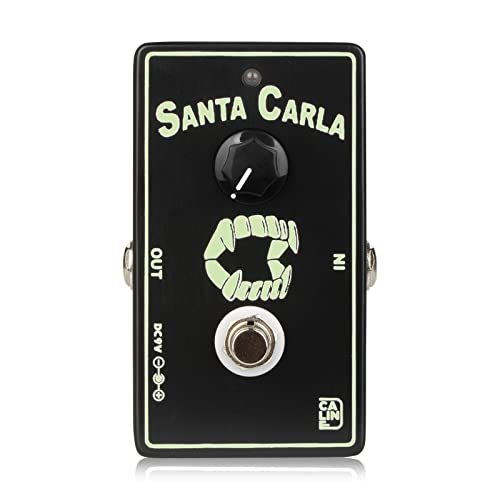
- Selectable boost from +2dB to +20dB
- True bypass for a cleaner signal when off
- Compact aluminum alloy mini pedal
Best For: Players who want an easy, stepped boost without extra controls
Clean Boost With EQ
Pure Boost 20dB+ Clean Boost Pedal

- 20dB+ clean boost for a volume lift
- ±15dB 2-band EQ for highs and lows
- True bypass in a compact metal enclosure
Best For: Players who want clean boost with simple EQ shaping
Ultra-Compact Clean Boost – TC Electronic SPARK MINI BOOSTER
If you’re shopping for acoustic guitar boost pedals and want a simple level lift, the TC Electronic SPARK MINI BOOSTER keeps things clean and compact. Its all-analog design is meant to amplify your signal without changing your core tone, while the 20 dB boost gives you enough headroom for solos, stronger presence, or pushing an amp a bit harder.
Best For: Players who want an ultra-small, transparent boost for acoustic or electric setups.
Pros:
- Up to 20 dB of clean boost to bring your tone forward
- Fully analog circuit preserves the character of your signal
- PrimeTime switching can act as latching or momentary boost
- Very compact footprint for tight pedalboards
Cons:
- Single-purpose boost pedal with no EQ or tone shaping controls
- Best suited to straightforward volume lift rather than feature-heavy acoustic processing
For players who value simplicity, this pedal is an easy way to add an always-ready boost without extra color. It is a practical choice when you want a small, clean gain lift and minimal pedalboard space.
Responsive Line Driver Boost – MXR CAE Boost/Line Driver
Among acoustic guitar boost pedals, the MXR CAE Boost/Line Driver stands out as a straightforward, high-quality option for adding volume without thinning your tone. Built with Custom Audio Electronics input from Bob Bradshaw, it is designed to clean up well when you roll back your guitar volume and to stay quiet alongside other pedals.
Best For: Players who want a responsive boost that stays clear and plays nicely with a pedalboard.
Pros:
- Responds well to guitar volume changes and picking dynamics
- Quiet operation with high-quality components
- Designed to integrate smoothly with other pedals
- Simple boost/line-driver approach keeps setup easy
Cons:
- Lacks the extra EQ or acoustic-specific features of a full preamp
- More of a utility boost than a tonal-shaping pedal
This is a strong pick if you want a dependable boost that feels natural under the fingers. It favors clean, practical gain staging over bells and whistles.
Dual-Mode Mini Booster – SORAN JBS-01 Booster Mini Pedal
If you want acoustic guitar boost pedals with a little more flexibility, the SORAN JBS-01 adds both Clean Boost and Overdrive Boost modes in a compact metal enclosure. It is built around a transparent volume lift, but the second mode and the Bass/Treble/Gain controls give you more room to shape how the pedal pushes your signal.
Best For: Players who want a small boost pedal with switchable clean and driven options.
Pros:
- Two selectable modes: Clean Boost and Overdrive Boost
- Bass, Treble, and Gain controls add extra tone-shaping flexibility
- True bypass helps keep the signal intact when bypassed
- Compact, sturdy metal case is pedalboard-friendly
Cons:
- Requires a standard 9V DC power adapter, which is not included
- Less straightforward than a single-knob clean boost
This pedal makes sense if you want more than just a plain volume bump. It offers practical versatility for solos, sustain, and subtle coloration while staying easy to fit on a board.
Acoustic Modeling Preamp Boost – Zoom AC-3 Acoustic Pedal
The Zoom AC-3 goes beyond a basic boost pedal and is aimed squarely at acoustic guitar players who want more control over tone and performance. It models 16 guitar body types and 15 specific models, adds nine effects, a compressor, EQ, anti-feedback tools, and a foot-switchable 9 dB boost for moving between rhythm and lead parts.
Best For: Acoustic players who want a full-featured preamp, modeler, and boost in one unit.
Pros:
- Acoustic modeling for 16 body types and 15 guitar models
- Built-in compressor, 3-band EQ, and nine adjustable effects
- Anti-feedback control and foot-switchable 9 dB boost
- Balanced XLR and dual 1/4-inch outputs for stage or recording use
Cons:
- Much larger and more complex than a simple boost pedal
- May be overkill if you only need a clean volume increase
For players who need a serious acoustic front end, this is the most feature-rich option in the group. It is best approached as a multi-function acoustic preamp that happens to include boost, not just as a basic volume pedal.
Clean Tone Boost – JOYO Roll Boost JF-38
If you want one of the more straightforward acoustic guitar boost pedals for adding level without changing your core sound too much, the JOYO Roll Boost keeps the focus on a clean, transparent lift. It offers up to 35dB of boost, true bypass, and a simple knob-based layout, so it fits players who just need more signal for solos, longer cable runs, or pushing an amp a little harder.
Best For: Players who want a transparent boost pedal with a large gain range and simple operation.
Pros:
- Up to 35dB clean boost for a strong volume lift
- True bypass helps minimize tone loss when disengaged
- Compact metal housing with LED status indicator
- Simple, single-purpose design
Cons:
- Does not include a power supply or battery
- Needs the right 9V DC setup for proper operation
As a budget-friendly boost, this pedal is best when you want transparency and headroom rather than extra tone shaping. The aluminum-alloy build and no-frills controls make it an easy fit on a practical pedalboard.
Acoustic Sim Tone – MOOER Acoustikar Simulator
The MOOER Acoustikar is one of the more specialized acoustic guitar boost pedals in this roundup because it is designed to simulate acoustic guitar character from an electric guitar. With Piezo, Standard, and Jumbo modes, it gives you multiple voicings to work with when you want a warmer, more acoustic-style texture on stage or in practice.
Best For: Players who want acoustic-style simulation from an electric guitar with multiple sound modes.
Pros:
- Three selectable modes: Piezo, Standard, and Jumbo
- Designed to restore an acoustic-guitar-like sound texture
- Compact analog pedal format
- Works from a standard 9V power source
Cons:
- Requires an adapter or external power source
- Not a traditional clean boost pedal
If your goal is more acoustic flavor than pure volume increase, this pedal is the most targeted option here. Its value comes from the mode selection and warm-sounding simulation rather than general-purpose boosting.
Buffer Boost Utility – SONICAKE Sonic Super Master
For acoustic guitar boost pedals that are meant to stay simple and useful, the SONICAKE Sonic Super Master offers a clean boost with a built-in buffer. Its 0-12dB gain range is more modest than some high-gain options, but the buffer function can be helpful when you want a signal that stays tidy while the pedal is off.
Best For: Players who want a compact clean boost with buffer support and modest gain.
Pros:
- Clean boost with a built-in buffer
- 0-12dB gain range for subtle level increases
- Compact mini pedal format
- Buffer stays active even when the pedal is bypassed
Cons:
- Lower maximum boost than some competing pedals
- Power supply is not included
This is a practical choice if you care more about signal utility than huge gain. The small footprint and buffer function make it especially appealing for streamlined boards that need a dependable always-ready boost.
Simple Step Boost – Caline CP-514 Santa Carla Boost
Caline CP-514 Santa Carla Boost Guitar Effect Pedal, Green, Mini Booster Pedal with True Bypass
Check Price On AmazonIf you want one of the more straightforward acoustic guitar boost pedals for adding clean volume and a little tone shaping, the Caline CP-514 keeps things simple. Its single-knob design gives you selectable boost steps from +2dB up to +20dB, so you can nudge your signal without overcomplicating the setup.
Best For: Players who want an easy, compact boost with fixed level steps and true bypass.
Pros:
- Offers selectable boost levels from +2dB to +20dB
- True bypass design helps keep the signal path clean when off
- Compact aluminum alloy casing for a small pedalboard footprint
- Simple one-knob control is quick to dial in
Cons:
- Requires a 9V center-negative adapter, which is not included
- Only provides stepped boost options rather than continuous control
Overall, this is a practical choice if you mainly need a reliable volume lift and value simplicity over extra EQ shaping. The fixed gain steps make it easy to use live or in a basic acoustic rig.
Clean Boost With EQ – Pure Boost 20dB+ Clean Boost Pedal
For acoustic guitar boost pedals that need more shaping than a basic volume lift, this Pure Boost adds clean gain plus a ±15dB 2-band EQ. That makes it a useful pick when you want to push your signal harder while still adjusting highs and lows to better fit the room or your mix.
Best For: Players who want clean boost with simple EQ control in a compact pedal.
Pros:
- Delivers 20dB+ clean boost without coloring your tone
- ±15dB 2-band EQ helps tailor highs and lows
- True bypass switching reduces interference when disengaged
- Metal enclosure and ultra-small footprint suit pedalboards
Cons:
- No additional modes beyond clean boost and EQ shaping
- Powered by corded electric input rather than battery use
This pedal stands out if you want more control than a single-knob booster but still need a small, no-frills unit. It should work well for players who want to add level, clarity, or a little warmth without changing the core sound much.
Dual-Mode Boost Choice – LEKATO 2-Mode Boost Pedal
If you need acoustic guitar boost pedals that can do more than just add volume, the LEKATO mini booster gives you two distinct voices. One mode is a clean boost with frequency roll-off for a more focused jump, while the TS-style mode adds warm overdrive character and a midrange push.
Best For: Players who want both a clean boost and a warmer TS-style boost in one mini pedal.
Pros:
- Two modes: clean boost and TS OD booster
- Clean mode filters muddy lows and harsh highs
- 3-knob layout adds low and high-frequency adjustment
- True bypass preserves the dry signal when off
Cons:
- Power adapter and cables are not included
- TS mode adds overdrive character, which may not suit players who want only transparent boost
This is the most flexible option in the group if you want a pedal that can serve as either a clean level lift or a more colored push into an amp or drive pedal. The extra EQ controls make it easier to fine-tune the result than a basic booster.
How We Picked These Acoustic Guitar Boost Pedals
We focused on pedals that offer clean gain, simple operation, solid bypass behavior, and enough headroom to preserve the character of an acoustic instrument. We also looked for models that fit common use cases: subtle volume lifts, buffer-friendly rigs, compact boards, and pedals that can help manage tone in live or direct setups.
Because acoustic players often use different pickups, preamps, and amps, versatility mattered too. Some of these pedals are pure boosters, while others add EQ, buffering, modeling, or DI-style tools that can be useful in a broader acoustic rig.
Quick Comparison: Which Type of Booster Fits Your Rig?
If you want the simplest signal lift, a clean boost is usually the best starting point. If your tone gets thin over long cable runs, a buffered boost can help maintain clarity. If you need more control over feedback or pickup tone, a boost with EQ or an acoustic-focused modeler may be the smarter choice.
For players who split time between acoustic and electric, a two-mode or more flexible boost pedal can be a practical all-in-one solution. If you mainly perform solo or in worship, coffeehouse, or unplugged band settings, a modest clean boost often delivers everything you need.
Key Buying Factors for Acoustic Guitar Boost Pedals
Clean Headroom and Gain Range
Look for a pedal that raises volume without clipping your signal too early. Acoustic rigs usually benefit from transparent gain and enough output to cut through a mix.
Tone Preservation
The best Acoustic Guitar Boost Pedals should keep your pickup sounding natural. A flat response is ideal if you already like your core tone, while EQ can help if your guitar sounds boxy, bright, or thin.
Buffering and Bypass
True bypass is useful for keeping the pedal out of the way, but a good buffer can improve long cable runs and help your acoustic retain sparkle. Which is better depends on the rest of your signal chain.
Stage Use and Control
Small enclosures are great for crowded boards, but bigger pedals may be worth it if you need EQ, DI features, or extra tone-shaping tools. For live use, simple controls are often faster and more reliable.
Who Should Buy Which Acoustic Guitar Boost Pedals?
Choose a straightforward clean boost if you just need more level for solos or louder passages. Pick a boost with EQ if you want to fine-tune a piezo pickup or tame feedback-prone frequencies. Go for an acoustic modeler or multi-function pedal if you want one box to cover boosting, shaping, and direct performance needs.
If you play both acoustic and electric guitars, a dual-mode booster can be the most flexible choice. For minimal pedalboards, compact Acoustic Guitar Boost Pedals with true bypass and a simple level control offer the best mix of convenience and sound quality.