Choosing the right volume pedal can make an acoustic rig feel more expressive, more controllable, and easier to manage live. The best options balance smooth taper, quiet operation, and the right impedance for your setup.
Below, we’ve focused on acoustic guitar volume pedals that suit passive and active systems, plus compact models and dual-function designs for players who want more than simple volume control.
Best 10 Acoustic Guitar Volume Pedals Picks for 2026
Compact Passive Control

- Compact Jr. size fits pedalboards better
- 250K design for passive signal chains
- Taper switch adds two swell rates
Best For: Acoustic players using passive pickups who want a simple pedalboard-sized volume control
Mini Pedal Control

- Half-size footprint for travel boards
- Low-friction drive tested to over one million cycles
- Aux jack switches between tuner and expression modes
Best For: Players who want a compact volume pedal with adjustable feel and flexible routing
Active Signal Control

- 25K potentiometer for active pickup signals
- Compact pedalboard-friendly design
- Includes tuner output for routing flexibility
Best For: Active pickup players needing a compact volume pedal with tuner output
Dual-Function Control
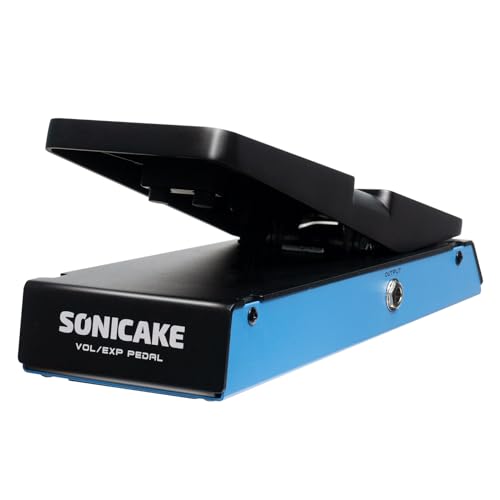
- Combines passive volume and expression in one pedal
- Works without battery or pedal power supply
- Full-size analog design with broad compatibility
Best For: Players who want a full-size dual-purpose pedal for volume and expression control
Anniversary Pick
Ernie Ball 40th Anniversary Volume Pedal

- Compact chassis with black finish
- Kevlar cord for precise control
- Works with active or passive signals
Best For: Compact, no-power volume control with adjustable swell response
Dual-Mode Choice
HOTONE Volume Expression 2-in-1 Pedal

- Volume and expression in one pedal
- Passive design needs no power
- Independent output jacks included
Best For: Players who want one pedal for both volume and expression
Compact Utility
2-in-1 Volume Expression Pedal for Guitar Bass

- Compact 2-in-1 volume and expression design
- Metal chassis with non-slip base
- No power required for plug-and-play use
Best For: Compact, plug-and-play control for volume and expression
Compact Passive 2-in-1
SONICAKE Vexpress Mini Volume/Expression Pedal
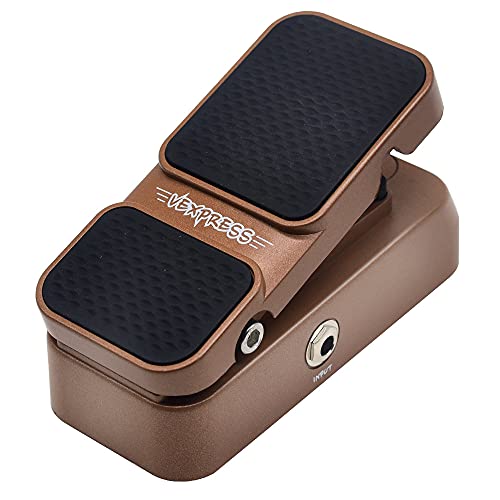
- Passive volume/expression control with no power required
- Automatically detects volume or EXP function
- Compact 5.85-inch design for easy carry
Best For: portable setups that need basic volume swells and expression control
Silent-Mute Stage Control
Black Passive Stereo Volume & Expression Pedal

- Mute-on-press function for silent transitions
- Passive, no-power design with non-slip tread
- Heavy-duty chassis tested for 100,000+ presses
Best For: players who need quiet muting and reliable stage-ready control
All-in-One Passive Control
Volume Expression Combo Pedal for Guitar

- Dual-function volume and expression control
- No power required for simple setup
- Silent tread with metal chassis
Best For: guitarists wanting one passive pedal for both volume swells and expression control
Compact Passive Control – Ernie Ball VP JR 250K
If you’re shopping for acoustic guitar volume pedals for a passive signal chain, the Ernie Ball VP JR 250K is built for straightforward hands-on level control. Its smaller footprint makes it easier to fit on a pedalboard, and the mono volume layout keeps operation simple for swells and level rides.
Best For: Players who want a compact passive volume pedal with a pedalboard-friendly size and simple mono control.
Pros:
- Jr. size helps it fit better on crowded pedalboards
- Designed for passive signals with a 250K VP JR potentiometer
- Taper switch offers two swell-rate options
- Mono volume control keeps the layout simple
Cons:
- Made specifically for passive signals, not active setups
- Single-function design does not add expression features
For players who mainly need reliable passive volume control, this model focuses on the essentials. The compact form and adjustable taper make it a practical choice when space and smooth swells matter more than extra routing options.
Mini Pedal Control – Dunlop Volume (X) Mini
The Dunlop Volume (X) Mini Pedal is a strong option if you want acoustic guitar volume pedals with a smaller footprint and flexible control. It delivers smooth swells in a compact form, while the low-friction band-drive and adjustable torque are designed to keep the pedal feeling consistent underfoot.
Best For: Players who want a compact pedal with smooth action and flexible tuner or expression routing.
Pros:
- Mini footprint saves space on travel or crowded boards
- Low-friction band-drive is tested to over one million cycles
- Adjustable torque lets you tune the rocker feel
- Aux jack can be switched between tuner and expression modes
Cons:
- More compact size may feel less like a full-size pedal
- Internal setup controls may take extra adjustment time
This pedal is aimed at players who want precise control without a large footprint. If you value compact size, smooth travel, and configurable routing, it offers a practical balance for stage or travel boards.
Active Signal Control – Ernie Ball VP JR 25K
For acoustic guitar volume pedals in active signal setups, the Ernie Ball VP JR 25K is purpose-built for that job. It uses a compact design and a 25K VPJR potentiometer made for active pickup signals, with a tuner output included for practical stage use.
Best For: Players with active pickups who want a compact volume pedal and tuner output in one setup.
Pros:
- 25K VPJR potentiometer is designed for active pickup signals
- Compact design is easy to place on a pedalboard
- Tuner output adds useful routing flexibility
- Includes pedal, Vectran cable, and stainless steel spring
Cons:
- Built specifically for active signals, so it is not the right match for passive rigs
- Does not add expression-pedal functions
This is a focused, no-frills option for active rigs that need dependable volume control. If your signal path calls for a compact pedal with tuner routing, it fits that role cleanly.
Dual-Function Control – SONICAKE FlipVol 2-in-1
If you want acoustic guitar volume pedals that can also handle expression duties, the SONICAKE FlipVol combines passive volume and EXP control in one full-size pedal. It runs without a battery or pedal power supply and is built as a 100% analog option with broad compatibility across guitar, bass, keyboard, synth, and controller setups.
Best For: Players who want one pedal for both passive volume and expression control.
Pros:
- 2-in-1 design combines expression pedal and passive volume pedal
- Works without a battery or pedal power supply
- Full-size format is more suitable for the feet
- High compatibility with guitar, bass, keyboard, synth, and workstation gear
Cons:
- Full-size design takes more space than mini pedals
- Supplied power adapter is included, but the pedal is still a simple analog design
This model stands out when you want one pedal to cover more than basic volume duties. The passive operation and dual-function layout make it a flexible pick for players who switch between roles in different rigs.
Anniversary Pick – Ernie Ball 40th Anniversary Volume Pedal
If you want one of the more straightforward acoustic guitar volume pedals for hands-free swells and level control, this compact Ernie Ball model keeps the focus on feel and reliability. It works with active or passive signals, uses no power, and adds a switchable taper so you can choose between two different swell rates.
Best For: Players who want a compact, no-power volume pedal with adjustable swell response.
Pros:
- Compact chassis with a limited edition black finish
- Improved Kevlar cord for precise volume control
- Works with active or passive signals
- Switchable taper offers two swell rates
Cons:
- Volume-only design, so it does not add expression control
- Small footprint may feel compact for players who prefer a larger pedal
Overall, this is a practical choice if you want simple acoustic guitar volume control without extra setup or power requirements. The adjustable taper and compact build make it easy to fit into a working pedalboard.
Dual-Mode Choice – HOTONE Volume Expression 2-in-1 Pedal
This HOTONE option is useful if you want acoustic guitar volume pedals that can also double as expression control for compatible gear. It combines volume and expression in one passive pedal, with independent output jacks and no power supply needed.
Best For: Players who need one pedal for both volume and expression duties.
Pros:
- 2-in-1 design combines volume and expression control
- Passive operation requires no power supply
- Independent volume and expression output jacks
- Includes an additional 15 cm TS cable in the box
Cons:
- More features than a simple volume-only pedal
- Wider footprint than ultra-minimal designs
For players building a flexible pedalboard, this model stands out because it covers two control jobs in one unit. That makes it a practical pick when you want to reduce clutter while keeping both swells and parameter control available.
Compact Utility – 2-in-1 Volume Expression Pedal for Guitar Bass
Among acoustic guitar volume pedals, this compact 2-in-1 model is aimed at players who want simple control and broad compatibility in a small footprint. It supports volume and expression duties, uses no power, and is built with a metal chassis plus a silicone non-slip base for more stable stage use.
Best For: Players who want a compact, plug-and-play pedal for volume and expression control.
Pros:
- 2-in-1 volume and expression control in one compact unit
- Metal chassis with silicone non-slip base
- Silent, smooth operation with noise-reducing footpads
- No power required for plug-and-play use
Cons:
- Compact size may feel small for players who prefer a larger treadle
- No extra accessories are listed in the supplied notes
This is a strong option if you want a simple pedal that can handle both fade-ins and parameter control without batteries or adapters. Its stability-focused build makes it a sensible everyday pick for rehearsals, gigs, and home practice.
Compact Passive 2-in-1 – SONICAKE Vexpress Mini Volume/Expression Pedal
If you want one of the most compact acoustic guitar volume pedals for a small rig, the SONICAKE Vexpress keeps things simple with passive operation and dual volume/expression use. It works without a battery or power supply and automatically detects whether you’re using volume or EXP control, but for gradual volume control you’ll need a TRS cable.
Best For: Players who want a tiny, no-power pedal for volume swells or expression control in a portable setup.
Pros:
- Passive design needs no battery or pedal power supply
- 2-in-1 volume and expression functionality
- Automatically detects volume or EXP mode
- Compact, lightweight build for easy transport
Cons:
- TRS cable is needed for gradual volume control
- Mini size may not suit players who prefer a larger foot platform
As a simple utility pedal, this model is best when portability and no-fuss setup matter more than extra features. Its small footprint makes it easy to add to an acoustic or multi-instrument rig that needs basic control in limited space.
Silent-Mute Stage Control – Black Passive Stereo Volume & Expression Pedal
This acoustic guitar volume pedals pick is aimed at players who want passive control with a mute-on-press function for cleaner transitions. It runs without batteries or external power, uses a non-slip tread, and is built for precise real-time changes whether you’re adjusting volume or expression on a compatible rig.
Best For: Guitarists who want silent muting, passive operation, and a durable pedal for stage or practice.
Pros:
- Mute function supports silent transitions between songs or tones
- Passive design requires no batteries or power supply
- Non-slip tread and heavy-duty chassis for stage use
- Compatible with guitars, basses, keyboards, synths, and multi-effects
Cons:
- Uses a 6.35mm mono input and stereo output, so compatibility should be checked carefully
- Bulkier than mini pedals, so it may take more pedalboard space
If you need a straightforward control pedal that can also mute between passages, this one is designed for practical use rather than complexity. Its passive layout and rugged build make it a sensible fit for live players who value reliability and grip.
All-in-One Passive Control – Volume Expression Combo Pedal for Guitar
For acoustic guitar volume pedals use cases that also need expression-style control, this passive combo pedal keeps the workflow simple. It offers volume swells or effect-parameter control in one unit, runs without power, and uses a silent tread design that suits studio sessions, live sets, and worship playing.
Best For: Players who want a compact passive pedal for volume control and expression duties in one unit.
Pros:
- Dual-function volume and expression control in one pedal
- Fully passive, so no battery or external power is needed
- Silent, smooth tread movement for quiet operation
- Metal chassis and reinforced mechanism built for heavy use
Cons:
- Best suited to rigs with 1/4-inch expression or effects connections
- Primarily designed around electric guitar and effects control use cases
This is a practical all-in-one option if you want fewer pedals and straightforward passive control. Its compact footprint and universal 1/4-inch compatibility make it easy to slot into an effects chain, provided your gear supports the required connections.
How We Picked the Best Acoustic Guitar Volume Pedals
We looked for pedals that are practical for real-world acoustic use: smooth pedal action, dependable signal handling, durable construction, and layouts that fit crowded pedalboards. Compatibility mattered too, since acoustic rigs may involve passive pickups, active preamps, stereo rigs, or expression-capable processors.
We also gave preference to pedals that offer easy live use, such as no-power passive designs, clear mute behavior, and control ranges that make swells and fine level changes feel natural.
Quick Comparison: What Matters Most
Some Acoustic Guitar Volume Pedals are built for simple level control, while others combine volume and expression in one unit. If you just need clean level rides, a dedicated volume pedal is usually the most straightforward choice. If you use modelers, effects, or multi-function rigs, a 2-in-1 design may be the smarter buy.
Also check whether the pedal is designed for passive or active signals. Using the wrong impedance can lead to dull tone, limited sweep, or inconsistent volume response.
Passive Vs. Active Signals
Passive pickups and piezo systems often benefit from higher-impedance volume pedals, while active systems and buffered rigs typically pair better with lower-impedance models. Matching the pedal to your signal path helps preserve clarity and gives you a more usable taper.
Key Buying Factors for Acoustic Guitar Volume Pedals
Taper and sweep: A smooth, predictable sweep matters more than raw features. For acoustic swells, you want a pedal that starts quietly, rises evenly, and doesn’t bunch all the usable range into the last part of the throw.
Noise and feel: Acoustic players often use these pedals in quieter musical settings, so mechanical noise, scratchy pots, and unstable foot feel can be distracting. Look for solid construction and a pedal action that feels controlled under pressure.
Bypass and mute function: A mute toe or heel-down mute can be very helpful on stage, especially when you need to tune, swap instruments, or silence the signal between songs.
Size and board fit: Full-size pedals usually offer the easiest foot control, but mini pedals can be attractive for smaller boards. Make sure the footprint matches your rig and playing style.
Extra functions: Some Acoustic Guitar Volume Pedals also work as expression pedals. That flexibility is useful if you run effects or digital processors, but only if you actually need both functions.
Who Should Buy Which Acoustic Guitar Volume Pedals?
If you play a passive acoustic pickup or piezo system, start with a pedal designed for passive signals and prioritize impedance match above everything else. If your instrument has an active preamp or onboard electronics, choose a low-impedance model made for active signals.
Players who want the simplest setup should lean toward a dedicated volume pedal. Musicians using modelers, ambient effects, or multi-FX units may prefer a volume-expression combo. For tight pedalboards or travel rigs, mini Acoustic Guitar Volume Pedals can save space without sacrificing the control most players need.