The best audio compressors for recording vocals help control peaks, add consistency, and shape a vocal that sits confidently in a mix. The right choice depends on whether you need a dedicated rack unit, a channel strip, or compression built into an audio interface.
We’ve selected 10 options for home studios, professional recording rooms, live rigs, and streaming setups, with attention to vocal-friendly controls, connectivity, flexibility, and overall value.
Best 10 Audio Compressors for Recording Vocals Picks for 2026
Best Rackmount Gate/Compressor

- Smooths uneven vocal levels
- Includes adaptive expander/gates
- Clear multi-function LED metering
Best For: Rackmount vocal rigs and versatile dynamics control
Best USB Vocal Recording Interface

- Includes a 76-style analog compressor
- Adds Vintage preamp character
- Supports computer and mobile recording
Best For: Home, mobile, and streaming vocal setups
Best Vocal Channel Strip

- Combines compression with vocal processing
- Includes de-esser and expander/gate
- Rackmount design with XLR mic input
Best For: Vocal, voiceover, and broadcast channel shaping
Best 1176-Style Hardware Compressor

- Uses a classic FET-style design
- Offers four compression ratios
- Includes adjustable attack and release
Best For: Dedicated studio vocal compression
Classic Vocal Control

- Single-channel discrete ’76-style design
- Custom CineMag USA transformers
- All-buttons-in ratio mode
Best For: Classic-style vocal compression in professional audio setups
Flexible Rack Processing
Behringer Composer Pro-XL MDX2600

- Two-channel compressor, limiter, and gate
- Designed for production, mixing, and mastering
- Includes a 2-year warranty
Best For: Multi-channel vocal and studio dynamics processing
Blended Tube Dynamics

- Selectable tube and solid-state control
- Optical isolators and variable blend
- Switchable +4 dBu/-10 dBV modes
Best For: Single-channel vocal processing with tonal flexibility
Flexible Analog Control
ART SCL2 Dual/Stereo Compressor
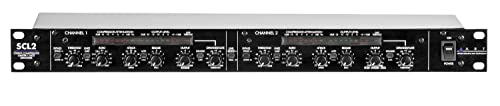
- Dual or linked stereo operation
- Balanced XLR and TRS connections
- Auto/manual attack and release with LED metering
Best For: Flexible vocal and stereo dynamics control in rack-based setups
Studio VCA Vocal Presence
Dual-Channel Vocal Dynamic Processor

- VCA circuit for vocal warmth and detail
- Noise gate and LED threshold monitoring
- Sidechain insert with XLR/TRS connectivity
Best For: Studio, streaming, and live vocal processing
Rackmount Vocal Shaping
Dual-Channel Vocal Compressor/Limiter

- VCA design for vocal clarity and presence
- Noise gate, LED metering, and sidechain insert
- Adjustable attack and release controls
Best For: Detailed vocal processing across studio, broadcast, and live use
Best Rackmount Gate/Compressor – dbx 266xs
For singers building a rack-based setup, the dbx 266xs is a practical choice among audio compressors for recording vocals when you want straightforward level control plus gating. Its separate LED displays make setup easier, while the program-adaptive gate can help manage unwanted noise between phrases.
Best For: Rackmount vocal rigs, portable systems, and users who also need compression or gating for instruments and mixes.
Pros:
- Compression smooths uneven levels and can add sustain or fullness.
- Program-adaptive expander/gates offer smooth release characteristics.
- Separate LED displays show gain reduction, compression threshold, and gate threshold.
Cons:
- It is an analog, corded 1U rack processor rather than a USB recording interface.
- Its broad dynamics-processing feature set may be more than needed for simple vocal recording.
The 266xs suits buyers who want dedicated hardware with visible metering and flexible compression, especially when vocal recording is part of a larger studio or live-sound rack.
Best USB Vocal Recording Interface – Universal Audio Volt 276
The Universal Audio Volt 276 combines a 2×2 USB-C audio interface with an analog compressor, making it a convenient option among audio compressors for recording vocals. Its Vintage mode and 76 Compressor are designed to add character, clarity, and punch while you record.
Best For: Home vocalists, mobile producers, and creators who want recording connectivity with built-in analog-style vocal compression.
Pros:
- Built-in analog compressor is based on the renowned 1176.
- Vintage mode is based on classic UA 610 preamps.
- Supports Mac, Windows, iPad, and iPhone recording setups.
Cons:
- The compressor is integrated into the interface rather than offered as a standalone rack processor.
- Mobile iPad use may require an external Volt power supply and Apple adapter, depending on the device.
Choose the Volt 276 if you want to record vocals through one compact interface instead of assembling a separate preamp, compressor, and computer connection.
Best Vocal Channel Strip – dbx 286s
The dbx 286s is a microphone preamp and channel strip built for shaping a vocal before it reaches the recorder. For anyone comparing audio compressors for recording vocals, it adds compression alongside de-essing, enhancement, and expander/gate functions in a single rackmount unit.
Best For: Vocalists, voiceover users, and studios that want compression plus sibilance, presence, and noise control from one channel strip.
Pros:
- Combines mic preamp, compression, de-esser, enhancer, and expander/gate.
- De-esser targets harsh high frequencies and sibilance.
- Balanced XLR mic input and additional 1/4-inch line input support varied sources.
Cons:
- It is a single-channel processor, so it is not intended for stereo processing.
- Its extensive processing controls may take longer to dial in than a compressor alone.
The 286s is especially appealing when vocal clarity requires more than level control. Its integrated de-esser and enhancer can help create a more finished signal before recording or broadcast.
Best 1176-Style Hardware Compressor – Klark Teknik 76-KT
The Klark Teknik 76-KT brings a classic FET-style approach to vocal dynamics. It is a strong candidate among audio compressors for recording vocals when you want a dedicated hardware compressor with discrete circuitry, transformer-coupled design, and selectable compression ratios.
Best For: Studio vocal chains and users seeking 1176-style hardware compression with adjustable timing controls.
Pros:
- Classic FET-style design modeled after iconic 1176 revisions.
- Offers 4:1, 8:1, 12:1, and 20:1 compression ratios.
- Includes adjustable attack and release times plus all-button mode.
Cons:
- It is a dedicated compressor, so it does not include a mic preamp or USB interface.
- The supplied specifications describe a rack-style professional audio unit rather than a compact desktop device.
The 76-KT is best suited to a more traditional studio signal path where a dedicated FET compressor can provide hands-on control over vocal dynamics before the signal reaches the recording system.
Classic Vocal Control – Warm Audio WA76
The Warm Audio WA76 is a single-channel discrete compressor suited to engineers seeking the classic ’76-style approach for audio compressors for recording vocals. Its fully discrete signal path, custom CineMag USA transformers, and selectable all-buttons-in mode provide a focused feature set for professional audio applications.
Best For: Recording engineers who want one classic-style compressor channel for vocal tracking or processing.
Pros:
- Fully discrete signal path modeled on the classic ’76 design.
- Custom CineMag USA transformers.
- Supports the distinctive all-buttons-in ratio setting.
- Compact metal chassis with included IEC cable and owner’s manual.
Cons:
- Single-channel design limits simultaneous processing.
- Requires a 24-volt DC power supply.
- Its classic feature set may be less versatile than a multi-function compressor.
The WA76 is a straightforward choice when characterful, single-channel compression is the priority. It is best matched with a vocal setup that values the classic ’76-inspired design over multiple channels or expanded processing tools.
Flexible Rack Processing – Behringer Composer Pro-XL MDX2600
The Behringer Composer Pro-XL MDX2600 is a two-channel compressor, limiter, and gate for audio compressors for recording vocals. Its channel count makes it practical for vocal production, mixing, and mastering workflows where broader dynamics control is useful.
Best For: Home and project studios needing two channels of dynamics processing for vocal production and mixing.
Pros:
- Combines compressor, limiter, and gate functions.
- Two-channel design supports processing two signals.
- Suitable for audio production, mixing, and mastering.
- Includes a 2-year manufacturer warranty.
Cons:
- The supplied notes identify fewer vocal-specific details than the other options.
- Corded electric operation may be less convenient for portable setups.
- Its rack-style dimensions may require appropriate equipment space.
The MDX2600 is a practical, feature-oriented option for buyers who want more than compression alone. Its two-channel layout and integrated limiter and gate can make it a flexible addition to a vocal recording or mixing rig.
Blended Tube Dynamics – ART Solo VLA Compressor
The ART Solo VLA is a single-channel multi-voice compressor for audio compressors for recording vocals. It combines selectable tube and solid-state control with optical isolators, variable blend control, and switchable operating levels for flexible vocal signal shaping.
Best For: Vocal engineers who want single-channel compression with tube/solid-state choices and parallel-style blend control.
Pros:
- Selectable MultiVoice tube and solid-state control.
- Uses OPTO analog optical isolators.
- Variable blend mixes uncompressed and compressed signals.
- Switchable +4 dBu and -10 dBV level modes.
Cons:
- Single-channel design is not intended for multi-channel processing.
- Corded electric operation limits placement flexibility.
- Its larger product dimensions may require dedicated rack or studio space.
The Solo VLA stands out for users who want more tonal and blend flexibility than a basic compressor provides. It is a compelling fit for vocal chains where selectable circuit character and controlled parallel blending are useful.
Flexible Analog Control – ART SCL2 Dual/Stereo Compressor
The ART SCL2 is a practical choice among audio compressors for recording vocals when you want flexible analog dynamics control in a rackmount format. Its dual-channel design can operate independently or as linked stereo channels, with selectable automatic or manual attack and release settings.
Best For: Home and project studios needing dual-channel vocal compression, stereo processing, and flexible routing.
Pros:
- Supports dual-channel or linked stereo operation.
- Offers balanced 1/4-inch TRS and XLR inputs.
- Includes selectable auto/manual attack and release controls.
- Provides precise LED level metering plus gate functionality.
Cons:
- Its 1U rackmount design requires suitable rack or studio space.
- The supplied notes do not specify a dedicated sidechain insert.
Choose the SCL2 if you value operating flexibility and clear metering over a vocal-only processor. Linked stereo operation also makes it useful beyond individual vocal tracks.
Studio VCA Vocal Presence – Dual-Channel Vocal Dynamic Processor
This dual-channel unit is aimed at buyers comparing audio compressors for recording vocals who want vocal-focused processing alongside noise reduction and routing flexibility. Its classic VCA circuit, Overeasy compression, auto attack/release settings, LED displays, and sidechain insert support studio, streaming, and live applications.
Best For: Vocal recording, streaming, and live setups that need compression, gating, visual monitoring, and sidechain control.
Pros:
- Classic VCA circuitry is designed to enhance vocal warmth and presence.
- Includes Overeasy compression and automatic attack/release settings.
- Built-in noise gate helps reduce unwanted background sound.
- XLR and 1/4-inch TRS connectivity plus a sidechain insert support flexible integration.
Cons:
- The supplied notes do not identify independent channel-linking controls.
- At 1U rackmount size, it is less convenient for portable, non-rack setups.
This is a strong fit when clean vocal presentation and practical monitoring matter as much as basic level control. The sidechain insert adds useful frequency-focused shaping for instruments and more involved mixes.
Rackmount Vocal Shaping – Dual-Channel Vocal Compressor/Limiter
For shoppers seeking audio compressors for recording vocals with additional control features, this dual-channel rackmount model combines Overeasy compression, adjustable attack and release, a noise gate, and a sidechain insert. Its VCA-based design is positioned for vocals, voiceovers, podcasting, broadcast, studio work, and live performance.
Best For: Vocalists, podcasters, streamers, and engineers who need rackmount compression with gating and sidechain options.
Pros:
- Provides dual-channel dynamics control for vocals and other sources.
- VCA circuitry is designed to improve vocal clarity, warmth, and presence.
- Includes adjustable attack/release controls and Overeasy compression.
- Offers LED metering, a noise gate, and XLR/TRS connections.
Cons:
- The supplied notes list push-button controls rather than knob controls.
- Its 1U rackmount format may not suit compact desktop rigs.
- The supplied information does not specify automatic attack/release settings.
This model makes sense when vocal processing needs to extend beyond straightforward compression. Its gate, metering, and sidechain capabilities provide a broader toolkit for controlled studio, broadcast, and live vocal chains.
How We Picked the Best Audio Compressors for Recording Vocals
We focused on compressors and vocal-processing devices that offer practical control over dynamics without requiring a complicated signal chain. The lineup includes FET-style compressors for fast, characterful control, VCA and optical-style designs for smoother processing, channel strips with preamp and de-essing functions, and interfaces with built-in vocal compression.
We also considered connection options, including XLR and TRS inputs, sidechain inserts, rack compatibility, stereo operation, portability, and suitability for recording, live sound, streaming, and vocal tracking. Because vocalists have different needs, the selection balances affordable processors with more specialized studio hardware.
Quick Comparison
| Best For | Recommended Type | What to Prioritize |
|---|---|---|
| Home recording | Interface or compact channel strip | Low-noise preamps, simple controls, and easy integration |
| Classic vocal character | FET-style compressor | Fast attack, selectable ratios, and transformer coloration |
| Flexible studio routing | Dual-channel rack compressor | Sidechain inserts, stereo linking, and broad metering |
| Live vocals or streaming | Channel strip or rack processor | Reliable controls, gating, de-essing, and accessible I/O |
Key Buying Factors for Audio Compressors for Recording Vocals
Compressor Type and Sound
FET compressors are often chosen for their fast response and assertive character, while optical-style designs tend to sound smoother and more forgiving. VCA processors are versatile and precise, making them useful for both tracking and mixing. If you want one unit to cover many applications, prioritize adjustable attack, release, ratio, and threshold controls.
Controls for Vocal Tracking
Look for makeup gain, gain-reduction metering, an adjustable knee, and a bypass switch for level-matched comparisons. A sidechain high-pass filter can reduce low-frequency pumping caused by plosives or proximity effect. De-essing, expansion, or gating can be valuable additions, but they should not replace careful microphone placement and room treatment.
Connections and Signal Flow
Confirm whether the unit accepts microphone-level signals directly or requires a separate preamp. Channel strips and interfaces can simplify recording by combining preamp, compression, and conversion. Rack processors typically need line-level signals and may be best placed after a preamp or interface output. Sidechain inserts are useful when you need external EQ or advanced ducking control.
Single-Channel or Dual-Channel Design
A single-channel compressor is sufficient for one vocal microphone and may provide more focused controls or character. Dual-channel models are better for stereo sources, multiple vocalists, or expanding a studio setup. Stereo-link controls matter when processing stereo program material, but they are less important for a standard mono vocal recording.
Who Should Buy Which Audio Compressors for Recording Vocals?
Choose an Interface with Built-In Compression
Choose an interface such as the Universal Audio Volt 276 if you are building a compact home studio and want recording, conversion, and basic vocal compression in one device. It is the simplest option for singers who do not already own a dedicated preamp and outboard processor.
Choose a Channel Strip for an All-In-One Vocal Front End
A channel strip such as the dbx 286s is a practical choice for spoken vocals, streaming, podcasting, and live vocal chains. Its integrated preamp, compressor, de-esser, enhancer, and gate can reduce the need for several separate processors.
Choose a FET Compressor for Character
The Klark Teknik 76-KT or Warm Audio WA76 suits users who want fast, energetic compression and classic studio-style vocal coloration. These are strong choices when the compressor is part of the desired sound rather than merely a transparent safety device.
Choose a Rack Processor for Expansion
Rack units such as the dbx 266xs, ART SCL2, and similar dual-channel processors make sense for studios and live rigs that need flexible routing, multiple channels, gating, limiting, or sidechain access. Before buying, verify that your interface or mixer provides the appropriate line-level sends and returns.