Finding reliable compression on a $200 budget is easier when you first decide whether you need a rack processor, studio unit, or compressor pedal. The right choice can smooth vocals, add sustain to guitar or bass, control peaks, or shape a complete mix.
We selected 10 affordable compressors with different strengths, from dual-channel rackmount designs to compact pedals, so you can match features and workflow to your setup without paying for controls you will not use.
Best 10 Audio Compressors Under 200 Picks for 2026
Rackmount Value
Behringer Composer Pro-XL MDX2600

- Two-channel compressor, limiter, and gate
- Designed for production, mixing, and mastering
- Compact portable rack-style format
Best For: Stereo or dual-mono studio dynamics processing
Versatile Rack Control

- Dual-channel or linked-stereo operation
- Balanced XLR and 1/4-inch TRS inputs
- Includes compression, limiting, expansion, and gating
Best For: Flexible analog studio and rack processing
Guitar Tone Shaper
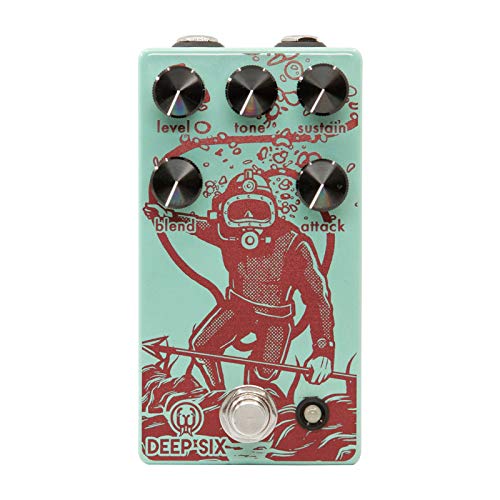
- Studio-grade compression in a stompbox
- Tone knob includes bass-cut shaping
- Top-mounted jacks and soft-switch bypass
Best For: Pedalboards and guitar-focused compression
Simple Pedal Choice

- Covers subtle to heavily squashed compression
- Attack, Sustain, Volume, and Bright controls
- 9V DC operation with 8mA consumption
Best For: Accessible guitar compression and tone shaping
Rackmount Vocal Control
Dual-Channel Compressor/Limiter

- Dual-channel VCA compression with Overeasy operation
- XLR/TRS I/O, sidechain insert, and noise gate
- LED metering with adjustable attack and release
Best For: Studio, live, streaming, and rack-based vocal processing
Bass Pedal Classic

- Bass-focused compression preserves low end and dynamics
- Compact analog pedal format
- Output and sensitivity controls for volume and sustain
Best For: Bass players wanting simple pedalboard compression
Streamlined Rack Processing

- Overeasy compression with auto attack and release
- XLR/TRS connectivity for rack-based audio systems
- Noise gate, LED monitoring, and sidechain control
Best For: Studio recording and live-streaming vocal setups
Versatile Digital Choice

- Six compression types
- Dual-compressor design
- Automatic makeup gain
Best For: Players seeking flexible digital compression options
Studio-Style Analog Control

- Analog signal format
- Ten gain-reduction LEDs
- True bypass
Best For: Players wanting compact analog compression with visual feedback
Blend-Friendly Stompbox
Walrus Audio Deep Six Compressor

- Attack and Blend controls
- Internal 18V headroom
- Battery or DC powered
Best For: Players using active pickups or humbuckers
Rackmount Value – Behringer Composer Pro-XL MDX2600
For buyers comparing audio compressors under 200, the Behringer Composer Pro-XL MDX2600 is a practical rack-style option for stereo processing. It combines two channels of compression, limiting, and gating in a single unit.
Best For: Audio production, mixing, and mastering setups needing two-channel dynamics control.
Pros:
- Provides two-channel compressor, limiter, and gate functionality.
- Suitable for audio production, mixing, and mastering.
- Portable 1U-style chassis with a stated 2-year warranty.
Cons:
- The supplied specifications do not detail the full control layout or metering features.
- Requires corded electric power rather than pedal-style operation.
The MDX2600 makes the most sense when you want broad dynamics processing in a compact rack unit. Its dual-channel format is especially useful for stereo sources or handling two mono signals.
Versatile Rack Control – ART SCL2 Compressor/Limiter
The ART SCL2 is a flexible choice among audio compressors under 200, offering dual-channel or linked-stereo operation. Its balanced XLR and 1/4-inch TRS connectivity suits analog rack and studio setups.
Best For: Users who need compressor, limiter, expander, and gate functions with stereo-linking flexibility.
Pros:
- Supports dual-channel or linked-stereo operation.
- Includes balanced 1/4-inch TRS and XLR inputs.
- Offers selectable automatic or manual attack and release controls.
- Features stereo balance control and LED level meters.
Cons:
- The 19-inch-wide chassis is less convenient for compact or pedalboard-style setups.
- Its corded electric design is intended for stationary use.
With multiple dynamics functions and connection options, the SCL2 is a strong fit for a traditional studio rack. Choose it when input flexibility and linked stereo operation matter more than portability.
Guitar Tone Shaper – Walrus Audio Deep Six V3
For guitarists shopping for audio compressors under 200, the Walrus Audio Deep Six Compressor V3 delivers studio-style compression in a stompbox format. Its tone control can also help shape the low end of the guitar signal.
Best For: Guitar players wanting pedalboard-friendly compression with low-end shaping.
Pros:
- Provides true-bypass, studio-grade compression in a pedal format.
- Added tone knob offers bass-cut control for low-end shaping.
- Soft-switch relay bypassing supports smooth, reliable operation.
- Top-mounted input and output jacks help with pedalboard placement.
Cons:
- Uses 9V power and a 1/4-inch audio connection, limiting it to pedal-oriented applications.
- The supplied notes do not specify battery operation.
The Deep Six V3 is more specialized than a rack compressor, but its compact design and guitar-focused controls make it convenient for live rigs and pedalboards. It is a sensible pick when tone shaping and reliable bypassing are priorities.
Simple Pedal Choice – JHS 3 Series Compressor
The JHS 3 Series Compressor is a straightforward option for guitarists comparing audio compressors under 200. It is designed to cover everything from subtle tone smoothing to heavily squashed compression without a complicated control set.
Best For: Players seeking accessible, adjustable guitar compression with optional brightness.
Pros:
- Attack and Sustain controls adjust the compression feel and response.
- Volume control supports unity-level or boosted output.
- Bright toggle helps the tone remain clear in certain situations.
- Made in Kansas City, USA, and uses 8mA at 9V DC.
Cons:
- Runs on 9V DC negative-center power, so a compatible supply is required.
- The supplied notes do not specify true bypass, enclosure dimensions, or included accessories.
The JHS 3 Series Compressor favors usability over an extensive feature set. Its three main controls and Bright toggle make it a practical choice for players who want quick access to both gentle and pronounced compression.
Rackmount Vocal Control – Dual-Channel Compressor/Limiter
For shoppers comparing audio compressors under 200, this dual-channel rackmount model is built for flexible studio, live, streaming, and stage use. Its VCA circuit, Overeasy compression, adjustable attack and release, noise gate, and sidechain insert provide broad control over vocals and instruments.
Best For: Studio vocals, live sound, streaming, and rack-based setups needing dual-channel processing.
Pros:
- Dual-channel compression supports vocals, guitars, drums, and other sources.
- XLR and 1/4-inch TRS connectivity integrates with mixers, interfaces, and PA systems.
- Includes LED metering, a noise gate, and sidechain input for detailed control.
- Adjustable attack and release allow more precise dynamic shaping.
Cons:
- The 19-inch rackmount design is less convenient for compact pedalboard or desktop setups.
- Its corded-electric, analog design requires dedicated rack or equipment space.
This is a feature-rich choice for buyers who need two channels and professional-style routing in one rack unit. The sidechain and noise-gate functions make it especially versatile beyond basic vocal compression.
Bass Pedal Classic – MXR Dyna Comp Bass Compressor
Among audio compressors under 200, the MXR Dyna Comp Bass Compressor is a focused pedal option for players who want familiar compression while retaining bass low end, dynamics, and transparency. Its compact format suits pedalboard-based rigs.
Best For: Bass players seeking a compact analog compressor pedal with straightforward output and sustain controls.
Pros:
- Designed to retain bass low end, dynamics, and transparency.
- Compact dimensions make it suitable for pedalboard use.
- Output and sensitivity controls provide adjustment of volume and sustain.
- Uses a standard 1/4-inch audio connection and 9-volt power.
Cons:
- It is a single pedal rather than a dual-channel rack processor.
- Its listed controls are more limited than models offering sidechain or noise-gate functions.
- The supplied details identify adapter power, so it is less suited to rack-style integration.
This pedal is the most specialized option in the group, prioritizing bass-focused compression and portability over extensive routing. It is a practical fit when simple, familiar controls matter more than studio processing features.
Streamlined Rack Processing – Dual-Channel Audio Compressor
This dual-channel 1U processor gives buyers comparing audio compressors under 200 a rack-oriented solution for studio recording and live streaming. It combines Overeasy compression, auto attack and release, VCA vocal enhancement, LED monitoring, a noise gate, and sidechain control.
Best For: Studio recording, live streaming, and vocal setups requiring dual-channel rack processing.
Pros:
- Dual-channel design provides flexible control for multiple audio sources.
- Auto attack and release support smooth, natural dynamic transitions.
- XLR and 1/4-inch TRS inputs and outputs suit professional audio connections.
- Noise gate, LED monitoring, and sidechain control expand its usefulness.
Cons:
- The 1U rack format may be excessive for users needing a small desktop or pedal solution.
- The supplied details do not specify the unit’s exact control layout or warranty coverage.
- Its 6.6-pound weight may matter when portability is a priority.
This model is a strong match for buyers who want broad vocal and instrument control in a rack-friendly package. Auto dynamics settings make it approachable, while the sidechain and noise gate add room for more advanced setups.
Versatile Digital Choice – Source Audio Atlas Compressor
For players comparing audio compressors under 200, the Source Audio Atlas Compressor stands out for its six compression types, dual-compressor design, and automatic makeup gain. Its digital signal format and compact pedal-style build make it a flexible option for shaping dynamics.
Best For: Players who want multiple compression approaches and convenient automatic level compensation.
Pros:
- Offers six compression types for varied tonal shaping.
- Uses dual compressors for expanded control possibilities.
- Includes automatic makeup gain to help compensate for volume changes.
Cons:
- Its digital signal format may not suit players specifically seeking an analog compressor.
- Uses a 9-volt, 5-milliamp power requirement.
The Atlas is a feature-focused choice for guitarists who want more than a single compression character. Its combination of compression variety and auto makeup gain makes it especially practical for experimentation and consistent output.
Studio-Style Analog Control – MXR Studio Compressor
Among audio compressors under 200, the MXR Studio Compressor offers a familiar analog approach in a phase 90-sized pedal. Constant Headroom Technology is designed for clear, clean performance, while ten gain-reduction LEDs provide useful visual feedback.
Best For: Players who want compact analog compression with clear gain-reduction monitoring.
Pros:
- Analog signal format in a compact pedal enclosure.
- Constant Headroom Technology supports clear, clean performance.
- Ten gain-reduction status LEDs make compression activity easy to monitor.
- True bypass helps preserve the direct signal when the pedal is disengaged.
Cons:
- Requires a 9-volt power source and draws 9 milliamps.
- Its studio-focused design may offer less compression variety than a multi-type compressor.
The M76 is a straightforward option for players who value analog operation and visual feedback. Its compact size, true bypass, and gain-reduction LEDs make it well suited to pedalboards where clarity and monitoring matter.
Blend-Friendly Stompbox – Walrus Audio Deep Six Compressor
The Walrus Audio Deep Six is a studio-grade stompbox to consider when shopping for audio compressors under 200. It combines Level, Sustain, Attack, and Blend controls with true bypass, while its internal voltage doubling is designed to provide increased headroom.
Best For: Players who need attack and blend control for active pickups or humbuckers.
Pros:
- Provides Level, Sustain, Attack, and Blend controls.
- Internal voltage is doubled to 18 volts for increased headroom.
- Blend control helps balance compressed and direct signals.
- Can run from a 9V battery or DC supply and includes polarity correction.
Cons:
- The supplied details list audio output effects as distortion as well as a compressor style.
- Lists a 100-milliamp current specification, which may require more power planning than some compact pedals.
The Deep Six focuses on hands-on control and signal blending rather than a minimal one-knob approach. Its Attack and Blend controls make it particularly adaptable for higher-output instruments, while the added internal headroom supports a broad dynamic range.
How We Picked the Best Audio Compressors Under 200
We compared these models by looking at their format, control range, signal-routing options, intended use, and value. The lineup includes rackmount compressors for vocals and broader studio duties, dedicated guitar and bass pedals, and flexible compressor pedals suited to modern pedalboards.
Important considerations included compression controls, limiting or gating functions, stereo or dual-channel operation, sidechain access, input and output connectivity, noise performance, and how easily each unit can fit into a real recording or live setup. Because compression needs vary widely, this list prioritizes useful differences rather than naming one universal winner.
Quick Comparison
| Type | Best For | Features to Look For |
|---|---|---|
| Rackmount compressor | Vocals, recording, live sound | Dual channels, limiter, gate, sidechain, XLR/TRS I/O |
| Studio compressor | Mix buses and instruments | Clear metering, flexible attack and release, low noise |
| Guitar compressor pedal | Sustain and clean-tone control | Blend control, simple level and compression adjustment |
| Bass compressor pedal | Evening out bass dynamics | Headroom, low-end transparency, durable switching |
| Advanced compressor pedal | Players who want presets or deep editing | Multiple modes, detailed controls, versatile routing |
Key Buying Factors for Audio Compressors Under $200
Choose the Right Format
A rack unit makes sense for a mixer, interface-based studio, or vocal chain, particularly when you need two channels, a gate, limiter, or balanced connections. Pedals are better for instrument-level signals and compact live rigs. A pedal can be placed before an amplifier or effects chain, while a rack compressor is generally more practical for microphones, line-level sources, and mixes.
Match the Controls to Your Experience
Basic controls such as compression, output level, attack, and release are enough for many guitar and bass applications. More advanced users may prefer threshold, ratio, knee, sidechain, blend, or metering controls. A blend control is especially useful when you want sustain and consistency while retaining some of the instrument’s natural transients.
Check Connectivity and Channel Count
Before buying, confirm whether the unit accepts XLR, TRS, instrument, or line-level signals. Dual-channel models can process two sources independently or support stereo operation, but they may be larger and more complex. Sidechain inserts are useful when you need external equalization or precise control over how the detector responds.
Consider Noise, Headroom, and Placement
Compression raises quieter parts of a signal, so a noisy device or noisy source can become more noticeable. Look for sensible gain staging, adequate headroom, and controls that make gain reduction easy to monitor. For pedals, check power requirements, enclosure size, bypass behavior, and whether the unit leaves enough room for your other effects.
Who Should Buy Which Audio Compressors Under 200?
For Home Studios and Vocal Chains
Choose a rackmount or studio-style compressor if you record microphones, need balanced I/O, or want dedicated limiting and gating. Dual-channel units offer more flexibility for tracking multiple sources.
For Guitar Players
A dedicated compressor pedal is the simplest route to longer sustain, cleaner picking, and more even dynamics. Choose a straightforward design for always-on use, or an advanced pedal if you want broader tone shaping and more detailed control.
For Bass Players
Prioritize a bass-specific compressor when possible. It should preserve low-end weight while controlling peaks and maintaining a consistent feel. Controls for blend, attack, or release can help prevent an overly flat or lifeless response.
For Versatile Pedalboards
Players who use multiple guitars, tunings, or styles may benefit from a compressor with several modes and deeper adjustment. The best option is the one whose controls you can set confidently and use consistently, not necessarily the model with the longest feature list.