The best compact audio compressors make it easier to control peaks, smooth vocals, add punch to instruments, and keep a recording or live mix more consistent without consuming valuable space.
This roundup compares 10 options across rackmount processors, single-channel studio units, inline preamp-compressors, and pedal-style designs, so you can match the format and feature set to your workflow.
Best 10 Compact Audio Compressors Picks for 2026
Best Value Rack Compressor
Behringer Composer Pro-XL MDX2600

- Two-channel compressor, limiter, and gate
- Designed for production, mixing, and mastering
- Portable 16.65-inch rack-style format
Best For: Home studios and general-purpose two-channel dynamics control
Flexible Stereo Control
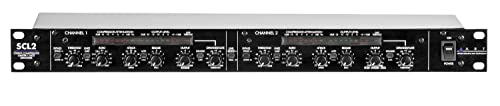
- Dual-channel or linked-stereo operation
- Compression, limiting, expansion, and gate functions
- Balanced XLR and 1/4-inch TRS connections
Best For: Analog studio and live setups needing flexible stereo dynamics
Best Mixer Integration
Behringer XENYX X1204USB Mixer

- Four built-in one-knob compressors
- 12-input mixer with USB audio interface
- Includes preamps, EQ, effects, and software
Best For: Small recording, podcasting, and live-mixing setups
Best for Vocal Shaping
Dual-Channel Rack Compressor with Gate

- VCA compression with adjustable attack and release
- Built-in noise gate and LED metering
- Sidechain insert plus XLR/TRS I/O
Best For: Vocals, streaming, voiceovers, and live sound
Flexible Single-Channel Control

- Selectable tube or solid-state MultiVoice operation
- Optical compression with variable blend control
- Switchable +4dBu/-10dBV level modes
Best For: Single-channel studio compression with flexible analog voicing
Warm Optical Dynamics

- One-channel tube optical compression
- Warm, balanced, versatile sound profile
- Rackmount chassis included
Best For: Warm analog-style compression in a one-channel studio setup
Dual-Channel Rack Processing
Professional Dual-Channel Compressor Limiter

- Two-channel VCA compression with auto attack/release
- Noise gate and LED gain-reduction monitoring
- XLR/TRS I/O plus sidechain input
Best For: Studio, streaming, and live setups needing dual-channel processing
Best Source-Level Pick
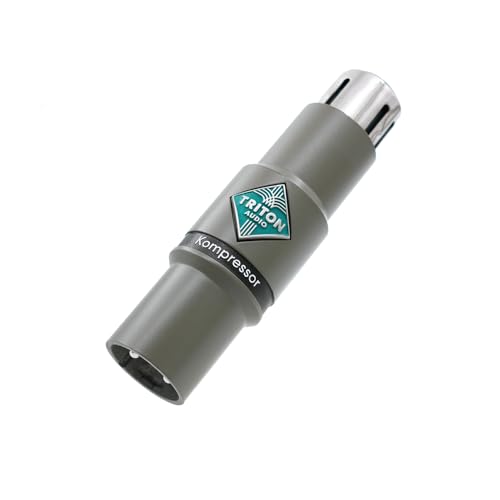
- Inline compression and 25 dB gain
- One-knob operation
- Designed for dynamic and ribbon mics
Best For: Simple source-level control for low-output microphones
Best for Guitar Effects
Universal Audio 1176 Compressor Pedal

- 1176-style stompbox compression
- Detailed attack and release controls
- Parallel and bypass options
Best For: Guitarists wanting flexible classic compression effects
Best for Optical Tube Character

- LA-2A optical tube emulation
- Mix control for parallel compression
- Stock or fast attack switch
Best For: Warm, smooth compression in a compact guitar pedal
Best Value Rack Compressor – Behringer Composer Pro-XL MDX2600
The Behringer Composer Pro-XL MDX2600 is a practical choice among compact audio compressors when you need two-channel dynamics control in a portable rack-style format. It combines compression, limiting, and gating for audio production, mixing, and mastering workflows.
Best For: Home studios, mixing setups, and users who need dual-channel compression, limiting, and gating.
Pros:
- Combines compressor, limiter, and gate functions across two channels.
- Suitable for audio production, mixing, and mastering.
- Portable 16.65-inch-wide design with a listed 2-year warranty.
Cons:
- The supplied specifications identify it as a corded-electric unit, so it is not battery powered.
- The listed product information does not detail advanced metering or sidechain features.
Choose the MDX2600 when straightforward two-channel dynamics processing and a compact footprint matter more than specialized routing features.
Flexible Stereo Control – ART SCL2 Compressor/Limiter
The ART SCL2 is a versatile option for compact audio compressors, offering dual-channel or linked-stereo operation with compression, limiting, expansion, and gating. Balanced XLR and 1/4-inch TRS connections help it integrate with a range of analog studio and live-sound equipment.
Best For: Users who want flexible dual-channel or stereo dynamics processing with balanced connectivity.
Pros:
- Supports dual-channel and linked-stereo operation.
- Includes compression, limiting, expansion, and gate functions.
- Offers XLR and 1/4-inch TRS balanced inputs, plus selectable auto/manual attack and release.
- Provides a stereo mode balance control and LED level meters.
Cons:
- Its 19-inch length may require a full-size rack or dedicated equipment space.
- The supplied notes describe analog operation but do not list USB or computer connectivity.
The SCL2 is a strong fit when stereo linking, balanced I/O, and broader dynamics functions are priorities in a traditional analog setup.
Best Mixer Integration – Behringer XENYX X1204USB Mixer
The Behringer XENYX X1204USB takes a different approach to compact audio compressors by building four one-knob compressors into a 12-input analog mixer. It also adds XENYX microphone preamps, British-style three-band EQs, built-in effects, and a USB audio interface for direct computer connection.
Best For: Small recording, podcasting, and live setups that need mixing, compression, effects, and USB connectivity in one unit.
Pros:
- Includes four studio-grade compressors with one-knob control and control LEDs.
- Provides four phantom-powered XENYX microphone preamps.
- Combines 12 inputs, British-style three-band EQ, 24-bit multi-effects, and USB audio interfacing.
- Includes recording, editing, podcasting software, plug-ins, and a low-latency driver according to the supplied notes.
Cons:
- It is a mixer rather than a dedicated standalone compressor.
- Its 15.45-by-14.35-by-5.9-inch dimensions may take more workspace than a compact dynamics processor.
Consider the X1204USB if your priority is an all-in-one production or live-mixing hub with accessible channel compression rather than detailed independent compressor controls.
Best for Vocal Shaping – Dual-Channel Rack Compressor with Gate
This dual-channel rack unit is aimed at users comparing compact audio compressors for vocals, streaming, studio work, and live sound. Its feature set includes VCA compression, a noise gate, sidechain insert, adjustable attack and release, LED metering, and XLR/TRS connectivity.
Best For: Vocal processing, voiceovers, podcasting, streaming, and setups needing sidechain control.
Pros:
- Dual-channel design with adjustable attack and release controls.
- Includes a noise gate and LED indicators for compression, gain reduction, and gate thresholds.
- Provides XLR and 1/4-inch TRS inputs and outputs for integration with mixers, interfaces, and PA systems.
- Dedicated sidechain insert supports frequency-based ducking for bass, kick drums, and other sources.
Cons:
- The 19-inch rack format is less compact than desktop-oriented gear.
- The supplied notes do not specify independent channel linking or detailed ratio and threshold ranges.
Its gate, sidechain, and vocal-oriented VCA design make this a compelling option for users who need more shaping tools than basic compression alone provides.
Flexible Single-Channel Control – ART Solo VLA
The ART Solo VLA is a practical option when you need compact audio compressors with flexible analog character in a single-channel format. Its selectable tube or solid-state MultiVoice operation, optical control, and variable blend make it adaptable to different recording and mixing tasks.
Best For: Studio users wanting one-channel compression with selectable tube/solid-state voicing and parallel-style blend control.
Pros:
- Selectable MultiVoice tube or solid-state signal path.
- Optical AOI control provides a dedicated compressor design.
- Variable blend combines uncompressed and compressed signals.
- Switch-selectable +4dBu and -10dBV level modes improve setup flexibility.
Cons:
- Single-channel design is less suitable for stereo processing without additional hardware.
- At 7.03 pounds and about 20.8 inches wide, it may require careful rack or workspace planning.
The Solo VLA stands out for users who value tonal options and blend control more than a minimal feature set. Confirm its dimensions and level-mode compatibility before adding it to a compact rig.
Warm Optical Dynamics – Warm Audio WA-1B
The Warm Audio WA-1B is a one-channel tube optical compressor for buyers comparing compact audio compressors with a warm, analog-oriented profile. Its knob-based control layout and included rackmount chassis suit a straightforward studio installation.
Best For: Users seeking a warm, balanced, versatile one-channel optical compressor for analog studio setups.
Pros:
- Combines one-channel compression with a tube optical design.
- Described sound profile is warm, balanced, and versatile.
- Included rackmount chassis supports rack-based installation.
- Simple knob control keeps operation direct.
Cons:
- Single-channel operation limits simultaneous stereo or dual-mono processing.
- At 12.1 pounds and 27.5 inches wide, it is not especially space-efficient for small setups.
- The supplied specifications identify a 3.5mm stereo audio jack connector, so connection planning is important.
The WA-1B is best considered when tube optical compression and a warm sound profile are priorities. Its rackmount format is useful, but its larger footprint may conflict with the goal of a truly compact system.
Dual-Channel Rack Processing – Professional Dual-Channel Compressor Limiter
This dual-channel 1U processor is a versatile choice among compact audio compressors for studio recording, live streaming, and live sound. It combines VCA compression with auto attack/release, a noise gate, LED monitoring, and XLR/TRS connectivity.
Best For: Users needing two channels of rackmount compression with vocal-focused processing, noise gating, and flexible balanced-style connections.
Pros:
- Dual-channel design supports two independent processing paths.
- Overeasy compression and auto attack/release simplify dynamic control.
- Built-in noise gate helps reduce unwanted background noise.
- XLR and 1/4-inch TRS inputs and outputs support varied studio and PA setups.
Cons:
- The supplied notes do not specify detailed controls for each compression parameter.
- At about 18.9 inches wide, it requires a standard rack-sized installation area.
This processor offers the broadest routing and channel-count flexibility of the three options. Its sidechain input, LED monitoring, and gate make it particularly practical for vocals, streaming, and live applications where noise control matters.
Best Source-Level Pick – Triton Audio Kompressor
For creators seeking compact audio compressors at the microphone, the Triton Audio Kompressor combines inline FET-OPTO compression with up to 25 dB of gain in a small XLR barrel. Its single control keeps setup approachable for podcasting, recording, and dynamic or ribbon microphones.
Best For: Low-output dynamic and ribbon microphones, including applications that need added gain and simple peak control.
Pros:
- Combines microphone preamplification and compression in one compact XLR unit.
- Provides up to 25 dB of gain for dynamic and ribbon microphones.
- One-knob control makes compression adjustment quick and straightforward.
- Requires 48V phantom power while blocking it from reaching the microphone.
Cons:
- Its one-knob design offers less detailed adjustment than multi-control compressors.
- It requires 48V phantom power to operate.
The Kompressor is a practical choice when you want consistent microphone levels without adding a separate preamp and compressor. Its compact XLR format is especially useful when space and setup simplicity matter.
Best for Guitar Effects – Universal Audio 1176 Compressor Pedal
The Universal Audio 1176 Compressor Limiter Pedal is a strong option among compact audio compressors for guitarists who want classic 1176-style control in a stompbox. It offers dedicated input, output, attack, release, and ratio settings, plus multiple compression modes.
Best For: Guitar players seeking versatile 1176-inspired compression, sustain, and aggressive squashed textures.
Pros:
- Authentically emulates the 1176LN Limiting Amplifier.
- Includes Single, Dual, and Sustain modes for varied compression effects.
- Provides input, output, attack, release, and ratio controls.
- Offers parallel compression, true bypass, and buffered bypass.
Cons:
- It is a 1/4-inch instrument pedal rather than an XLR microphone compressor.
- It requires a 9V DC power source.
Choose this pedal when hands-on control and recognizable 1176-style character are more important than a minimal control layout. The ratio control’s “all buttons in” mode also suits deliberately compressed, gritty sounds.
Best for Optical Tube Character – Universal Audio LA-2A Pedal
The Universal Audio LA-2A Studio Compressor Pedal brings an optical tube compressor design into a compact stompbox. As compact audio compressors go, it is aimed at players who want smooth LA-2A-style character, with a mix control for parallel compression and a switch for stock or fast attack.
Best For: Guitarists looking for warm, three-dimensional optical compression and straightforward parallel blending.
Pros:
- Emulates the Teletronix LA-2A optical tube compressor and limiter.
- Models vintage transformers, tube amplifiers, and the T4 optical cell.
- Includes a mix control for parallel compression.
- Offers stock and fast attack settings plus true or buffered bypass.
Cons:
- Its control set is less extensive than the 1176-style pedal’s.
- It uses 1/4-inch audio connections and requires 9V DC power.
The LA-2A pedal is the better fit when tonal character and smooth optical-style leveling take priority over extensive parameter control. Its mix knob adds useful flexibility for retaining some of the original signal.
How We Picked the Best Compact Audio Compressors
We evaluated these Compact Audio Compressors by looking at their signal format, channel count, compression style, available controls, connectivity, and likely use cases. The selection includes flexible rack processors for studio and live work, optical and FET-inspired designs for tone shaping, mixer-based compression, and compact pedal or inline solutions for musicians.
We also considered practical factors such as metering, sidechain access, expansion or gating, phantom-powered microphone compatibility, and whether a unit is better suited to vocals, individual instruments, buses, or complete portable rigs. Because “compact” can mean different things, the list covers both rack-friendly hardware and small-footprint devices that save setup space.
Quick Comparison
| Best For | Recommended Type | What to Prioritize |
|---|---|---|
| Flexible studio or live racks | Dual-channel rack processor | Independent channels, metering, sidechain, and gating |
| Single vocal or instrument tracks | Single-channel compressor | Detailed attack, release, ratio, and makeup gain controls |
| Warm, characterful compression | Optical compressor | Smooth response and musical leveling |
| Fast, assertive control | FET-style compressor | Quick attack, aggressive ratios, and strong transient shaping |
| Pedalboard setups | Compressor pedal | Durability, footswitch layout, noise performance, and bypass behavior |
| Minimal microphone chains | Inline preamp-compressor | Gain range, phantom power, and compatibility with dynamic or ribbon microphones |
Key Buying Factors for Compact Audio Compressors
Format and Signal Path
Choose a rack unit when you need balanced connections, multiple channels, or repeatable studio and live-rack operation. A pedal is more convenient for guitar or bass signal chains, while an inline device can be useful when you want gain and compression close to the microphone. Mixer compression is convenient, but it is less flexible than a dedicated processor.
Compression Controls
At minimum, look for threshold, ratio, attack, release, and output or makeup gain controls. Variable attack and release settings provide more control over transients and sustain. Automatic timing or program-dependent behavior can be helpful for vocals and general leveling, while simpler controls may be faster for live use.
Connectivity and Metering
Check whether the unit uses XLR, TRS, insert, or instrument-level connections that match the rest of your system. Sidechain inserts are valuable for advanced ducking and frequency-conscious compression. Clear gain-reduction metering helps you set compression consistently and avoid excessive pumping or distortion.
Sound and Application
Optical designs are often favored for smooth vocal and bass leveling, while FET-style circuits can deliver more obvious punch and attitude. Units with expanders, gates, or de-essers can solve additional noise and sibilance problems, but they may add complexity if you only need straightforward dynamics control.
Who Should Buy Which Compact Audio Compressors?
Choose a dual-channel rack processor if you record several sources, run a small live system, or want one unit that can handle vocals, instruments, and stereo buses. A single-channel compressor is the better fit for a focused vocal, bass, or tracking chain where hands-on adjustment matters.
Pick an optical compressor when smooth, forgiving leveling is the priority. A FET-style pedal or processor is better for pronounced attack shaping and performance-oriented setups. If your main need is microphone gain plus basic dynamics control in a compact package, an inline preamp-compressor can reduce cable clutter and simplify the chain.
Finally, confirm input levels, phantom-power requirements, rack or pedalboard dimensions, and available bypass or routing options before buying. The right compact compressor should fit both your physical setup and the amount of control you realistically need.