The right compressor can make a vocal sit firmly in a mix, smooth uneven bass, control peaks during live sound, or add the character that makes drums and instruments feel larger. With hardware options ranging from affordable rack processors to studio-style FET, optical, and VCA designs, choosing the best fit depends on your signal chain and workflow.
This roundup compares 10 audio compressors for recording studios, touring rigs, home setups, streaming, and stereo bus processing. Use the guide below to narrow your options by compressor style, connectivity, control, and intended application.
Best 10 Audio Compressors Picks for 2026
Versatile Rack Control

- Compressor, expander, and gate in one 1U unit
- Separate LED displays simplify setup
- Useful for guitars, drums, vocals, and mixes
Best For: Flexible live, touring, and studio dynamics control
Warm Optical Character

- Tube-based optical compression and limiting
- MIDAS transformers and balanced I/O
- Classic VU metering with variable release
Best For: Musical studio or live compression with analog character
Classic FET Dynamics

- Single-channel fully discrete compressor
- Custom CineMag USA transformers
- Includes the all-buttons-in ratio setting
Best For: Professional single-source tracking and classic compression
Two-Channel Utility
Behringer Composer Pro-XL MDX2600

- Two-channel compressor, limiter, and gate
- Includes de-esser functionality
- Intended for production, mixing, and mastering
Best For: Affordable multi-purpose dynamics processing
Studio Bus Control
Warm Audio Bus-Comp Stereo VCA Compressor

- Stereo VCA design for mixing and recording
- Five ratios plus sidechain input filter
- CineMag transformers and metal construction
Best For: Stereo bus compression in studio setups
FET Character
Klark Teknik 76-KT Classic FET Compressor

- 1176LN-inspired classic FET-style design
- Discrete path with Class-A output amplifier
- Four ratios, all-button mode, and adjustable timing
Best For: Professional recording and mixing with FET-style compression
Flexible Dynamics Rack
ART SCL2 Compressor/Limiter/Gate
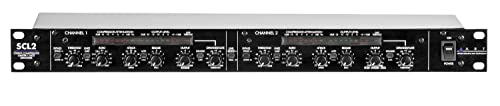
- Dual-channel or linked-stereo operation
- Compression, limiting, expansion, and gating
- Balanced TRS/XLR connections with LED meters
Best For: Multi-purpose analog dynamics processing
Tube Tone Specialist

- Teletronix LA-2A optical tube emulation
- Parallel compression via mix control
- Stock/Fast attack and bypass options
Best For: Pedalboard users wanting vintage tube-style compression
Versatile Tube Rack Choice
Solo VLA Single-Channel Compressor

- Selectable tube or solid-state voices
- OPTO analog optical isolators
- Variable compressed/uncompressed blend
Best For: Studio setups needing flexible single-channel rack compression
Dual-Channel Control Center

- Dual-channel OverEasy compression
- Built-in noise gate and LED monitoring
- Sidechain insert with XLR/TRS I/O
Best For: Studio, live, and streaming rigs needing flexible rack processing
Versatile Rack Control – dbx 266xs Compressor/Gate
The dbx 266xs is a practical choice for audio compressors when you need flexible dynamics control across portable, touring, or studio setups. Its compressor, expander/gate, sidechain insert, and separate LED displays support quick, accurate adjustments.
Best For: Engineers who want one rack unit for smoothing levels, adding guitar sustain, tightening mixes, and controlling noise.
Pros:
- Compressor and program-adaptive expander/gate in one unit
- New gate timing algorithms provide smooth release characteristics
- Separate LED displays show gain reduction, compression threshold, and gate threshold
- Single-rack-space, 1U design suits compact installations
Cons:
- Analog, front-panel operation may be less convenient than software control
- Its broad feature set may be more than needed for simple compression tasks
The 266xs is a flexible, straightforward dynamics processor for users who value visible metering and both compression and gating in a compact rack format.
Warm Optical Character – Klark Teknik 2A-KT
The Klark Teknik 2A-KT brings a classic optical approach to audio compressors, pairing tube circuitry and MIDAS transformers with balanced XLR and 1/4-inch TRS connections. It is designed for smooth, musical compression in studio or live applications.
Best For: Users seeking tube-based optical compression with classic metering and flexible compressor/limiter operation.
Pros:
- Vintage lag-free optical attenuator technology
- Premium 12AX7, 12BH7, and EL84 tubes support a warm analog output
- MIDAS input and output transformers are designed for high-quality reproduction
- Includes limit/compress switching, variable release, and stereo-link capability
Cons:
- Tube-based design may be less suitable for buyers wanting a transparent modern processor
- Its classic control layout offers fewer detailed adjustment options than some compressor types
With its optical design, tube complement, VU meter, and balanced connections, the 2A-KT is aimed at users who want recognizable analog character and simple, musical control.
Classic FET Dynamics – Warm Audio WA76
The Warm Audio WA76 is a single-channel option for audio compressors, built around a fully discrete signal path and custom CineMag USA transformers. Its design follows the classic ’76 format and includes the distinctive “all buttons in” ratio setting.
Best For: Professional audio users who need one channel of classic-style discrete compression with a dedicated all-buttons-in mode.
Pros:
- Fully discrete signal path
- Custom CineMag USA transformers
- Designed to stay true to the classic ’76 in design and performance
- Supports the famous “all buttons in” ratio setting
Cons:
- Single-channel design limits simultaneous processing compared with two-channel units
- Its classic-focused feature set may not suit users seeking extensive modern routing options
The WA76 is a focused choice for tracking or processing one source at a time, especially when a discrete ’76-style design and transformer-based signal path are priorities.
Two-Channel Utility – Behringer Composer Pro-XL MDX2600
The Behringer Composer Pro-XL MDX2600 is a practical two-channel choice among audio compressors for production, mixing, and mastering. Its stated configuration combines compression, limiting, gating, and de-essing in a rack-style processor.
Best For: Budget-conscious users who want two-channel dynamics processing for audio production, mixing, and mastering.
Pros:
- Two-channel compressor, limiter, and gate design
- Includes a de-esser for additional dynamics control
- Suitable for audio production, mixing, and mastering applications
- Portable construction and a 2-year warranty are listed
Cons:
- The supplied notes provide limited detail about its individual controls and routing
- It may be less specialized than single-purpose classic compressor designs
The MDX2600 makes the most sense when channel count and broad utility matter more than a narrowly defined vintage compression character.
Studio Bus Control – Warm Audio Bus-Comp Stereo VCA Compressor
The Warm Audio Bus-Comp is a practical choice for mixing and recording when you need stereo bus compression with a classic VCA-style approach. Its five selectable ratios, sidechain input filter, and CineMag transformers give it useful flexibility for shaping a stereo mix.
Best For: Stereo bus compression in recording and mixing setups.
Pros:
- Stereo VCA bus compressor designed for mixing and recording.
- Offers five compression ratios for flexible control.
- Includes a sidechain input filter and CineMag transformers.
- Metal construction and a classic black finish.
Cons:
- Uses corded electric power rather than a portable power source.
- Its 9.7-pound, rack-style form factor may require dedicated studio space.
Choose this model if stereo bus duties and transformer-equipped signal processing are your priorities. It is less suited to users seeking a compact or battery-powered compressor.
FET Character – Klark Teknik 76-KT Classic FET Compressor
The Klark Teknik 76-KT is a FET-style compressor for professional audio applications, modeled after the 1176LN design. It combines a discrete signal path, Class-A line-level amplifier, MIDAS transformers, and selectable compression ratios for assertive dynamics control.
Best For: Professional recording and mixing applications that benefit from classic FET-style compression.
Pros:
- Classic FET-style design modeled after the 1176LN.
- Completely discrete signal path with a Class-A output amplifier.
- Custom-built MIDAS input and output transformers.
- Push-button 4:1, 8:1, 12:1, and 20:1 ratios, plus all-button mode.
Cons:
- Its specialized FET character may be less suitable for users wanting a neutral compressor.
- Requires corded electric power and rack-style installation.
For engineers looking specifically for classic FET behavior and hands-on ratio selection, the 76-KT offers a focused feature set. Adjustable attack and release controls add further control over the compression response.
Flexible Dynamics Rack – ART SCL2 Compressor/Limiter/Gate
The ART SCL2 is a versatile dynamics processor that combines dual-channel or linked-stereo operation with compression, limiting, expansion, and gating. Balanced 1/4-inch TRS and XLR connections, selectable attack and release modes, and LED metering make it a practical rack option for varied signal-control tasks.
Best For: Users who need stereo or dual-channel compression alongside gating and expansion.
Pros:
- Supports dual-channel or linked-stereo operation.
- Combines compressor, limiter, expander, and gate functions.
- Provides balanced 1/4-inch TRS and XLR inputs.
- Offers auto/manual attack and release selection with LED level meters.
Cons:
- The broad dynamics feature set may be more than needed for simple compression.
- Requires corded electric power and rack-style space.
The SCL2 is a strong fit when one unit needs to cover several dynamics-processing roles. Its linked-stereo mode and balanced connectivity make it especially useful in flexible analog signal chains.
Tube Tone Specialist – LA-2A Studio Compressor Pedal
The Universal Audio LA2A Studio Compressor Pedal brings an iconic optical tube compressor/limiter design into a compact stompbox. Among audio compressors, it stands out for its emulation of the Teletronix LA-2A, including vintage transformers, tube amplifiers, and the T4 optical cell.
Best For: Guitarists and studio users seeking fat, three-dimensional tube-style compression with pedal-friendly controls.
Pros:
- Authentic end-to-end emulation of the classic Teletronix LA-2A circuit.
- Mix control supports easy parallel compression effects.
- Stock/Fast attack switch adds response flexibility.
- True/buffered bypass and durable UA construction suit regular use.
Cons:
- Requires a 9V DC, 100mA power source.
- Its stompbox format may be less suitable for multi-channel rack processing.
This is a focused choice for users who want recognizable optical tube compression in a pedalboard-sized format rather than a general-purpose rack unit.
Versatile Tube Rack Choice – Solo VLA Single-Channel Compressor
The ART Solo VLA is a single-channel rack compressor with a mastering-quality signal path and selectable MultiVoice tube/solid-state operation. For audio compressors, its variable blend and switchable level modes make it a flexible option for shaping compressed and uncompressed signals.
Best For: Studio users who want one rack channel with selectable tube or solid-state character and optical-style control.
Pros:
- Selectable MultiVoice tube/solid-state operation.
- Uses OPTO analog optical isolators for compression control.
- Variable blend combines uncompressed and compressed signals.
- Switchable +4dBu/-10dBV level modes support different setups.
Cons:
- Provides only one compressor channel.
- Its 7.03-pound rack-oriented design is less portable than a pedal.
The Solo VLA suits buyers prioritizing tonal flexibility and blend control in a dedicated rack unit, especially when a single channel is sufficient.
Dual-Channel Control Center – Dynamic Processor with Gate
This 1U rackmount dynamic processor combines dual-channel compression with a noise gate and sidechain insert. Among audio compressors, it is designed for practical studio, live, and streaming use, with XLR/TRS connectivity, visual LED monitoring, and automatic attack/release settings.
Best For: Users needing two channels of compression plus noise reduction and sidechain routing for vocals, instruments, streaming, or live sound.
Pros:
- Dual-channel design provides control over multiple sources.
- OverEasy compression and auto attack/release support smooth dynamics control.
- Built-in noise gate and independent LED indicators aid monitoring.
- Sidechain insert enables targeted frequency ducking, including kick and bass applications.
Cons:
- The 1U rackmount format is not intended for compact pedalboard setups.
- Requires 110V AC corded power.
- Its feature set may be more than needed for simple single-source compression.
This is the most function-packed option here for routing-focused setups, particularly when dual-channel processing, gating, and sidechain control matter as much as compression.
How We Picked These Audio Compressors
We selected these models to cover the main hardware compressor formats and use cases rather than focusing on one price tier or circuit design. The lineup includes single-channel and dual-channel units, rack processors with gates and expanders, stereo bus compressors, FET and optical-style designs, and a pedal-format option. We considered control flexibility, signal routing, practical studio and live-sound features, build suitability, and the kinds of sources each compressor is best equipped to handle.
Because compression is highly dependent on the source and desired result, no single model is ideal for every buyer. A transparent processor may be preferable for vocals or broadcast work, while a colored FET unit can be more useful for aggressive drum, guitar, or bass tones.
Quick Comparison
| Best For | Look For |
|---|---|
| Budget rack processing | Dual channels, sidechain inserts, gates, and flexible metering |
| Vocals and bass | Optical or multi-voice compression with smooth gain reduction |
| Drums and aggressive sources | FET-style response, fast attack, and distinctive coloration |
| Stereo mixes and buses | VCA architecture, stereo linking, and matched controls |
| Live sound and streaming | Simple operation, dependable metering, and useful expansion or gating |
Key Buying Factors for Audio Compressors
Compressor Type
FET compressors are often chosen for speed, punch, and harmonic character. Optical designs generally offer smoother, more forgiving gain control, making them popular on vocals and bass. VCA compressors are valued for precision, consistency, and stereo bus duties. Multi-voice designs can provide several compression behaviors in one unit, which is useful when one processor must serve many sources.
Channels and Stereo Linking
A single-channel compressor is enough for a vocal, bass, guitar, or mono tracking path. Dual-channel models can process two independent sources or operate as a linked stereo pair. For mix-bus work, verify that the unit supports reliable stereo linking and provides controls appropriate for maintaining a balanced image.
Routing and Sidechain Features
Sidechain inserts allow external signals or filtered detector paths to shape compression. This can help reduce pumping, make room for vocals, or control a bass-heavy source. Gates, expanders, de-essers, and limiters add value in live racks, broadcast chains, and streaming setups, but may be unnecessary if you already use software or separate processors.
Controls, Metering, and Headroom
Check whether the unit offers the attack, release, ratio, threshold, and makeup-gain controls your workflow requires. Clear gain-reduction and output meters make setup faster, particularly in live environments. Also confirm the available input and output connections, rack space, and operating level before buying.
Who Should Buy Which Audio Compressors?
Choose a flexible dual-channel rack processor if you need affordable control for live sound, streaming, rehearsal spaces, or general studio duties. Pick a FET-style compressor when punch, speed, and vintage-inspired character are priorities. An optical or multi-voice unit is a strong choice for smoother vocal, bass, and instrument control. For stereo mixes, prioritize a dedicated VCA bus compressor with stereo linking and matched controls.
Buy a compressor pedal when portability and direct instrument use matter more than rack integration. If you are new to hardware compression, start with a model that has clear metering and straightforward controls. Experienced mixers may prefer a specialized circuit with fewer compromises, especially when choosing a signature tone for vocals, drums, bass, or the stereo bus.