Wearable metronomes give musicians a steady pulse without competing with the sound of an instrument or ensemble. They are especially useful for drummers, guitarists, pianists, students, and performers who prefer tactile timing cues.
This roundup compares traditional metronomes, vibrating wrist devices, and app-connected models to help you find the right balance of tempo control, comfort, feedback strength, and convenience.
Best 10 Wearable Metronomes Picks for 2026
Premium Wearable Pick

- Strong tactile vibrations with synced LED lights
- App supports subdivisions, accents, presets, and setlists
- Connects up to five wearables for shared timing
Best For: Musicians wanting powerful silent practice and advanced app features
Compact Digital Alternative

- High-contrast LCD display
- Easy volume control
- Lightweight 35-gram design
Best For: Simple digital practice timing without documented wearable vibration
Budget Vibrating Watch
Digital Vibrating Metronome Watch

- 40–240 BPM range with multiple beat types
- Includes music rhythms and an exercise mode
- LCD display with removable silicone strap
Best For: Beginners and active users seeking an affordable tactile timer
Traditional Mechanical Choice

- Compact plastic-cased design
- Lightweight at 6.4 ounces
- Made in Germany with a mahogany-brown finish
Best For: Stationary practice with a traditional compact metronome
Best App-Controlled Pick
Smart Vibrating Metronome Watch
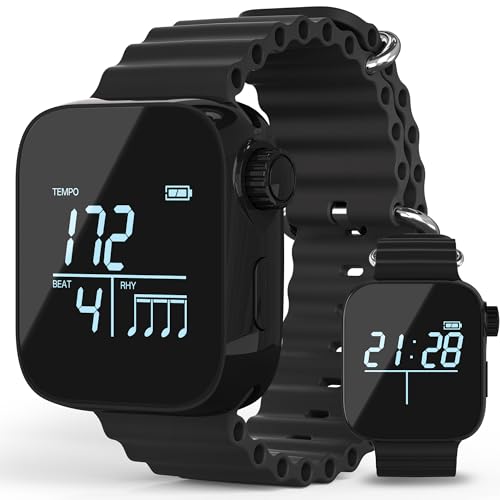
- Strong wrist vibration for loud or silent practice
- App control with multi-device synchronization
- Music, running, and beat-loop modes
Best For: App-connected practice, group rehearsals, and runners
Best Versatile White Model

- Three modes for music, sports, and time
- Adjustable vibration intensity and brightness via app
- Rechargeable USB design with six-month warranty
Best For: Everyday practice, lessons, and quiet performance settings
Best Simple Long-Standby Option
Rockhouse Wearable Vibrating Metronome

- Core tempo and rhythm controls for music practice
- Works for instruments, running, and jump rope
- Over five hours of use and one month of standby
Best For: Simple practice timing and occasional-use portability
Feature-Rich White Option
AKLOT Vibrating Metronome Watch

- Metronome, sport, and 24-hour time modes
- App-adjustable brightness and vibration
- Beat loop function with six rhythm styles
Best For: Users wanting practice, workout, and time features
Versatile Black Option
AKLOT Black Vibrating Metronome Watch

- Black wrist design for discreet practice
- 40–240 BPM musical tempo range
- Sport and 24-hour time modes included
Best For: Musicians wanting a multipurpose black wearable metronome
Premium Wearable Pick – Soundbrenner Pulse
The Soundbrenner Pulse is a feature-rich choice for musicians seeking wearable metronomes that replace an audible click with strong, precisely synced vibrations. Its bands support wrist, arm, or ankle placement, while the companion app adds detailed rhythm controls and presets.
Best For: Musicians who want powerful silent practice, app control, and multi-player synchronization.
Pros:
- Vibrations are designed to be seven times stronger than those of an average smartphone.
- LED lights provide a visual rhythm cue alongside the vibrations.
- The app supports time signatures, subdivisions, accents, presets, and setlists.
- Up to five wearables can connect to one mobile device.
Cons:
- It is not water resistant or waterproof.
- Metronome playback is rated at 6+ hours.
- Some features require a compatible smartphone and companion app.
With flexible placement and extensive app features, the Pulse is a strong option when silent, tactile timing matters more than simplicity.
Compact Digital Alternative – Seiko DM51B Metronome
The Seiko DM51B is a compact digital metronome for shoppers comparing wearable metronomes with straightforward practice timers. It has a high-contrast LCD, easy volume control, and a lightweight 35-gram design, but the supplied details do not identify it as a vibrating wearable.
Best For: Players who prefer a simple, lightweight digital metronome for indoor or outdoor use.
Pros:
- High-contrast LCD display is easy to read.
- Volume control is designed for simple adjustment.
- Lightweight at 35 grams.
- Includes one lithium metal battery.
Cons:
- The supplied notes do not list vibration or wearable features.
- It uses an audible volume-controlled approach rather than a documented tactile beat.
- No included components are listed beyond the metronome and battery information.
The DM51B makes more sense as a basic digital companion than as a true wearable metronome, especially for buyers prioritizing an LCD and uncomplicated controls.
Budget Vibrating Watch – Digital Vibrating Metronome Watch
This digital vibrating metronome watch is aimed at beginners and musicians who want wearable metronomes with adjustable tactile timing. It covers 40–240 BPM, offers several beat types and rhythm patterns, and adds an exercise mode for regulating pace and breathing.
Best For: Beginners, musicians practicing in noisy settings, and users who want a simple workout-oriented vibrating watch.
Pros:
- Provides subtle beat vibrations with a stated maximum up to five times a regular smartphone’s vibration.
- Supports 40–240 BPM, multiple time signatures, and rock, jazz, and classical rhythm patterns.
- Exercise mode can provide 40–240 vibrations per minute for pacing workouts.
- Compact design includes an LCD display and removable silicone strap.
Cons:
- The supplied details describe moisture resistance, not full waterproofing.
- It is made for straightforward operation and may offer fewer advanced controls than app-connected models.
- The product notes do not specify battery life.
Its broad tempo range and dual music-and-exercise functionality make this a practical entry-level choice for users who want tactile cues without a more complex app ecosystem.
Traditional Mechanical Choice – Wittner Taktell Piccolo
The Wittner Taktell Piccolo is a traditional mechanical metronome rather than one of the wearable metronomes in this roundup. Its compact plastic casing, mahogany-brown finish, and German manufacture make it a conventional option for musicians who prefer a physical practice instrument.
Best For: Musicians who want a compact, traditional metronome for stationary practice.
Pros:
- Compact dimensions make it easy to place in a practice area.
- Plastic casing keeps the design relatively light at 6.4 ounces.
- Made in Germany.
- Mahogany-brown finish gives it a classic appearance.
Cons:
- It is not described as wearable or vibration-based.
- The supplied notes do not list digital tempo controls, an LCD, or app connectivity.
- Its traditional design is less suitable for silent practice or noisy environments.
The Wittner is best viewed as a compact conventional alternative, not a tactile wearable; choose it when a familiar mechanical-style format is the priority.
Best App-Controlled Pick – Smart Vibrating Metronome Watch
If you want wearable metronomes with flexible controls, this app-connected watch combines strong wrist vibration with adjustable music and sports modes. It is designed for silent practice, running, and synchronized group sessions.
Best For: Musicians and runners who want app control, beat-loop practice, or multi-device tempo synchronization.
Pros:
- Strong haptic pulse can be felt during loud rehearsals, outdoor running, or quiet practice.
- Offers 40–240 BPM, 0–9 beats, six rhythm types, and a running cadence mode.
- App control and multi-device syncing support coordinated band or orchestra practice.
- Adjustable wrist strap, scratch-resistant screen, and USB magnetic charging add convenience.
Cons:
- App connection is required for the app-based controls and multi-device syncing features.
- Its broad feature set may be more than needed for users seeking a basic metronome.
This is the most feature-oriented option in the group, especially for app-based tempo adjustments and repeated section work. The single-beat loop function is useful when building muscle memory.
Best Versatile White Model – Vibration Metronome Watch
This wearable metronome is a practical choice for musicians who need quiet, hands-free timing at home, lessons, rehearsals, or performances. Its three modes cover instrument practice, sports, and everyday timekeeping.
Best For: Players who want a lightweight white wrist metronome with adjustable vibration intensity and screen brightness.
Pros:
- Vibration delivers a private beat without disturbing people nearby.
- Metronome mode supports 40–240 BPM, 0–9 beats, and six rhythm styles.
- Includes sport tempo settings from 10–240 BPM and 12/24-hour time formats.
- Rechargeable USB design and a six-month warranty support regular use.
Cons:
- The product notes mention that a slight mechanical sound may occur during vibration.
- It may need charging before first use if the battery entered hibernation during storage.
- A protective film must be removed from the screen before use.
With broad tempo settings and three operating modes, this model balances practice features with everyday convenience. App adjustments for brightness and vibration intensity make it easier to tailor the experience.
Best Simple Long-Standby Option – Rockhouse Wearable Vibrating Metronome
For shoppers seeking straightforward wearable metronomes, the Rockhouse watch focuses on wrist vibration, simple controls, and core tempo customization. It works with several instruments and fitness activities without relying on the feature list of a connected app.
Best For: Drummers, instrumentalists, and fitness users who prioritize simple operation and extended standby time.
Pros:
- Provides a vibrating pulse for instrument practice, running, and jump-rope activities.
- Supports 40–240 BPM, 0–9 beat patterns, and six rhythm options.
- Compact ABS body, removable silicone strap, LCD display, and simple controls are practical for daily use.
- Offers more than five hours of battery life and more than one month of standby time.
Cons:
- The notes do not mention app control or multi-device synchronization.
- Its stated active battery life is more limited than its standby time.
- Color availability is listed as black or white rather than a single fixed finish.
This model is a sensible fit when the essentials matter most: tactile timing, familiar tempo ranges, and easy wrist-based operation. Its long standby claim is particularly useful for occasional practice between charges.
Quiet Practice Pick – Upgraded Vibration Metronome Watch
For musicians comparing wearable metronomes, this wristwatch-style option delivers vibration-based beats without broadcasting them through a room. Its three modes, app support, and 40–240 BPM musical range make it a practical choice for focused practice, lessons, rehearsals, and performances.
Best For: Musicians who want a lightweight, quiet wrist metronome for instrument practice and flexible everyday use.
Pros:
- Vibrating design supports quiet practice at home, school, in studios, or public spaces.
- Offers metronome, sport, and 12/24-hour time modes.
- Provides 40–240 BPM tempo, 0–9 beat signatures, and six rhythm styles.
- App control adjusts screen brightness and vibration intensity.
Cons:
- A slight mechanical sound may occur during vibration, depending on intensity.
- Requires USB charging and may need charging before first use if the battery is deeply discharged.
- The protective screen film should be removed before use.
This is a well-rounded wearable metronome for players who value discreet feedback and broad musical settings. The rechargeable design and included six-month warranty add practical reassurance for regular practice.
Feature-Rich White Option – AKLOT Vibrating Metronome Watch
This white AKLOT is among the more versatile wearable metronomes for players who also want sport and time functions. It combines app-adjustable vibration with a beat loop function, broad tempo controls, and a clear 24-hour time display.
Best For: Musicians and fitness-minded users who want one wrist device for practice pulses, workout breathing cues, and 24-hour timekeeping.
Pros:
- Metronome mode supports 40–240 BPM, 0–9 beat signatures, and six rhythm styles.
- Sport mode provides adjustable vibration frequencies from 10–240 BPM.
- Companion app adjusts screen brightness and vibration intensity.
- Includes a 24-hour time mode and beat loop function.
Cons:
- Vibration produces a slight operating hum, though intensity can affect its volume.
- The included electronic manual may require consulting the product detail page.
- Its 3.17-ounce weight is slightly higher than the other listed models.
The AKLOT Metronome II stands out when flexible settings matter more than having a music-only device. Its white finish, app controls, and added timing features make it a useful multi-purpose option.
Versatile Black Option – AKLOT Black Vibrating Metronome Watch
For shoppers seeking wearable metronomes in a traditional black finish, this AKLOT model pairs wrist-based vibration with musical, sport, and time modes. It offers the same broad practice controls as the white version while keeping the device discreet during instrument sessions.
Best For: Players who prefer a black wrist metronome with app-adjustable pulses and additional sport and time functions.
Pros:
- Supports 40–240 BPM, 0–9 beat signatures, and six rhythm styles for music practice.
- Sport mode offers vibration frequencies from 10–240 BPM.
- App controls let users adjust screen brightness and vibration intensity.
- Includes 24-hour timekeeping and a beat loop function.
Cons:
- A slight vibration hum is unavoidable during operation.
- USB charging is listed, but battery runtime details are not supplied.
- The product notes identify the battery as a nonstandard rechargeable type.
This black AKLOT is a practical choice for musicians who want discreet tactile timing without giving up multipurpose features. Its adjustable settings suit varied practice routines, while the sport and time modes broaden its everyday usefulness.
How We Picked the Best Wearable Metronomes
We focused on the features that matter during real practice sessions: dependable tempo adjustment, noticeable but controlled vibration, comfortable wrist wear, readable controls, battery or power convenience, and suitability for different instruments and skill levels. We also included a few conventional metronomes because some musicians still prefer audible or visual timing over a wearable design.
Product descriptions and specifications were compared for tempo ranges, operating modes, app support, charging or battery requirements, and intended use. Because comfort and vibration strength can be highly personal, treat those characteristics as important preferences rather than universal performance guarantees.
Quick Comparison
| Type | Best For | Main Advantage | Potential Trade-Off |
|---|---|---|---|
| Vibrating wrist metronome | Discreet practice and performance | Tactile timing without audible clicks | Requires charging or battery replacement |
| App-connected wearable | Custom rhythms and flexible control | Expanded settings and remote adjustment | May depend on a phone or app |
| Traditional digital metronome | Simple portable practice | Easy setup and familiar operation | Less discreet than vibration-only timing |
| Mechanical metronome | Visual and audible tempo practice | No electronics or charging | Less portable and less versatile |
Key Buying Factors for Wearable Metronomes
Vibration and Tempo Control
Choose a model with a tempo range broad enough for your repertoire and controls that are easy to operate mid-session. Strong haptic feedback is helpful in noisy rooms, but excessively intense vibration can become distracting. Multiple vibration patterns or modes can make beats easier to distinguish.
Comfort, Fit, and Visibility
A wearable metronome should stay secure while moving without feeling bulky. Check the strap design, screen readability, button placement, and whether the device can be worn on either wrist. A discreet profile is particularly valuable for rehearsals, lessons, and live performance.
Battery Life and Charging
Confirm whether the unit uses replaceable batteries or USB charging, then consider how often you practice and whether you need it for long rehearsals. A low-battery indicator and straightforward charging connection can prevent interruptions.
App Features and Reliability
App control may provide finer tempo adjustments, saved presets, alternate rhythms, and mode switching. However, a standalone control system is preferable if you want fast setup without pairing problems or carrying a phone.
Who Should Buy Which Wearable Metronomes?
Choose a dedicated vibrating wrist model if you want silent, tactile guidance for instrument practice, workouts, or performance. App-controlled watches suit users who value customization, saved settings, and multiple operating modes. Beginners may prefer a straightforward digital model with clearly labeled controls, while advanced musicians should prioritize precise tempo adjustment, strong feedback, and dependable operation.
If you mainly practice at home and enjoy seeing and hearing the beat, a conventional digital or mechanical metronome may offer better value than a wearable. For drummers and performers working in loud environments, a wrist device with distinct haptic pulses is usually the more practical choice.