Choosing among today’s synthesizers means balancing sound design, portability, workflow, and price. This roundup covers a broad mix of analog and digital instruments, samplers, MIDI controllers, and compact rhythm tools.
Whether you are building a studio setup, learning synthesis, or want an instrument you can take anywhere, the right choice depends on how you plan to create and perform. Use the guide below to narrow the list by features, connectivity, and playing style.
Best 10 Synthesizers Picks for 2026
Editor's Pick
MOOG Messenger Analog Synthesizer

- Two wavefolding VCOs with sub-oscillator
- 32-key velocity- and aftertouch-sensitive keyboard
- Sequencer, arpeggiator, CV, MIDI, and USB-C
Best For: Hands-on analog performance and studio sound design
Best Portable Sampler

- Standalone battery-powered sampling and sequencing
- 16 MPC pads, microphone, speaker, and color display
- Chopping, resampling, effects, and microSD storage
Best For: Portable beatmaking and DAWless production
Most Experimental
Arturia MicroFreak Hybrid Synthesizer
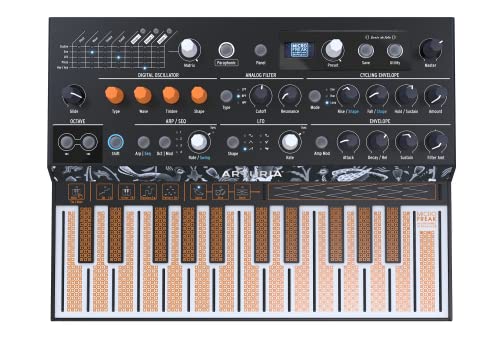
- Multiple digital oscillator and synthesis modes
- 25-key keyboard with poly-aftertouch
- Modulation matrix, sequencer, CV, USB, and MIDI
Best For: Experimental electronic sound design
Best Budget Rhythm Companion

- Four drum kits and four bass sounds
- Records layered patterns with muting
- Built-in speaker and wired headphone support
Best For: Simple portable rhythms and casual beatmaking
Compact Control Center

- 25 velocity-sensitive slim keys
- Pads, encoders, faders, and arpeggiator
- Includes a useful software suite
Best For: Compact software-synth and DAW control
Portable Analog Explorer

- Battery-powered with built-in speaker
- LFO, filter, envelope, PWM, and delay
- CV/Gate outputs for hardware rigs
Best For: Portable analogue sound exploration
Beatmaking Workhorse

- 25 velocity-sensitive mini keys
- Eight MPC pads and eight assignable knobs
- Includes production software and sounds
Best For: Compact beatmaking and virtual-synth control
Best Portable FM Synthesizer

- Six-operator FM synthesis with 32 algorithms
- 128 presets, six effects, arpeggiator, and sequencer
- Battery-powered with speaker and multiple MIDI options
Best For: Portable FM sound design and all-in-one creative setups
Best Pocket Synthesizer for Beginners

- Iconic retro analog sound with three octaves
- Stylus-controlled surface is quick to learn
- Pocket-sized, battery-powered, and headphone-ready
Best For: Casual playing, beginners, and vintage electronic sounds
Best Experimental Synthesizer
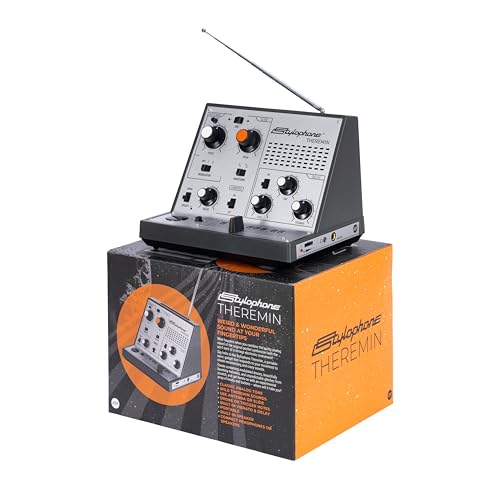
- Theremin antenna and touch slider for expressive control
- Built-in delay and vibrato for drones and textures
- Speaker, headphones, and 3.5mm output included
Best For: Experimental soundscapes, drones, and cinematic textures
Editor's Pick – MOOG Messenger Analog Synthesizer
The MOOG Messenger is a strong choice for musicians seeking classic analog synthesizers in a portable, performance-ready format. Its two wavefolding oscillators, versatile ladder filter, full-size keys, and knob-per-function layout offer substantial hands-on sound shaping.
Best For: Performers and producers who want a powerful monophonic analog synthesizer with expressive keys, deep modulation, and modern connectivity.
Pros:
- Two continuously variable-shape VCOs, sync, frequency modulation, and a sub-oscillator
- 32 semi-weighted keys with velocity and aftertouch
- 64-step sequencer, arpeggiator, 256 presets, and extensive CV, MIDI, and USB-C connectivity
- Ladder filter includes resonance bass compensation for fuller low end
Cons:
- Monophonic design is less suited to full chordal playing
- At 5.14 kg, it is less lightweight than more compact synthesizers
The Messenger stands out when tactile control, expressive performance, and bass-focused analog tone matter more than maximum portability. Its broad connectivity also makes it practical for both studio and live setups.
Best Portable Sampler – Akai MPC Sample
The Akai MPC Sample is a compact alternative for creators who want sampling and beatmaking away from a computer. As a portable music-production device, it combines standalone operation, responsive pads, onboard effects, and battery power in a travel-friendly format.
Best For: Beatmakers, finger drummers, DAWless producers, and beginners who want portable sampling, sequencing, and performance tools.
Pros:
- Standalone, battery-powered operation with built-in speaker and microphone
- 16 responsive MPC pads and a 2.4-inch full-color display
- Instant chopping, timestretching, repitching, resampling, and over 100 factory kits
- USB-C audio/MIDI, microSD storage, and multiple audio and MIDI connections
Cons:
- Rechargeable battery and storage make it dependent on portable hardware components
- MIDI DIN connection requires an adapter, which is not included
The MPC Sample is especially appealing if portability and quick sample manipulation are priorities. Its built-in microphone, speaker, and effects make it ready for sketching ideas or building grooves without a DAW.
Most Experimental – Arturia MicroFreak Hybrid Synthesizer
The Arturia MicroFreak is designed for adventurous sound designers who want hybrid synthesizers with unusual control options. Its digital oscillator engines, analog filter, pressure-sensitive touch keyboard, modulation matrix, and generative sequencing features encourage experimentation in a compact instrument.
Best For: Experienced producers and electronic musicians exploring wavetable, physical-modeling, vocoder, and other unconventional sounds.
Pros:
- Multiple digital oscillator modes spanning physical modeling, wavetable, vocoder, and more
- 25-key PCB keyboard with individual pressure or poly-aftertouch response
- Five-by-seven modulation matrix, automation recording, and Spice and Dice sequencing
- CV, USB, MIDI, audio, and headphone connectivity
Cons:
- Touch-plate keyboard feels different from a conventional moving-key keyboard
- Its advanced feature set may be less approachable for beginners
MicroFreak is a compelling pick when distinctive textures and creative sequencing matter more than traditional keyboard feel. The combination of digital engines and a resonant analog filter gives it a broad, experimental range.
Best Budget Rhythm Companion – Stylophone Beat Drum Machine
The Stylophone Beat is a compact rhythm machine for adding simple drum and bass patterns to a portable music setup. While it is not a traditional pitched synthesizer, its stylus-based interface, built-in speaker, and layered pattern features make it a straightforward beatmaking companion.
Best For: Casual beatmakers, portable jam sessions, and musicians who want a small drum machine with basic bass sounds.
Pros:
- Compact design with four drum kits and four bass sounds
- Stylus-based performance interface offers a distinctive way to create rhythms
- Supports multiple pattern recording, layered parts, muting, click track, and tempo lock
- Built-in speaker and wired headphone output support portable use
Cons:
- Requires three AA batteries, which are not included
- Limited to four drum kits and four bass sounds
- Plastic construction and basic feature set may not suit advanced production
The Stylophone Beat makes the most sense as an accessible rhythm sketchpad or compact companion to larger synthesizers. Its small size and simple controls favor quick ideas over detailed studio sound design.
Compact Control Center – Arturia MiniLab 3
The Arturia MiniLab 3 is a compact MIDI controller for producers who want hands-on control over software synthesizers, instruments, and DAW tracks. Its 25 velocity-sensitive keys, pads, encoders, faders, and included software make it a practical starting point for a home studio or a portable setup.
Best For: Beginners and home producers who want versatile control of software synthesizers in a small keyboard controller.
Pros:
- 25 slim, velocity-sensitive keys provide expressive synth action.
- Includes eight RGB-backlit pads, eight rotary encoders, four faders, and an arpeggiator.
- Works with Mac and Windows and includes Ableton Live Lite, Analog Lab Intro, and UVI Model D.
- Built-in display and clickable browsing knob support hands-on workflow control.
Cons:
- Its 25-key layout is limited for players who need a larger keyboard range.
- USB connectivity may be less convenient for setups seeking wireless operation.
The MiniLab 3 stands out as an all-in-one controller rather than a standalone synthesizer. Choose it if you want compact keys and broad software control, especially for arranging, beat programming, and tweaking virtual instruments.
Portable Analog Explorer – Stylophone GENX-2
The Stylophone GENX-2 is a portable analogue synthesizer for creating sounds away from the studio. Battery operation, a built-in speaker, a stylus keyboard, and hands-on synthesis controls make it an especially distinctive option for experimenting with leads, basses, and expressive effects.
Best For: Mobile sound designers and performers who want an unusual standalone synthesizer with CV/Gate connectivity.
Pros:
- Battery operation and a built-in speaker support portable playing.
- Includes an LFO, resonant low-pass filter, attack/decay envelope, and pulse-width modulation.
- CV and Gate outputs allow control of modular and semi-modular equipment.
- Dual sub-octave switches, analogue delay, and a finger-sensitive expression strip expand performance options.
Cons:
- The stylus-powered keyboard has a different playing feel from a conventional full-size keyboard.
- Its compact two-octave format may not suit players wanting a traditional keyboard range.
- The supplied details list Auxiliary connectivity rather than USB computer connectivity.
The GENX-2 prioritizes immediacy, portability, and character over conventional keyboard ergonomics. It is a strong fit for hands-on experimentation, but players focused on standard keys or direct USB integration may prefer a MIDI controller.
Beatmaking Workhorse – Akai MPK Mini MK3
The Akai Professional MPK Mini MK3 is a USB MIDI keyboard controller aimed at beat makers, producers, and users controlling virtual synthesizers. It combines 25 velocity-sensitive keys with MPC-style pads, assignable knobs, a four-way thumbstick, and an arpeggiator in a compact format.
Best For: Home-studio producers who need compact keyboard, drum-pad, and virtual synthesizer control.
Pros:
- Eight velocity-sensitive MPC-style pads include Note Repeat and Full Level functions.
- Eight 360-degree knobs support plugin, mixing, and synthesizer parameter control.
- The four-way thumbstick handles pitch and modulation, while the arpeggiator offers adjustable settings.
- Includes MPC Beats, three virtual instruments, 2GB of sound content, and an NKS bundle choice.
Cons:
- The 25-key mini keyboard is less suitable for extended two-handed playing.
- It requires a USB connection and compatible computer or device for its software-focused workflow.
- The one-year manufacturer warranty is shorter than some competing options listed here.
The MPK Mini MK3 is particularly compelling when beat production matters as much as synthesizer control. Its pads, knobs, and included production software give it a broad feature set for a compact USB controller.
Best Portable FM Synthesizer – M-VAVE FM001
The M-VAVE FM001 is a flexible choice for musicians who want portable synthesizers with genuine FM sound design. Its battery operation, built-in speaker, 27 silicone keys, six operators, and 128 presets make it suitable for quick sketches, practice, and hands-on experimentation.
Best For: Portable sound design, beginners learning FM synthesis, and creators who want built-in sequencing and effects.
Pros:
- Six-operator FM engine with 32 algorithms and adjustable operator controls.
- Includes 128 presets, six effects, an arpeggiator, and a 16-step sequencer.
- Supports USB MIDI, Bluetooth MIDI, and 3.5mm MIDI input for flexible setups.
- Compact battery-powered design with a built-in speaker.
Cons:
- Its small 27-key layout may not suit players seeking a full-size keyboard.
- The plastic construction and silicone keys may feel less substantial than larger instruments.
Choose the FM001 if you want a feature-rich portable synthesizer that combines classic FM tones with modern connectivity and performance tools. It offers more sequencing and sound-shaping depth than a simple pocket instrument.
Best Pocket Synthesizer for Beginners – Stylophone Original
The original Stylophone is one of the simplest synthesizers for exploring melodic ideas on the go. Instead of traditional keys, you tap and slide a stylus across its touch-sensitive metal surface, producing a distinctive retro analog sound in a compact battery-powered body.
Best For: Beginners, nostalgic sound seekers, casual portable playing, and musicians wanting an unusual lead or effect instrument.
Pros:
- Distinctive analog sound with three octaves and optional vibrato.
- Stylus-based interface is easy to learn and encourages expressive slides.
- Fits in a pocket and includes a built-in speaker and headphone socket.
- Can connect to a computer or other gear through a 3.5mm stereo cable.
Cons:
- Its stylus interface is less suited to conventional keyboard technique.
- Runs on three AA batteries, which are not described as included.
- Limited controls make it less versatile for advanced synthesis than larger instruments.
The Stylophone stands out for immediacy and character rather than extensive programming. It is a strong pick when you want a recognizable vintage-style voice, a playful performance experience, and a highly portable instrument.
Best Experimental Synthesizer – Stylophone Theremin
The Stylophone Theremin is an unconventional option among synthesizers, combining a pitch theremin antenna with a touch slider and retro analog circuitry. It is designed for drones, gliding melodies, and atmospheric experimentation rather than conventional keyboard performance.
Best For: Experimental musicians, sound designers, cinematic textures, drones, and performers who want expressive pitch movement.
Pros:
- Combines antenna-style theremin control with a precision touch slider.
- Built-in delay and vibrato add motion and depth to sustained sounds.
- Battery-powered design includes a speaker and headphone output for portable use.
- Audio output can connect to amps, pedals, or recording equipment.
Cons:
- Its experimental control scheme may take practice for consistent note accuracy.
- It is less suitable for traditional chord-based playing than a keyboard synthesizer.
- At 896 g, it is heavier than the pocket-sized Stylophone Original.
Pick the Stylophone Theremin when expressive slides, sustained drones, and unusual modulation matter more than conventional keys. Its effects and outputs make it especially useful for texture-focused performances and recording experiments.
How We Picked These Synthesizers
We selected these instruments to represent the main ways musicians use Synthesizers in 2026. The lineup includes true sound-generating synths, portable groove and sampling tools, MIDI controllers, and compact instruments designed for experimentation. We considered synthesis options, hands-on controls, keyboard or touch interfaces, portability, built-in speakers, computer connectivity, and expansion features such as MIDI, CV, and Gate.
Because these products serve different purposes, the best option is not necessarily the most advanced one. A beginner may benefit more from an approachable interface, while a producer may prioritize sequencing, sampling, or DAW integration.
Quick Comparison
| Best For | Recommended Type | What to Look For |
|---|---|---|
| Analog sound design | Monophonic or analog synth | Oscillators, filters, envelopes, and modulation |
| Beat making | Sampler or drum machine | Pads, sequencing, sample storage, and effects |
| Computer-based production | MIDI controller | Key feel, pads, knobs, software integration, and USB power |
| Portable practice | Battery-powered compact synth | Built-in speaker, battery life, and simple controls |
| Experimental performance | Touch or stylus instrument | Expressive input, delay, vibrato, and unusual interfaces |
Key Buying Factors for Synthesizers
Synthesis and Sound-Shaping Controls
Analog instruments often appeal to players who want immediate control over oscillators, filters, envelopes, and modulation. Digital and FM Synthesizers can offer more presets, algorithms, and tonal variety, but may require more menu navigation or programming knowledge.
Keys, Pads, and Expressive Control
Traditional keys are useful for melodies and chords, while pads suit finger drumming and clip triggering. Stylus, touch, and theremin-style controls provide different kinds of expression but may take practice. Also check the range and whether a product generates sound on its own or only sends MIDI data.
Connectivity and Workflow
USB MIDI is important for computer production, whereas MIDI, CV, and Gate connections can help integrate hardware. If you perform away from a desk, built-in speakers and battery power add convenience. Samplers should also be judged by storage, input options, sequencing, and sample-management workflow.
Portability and Learning Curve
Compact instruments are easy to carry and often encourage experimentation, but smaller controls can be less comfortable for extended sessions. Beginners should favor clear layouts and accessible presets; experienced users may prefer deeper modulation, more routing options, or broader connectivity.
Who Should Buy Which Synthesizers?
Choose a dedicated analog synthesizer if your priority is hands-on tone shaping and classic monophonic leads or basses. A sampler or portable groove device is a better fit for beat makers who want to manipulate recorded sounds and build arrangements. MIDI controllers are ideal for producers who already own software instruments and need keys, pads, and knobs rather than an internal sound engine.
For travel, casual practice, or creative sketching, a battery-powered compact synth with a speaker is the practical choice. Stylus- and touch-based instruments suit performers who want distinctive gestures and unconventional sounds. Before buying, confirm whether the instrument includes its own sounds, requires a computer or external gear, and supports the connections your setup already uses.