Pitch shifter pedals with expression control can do far more than simple down-tuning. The best models let you bend notes, add harmony, and create synth-like textures with real foot control.
In this roundup, we focus on pedals that are useful for live players, recording setups, and compact boards alike, with an eye on tracking, range, and control options.
Best 10 Pitch Shifter Pedals with Expression Control Picks for 2026
Advanced Workstation Pick

- Eight-octave pitch range
- Onboard pedal with toe switch
- 30 memories for saved setups
Best For: players who want deep pitch control and preset-ready flexibility
Expression-Driven Creative Pick
TC Electronic Brainwaves Pitch Shifter

- Pressure-sensitive MASH control
- Independent dual voices
- Studio-grade pitch algorithms
Best For: players who want interactive pitch effects and customizable control
Compact Expression-Friendly Pick

- EXP input for optional expression pedal
- Up, down, and dual shift modes
- Compact, simple control layout
Best For: players who want a small pitch shifter with optional expression control
Compact Performance Pick

- Compact pitch shifting pedal
- Supports external expression pedal
- Up to three tuning setups via footswitches
Best For: players who want a compact shifter with external control options
Triple-Engine Harmony Workhorse
HOTONE Professional Triple Polyphonic Pitch Shifter

- Three independent pitch engines for layered effects
- Flux footswitch adds customizable glide behavior
- Stereo I/O, MIDI, and USB-C for advanced rigs
Best For: Players needing expressive harmonies and deep control
Mechanical Expression Synth
Motor Pedal Pitch Shifter & Harmony Pedal
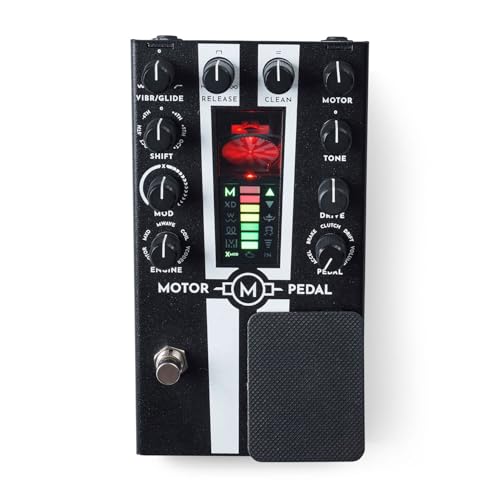
- Real electro-mechanical sound source, not emulation
- Pressure-sensitive foot controller with multiple modes
- Tracks pitch in real time with MIDI routing support
Best For: Experimental players wanting a tactile synth-style pitch pedal
Compact Drop Tuning Utility
Digitech DROP Polyphonic Drop Tune Pedal

- Polyphonic drop tuning from 1 to 7 semitones
- Momentary or latching footswitch operation
- True bypass and octave-down modes
Best For: Guitarists wanting simple, reliable downward pitch shifts
Polyphonic Studio Workhorse

- 4-in-1 engine with harmony, shift, detune, and glide/ramp
- 8ms low-latency tracking for live and studio use
- Tight/Classic modes plus +/-2 octave range
Best For: Players needing a versatile, low-latency pitch pedal for guitar or bass
Mini Harmony Box
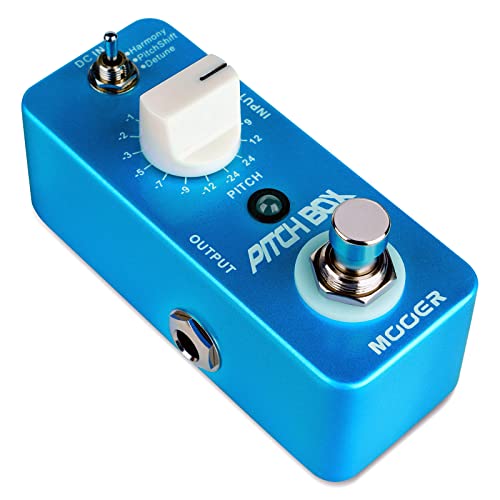
- Harmony, pitch shift, and detune modes
- Polyphonic conversion with +/-2 octave range
- Mini metal shell and true bypass
Best For: Compact pedalboards that need simple, versatile pitch shifting
Budget Octave Shifter
Donner Harmonic Square Mini Pedal

- 7 shift types and 3 tone modes for 21 combinations
- Wet/dry knobs for easy blend control
- Compact aluminum shell with true bypass
Best For: Affordable octave and detune tones in a small pedal
Advanced Workstation Pick – BOSS XS-100 Poly Shifter
If you want pitch shifter pedals with expression control and maximum flexibility, the BOSS XS-100 is built like a full pitch-shifting workstation. It covers guitar and bass across an eight-octave range, adds a smooth onboard pedal with toe switch, and gives you plenty of ways to save and recall setups for different tunings and effects.
Best For: Players who want deep, performance-ready pitch control with presets and external control options.
Pros:
- Eight-octave range with fixed semitone settings for drop tunings, capo effects, and extreme shifts
- Onboard pedal with integrated toe switch for linear pitch control across +/- four octaves
- Adjustable pedal curve and response for more tailored feel
- 30 memories help store favorite setups for quick recall
Cons:
- More of a workstation-style pedal than a simple compact shifter
- May be more control than some players need for basic pitch changes
- Requires extra setup if you want to add external footswitches or expression control
This is the most feature-rich option here, especially if you want a pedal that can handle both standard pitch duties and more complex live switching. The XS-100 leans hard into control and memory storage, making it a strong fit for players who like to program sounds in advance.
Expression-Driven Creative Pick – TC Electronic Brainwaves Pitch Shifter
The TC Electronic BRAINWAVES stands out among pitch shifter pedals with expression control because its MASH footswitch behaves like a pressure-sensitive expression surface. You get dual independent voices, studio-grade algorithms, and flexible pitch effects ranging from unison to two octaves up or down.
Best For: Players who want expressive, hands-on pitch bending and customizable effects.
Pros:
- MASH footswitch adds pressure-sensitive control that can bend pitch-shifted notes
- Completely independent dual voices for layered pitch effects
- Includes polyphonic shifting, octave-up, and detune algorithms
- Editor support lets you customize MASH behavior and pedal settings
Cons:
- MASH is footswitch-based rather than a traditional treadle expression pedal
- Customization relies on the TonePrint editor for deeper setup
- Less focused on preset storage than some workstation-style shifters
If you want expressive control without stepping into a larger multi-function unit, this pedal offers a creative middle ground. Its pressure-sensitive design makes it especially appealing for players who like dynamic, interactive pitch movement.
Compact Expression-Friendly Pick – Electro-Harmonix Pitch Fork
The Electro-Harmonix Pitch Fork is a compact choice for pitch shifter pedals with expression control, thanks to its EXP input for an optional expression pedal. It offers up, down, or dual shifting, plus a simple 11-position Shift knob and Latch or Momentary behavior for different playing styles.
Best For: Guitarists who want a compact shifter with straightforward controls and optional expression pedal use.
Pros:
- EXP input supports pitch shift or glissando control with an optional expression pedal
- Up, down, and dual shift modes cover a useful range of effects
- 11-position Shift knob makes interval selection simple
- Latch and Momentary modes add flexibility for live use
Cons:
- Expression control requires an external pedal
- More limited control layout than larger workstation-style units
- No onboard treadle-style pedal for continuous pitch sweeps
This is a practical pick if you want a small pedal that still gives you expression-driven movement when needed. It keeps the interface simple while covering the core pitch-shifting jobs most players need.
Compact Performance Pick – BOSS XS-1 Poly Shifter
The BOSS XS-1 is a compact option in the pitch shifter pedals with expression control category, giving you natural-feeling pitch changes in a smaller footprint. It handles guitar, bass, or other instruments across +/- seven semitones or +/- three octaves, and it also supports external footswitches or an expression pedal for added control.
Best For: Players who want a compact pitch shifter with strong core tracking and external control options.
Pros:
- Compact design with class-leading BOSS pitch-shifting algorithms
- Supports external expression pedal for linear pitch control
- External footswitches can access up to three tuning setups
- Balance knob and detune function add useful practical flexibility
Cons:
- No built-in treadle-style expression pedal
- Range is narrower than the larger XS-100 model
- External control requires additional accessories
For players who want a smaller pedal without giving up expressive control options, the XS-1 is easy to recommend. It focuses on clean pitch shifting, simple live adjustments, and compatibility with external controllers.
Triple-Engine Harmony Workhorse – HOTONE Professional Triple Polyphonic Pitch Shifter
If you want pitch shifter pedals with expression control that can also handle harmonies, the HOTONE NP-200 is built for big, flexible sounds. Its three independent pitch engines let you stack PolyShift, KeyTrack, Detune, and ARP modes, while the Flux footswitch adds customizable glide behavior for more expressive performance moves.
Best For: Players who want a studio-friendly pitch shifter with deep harmony options, stereo routing, and MIDI/USB control.
Pros:
- Three independent pitch engines for layered textures and complex pitch effects
- Flux footswitch enables customizable glides, from subtle vibrato to large dive-bomb style shifts
- Stereo I/O, MIDI In/Thru, and USB-C support make it easy to integrate into advanced rigs
- 32-bit DSP, 115dB SNR, and analog dry-thru aim to keep the dry tone transparent
Cons:
- Deep feature set may be more than casual players need
- Requires some setup to get the most from the harmony and control options
Overall, this is a strong pick if you want one pedal that can cover expressive pitch moves, intelligent harmonies, and serious rig integration without sacrificing transparency.
Mechanical Expression Synth – Motor Pedal Pitch Shifter & Harmony Pedal
Among pitch shifter pedals with expression control, the Motor Pedal stands out because it is a real electro-mechanical sound source, not a modeled effect. It tracks your playing in real time and pairs that with a pressure-sensitive foot controller offering standard and floor-it ranges, plus modes like accelerate, brake, clutch, volume swells, and drift.
Best For: Guitarists who want an experimental pitch and synth pedal with hands-on expression control and a true mechanical voice.
Pros:
- Real spinning motor sound source gives it a distinctive electro-mechanical character
- Expression foot pedal includes multiple performance modes for dynamic control
- Tracks pitch in real time and can work as a drone, ring-mod, or cross-mod engine
- Track in, track out, and MIDI support add flexible routing options
Cons:
- More specialized than a standard pitch shifter pedal
- Needs 500 mA, so power requirements are higher than many compact pedals
This is a creative choice for players who want an unusual, playable effect with a very hands-on feel. If expression and texture matter more than traditional pitch correction, it offers a lot to explore.
Compact Drop Tuning Utility – Digitech DROP Polyphonic Drop Tune Pedal
If you need a straightforward option in the world of pitch shifter pedals with expression control, the Digitech DROP keeps the job focused on downward tuning. It offers 1 to 7 semitones of drop tuning, plus octave-down settings, and the Hold/Tap switch lets you choose momentary or latching operation for quick stage use.
Best For: Players who want a compact, no-nonsense drop-tuning pedal for simple semitone shifts and octave-down sounds.
Pros:
- Polyphonic drop tuning from 1 to 7 semitones
- Two octave-down modes expand the available low-end shifts
- Momentary or latching switching adds flexible performance control
- True-bypass design helps preserve tone when bypassed
Cons:
- Only provides downward pitch shifting, not upward harmonies
- Less feature-rich than larger multi-mode pitch pedals
For players who only need reliable drop tuning, this pedal stays simple and practical. It is a good fit when you want fast retuning without diving into a more complex pitch system.
Polyphonic Studio Workhorse – Vein Polyphonic Pitch Shifter
If you want one of the more feature-packed pitch shifter pedals with expression control style options, this Vein unit is built for players who need fast tracking, polyphonic harmony, and flexible pitch movement without obvious digital lag. Its 4-in-1 pitch engine covers Harmony, Pitch Shifter, Detune, and Glide/Ramp, while the 8ms latency claim and dual Tight/Classic modes make it a practical choice for both guitar and bass.
Best For: Guitarists and bassists who want a studio-ready, low-latency pitch pedal with broad range and hands-free expressive effects.
Pros:
- 4 modes in one pedal: Harmony, Pitch Shifter, Detune, and Glide/Ramp
- 8ms ultra-low latency tracking is designed for live and studio use
- Dual Tight and Classic algorithms give you guitar- or bass-friendly voicing
- Up to +/- 2 octave range with independent Attack and Release controls
Cons:
- More complex than a simple octave or detune pedal
- Requires 250mA power, so it is not the lowest-draw option
- Expression-style movement is built around controls and ramping rather than a separate treadle
This is the most advanced option in the group if you want expansive pitch effects and the ability to shape bends, dives, and glides from a single box. It is especially compelling if you value stereo routing, spillover tails, and ongoing USB-C updates.
Mini Harmony Box – Mooer Drop Pitch Harmonizer
The Mooer Drop is a compact pick for players comparing pitch shifter pedals with expression control ideas in a small-format board setup, especially if you want harmony, pitch shift, and detune in one simple box. It offers precise polyphonic pitch conversion, a +/-2 octave range, and 16 optional parameters, making it useful when you need adjustable pitch effects without taking up much space.
Best For: Guitarists or bassists who want a mini pedal with multiple pitch modes and a tiny footprint.
Pros:
- Three modes: Harmony, Pitch Shift, and Detune
- Precise polyphonic pitch conversion for musical tracking
- Up to +/-2 octave range with 16 optional parameters
- Mini metal enclosure and true bypass for pedalboard convenience
Cons:
- Power adapter is not included
- Smaller controls may be less convenient than larger pedals
- No dedicated expression pedal input is listed in the supplied details
For players who value portability and straightforward operation, this is an easy pitch shifter to fit into a tight rig. It is less elaborate than the Vein model, but it still covers the core harmony and detune sounds many players need.
Budget Octave Shifter – Donner Harmonic Square Mini Pedal
The Donner Harmonic Square is a practical budget-friendly option if you are shopping pitch shifter pedals with expression control features in mind but mainly want straightforward octave and detune sounds. With 7 shift types, 3 tone modes, and separate wet/dry knobs, it gives you a lot of useful variation for guitar or bass in a compact true-bypass enclosure.
Best For: Players who want an affordable mini pitch pedal with octave, detune, and blend control.
Pros:
- 7 shift types plus 3 tone modes for 21 sound combinations
- Sharp, Flat, and Detune settings cover pitch up, pitch down, and subtle shifting
- Wet and dry knobs make blending easy
- Compact aluminum-alloy body with true bypass
Cons:
- Power adapter is not included
- Requires a 500mA supply, which is higher than some mini pedals
- Focuses more on octave and detune sounds than advanced performance features
This pedal is a good fit if you want simple control over harmonized and shifted tones without stepping up to a more complex multi-mode unit. It is the most economical-feeling choice here, especially for basic octave and detune work.
How We Picked These Pitch Shifter Pedals with Expression Control
We prioritized pedals that offer reliable pitch tracking, useful range, low latency, and practical control features such as expression input, footswitch modes, MIDI support, or momentary functions. We also looked for models that make sense on real pedalboards, not just in theory.
Because pitch effects can sound harsh or glitchy when pushed too hard, we favored units with strong reputation for note clarity, flexible voicing, and usable presets or modes for guitar and bass players.
Quick Comparison: Which Type Fits Your Setup?
Compact drop-tuning pedals are best if you want fast, straightforward semitone shifts. Polyphonic shifters and harmonizers are better if you need chords to stay clean. Larger workstation-style units typically offer the deepest control, while mini pedals save board space and cost less.
If you use an expression pedal often, look for a unit with a dedicated EXP jack, MIDI control, or a performance-friendly interface that makes pitch sweeps feel smooth and musical.
Key Buying Factors for Pitch Shifter Pedals with Expression Control
Tracking and Latency
Good tracking matters more than extreme range for most players. If the pedal lags or mistracks, expressive playing becomes frustrating. Check whether the unit handles single notes, chords, and low-register notes well.
Expression and Control Options
Not every pedal with an expression jack behaves the same way. Some offer smooth continuous sweeps, while others use expression for preset selection, blend, or pitch range changes. Make sure the control style matches how you actually play.
Range and Musical Use
Consider whether you need subtle detuning, octave layering, harmonic intervals, or full drop tuning across multiple octaves. The best Pitch Shifter Pedals with Expression Control should cover the sounds you use most without making setup complicated.
Power, Size, and Integration
Smaller pedals are easier to power and fit on crowded boards, but larger units often provide better routing and more performance features. If you use MIDI, stereo rigs, or multiple controllers, choose a pedal that integrates cleanly with the rest of your setup.
Who Should Buy Which Pitch Shifter Pedals with Expression Control?
Players who want simple down-tuning for heavier riffs should focus on compact drop pedals. Guitarists who need harmony lines, octave textures, or real-time sweeps should look at more flexible polyphonic models. Bass players should pay extra attention to tracking and low-end clarity. If you want the most hands-on performance control, choose a pedal with expression input and the broadest set of routing or control options.
In short, the right choice depends on whether you value convenience, expressive range, or deep control. For most buyers, the best option is the one that stays musical under your feet and fits naturally into your playing style.