If you want your acoustic guitar to ring out longer, stay even across chords, or sit better in a mix, the right pedal can make a big difference.
This roundup covers the best acoustic guitar sustain pedals of 2026, with options for players who want subtle compression, stronger note hold, or flexible acoustic effects.
Best 10 Acoustic Guitar Sustain Pedals Picks for 2026
Acoustic Multi-Effects Preamp
SONICAKE Sonic Wood with XLR Output

- Analog preamp with 2-band EQ
- Chorus, delay, and reverb onboard
- XLR output for direct PA hookup
Best For: Acoustic players who want an all-in-one gig solution
Classic Compressor Sustainer

- Low-noise compression and sustain
- Level, tone, attack, and sustain controls
- Compact, easy-to-place pedal format
Best For: Guitarists who want simple, low-noise compression and sustain control
Direct-Output Acoustic Preamp
SONICAKE A Factory Reverb Pedal

- Analog preamp with digital reverb
- Notch filter and mute for feedback control
- XLR balanced output for direct use
Best For: Acoustic players who want a simple preamp/reverb pedal with feedback control
Budget Compressor Sustainer
Behringer CS400 Dynamics Pedal

- Smooth compression and sustain
- Dedicated level, tone, attack, and sustain controls
- Blue LED for status and battery check
Best For: Players who want affordable compression and sustain shaping
Acoustic Tone Simulator
MOOER Acoustikar Acoustic Guitar Pedal Simulator

- 3 acoustic voicings: Piezo, Standard, Jumbo
- Analog, knob-controlled acoustic simulation
- Compact 3.54" x 3.54" footprint
Best For: electric players who want a simple acoustic-style simulator
Compact Sustain Shaper
Mini Compressor Pedal for Electric Guitar Bass

- Sustain and Attack controls for tone shaping
- Noise-reduction design for quieter compression
- True bypass with durable aluminum alloy body
Best For: players who want compact compression and sustain control
Multi-Effects Practice Hub

- 80 preset and 80 user patches
- 66 effects plus looper and drum machine
- Expression pedal and headphone out included
Best For: players wanting one pedal for effects, practice, and patch storage
Acoustic Amp Sim
Acoustic Guitar Simulator Pedal
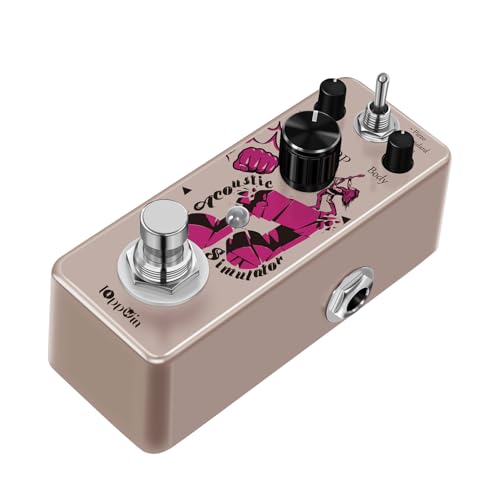
- Electric-to-acoustic conversion pedal
- 3 voicing modes: Piezo, Standard, Jumbo
- True bypass in a compact metal case
Best For: electric players wanting simple acoustic-style tones
Dynamics Control
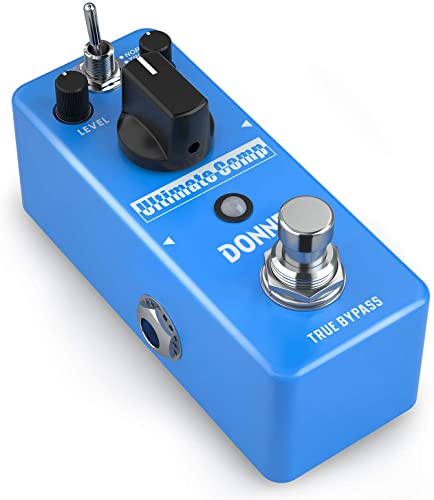
- Pure analog compressor with true bypass
- Normal and Treble modes for shaping
- COMP, TONE, and LEVEL controls
Best For: players wanting smoother, more even dynamics
Tone Shaper

- Five-band analog EQ for detailed tone control
- ±18dB range across highs, mids, and lows
- True bypass with electric and acoustic support
Best For: players who want precise tone shaping
Acoustic Multi-Effects Preamp – SONICAKE Sonic Wood with XLR Output
If you want one of the more versatile acoustic guitar sustain pedals for live use, this SONICAKE unit bundles preamp, chorus, delay, and reverb into a single board-friendly package. Its analog preamp with 2-band EQ is aimed at a warm, natural acoustic tone, while the built-in effects give you practical control over ambience and space.
Best For: Acoustic players who want an all-in-one gig solution with onboard tone shaping and direct PA connection.
Pros:
- Analog preamp with 2-band EQ for warm, natural acoustic sound
- Includes chorus, delay, and reverb for different playing scenarios
- Tap tempo and tail on/off add more control over effects behavior
- XLR output makes direct connection to PA, mixer, or audio interface easier
Cons:
- Uses a 9V DC adapter, so power is not fully self-contained
- At 10.31 inches long, it may take up more pedalboard space than a single-function pedal
This is a strong pick if you want one pedal to cover core acoustic processing plus stage-ready outputs. It is less about minimalism and more about consolidation, which is useful when you need several tools in one box.
Classic Compressor Sustainer – Boss CS-3 Pedal
For players comparing acoustic guitar sustain pedals that focus on smooth leveling rather than added ambience, the Boss CS-3 is a straightforward compressor/sustainer. It offers onboard level, tone, attack, and sustain controls, so you can shape the response without digging through menus or presets.
Best For: Guitarists who want simple, low-noise compression and sustain control from a compact pedal.
Pros:
- Low-noise design supports super-quiet operation
- Level, tone, attack, and sustain controls give precise shaping
- Compact Boss pedal format is easy to place on a board
Cons:
- Focused on compression/sustain only, with no extra acoustic effects
- Does not include the direct-output features found on some acoustic preamp pedals
The CS-3 is best when you want dependable sustain and control without extra processing. It is a practical choice if your main goal is dynamics shaping rather than a full acoustic effects chain.
Direct-Output Acoustic Preamp – SONICAKE A Factory Reverb Pedal
If your search for acoustic guitar sustain pedals also includes a clean preamp with built-in ambience, this SONICAKE A Factory model is built around analog preamp plus digital reverb. It adds a notch filter and mute with gain/frequency adjustment to help reduce whistling or feedback, while the high-impedance input and XLR balanced output fit practical stage and recording setups.
Best For: Acoustic players who want a simple preamp/reverb pedal with feedback control and balanced output.
Pros:
- Analog preamp with digital reverb built in
- Notch filter and mute help address whistling or feedback issues
- High-impedance input suits acoustic instrument use
- XLR balanced output is useful for direct connection
Cons:
- Power supply is not included
- Focuses on preamp and reverb rather than a wider multi-effects set
This pedal is a sensible pick if you want acoustic tone shaping and direct-output convenience without a larger effects suite. Its feedback-focused controls make it especially practical for live environments.
Budget Compressor Sustainer – Behringer CS400 Dynamics Pedal
Among acoustic guitar sustain pedals, the Behringer CS400 is a basic compressor/sustainer aimed at smoothing out dynamics and extending notes. It offers dedicated level, tone, attack, and sustain controls, plus a blue status LED for effect status and battery check, making it an uncomplicated utility pedal for everyday use.
Best For: Players who want affordable compression and sustain shaping in a simple analog pedal.
Pros:
- Designed for smooth compression and endless sustain
- Dedicated level, tone, attack, and sustain controls
- Blue status LED helps with on/off and battery checking
- Analog format keeps the setup straightforward
Cons:
- Very basic feature set compared with preamp or multi-effects pedals
- Does not include acoustic-specific XLR output or built-in ambience effects
This is a practical no-frills option if your priority is compression and sustain rather than broader acoustic processing. It keeps the feature set focused, which can be ideal for players who want a simple pedal to do one job well.
Acoustic Tone Simulator – MOOER Acoustikar Acoustic Guitar Pedal Simulator
If you’re looking at acoustic guitar sustain pedals to give an electric guitar a more natural acoustic-like voice, the MOOER Acoustikar is built around that goal. It offers three modes—Piezo, Standard, and Jumbo—so you can choose a brighter pick-up style sound or a fuller acoustic texture depending on the part you’re playing.
Best For: Players who want an acoustic-style simulator pedal for electric guitar parts and quick tone shaping.
Pros:
- Three selectable acoustic voicings: Piezo, Standard, and Jumbo.
- Designed to restore an acoustic guitar texture on electric guitar.
- Compact analog pedal with simple knob-based control.
- Small footprint makes it easy to fit on crowded boards.
Cons:
- Needs a 9V adapter and 300 mA power supply.
- Focused on acoustic simulation rather than multi-effect flexibility.
For players who want a straightforward way to approximate acoustic character, this pedal keeps the feature set focused and practical. The mode selection makes it easy to dial in the right flavor without extra setup.
Compact Sustain Shaper – Mini Compressor Pedal for Electric Guitar Bass
When shopping for acoustic guitar sustain pedals, a compressor can be useful for evening out dynamics and adding more controlled sustain. This mini compressor pedal is centered on Sustain and Attack controls, and its noise-reduction design aims to keep compression effects as quiet as possible.
Best For: Players who want a small compressor with sustain and attack control for cleaner dynamics.
Pros:
- Sustain and Attack controls help shape compression behavior.
- Noise-reduction design is aimed at quieter compression.
- True bypass switching helps keep the dry signal intact when off.
- Durable aluminum alloy build with indicator light.
Cons:
- Adapter and cable are not included.
- Powered by DC 9V only.
This is a practical choice if you want a compact compressor rather than a full acoustic simulator. It keeps the control set simple while still giving you useful sustain shaping for guitar or bass.
Multi-Effects Practice Hub – MOOER GE100 Preset Patches
If you want acoustic guitar sustain pedals functionality as part of a broader setup, the MOOER GE100 gives you a wide multi-effects platform instead of a single-purpose box. It includes 80 preset patches, 80 user patches, 66 effect types, and an adjustable output mode, making it useful for players who need many tones in one unit.
Best For: Guitarists who want an all-in-one multi-effects pedal with looping, rhythm, and patch storage.
Pros:
- 80 preset patches and 80 user patches for tone storage.
- 66 effect types across 8 effect modules.
- 180-second looper and built-in drum machine for practice and songwriting.
- Assignable expression pedal and headphone out add flexibility.
Cons:
- Larger than a single-purpose pedal.
- May be more complex than needed if you only want one effect.
This is the most versatile option in the group, but it’s aimed at players who want breadth rather than a dedicated acoustic tone pedal. If you need practice tools and a wide effect library, it delivers plenty of utility.
Acoustic Amp Sim – Acoustic Guitar Simulator Pedal
If you want acoustic guitar sustain pedals that can turn an electric rig into a more convincing acoustic voice, this simulator is built for that job. Its analog design aims for a natural, responsive feel, while the three cabinet modes let you steer the sound toward brighter piezo sparkle, a balanced standard tone, or a warmer jumbo-style body.
Best For: Players who need a compact electric-to-acoustic conversion pedal with simple, useful voicing options.
Pros:
- Three cabinet modes: Piezo, Standard, and Jumbo
- Analog signal path for organic, dynamic acoustic textures
- True bypass helps avoid tone loss when disengaged
- Metal housing and small footprint suit stage or studio use
Cons:
- Requires 9V corded power
- Focused on acoustic simulation rather than broader effects
For players chasing a practical acoustic substitute from an electric guitar, this pedal keeps things straightforward and purpose-built. The mode choices make it easy to match different songs or pickup styles without adding much complexity to the board.
Dynamics Control – Donner Ultimate Comp Pedal
When looking at acoustic guitar sustain pedals, a compressor can be a smart add-on for evening out attack and keeping notes more controlled. This Donner pedal uses a pure analog design with two modes and straightforward knobs, making it easy to shape a cleaner, more even sound without overcomplicating your setup.
Best For: Guitarists who want a simple compressor for smoother dynamics and transparent true-bypass operation.
Pros:
- Compression helps smooth high and low frequency dynamics
- COMP, TONE, and LEVEL controls are easy to dial in
- Normal and Treble modes add flexibility
- True bypass keeps the signal transparent when off
Cons:
- Power adapter is not included
- Not an acoustic simulation pedal by itself
This is a practical choice if you want compression as part of a more controlled acoustic-style chain or general guitar board. The warm, balanced voicing and simple control set make it approachable for quick stage adjustments.
Tone Shaper – Analog EQ Pedal
For acoustic guitar sustain pedals and tone-shaping duties, an EQ can be one of the most useful tools on the board. This analog equalizer pedal gives you direct control over highs, mids, and lows, with five frequency bands and a wide ±18dB range to help refine a guitar sound without losing its natural character.
Best For: Players who want hands-on tonal control for electric or acoustic guitar setups.
Pros:
- Five EQ bands: 100Hz, 250Hz, 630Hz, 1.6kHz, and 4kHz
- Wide ±18dB adjustment range for detailed shaping
- True bypass helps minimize tone loss
- Works with both electric and acoustic guitar
Cons:
- Requires a 9V center-negative power supply, not included
- Not a sustain or simulation effect on its own
If your goal is to fine-tune an acoustic signal rather than replace it, this EQ is a straightforward solution. It’s especially handy when you need to tame harshness, add body, or carve out space in a live mix.
How We Picked the Best Acoustic Guitar Sustain Pedals
We focused on pedals that help acoustic players improve sustain without making the guitar sound overly processed. That means looking at compression behavior, tonal transparency, noise control, and whether the pedal works well with acoustic pickups and stage use.
We also considered practical factors like true bypass, XLR or line-level output where relevant, power requirements, and ease of dialing in usable settings quickly.
Quick Comparison
For a simple approach, compressor pedals are best when you want more even volume and longer note decay. Acoustic simulator and preamp-style units are better if you need broader tone shaping, DI-style output, or help making a piezo pickup sound more natural. Multi-effects pedals suit players who want sustain plus reverb, delay, or chorus in one rig.
Key Buying Factors for Acoustic Guitar Sustain Pedals
Compression Style
Look for smooth, musical compression rather than aggressive squashing. Acoustic guitars usually benefit from subtle sustain enhancement that preserves attack and dynamics.
Tone Transparency
The best Acoustic Guitar Sustain Pedals should keep your natural tone intact. If your guitar already sounds balanced, choose a pedal with a clean signal path and minimal coloration.
Pickup Compatibility
If you use a piezo pickup, a pedal with acoustic voicing, EQ, or simulation modes may sound more natural than a standard compressor. Magnetic pickups can usually handle conventional compression more easily.
Output and Routing
For live use, consider XLR output, DI convenience, or cabinet/sim features if you want to run direct to a mixer. Studio players may prefer simple analog controls and quiet operation.
Control Simplicity
Compression can be easy to overdo. Pedals with straightforward controls are often the best fit for acoustic players who want fast setup and reliable results on stage.
Who Should Buy Which Acoustic Guitar Sustain Pedals?
If you want the most natural sustain boost, choose a dedicated compressor. If your main issue is piezo harshness or an underwhelming direct tone, an acoustic preamp or simulator may be the better choice. If you need one pedal to cover sustain, ambience, and broader tone shaping, a multi-effects unit offers the most flexibility.
In short, Acoustic Guitar Sustain Pedals are most effective when matched to your pickup type, playing style, and how much tonal control you want. Start subtle, compare in context with your amp or PA, and choose the pedal that supports your natural acoustic voice rather than replacing it.