If you plug bass straight into a mixer, interface, or PA, a solid DI box can make the difference between thin, noisy sound and a tight, dependable signal.
These passive DI boxes for bass guitar are built for simple, no-power operation, better ground control, and easy integration with live and recording setups.
Best 10 Passive Di Boxes for Bass Guitar Picks for 2026
Studio-Grade Passive DI
Radial Pro DI Passive Direct Box

- Passive mono direct box
- Custom transformer design
- Rugged I-beam construction
Best For: bass players wanting a durable, straightforward passive DI
Budget Passive DI

- Balanced mic-level output conversion
- Helps with long cables and impedance mismatches
- Thru/Out jack for amp plus mixer
Best For: bass players seeking an affordable, compact passive DI
Classic Workhorse Passive DI
Whirlwind IMP 2 Passive Instrument DI Box
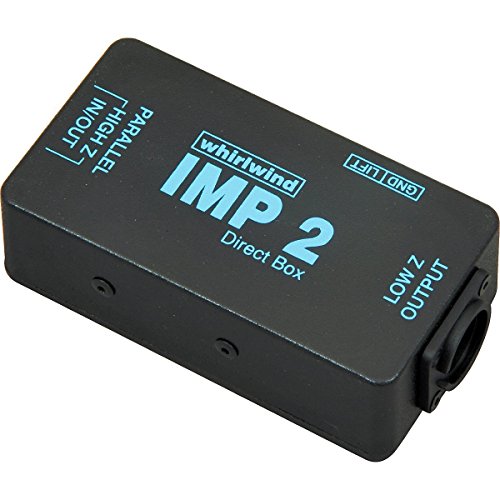
- Converts instrument or line to balanced mic level
- Compact stainless steel enclosure
- TRHL transformer riveted to chassis
Best For: bass players wanting a durable, economical passive DI
Feature-Rich Passive DI

- Impedance transformer for matching
- Ground lift and isolation help cut hum
- Thru output for amp and mixer routing
Best For: bass players needing flexible routing and noise control
Compact Pedalboard DI
VSN High Performance Passive DI Box Unit

- Small alloy body saves pedalboard space
- Gain switch: -20 dB / 0 / +20 dB
- 1/4-inch to balanced/unbalanced XLR routing
Best For: Bass players needing a compact, simple DI-style box with level switching
Road-Ready Passive DI

- No external power required
- Hum and feedback eliminator included
- Balanced XLR plus parallel output
Best For: Bassists wanting a simple passive DI with noise reduction and amp splitting
Classic Budget DI
Pyle Premium Direct Injection Audio Box

- 1/4-inch input with attenuation control
- Buzz and hum cancellation included
- Balanced and unbalanced XLR support
Best For: Bass players needing a simple, budget-friendly DI for PA or recording
Studio-Grade Passive DI for Stage and Rehearsal
PD200 Stereo Passive DI Box Unit

- Ground lift switch for hum reduction
- Input attenuator and thru output
- Compact aluminum alloy road-ready build
Best For: Bass players who need a compact passive DI with simple routing
Steel-Chassis Hum Eliminator DI

- Buzz and hum cancellation
- Ground lift adapter and input attenuator
- Durable all-steel chassis
Best For: Bass players wanting a basic passive DI with hum control
Dual-Channel Passive DI for Flexible Routing
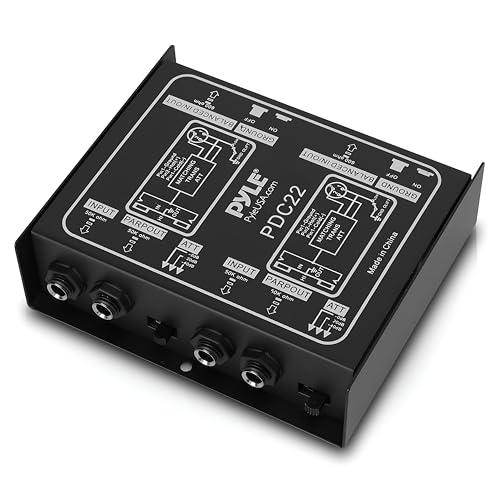
- Dual-channel passive DI layout
- Ground lift and hum cancellation
- All-steel chassis with input attenuator
Best For: Bass players needing a dual-channel passive DI for flexible signal paths
Studio-Grade Passive DI – Radial Pro DI Passive Direct Box
If you want one of the more serious passive DI boxes for bass guitar, the Radial Pro DI focuses on clean signal conversion and durable build quality. Its custom transformer and mono passive design make it a practical choice for routing bass to a mixer or recording setup while keeping the signal balanced.
Best For: Bass players who want a rugged passive DI with a custom transformer for dependable live and studio use.
Pros:
- Passive mono direct box with a custom transformer
- Rugged I-beam construction for tough use
- Simple, focused design for direct bass signal routing
Cons:
- Mono-only design
- Limited feature set compared with DI boxes that add ground lift or pad controls
For players prioritizing build quality and straightforward operation, this is a solid no-frills passive DI box. It keeps the design centered on the transformer and the enclosure, which is often what matters most in a bass signal path.
Budget Passive DI – Behringer Ultra-DI DI400P
The Behringer Ultra-DI DI400P is a compact passive option for bass guitar when you need basic signal matching without much fuss. It is designed to convert unbalanced instrument signals to balanced mic-level output, help with long cable runs, and provide a thru jack for sending bass to an amp while feeding the mixer.
Best For: Budget-minded bass players who need a simple passive DI for live sound or basic recording.
Pros:
- Converts unbalanced guitar or bass signals to balanced mic-level output
- Helps reduce tone loss from impedance mismatches and long cables
- Thru/Out jack supports amp-and-mixer routing
- Compact metal enclosure
Cons:
- No dedicated ground lift listed in the supplied notes
- Feature set is simpler than more fully equipped passive DI boxes
If you mainly need an affordable passive DI box for bass guitar, this model covers the essentials well. Its straightforward layout and compact metal build make it easy to keep in a gig bag or pedal setup.
Classic Workhorse Passive DI – Whirlwind IMP 2 Passive Instrument DI Box
For passive DI boxes for bass guitar, the Whirlwind IMP 2 is built around a simple transformer-based design that turns an unbalanced instrument or line signal into a low-impedance balanced mic-level signal. Its compact footprint and reputation for durability make it a practical choice when you want a straightforward DI for stage or studio use.
Best For: Bass players who want an economical, durable passive DI with a proven no-nonsense design.
Pros:
- Converts unbalanced instrument or line signals to balanced mic level
- Compact footprint with a stainless steel enclosure
- Uses Whirlwind’s TRHL transformer
- Transformer is riveted to the chassis for durability
Cons:
- Basic feature set compared with more modern DI boxes
- No added bass-specific controls listed in the supplied notes
This is a classic utility DI that stays focused on the essentials. If you value a small, sturdy passive box that simply does the conversion job well, it remains an easy one to recommend.
Feature-Rich Passive DI – PRORECK DC21 Passive DI Box
The PRORECK DC21 is a feature-packed passive DI box for bass guitar if you want more control over routing and noise reduction. According to the supplied notes, it combines impedance matching, a ground lift switch, an input attenuator, and dual-output flexibility for both live performance and studio recording.
Best For: Bass players who want a passive DI with ground lift, input attenuation, and dual-output flexibility.
Pros:
- Built-in impedance transformer for signal and impedance matching
- Ground lift switch and isolation transformer help eliminate hum and buzz
- Thru direct output supports amp monitoring while sending balanced signal to mixer or PA
- Compatible with bass, guitars, keyboards, and other audio devices
Cons:
- More features may be unnecessary if you only need a basic DI
- Detailed handling of the XLR and 1/4" routing may take a little setup time
For players dealing with noise issues or needing a more flexible passive DI box, the DC21 offers a lot in one unit. It is especially appealing if you want one box that can handle both live stage routing and studio-style signal splitting.
Compact Pedalboard DI – VSN High Performance Passive DI Box Unit
If you need passive di boxes for bass guitar that save space and keep your rig simple, this VSN unit is built around a compact metal chassis and straightforward 1/4-inch to balanced/unbalanced XLR routing. It also includes a -20 dB / 0 / +20 dB gain switch, which can help you better match levels when running bass or other instruments through a DI-style setup.
Best For: Bass players who want a small, road-friendly passive DI-style box with level switching and basic hum/noise control in a pedalboard-friendly format.
Pros:
- Compact, sturdy alloy body that takes up little pedalboard space
- Gain switch offers -20 dB, 0, and +20 dB settings for level matching
- Supports 1/4-inch to balanced and unbalanced XLR connections
- Includes a 60-day refund warranty and 1-year warranty description
Cons:
- Power supply is not included, even though 9V power is noted
- Product notes mix DI box language with other pedal functions, so feature focus is not fully clear
This is a practical choice if your priority is compact size and flexible signal-level control over a lot of extras. For bass guitar use, its main appeal is the small footprint and simple connectivity.
Road-Ready Passive DI – Bolanle 1-Channel Direct Box
For passive di boxes for bass guitar in live or studio setups, this Bolanle direct box focuses on clean signal conversion without requiring external power. It is designed for guitars, basses, and synths, and adds a hum eliminator, feedback eliminator, and attenuation switch to help keep your bass signal controlled and interference-free.
Best For: Bassists who want a no-power passive DI for stage or recording use with hum reduction and flexible output options.
Pros:
- No external power supply required
- Built-in hum and feedback eliminator for cleaner output
- Dual mode and signal attenuation switch help prevent overload
- Balanced XLR output plus parallel output for amp feed
Cons:
- Single-channel design only
- No detailed bass-specific tone-shaping features listed
This is the most straightforward option here if you want passive operation and practical noise reduction in one box. Its balanced XLR and parallel output make it easy to split a bass signal between mixer and amp.
Classic Budget DI – Pyle Premium Direct Injection Audio Box
If you are comparing passive di boxes for bass guitar and want a simple, established-style direct box, this Pyle unit covers the essentials. It accepts 1/4-inch inputs, includes input attenuation, and is designed to connect bass, guitar, keyboards, and other unbalanced sources to balanced or unbalanced XLR destinations.
Best For: Bass players who want a basic passive DI for PA or recording hookup with hum cancellation and input attenuation.
Pros:
- Works with electric bass, guitar, keyboards, and other unbalanced sources
- Includes input attenuation for level control
- Buzz and hum cancellation help clean up noisy signals
- Balanced and unbalanced XLR support broadens connection options
Cons:
- Bulkier than some mini-format DI boxes
- No advanced controls beyond attenuation and basic DI routing
This Pyle box is a solid utility pick when you want the core DI function without added complexity. For bass guitar, its strengths are simple connectivity, hum cancellation, and a straightforward path to the mixer.
Studio-Grade Passive DI for Stage and Rehearsal – PD200 Stereo Passive DI Box Unit
If you’re shopping for passive di boxes for bass guitar, the PD200 is built around the essentials: unbalanced 1/4″ instrument input, balanced XLR output, and a ground lift switch to help cut buzz and hum. It also includes an input attenuator and a thru path, so you can send signal to an amp while feeding front-of-house or a recording setup.
Best For: Bass players who want a compact passive DI with hum reduction and a simple amp-plus-PA setup.
Pros:
- Ground lift switch helps eliminate common ground loop noise.
- Input attenuator adds flexibility for different instrument and line-level sources.
- Thru output lets you split signal to an amp and a mixer/PA.
- Compact aluminum alloy housing is made for road use.
Cons:
- Designed as a passive unit, so it may not suit users who specifically want an active DI.
- Primary notes focus on guitar and keyboard use, even though bass is supported.
Overall, this is a practical passive DI box if you want a straightforward hum-eliminating signal path for bass in live or rehearsal setups. Its feature set is lean but useful, especially if you value a durable build and easy routing.
Steel-Chassis Hum Eliminator DI – Pyle PDC21 Passive DI Box
For passive di boxes for bass guitar, the Pyle PDC21 offers the core DI features most players look for: unbalanced-to-balanced conversion, buzz and hum cancellation, and a ground lift adapter. It also includes an input attenuator and is described as a versatile box for instruments, processors, and other unbalanced sources.
Best For: Bass players and home-studio users who want a simple passive DI with solid noise control.
Pros:
- Buzz and hum cancellation help clean up unbalanced instrument signals.
- Ground lift adapter supports easier use with bass, guitar, and keyboards.
- All-steel chassis adds durability for regular transport.
- Input attenuator broadens its usefulness across source types.
Cons:
- Bullets emphasize broad instrument use rather than bass-specific features.
- No detailed bass-specific performance claims are provided in the notes.
This is a straightforward passive DI option if you want a practical, no-frills box for bass and other instruments. Its biggest strengths are noise control, durability, and simple signal conversion for live or recording use.
Dual-Channel Passive DI for Flexible Routing – Pyle-Pro PDC22 Passive DI Box
If you need passive di boxes for bass guitar with more routing flexibility, the Pyle-Pro PDC22 stands out for its dual-channel design and standard hum-canceling DI features. It provides 1/4-inch connectivity, balanced and unbalanced XLR handling, an input attenuator, and a ground lift adapter for cleaner signal transfer to a PA or recording mixer.
Best For: Bass players who want a dual-channel passive DI for live setups or multiple signal paths.
Pros:
- Dual-channel design gives you more flexibility than a single-box layout.
- Ground lift adapter and hum cancellation support cleaner audio.
- Input attenuator helps adapt different source levels.
- All-steel chassis is built for durability.
Cons:
- Bulkier style may be more than some players need for a simple bass rig.
- Notes focus on general instrument and source compatibility rather than bass-specific tuning.
For bass players who want a passive DI with extra routing options, this model is the most feature-rich of the three. The dual-channel layout is its main advantage, especially if you need a more versatile live or recording setup.
How We Picked the Best Passive Di Boxes for Bass Guitar
We focused on Passive Di Boxes for Bass Guitar that prioritize reliable balanced output, practical noise reduction, and straightforward operation. The strongest picks also offer useful extras such as ground lift switches, pad controls, and durable enclosures for gigging.
Quick Comparison
For most bass players, a passive DI is the simplest solution when you want to send your instrument to a mixer or audio interface without adding power requirements. The best options here balance clean signal transfer, consistent impedance handling, and roadworthy build quality. Compact models suit minimal rigs, while feature-rich boxes are better for players who need flexibility on louder stages or with active pedalboards.
Key Buying Factors for Passive Di Boxes for Bass Guitar
Impedance and Tone Preservation
Bass pickups can lose low-end punch if the DI loads the signal poorly. Look for units designed to preserve bass response and maintain a natural tone into balanced outputs.
Ground Lift and Noise Control
A ground lift switch is one of the most useful features in Passive Di Boxes for Bass Guitar. It can help reduce hum and buzz caused by ground loops in live or studio rigs.
Pad and Input Handling
If you use active basses, hot pickups, or strong pedal outputs, an input attenuator or pad helps prevent overload before the signal reaches the console.
Build Quality and Connectivity
Metal housings, secure jacks, and clear labeling matter for repeat use. Check that the DI fits your cabling needs, especially if you often switch between stage, rehearsal, and recording setups.
Who Should Buy Which Passive Di Boxes for Bass Guitar?
Choose a basic passive DI if you want an affordable, plug-and-play solution for standard bass setups. Go for a more feature-rich model if you need better noise rejection, stereo support, or extra headroom handling for modern pedalboards and louder sources. If you play regularly on stage, durability and dependable ground-lift performance are worth prioritizing over the lowest price.
In short, the best Passive Di Boxes for Bass Guitar are the ones that keep your low end intact, stay quiet, and match the way you actually play.