One amp for your microphone and acoustic guitar can make practice, open mics, and small gigs simpler. But the right choice depends on more than wattage: input layout, vocal clarity, portability, and power options all matter.
These 10 picks cover compact practice amps, battery-powered models, and larger combos for performers who need more control or volume.
Best 10 Vocal and Guitar Combo Amps Picks for 2026
Best for Multi-Performer Busking

- 120W; dual 8-inch woofers
- 6–8-hour rated battery
- Phantom power, DI out, and effects loop
Best For: Small groups playing away from wall power
Best for Simple Band Setups

- Six inputs for a small group
- 100W with three-band EQ
- Bluetooth and 48V phantom power
Best For: Small bands needing instruments, mics, and playback
Best for Portable Practice

- 80W four-driver design
- Six inputs and Bluetooth
- 6–8-hour rated battery
Best For: Battery-powered practice with guitar, vocals, and backing tracks
Best for Solo Vocal Effects

- Automatic vocal harmony and looper
- Independent EQ and anti-feedback controls
- Dual assignable XLR DI outputs
Best For: Solo singer-guitarists using harmony and looping
Best for Bluetooth Backing Tracks
Fender 100W Acoustic Guitar Amp
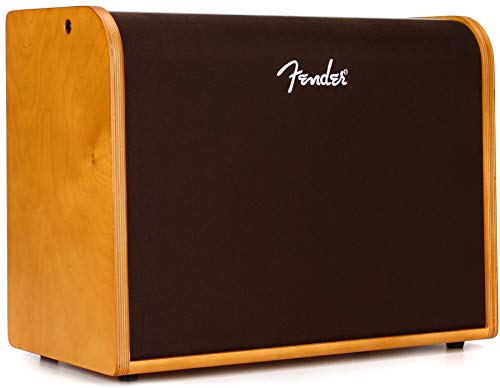
- 100-watt output
- Two instrument-or-mic channels with effects
- Bluetooth streaming
Best For: Singer-songwriters using backing tracks
Best for Live Performance Tools
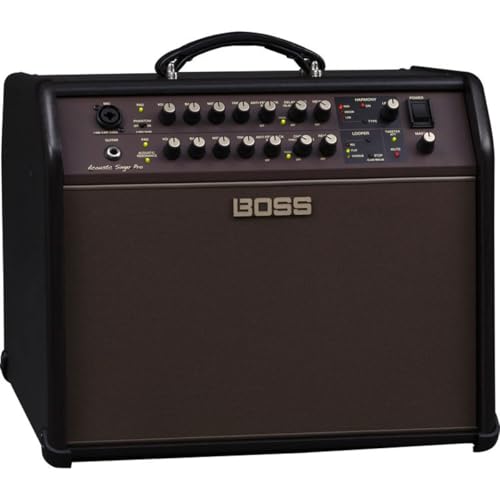
- 120-watt bi-amp design
- Built-in vocal harmony and looper
- Independent anti-feedback controls
Best For: Acoustic performers using harmony and looping
Best for a Simple Mic-and-Guitar Setup

- 40-watt output
- Front-panel instrument and XLR mic inputs
- Instrument-channel reverb
Best For: Straightforward singer-songwriter setups
Best for Active Performers
Fishman Loudbox Artist Bluetooth 120W

- 120W bi-amplified acoustic power
- Bluetooth backing-track playback
- Phantom power and balanced XLR outputs
Best For: Performers needing flexible vocal-and-guitar controls
Best for Quiet Practice
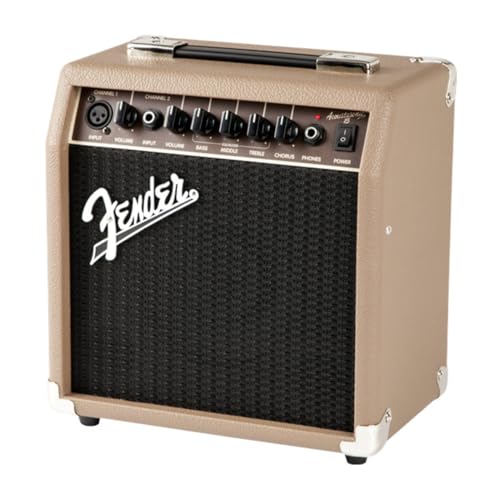
- 15W compact combo amp
- Instrument and XLR mic inputs
- Headphone output for silent practice
Best For: Singer-songwriters who value portability and practice features
Best Mid-Power Option

- 60W, two-channel design
- Bluetooth and auxiliary inputs
- Reverb, chorus, and D.I. output
Best For: Acoustic sets needing mic, guitar, and accompaniment inputs
Best for Multi-Performer Busking – Coolmusic BP60D 120W
For performers comparing vocal and guitar combo amps for busking or small outdoor shows, the battery-powered BP60D offers 120W output, dual 8-inch woofers, and inputs for microphones, instruments, and backing tracks.
Best For: Small groups that need several live inputs and flexible recording or sound-system connections away from wall power.
Pros:
- Rechargeable battery is rated for 6–8 hours of play.
- Microphone input with 48V phantom power; separate vocal and instrument tone and effect controls.
- Record, headphone, DI out, and effects-loop connections add routing options.
Cons:
- At 9.0 kg, it is substantial to carry despite the integrated handle.
- Battery runtime depends on use, so longer events may require external power.
The BP60D stands out when input capacity and connection options matter more than packing light. Its channel controls also make it easier to balance a guitar and vocals during a shared set.
Best for Simple Band Setups – Coolmusic BP80 100W
The Coolmusic BP80 is a practical option among vocal and guitar combo amps when a small group needs to connect two instruments, two microphones, and playback devices. Its 100W rating and rechargeable operation suit rehearsals or performances where an outlet is not always available.
Best For: Small bands wanting multiple inputs, basic EQ control, and Bluetooth playback in one amplifier.
Pros:
- Six inputs accommodate instruments, microphones, and auxiliary sources.
- Independent three-band EQ adjustments help balance connected sources.
- 48V phantom power supports condenser microphones; the battery is rated for up to 6–8 hours.
Cons:
- A full charge takes about five hours.
- Its single 8-inch woofer and 3-inch tweeter differ from the multi-driver layouts of the BP40D and BP60D.
Choose the BP80 if straightforward multi-source mixing is the priority. Bluetooth, USB, headphone, and DI connections give it useful flexibility without making effects its main selling point.
Best for Portable Practice – Coolmusic BP40D 80W
Among vocal and guitar combo amps for practice and small-group use, the Coolmusic BP40D pairs an 80W amplifier with a rechargeable battery and Bluetooth accompaniment. Its six-input layout can accommodate two instruments, two microphones, and two auxiliary sources.
Best For: Musicians who want battery-powered guitar-and-vocal practice with room for additional players or playback sources.
Pros:
- Dual 6.5-inch woofers and dual 2-inch tweeters provide a four-driver setup.
- 48V phantom power supports condenser microphones.
- Battery is rated for 6–8 hours, depending on volume; Bluetooth enables accompaniment playback.
Cons:
- Its 80W rating is lower than the BP80 and BP60D models in this roundup.
- Charging takes about five hours.
The BP40D makes sense if you value a rechargeable, 7.2 kg amp with multiple inputs more than maximum listed wattage. It can also run from an electrical connection when battery power is unnecessary.
Best for Solo Vocal Effects – BOSS Acoustic Singer Live
BOSS ACS-Live Combo Amplifier for Acoustic Guitar and Vocals | The Acoustic Stage Amp Redefined
Check Price On AmazonThe BOSS Acoustic Singer Live targets performers who want more than basic amplification from vocal and guitar combo amps. Its 60W bi-amp design combines dedicated guitar and microphone channels with automatic vocal harmony, a looper, and channel-specific effects.
Best For: Solo acoustic singer-guitarists who want built-in harmony, looping, and control over their stage sound.
Pros:
- Automatic vocal harmony follows the guitar input’s key and chords.
- Three-band EQ and anti-feedback controls are provided for each channel.
- Two assignable XLR DI outputs offer flexible routing to a sound system.
- Guitar chorus, microphone delay/echo, and independent reverb expand performance options.
Cons:
- Requires wall power rather than offering battery operation.
- Its two-channel setup is less suited to connecting a larger group than the multi-input Coolmusic models here.
If your set revolves around one guitar and one voice, the harmony, looper, and routing features are compelling. The trade-off is a corded, 12 kg amp rather than a battery-powered multi-input unit.
Best for Bluetooth Backing Tracks – Fender 100W Acoustic Guitar Amp
Among vocal and guitar combo amps, this 100-watt Fender is a practical choice if you want to plug in a microphone and acoustic guitar while streaming backing tracks over Bluetooth. Its two channels accommodate an instrument or microphone, and the 8-inch full-range speaker uses a whizzer cone for added clarity.
Best For: Singer-songwriters who want two input channels and Bluetooth playback in one amp.
Pros:
- 100 watts of output.
- Two channels designed for instrument or microphone use, with built-in effects.
- Bluetooth wireless streaming and a two-year limited warranty.
Cons:
- Requires an electrical outlet.
- No built-in looper or vocal harmony feature is listed.
The appeal is its straightforward mix of mic-and-guitar flexibility, effects, and wireless playback; choose it when those conveniences matter more than specialized performance tools.
Best for Live Performance Tools – BOSS Acoustic Singer Pro
If you want vocal and guitar combo amps with performance features built in, the 120-watt BOSS Acoustic Singer Pro stands out. Its separate guitar and mic channels each have three-band EQ, while the mic channel accepts an XLR or quarter-inch connection and provides phantom power.
Best For: Performing acoustic musicians who want vocal harmonies, looping, and detailed control from one amp.
Pros:
- 120-watt bi-amp design with an 8-inch woofer and dome tweeter.
- Automatic vocal harmony and an integrated looper.
- Independent anti-feedback controls and flexible dual XLR DI outputs.
- Channel-specific effects, including guitar chorus, mic delay or echo, and independent reverb.
Cons:
- Requires an electrical outlet.
- Bluetooth streaming is not listed among its features.
This is the feature-rich option for performers who will use its harmony, looping, and routing capabilities; for simpler amplification, much of that control may be unnecessary.
Best for a Simple Mic-and-Guitar Setup – Fender Acoustasonic 40
For shoppers comparing vocal and guitar combo amps without needing an extensive effects setup, the 40-watt Fender Acoustasonic offers front-panel inputs for an instrument and an XLR microphone. The instrument channel includes reverb, and Fender describes a whizzer cone designed to add clarity.
Best For: Singer-songwriters seeking a straightforward, portable amp with dedicated mic and instrument inputs.
Pros:
- Separate front-panel quarter-inch instrument and XLR microphone inputs.
- Built-in reverb on the instrument channel.
- 40-watt output and a two-year limited warranty.
Cons:
- Requires an electrical outlet.
- Bluetooth streaming and vocal harmony are not listed.
Its strength is an uncomplicated way to amplify guitar and vocals together. The supplied specifications conflict on speaker configuration, so confirm that detail with the seller if it affects your decision.
Best for Active Performers – Fishman Loudbox Artist Bluetooth 120W
Among vocal and guitar combo amps, the Fishman Loudbox Artist Bluetooth is a strong fit for performers who want substantial acoustic power and dedicated tools for a microphone-and-guitar setup. Its 120-watt bi-amplified design pairs with Bluetooth for adding backing tracks.
Best For: Active acoustic performers who need vocal and instrument amplification, effects, and flexible output options.
Pros:
- 120 watts of bi-amplified acoustic power.
- Phantom power and balanced XLR outputs support versatile performance setups.
- Tone and feedback controls, dual effects, and Bluetooth accompaniment.
Cons:
- At 29.5 pounds, it is the heaviest amp in this roundup.
- Requires corded power.
Choose the Loudbox Artist when performance controls and output flexibility matter more than minimizing weight. Its footswitch input also allows remote channel muting or control of select effects.
Best for Quiet Practice – Fender Acoustasonic 15
The Fender Acoustasonic 15 is a compact choice among vocal and guitar combo amps for players who want to connect an instrument and microphone without hauling a larger amp. Its 15-watt design and headphone output suit practice and easy transport.
Best For: Singer-songwriters practicing at home or seeking a lightweight amp for simple setups.
Pros:
- Separate front-panel instrument and XLR microphone inputs.
- Headphone output allows silent practice.
- 13-pound design is easy to carry.
Cons:
- 15-watt output is the lowest in this roundup.
- Requires corded power.
The Acoustasonic 15 prioritizes portability and straightforward mic-and-guitar connections over higher output. Its six-inch speaker also uses Fender’s supplementary whizzer cone.
Best Mid-Power Option – Fishman Loudbox Mini BT 60W
The Fishman Loudbox Mini BT sits between the other vocal and guitar combo amps here on power, offering 60 watts and two channels. A microphone input, quarter-inch instrument input, and Bluetooth connectivity make it a practical option for acoustic sets with accompaniment.
Best For: Acoustic players who want a two-channel mic-and-guitar amp with Bluetooth without stepping up to 120 watts.
Pros:
- Two channels with microphone and instrument inputs.
- Bluetooth plus quarter-inch and eighth-inch auxiliary inputs for accompaniment.
- Reverb, chorus, phase control, and a D.I. output.
Cons:
- Offers half the rated wattage of the Loudbox Artist.
- Requires corded power.
The Mini BT balances useful performance connections with moderate output. Check the listed weight before buying, as the supplied specifications give conflicting figures of 21.2 and 24.3 pounds.
How We Picked These Vocal and Guitar Combo Amps
We focused on acoustic-oriented combos that could plausibly serve a singer-guitarist, then compared their listed inputs, controls, portability, power options, and intended use. A guitar input alone does not make an amp suitable for vocals: check that the specific model has a microphone-compatible input and the controls you need. Manufacturer wattage figures can help identify a product’s general class, but they do not predict how loud or clear it will sound in your room.
Quick Comparison by Use
For home practice and easy transport, start with compact models such as the Fender Acoustasonic 15 or 40. For playing away from an outlet, compare the battery-powered Coolmusic BP40D, BP60D, and BP80; check the battery setup and runtime before committing. If you mainly perform near an outlet and want more room to work with vocals and guitar, compare the BOSS Acoustic Singer Live and Pro, Fender Acoustic 100, and Fishman Loudbox Artist and PRO-LBT-500. Match the amp to your usual venue rather than buying by wattage alone.
Key Buying Factors for Vocal and Guitar Combo Amps
Inputs and Independent Control
Look for separate mic and instrument channels if you plan to sing and play at the same time. Confirm the mic connection type, whether a condenser mic requires phantom power, and whether each channel has its own volume and tone or effects controls. If you perform with another musician, count the inputs you will actually use—not just the number advertised.
Sound, Volume, and Feedback
Clear vocals and a natural acoustic-guitar sound matter more than a long effects list. Reverb can help both sources; chorus or delay may be useful for guitar, but separate effects settings offer more flexibility. Consider how much clean volume you need before feedback becomes a problem, especially if you stand close to the amp. Placement and a microphone’s pickup pattern also affect the result.
Power and Connections
Battery power is valuable for outdoor sets or rooms with awkward outlets, but check expected runtime at your playing level. For plugged-in gigs, look for the outputs you need to connect to a PA or recorder, plus a practical way to carry and position the amp. Bluetooth playback is handy for backing tracks, but it is not a substitute for a live mic input.
Who Should Buy Which Vocal and Guitar Combo Amps?
Choose a compact combo for quiet practice and occasional low-volume sets, provided its mic input meets your needs. Choose a battery-powered model if outlet-free performance is the priority. For regular solo gigs, prioritize separate channel control, dependable connections, and enough clean volume for the space. If you frequently play with a full band or need to cover a large audience, plan on a PA rather than expecting a single combo amp to do every job.