A noisy office can make concentration difficult, especially when footsteps, rolling chairs, equipment, or nearby conversations travel through the floor and walls. The right soundproofing solution can help reduce vibration, soften reflected sound, and make a workspace more comfortable.
Our selection includes interlocking felt mats, acoustic foam panels, absorption tiles, and mass-loaded vinyl. Use the guide below to match the material, coverage, and installation method to your office’s specific noise problem.
Best 10 Soundproofing Mats for Offices Picks for 2026
Soft-Floor Office Quieting
Interlocking Felt Carpet Tiles

- Dampens ambient noise and vibrations
- Protects hardwood and tile floors
- 24 tiles cover up to 24 sq. ft.
Best For: Home offices and chair areas needing warm, customizable floor coverage
Echo Control for Workspaces
BXI Acoustic Absorption Panels

- Reduces echo and reverberation
- Mounts on walls or ceilings
- Six panels cover about 7.7 sq. ft.
Best For: Offices and conference rooms needing clearer, less reverberant sound
Vibration-Resistant Floor Coverage
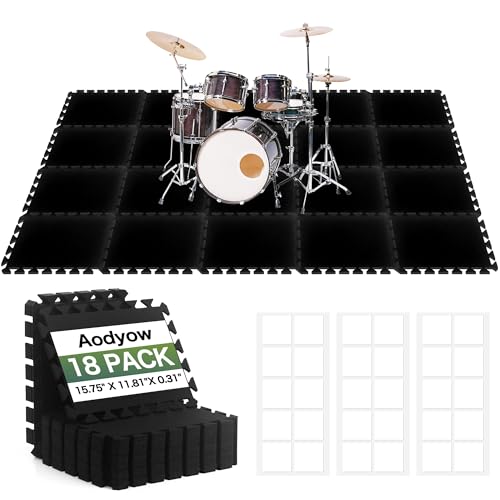
- Absorbs impacts and floor vibrations
- Interlocking, cuttable design
- Includes 50 removable adhesive strips
Best For: Office equipment areas and flexible studio-style workspaces
Best Wall Coverage

- 12-pack covers about 12 sq. ft.
- Peel-and-stick installation
- Decorative 3D brick polyester design
Best For: Office walls and recording spaces needing broad, easy-to-install absorption
Best for Large Wall Projects

- 50 one-inch acoustic foam panels
- Includes 300 adhesive pieces
- Targets echo, reverb, and flutter echoes
Best For: Large office walls, studios, and voice-focused rooms
Flexible Coverage Pick

- Covers up to 17 sq. ft.
- Interlocking, expandable design
- Includes removable anti-slip tape
Best For: Customizable coverage in meeting rooms, classrooms, and home offices
Large-Area Value Pick

- Covers 20.24 sq. ft.
- NRC rated at 0.7
- Cuttable panels with anti-slip tape
Best For: Broader indoor office zones and equipment areas
Highest Absorption Pick

- 0.4-inch thick panels
- Listed NRC of 0.87
- Dense, interlocking polyester felt
Best For: Targeted office areas where stronger stated absorption matters
Soft-Floor Office Quieting – Interlocking Felt Carpet Tiles
For offices that need gentler footfall and chair noise control without committing to permanent flooring, these interlocking felt tiles are a practical option among soundproofing mats for offices. Their 0.3-inch polyester-felt construction helps absorb ambient noise and vibrations while protecting hardwood or tile floors.
Best For: Home offices, desk-chair areas, and renters seeking a warm, customizable floor covering.
Pros:
- High-density felt helps dampen ambient noise and vibrations.
- Protects floors from rolling-chair scuffs and scratches.
- Tool-free interlocking design can be cut to fit corners.
- 24 tiles cover up to 24 square feet.
Cons:
- Designed more for floor-level absorption than wall or ceiling sound isolation.
- Felt may be less suitable for heavy gym equipment than rubber flooring.
The dark-gray finish and removable puzzle format make this a flexible office-floor solution. Choose it when comfort, floor protection, and modest noise reduction matter more than structural sound blocking.
Structural Sound Blocking – TroyStudio Mass Loaded Vinyl
When office noise travels through walls, ceilings, doors, or floors, this flexible mass-loaded vinyl is a more construction-oriented choice among soundproofing mats for offices. Its 1 lb./sq. ft. density adds mass to assemblies, while the damping rubber layer helps reduce vibration.
Best For: Office renovation projects targeting walls, ceilings, doors, floors, HVAC components, or other structures.
Pros:
- Dense 1 lb./sq. ft. barrier helps block sound when installed in an assembly.
- Flexible 1/8-inch profile saves space compared with thicker materials.
- Rubber component helps control vibration.
- Cuttable and compatible with adhesive, screws, or roofing nails.
Cons:
- The 1 x 8-foot roll covers only 8 square feet.
- Requires installation, sealed seams, and suitable construction materials.
- Not a ready-to-use loose floor mat.
This is the strongest fit for an office soundproofing build rather than a quick floor upgrade. Proper attachment and sealed joints are important to achieve the intended barrier performance.
Echo Control for Workspaces – BXI Acoustic Absorption Panels
For open offices, conference rooms, and workspaces where speech echo is the main problem, these polyester panels provide a wall- or ceiling-mounted approach to soundproofing mats for offices. They are designed to absorb sound energy, reduce reverb, and improve room clarity rather than block noise passing through a wall.
Best For: Offices, podcast rooms, conference spaces, and studios needing less echo and reverberation.
Pros:
- High-density polyester fiber absorbs sound energy.
- Designed to reduce echo, reverb, and mid-to-high-frequency noise.
- Six panels cover approximately 7.7 square feet.
- Cuttable and mountable with construction adhesive or compatible double-sided tape.
Cons:
- Mounting supplies are sold separately.
- Absorption panels do not provide the same structural blocking as mass-loaded vinyl.
- Coverage is limited to about 7.7 square feet per pack.
These panels are a sensible choice when office conversations sound harsh or rooms feel reverberant. Use them as acoustic treatment, especially on walls or ceilings, rather than as a standalone barrier against external noise.
Vibration-Resistant Floor Coverage – Interlocking Felt Sound Mats
These interlocking felt pads suit offices where equipment, chairs, or nearby music-making create floor vibration and impact noise. As soundproofing mats for offices, they combine a 0.3-inch high-density felt surface with a puzzle layout that provides removable coverage and helps keep equipment in place.
Best For: Office equipment areas, studio-style workspaces, chair zones, and rooms shared with music or exercise equipment.
Pros:
- High-density felt helps absorb impacts, echoes, and floor vibrations.
- Interlocking design creates a flat, customizable surface.
- Includes 50 removable double-sided adhesive strips for added slip resistance.
- Can be cut with a utility knife and stacked for storage.
Cons:
- Coverage dimensions are smaller and irregularly shaped than a conventional large rug.
- Felt is not the same as a heavy structural sound barrier.
- Adhesive strips may be unnecessary or unsuitable for some flooring.
The 18-piece set is particularly useful when you need movable floor treatment around chairs, speakers, instruments, or equipment. It offers practical impact and vibration control while remaining easier to rearrange than permanently installed materials.
Best Wall Coverage – Brick Acoustic Panels
For offices that need broad wall treatment, these soundproofing mats for offices are adhesive-backed polyester acoustic panels designed to reduce echoes and absorb noise. Each 12-pack covers about 12 square feet and can be installed on walls, doors, windows, or ceilings without separate tape or spray adhesive.
Best For: Office walls, home studios, recording spaces, and rooms where a decorative brick texture is preferred.
Pros:
- Peel-and-stick installation requires no extra adhesive.
- High-density polyester construction is rated with an NRC above 0.95 in the supplied specifications.
- Brick-style design combines acoustic treatment with office decor.
- Odorless, non-toxic, and made from 100% polyester.
Cons:
- Each panel is only 0.4 inches thick, so it is primarily suited to sound absorption rather than complete sound blocking.
- One pack covers approximately 12 square feet, which may require multiple packs for larger offices.
This is a practical choice when wall coverage and simple installation matter most. Its peel-and-stick format and decorative finish make it easier to integrate into an office than bulkier acoustic treatments.
Best Floor Treatment – Interlocking Acoustic Floor Mats
These soundproofing mats for offices are designed for floors rather than walls, using high-density felt to cushion foot traffic, dampen vibration, and reduce reverb or echo. The interlocking 24-piece layout can cover up to 20.5 square feet and can be rearranged or stored when needed.
Best For: Office floors, music rooms, home gyms, instrument areas, and workspaces where vibration or impact noise is a concern.
Pros:
- Interlocking pieces create a flat, wrinkle-free surface when assembled correctly.
- High-density felt helps cushion floors and isolate instrument vibrations.
- Removable double-sided tape is included for additional non-slip support.
- Mats detach, stack, and store relatively easily.
Cons:
- Coverage is limited to a maximum of about 20.5 square feet per 24-piece set.
- The 0.3-inch thickness may provide less cushioning than thicker gym or industrial flooring.
- These mats target floor vibration and impact noise rather than wall or airborne-noise treatment.
Choose this set when the main problem is noise transmitted through a hard floor. Its modular format is especially useful for offices with movable equipment, instruments, or areas that need occasional reconfiguration.
Best for Large Wall Projects – Focusound Wedge Foam Panels
For offices that need extensive spot treatment, this 50-pack of one-inch acoustic foam panels provides triangular wedge surfaces to help absorb unwanted echoes, reverb, and flutter echoes. The included 300 pieces of double-sided adhesive support installation in home offices, recording areas, and other controlled spaces.
Best For: Large office wall projects, recording studios, vocal booths, control rooms, and computer or server rooms.
Pros:
- Fifty 12-by-12-inch panels offer substantial panel quantity for larger treatment plans.
- Triangular groove structure helps address echoes, waves, reverb, and flutter echoes.
- Includes 300 pieces of double-sided adhesive for installation.
- Supplied notes cite fire resistance, air permeability, and non-toxic materials.
Cons:
- Adhesive installation may still require careful wall preparation and placement.
- Foam panels are intended to improve room acoustics and reduce echoes, not fully block outside noise.
- The wedge appearance may be less decorative than flat or brick-style office panels.
This pack is a strong fit when quantity and targeted echo control are more important than a polished decorative finish. It offers enough pieces to treat a larger area or build a more selective acoustic layout.
Flexible Coverage Pick – 20-Piece Felt Puzzle Mats
For offices that need adaptable soundproofing mats for offices, this 20-piece high-density felt set offers a simple way to cushion hard floors and reduce reverb from foot traffic. The interlocking design can cover up to 17 square feet and can be expanded with additional sets.
Best For: Meeting rooms, classrooms, home offices, and other spaces needing customizable floor coverage.
Pros:
- Interlocking pieces assemble and disassemble quickly.
- High-density felt helps absorb sound and dampen vibrations.
- Includes 48 removable double-sided tape pieces for added stability.
- Muted black finish suits many office interiors.
Cons:
- Maximum coverage is about 17 square feet per set.
- These mats are intended for indoor use and may require multiple sets for larger offices.
This is a practical choice when flexible sizing matters more than covering an entire room with one purchase. Its puzzle format makes it especially convenient for targeted areas beneath desks, equipment, or high-traffic zones.
Large-Area Value Pick – 24-Piece Polyester Felt Mats
These soundproofing mats for offices provide 20.24 square feet of interlocking coverage, making them useful when you want to cover a broader floor area with one set. Their 0.32-inch polyester felt construction is designed to absorb room sound and reduce vibration beneath office furniture or equipment.
Best For: Larger office zones, open work areas, home gyms, and spaces with treadmills or other vibration-producing equipment.
Pros:
- 24 panels provide approximately 20.24 square feet of coverage.
- Listed NRC of 0.7 and average absorption coefficient of 0.75.
- Interlocking structure creates a flat, wrinkle-free surface.
- Panels can be cut with a knife and include removable double-sided tape.
Cons:
- At 0.32 inches, these are thinner than the 0.4-inch option in this roundup.
- Not water resistant, so they are best suited to dry indoor areas.
The combination of broad coverage, cuttable panels, and stated acoustic ratings makes this a versatile option for offices that need floor cushioning across a defined zone. It is also a sensible fit where equipment vibration is part of the noise problem.
Highest Absorption Pick – 16-Piece Thick Felt Mats
For offices prioritizing thicker, denser flooring, this set uses 0.4-inch polyester felt panels with a listed NRC of 0.87. The interlocking mats are designed to absorb sound energy, reduce echo, and dampen vibrations while adding a cushioned layer over hard floors.
Best For: Smaller office areas, conference rooms, studio-office spaces, and locations where stronger stated sound absorption is a priority.
Pros:
- 0.4-inch thickness and 150 kg/m³ high-density felt construction.
- Listed NRC of 0.87 and average absorption coefficient of 0.78.
- Interlocking panels provide a flat, non-slip surface.
- Panels can be cut with a knife and secured with removable tape.
Cons:
- The 16-piece set provides less coverage than the 24-piece alternative.
- Its gray color may not suit every office design.
This is the strongest candidate here when acoustic performance specifications and added thickness outweigh total coverage. Choose it for a targeted office area rather than a large open floor, unless you plan to combine multiple sets.
How We Picked the Best Soundproofing Mats for Offices
We focused on products that can address common office noise issues without requiring a major renovation. The selection includes floor mats for footsteps, chair movement, exercise equipment, and vibration; wall-mounted acoustic panels for echo and reverberation; and mass-loaded vinyl for adding a dense sound barrier to walls, floors, doors, or enclosures.
We also considered coverage, thickness, installation style, surface grip, material density, flexibility, and practical use in home offices, meeting rooms, studios, and shared workspaces. Because absorption and sound blocking solve different problems, the list includes both surface treatments and barrier materials.
Quick Comparison
- Best for floor noise: Interlocking felt mats with non-slip or anti-vibration construction.
- Best for echo: Acoustic foam or high-density wall panels.
- Best for blocking transmitted sound: Mass-loaded vinyl, installed as part of a wall, floor, door, or equipment assembly.
- Best for flexible coverage: Puzzle-style tiles that can be expanded, rearranged, or trimmed.
- Best for large areas: Larger multi-piece packs, provided the stated dimensions cover the intended workspace.
Key Buying Factors for Soundproofing Mats for Offices
Identify the Noise Path
Floor mats are most useful when the problem involves impact noise, vibration, or equipment contact with the floor. If the main issue is speech or room echo, wall-mounted acoustic panels are usually more appropriate. For noise passing through a partition, a dense barrier such as mass-loaded vinyl may be the better choice.
Check Thickness and Density
Thickness alone does not determine performance. Denser materials generally provide better vibration control or blocking, while porous panels are designed primarily to absorb reflected sound. Compare dimensions and construction rather than assuming a thicker-looking product will solve every noise issue.
Measure Coverage and Installation
Calculate the area beneath desks, chairs, instruments, or equipment before ordering. Interlocking tiles are convenient for irregular layouts and future expansion. Adhesive-backed panels install quickly but may be difficult to reposition, while loose mats offer more flexibility.
Consider Office Safety and Appearance
Choose a stable, non-slip surface in areas with rolling chairs or frequent foot traffic. Also check whether edges sit flat, the material is easy to clean, and the color or texture suits a professional workspace. Follow the manufacturer’s installation and ventilation guidance for foam or adhesive products.
Who Should Buy Which Soundproofing Mats for Offices?
Choose interlocking floor mats for home offices, music practice areas, standing desks, and equipment that creates vibration or impact noise. They are easy to configure and can protect the floor while reducing some transmitted noise.
Choose acoustic wall panels or foam for offices with noticeable echo, hard surfaces, video-call reflections, or distracting speech reverberation. These products improve room acoustics but should not be treated as complete sound isolation.
Choose mass-loaded vinyl when sound is traveling through a wall, door, ceiling, or floor assembly and you can install a layered barrier system. It is less decorative and more installation-intensive, but its density makes it useful for sound-blocking projects.