Thick soundproofing mats can help reduce vibration, soften reflected sound, and make noisy spaces more comfortable. The right choice depends on whether you need floor coverage, automotive deadening, or a barrier for walls and partitions.
We compare 10 options across interlocking acoustic mats, butyl sheets, mass-loaded vinyl, and sound-absorbing panels so you can match thickness, coverage, installation, and intended use to your project.
Best 10 Thick Soundproofing Mats Picks for 2026
Best Budget-Friendly Acoustic Tiles
0.4-Inch Interlocking Floor Mats

- 0.4-inch high-density polyester felt panels
- NRC 0.87 for sound absorption
- Interlocking, cuttable, and tape-assisted installation
Best For: Instrument areas, home gyms, offices, and hardwood floors
Best Peel-and-Stick Automotive Option
80-Mil Butyl Sound Deadening Mat

- 36 square feet of vehicle coverage
- Three-layer foil, butyl, and adhesive construction
- Waterproof and rated from -50°F to 300°F
Best For: DIY car doors, trunks, and interior panels
Best for Maximum Floor Absorption
0.5-Inch Interlocking Acoustic Mats

- 0.5-inch high-density polyester felt
- NRC 0.91 for strong sound absorption
- Interlocking panels with included removable tape
Best For: Music studios, instruments, treadmills, and home gyms
Best Heavy-Duty Automotive Coverage

- 197-mil three-layer automotive material
- 30 sheets measuring 17 by 13 inches
- Designed for road noise, vibration, and rattles
Best For: Large DIY vehicle interior sound-deadening projects
Best Modular Floor Coverage
High-Density Felt Interlocking Mats

- 20 interlocking pieces cover up to 17 sq. ft.
- 0.4-inch felt cushions floors and dampens vibration.
- Expandable design includes removable double-sided tape.
Best For: Gyms, playrooms, studios, and protected hard-floor areas
Best for Echo Control
BXI High-Density Acoustic Panels

- Six 0.4-inch panels cover 7.7 sq. ft.
- High-density polyester helps reduce echo and reverb.
- Cuttable and suitable for wall or ceiling treatment.
Best For: Studios, gaming rooms, podcasts, and home theaters
Best for Larger Instrument Areas
18-Piece Felt Soundproofing Mat Set
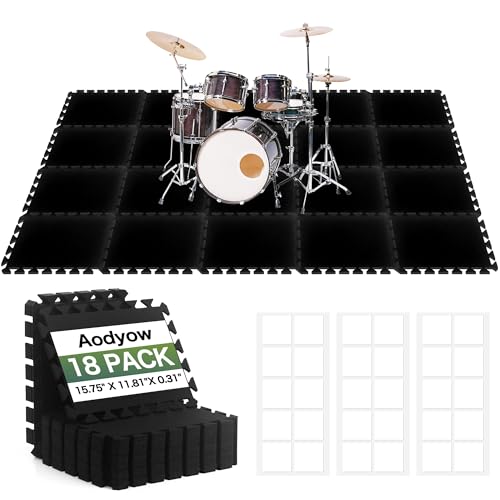
- 18 interlocking 0.3-inch felt panels
- Helps absorb echoes and instrument vibration
- Cuttable, removable, and easy to store
Best For: Drums, pianos, studios, and home gyms
Best Space-Saving Value
20-Piece Interlocking Acoustic Floor Mats
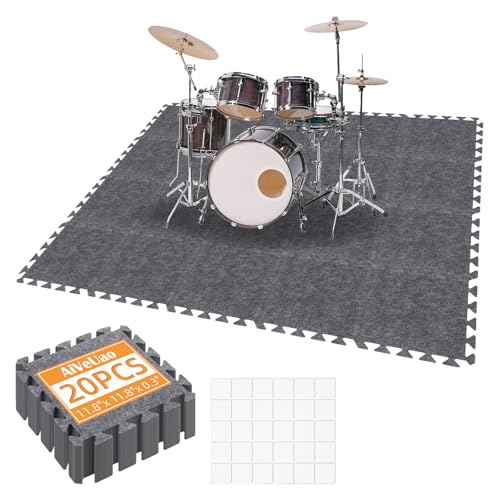
- Covers up to 17 square feet
- High-density felt cushions floors and dampens vibration
- Detaches and stacks for compact storage
Best For: Small studios, home gyms, offices, and playrooms
Best Measured Acoustic Performance
TroyStudio 24-Piece Felt Mat Set

- NRC 0.7 and average absorption coefficient 0.75
- 24 panels fit a 4-by-6-foot drum mat
- 0.32-inch cuttable, interlocking polyester felt
Best For: Drums, pianos, studios, and equipment areas needing rated absorption
Best Budget-Friendly Acoustic Tiles – 0.4-Inch Interlocking Floor Mats
These thick soundproofing mats are a practical choice for reducing echo and vibration around instruments, speakers, and workout equipment. The 0.4-inch polyester felt panels interlock into a stable surface, while the included tape helps improve placement on hard floors.
Best For: Drum kits, pianos, home gyms, offices, playrooms, and hardwood floors where sound absorption and floor protection are both useful.
Pros:
- High-density felt has an NRC of 0.87 for absorbing sound energy and reducing reverb.
- Interlocking 11-by-11-inch panels create a flat, wrinkle-free surface.
- Cuttable material, removable double-sided tape, and easy-clean construction support flexible installation.
Cons:
- The 16-panel pack provides less coverage per panel than larger floor-mat formats.
- At 0.4 inches thick, it is thinner than the 0.5-inch TroyStudio alternative.
Choose this set when you want versatile acoustic floor tiles with a comfortable felt surface and straightforward installation. Its vibration-dampening design is especially well suited to smaller instrument or equipment areas.
Best Peel-and-Stick Automotive Option – 80-Mil Butyl Sound Deadening Mat
For vehicle projects, these thick soundproofing mats combine an 80-mil butyl layer with reinforced aluminum foil and adhesive backing. The sheets are designed to reduce road, engine, and wind noise while also dampening panel vibrations.
Best For: DIY car door, trunk, and interior sound-deadening projects requiring 36 square feet of coverage.
Pros:
- Three-layer construction pairs butyl vibration absorption with foil heat reflection and adhesive backing.
- 36-square-foot coverage is intended for doors and trunks on most vehicles.
- Waterproof, wear-resistant material supports use across a -50°F to 300°F working range.
- Peel-and-stick installation requires cleaning, cutting, peeling, and pressing.
Cons:
- The 80-mil thickness is less substantial than a 197-mil automotive option.
- Vehicle-focused sheets are not intended as general-purpose room floor mats.
This is a straightforward automotive choice for shoppers who prioritize broad coverage and simple installation. Its butyl core targets vibration control, while the foil layer adds heat-insulation and water-resistance properties.
Best for Maximum Floor Absorption – 0.5-Inch Interlocking Acoustic Mats
These 0.5-inch thick soundproofing mats are designed for shoppers who want enhanced absorption and vibration dampening under instruments or equipment. Dense polyester felt panels interlock for a smooth surface and can be secured with the included removable tape.
Best For: Music studios, drums, pianos, loudspeakers, treadmills, home gyms, and other areas needing thicker acoustic floor protection.
Pros:
- 0.5-inch panels use 165 kg/m³ felt density for a substantial floor layer.
- NRC 0.91 and a 0.83 average absorption coefficient support strong echo and reverb reduction.
- Interlocking construction helps create a flat, wrinkle-free installation.
- Panels are cuttable, easy to clean, and supplied with removable double-sided tape.
Cons:
- The 15-panel pack contains one fewer panel than the 16-piece version.
- The thicker construction may be more material than needed for small, low-noise spaces.
Among these floor-focused options, this model emphasizes thickness and absorption performance. It is a strong fit when reducing room reflections and isolating instrument or equipment vibrations matters more than maximizing panel count.
Best Heavy-Duty Automotive Coverage – 197-Mil Sound Deadening Mat
These thick soundproofing mats are built for automotive noise and vibration control, using 197-mil sheets with a three-layer structure. The dense foam and adhesive backing are intended to reduce road noise, panel vibration, and interior rattles across larger vehicle projects.
Best For: Car interiors, doors, floors, trunks, and other vehicle areas where thicker sound-deadening material and 45 square feet of coverage are useful.
Pros:
- 197-mil thickness provides a substantial layer for noise insulation and vibration damping.
- Three-layer construction includes aluminum foil, closed-cell foam, and strong adhesive backing.
- Thirty sheets measure 17 by 13 inches, making cutting and placement manageable.
- Top foil layer provides water resistance and thermal insulation.
Cons:
- Its thicker construction can require more space and careful fitting inside vehicle panels.
- The supplied notes list both 45-square-foot and 32-square-foot coverage, so buyers should confirm the package details before ordering.
This is the most substantial automotive mat in the group, favoring material thickness and broad coverage over minimal added weight. It suits DIY installers addressing multiple rattling or noisy areas in a vehicle.
Best Modular Floor Coverage – High-Density Felt Interlocking Mats
For shoppers comparing thick soundproofing mats for floors, this 20-piece felt set combines cushioning, sound absorption, and flexible coverage. Each 11.8-inch puzzle piece is 0.4 inches thick, and the interlocking design lets you create a customized area of up to 17 square feet.
Best For: Home gyms, playrooms, music spaces, classrooms, and other areas where floor protection and reduced footfall noise matter.
Pros:
- High-density felt helps absorb shock, reduce reverb, and dampen vibration.
- Interlocking pieces are easy to assemble, disassemble, and expand with additional sets.
- Slip-resistant construction helps protect hard floors from scratches, knocks, sweat, and fluids.
- Includes 48 pieces of removable double-sided tape for added stability.
Cons:
- The 20-piece set covers up to 17 square feet, so larger spaces may require multiple sets.
- Designed primarily for floor use rather than wall or ceiling installation.
This is a practical choice when you want thick soundproofing mats that are easy to rearrange and provide both underfoot cushioning and moderate sound absorption. Its modular format is especially useful for changing room layouts.
Best Sound Barrier – TroyStudio Mass Loaded Vinyl Sheet
This TroyStudio MLV sheet is a strong option for shoppers seeking thick soundproofing mats in a flexible barrier format. The 1/8-inch, 1-pound-per-square-foot material adds mass to walls, ceilings, floors, doors, and other structures while also helping control vibration.
Best For: Construction and retrofit sound-control projects involving walls, ceilings, doors, HVAC systems, vehicles, studios, and home theaters.
Pros:
- High-density 1 lb/sq. ft. construction is designed to block sound through added mass.
- High damping rubber component helps reduce vibration.
- Flexible, waterproof, flame-retardant, and cuttable with a utility knife.
- Nonwoven backing supports even application of construction adhesive.
Cons:
- The 1-by-8-foot sheet covers only 8 square feet.
- Effective installation requires sealing seams and joints with acoustic caulking or barrier tape.
- At 8 pounds, handling and positioning may require some planning despite the compact size.
Choose this barrier when sound control depends on adding mass inside a wall, ceiling, floor, door, or enclosure rather than simply treating room echo. Its flexible sheet format makes it adaptable, but installation details are important for minimizing gaps.
Best for Echo Control – BXI High-Density Acoustic Panels
These BXI panels suit shoppers looking for thick soundproofing mats or panels to improve room acoustics. The six 0.4-inch polyester-fiber panels cover 7.7 square feet and are designed to absorb sound energy, reduce echo and reverb, and help manage mid-to-high-frequency noise.
Best For: Recording studios, gaming rooms, home theaters, offices, podcast spaces, vocal booths, and home studios.
Pros:
- High-density 200 kg/m³ polyester fiber provides acoustic absorption.
- Listed NRC of 0.95 and average absorption coefficient of 0.86 support echo and reverb reduction.
- Panels can be cut and mounted with construction adhesive or 3M VHB tape.
- Odorless, non-toxic, formaldehyde-free, and Class B1 flame retardant.
Cons:
- The six-panel pack covers 7.7 square feet, which may be limited for larger rooms.
- Mounting adhesive or tape is sold separately.
- These panels focus on sound absorption and room treatment rather than serving as a heavy structural sound barrier.
These panels are best for controlling reflections inside a room, not for blocking all sound transmission through walls. Their matte-black appearance, cuttable construction, and strong stated absorption ratings make them a useful treatment option for recording and entertainment spaces.
Best for Larger Instrument Areas – 18-Piece Felt Soundproofing Mat Set
If you need thick soundproofing mats for a drum kit, piano, or studio setup, this 18-piece felt set offers a flexible interlocking surface. Its 0.3-inch high-density panels help absorb impact and vibration while the puzzle-style design can be customized to fit your space.
Best For: Drum kits, pianos, music studios, home theaters, treadmills, and home gyms where floor protection and vibration damping are priorities.
Pros:
- 18 panels provide a generous, customizable coverage area.
- High-density felt helps reduce echoes, reverberation, and instrument vibration.
- Interlocking panels and included adhesive strips help keep the surface in place.
- Panels can be cut, removed, stacked, and stored conveniently.
Cons:
- The individual panels are smaller than a single-piece floor mat and require assembly.
- At 0.3 inches thick, they may provide less cushioning than substantially thicker flooring.
This is a practical choice when you want broad, configurable coverage and easy storage. The interlocking layout is particularly useful for drum and piano setups that need a stable, protective surface.
Best Space-Saving Value – 20-Piece Interlocking Acoustic Floor Mats
These thick soundproofing mats create a modular 0.3-inch felt surface for instruments, exercise equipment, and hard floors. The 20-piece design covers up to 17 square feet and can be expanded or reduced to suit the area.
Best For: Smaller music areas, home gyms, offices, playrooms, and hardwood floors needing cushioning, floor protection, and basic vibration control.
Pros:
- 20 interlocking panels can cover up to 17 square feet.
- High-density felt cushions hard floors and helps reduce reverb, echo, and impact noise.
- Puzzle-style assembly creates a flat, wrinkle-free surface when properly connected.
- Panels detach and stack neatly, with removable tape included for added slip resistance.
Cons:
- The 11.8-inch panels require setup and alignment across the floor.
- The notes do not specify a noise reduction coefficient or measured absorption rating.
This set is a straightforward modular option for users who want flexible coverage without committing to a permanent installation. It balances easy storage with useful cushioning for instruments and everyday equipment.
Best Measured Acoustic Performance – TroyStudio 24-Piece Felt Mat Set
For shoppers comparing thick soundproofing mats by published performance data, this TroyStudio set lists an NRC of 0.7 and an average absorption coefficient of 0.75. The 24 interlocking polyester-felt panels form a 4-by-6-foot drum mat and add a protective, slip-resistant layer over hard floors.
Best For: Drum kits, pianos, speakers, music studios, treadmills, and home gyms where documented sound absorption and a defined coverage layout are useful.
Pros:
- 24 panels are designed to fit a 4-by-6-foot drum mat arrangement.
- Published NRC 0.7 and average absorption coefficient 0.75 provide useful performance benchmarks.
- Thickened 0.32-inch felt helps absorb sound energy and isolate instrument vibration.
- Cuttable panels, included removable tape, and easy-clean material support flexible installation.
Cons:
- The panels must be assembled to create the full mat.
- The felt is intended for indoor use and is not water resistant.
- Coverage is listed at 20.24 square feet, so larger rooms may need additional flooring.
This is the strongest pick for buyers who want a slightly thicker panel and clear acoustic specifications. Its 24-piece layout is especially convenient for building a dedicated drum or instrument area.
How We Picked the Best Thick Soundproofing Mats
We organized these products by their construction and most likely use: interlocking felt or carpet-style mats for floors, adhesive automotive sheets for panels and body cavities, mass-loaded vinyl for airborne-noise barriers, and acoustic panels for echo control. We considered stated thickness, coverage, material type, installation format, vibration control, and practical portability.
Because “soundproofing” products work differently, this list does not treat every mat as interchangeable. Absorbers reduce reflections inside a room, while dense barriers and constrained-layer materials are better suited to blocking or damping transmitted noise.
Quick Comparison
| Type | Best for | Main advantage | Installation |
|---|---|---|---|
| Interlocking floor mats | Studios, practice rooms, equipment areas | Easy coverage and repositioning | Lay and connect |
| Butyl automotive mats | Cars, doors, trunks, panels | Vibration and road-noise damping | Adhesive application |
| Mass-loaded vinyl | Walls, floors, partitions | Dense airborne-noise barrier | Cut and secure |
| Acoustic panels | Echo and reverberation control | Improves room clarity | Wall mounting |
Key Buying Factors for Thick Soundproofing Mats
Thickness and Density
Thickness alone does not determine performance. Dense materials such as butyl and mass-loaded vinyl are generally used for damping or blocking, while porous felt and foam-like materials absorb reflected sound. Check both thickness and material density when comparing products.
Coverage and Layout
Calculate the area before ordering. Interlocking pieces are convenient for irregular spaces and can be replaced individually, but many small tiles create more seams. Sheet products cover large areas faster and may be easier to use beneath flooring or behind panels.
Installation and Compatibility
Look for non-slip backing or interlocking edges when the mat will remain exposed. Automotive sheets typically require clean, warm surfaces and firm rolling for proper adhesion. Mass-loaded vinyl may need mechanical fasteners, seams, and additional support because of its weight.
Noise Problem
For footfall, equipment vibration, and drumming, prioritize resilient floor coverage. For vehicle panel resonance, choose automotive damping sheets. For voices or machinery passing through a wall, a dense barrier and sealed installation usually matter more than a soft absorbing mat.
Who Should Buy Which Thick Soundproofing Mats?
- Musicians and practice-room users: Choose interlocking floor mats for a removable layer beneath drums, keyboards, amplifiers, or other equipment.
- Vehicle owners: Use adhesive butyl sound-deadening mats on suitable metal panels to target vibration and road noise.
- Home studio and office users: Consider acoustic panels when the main issue is echo, reverb, or speech clarity rather than sound traveling through a wall.
- Construction and remodeling projects: Choose mass-loaded vinyl when you need a heavy barrier integrated into a wall, ceiling, floor, or partition assembly.
- Renters and temporary setups: Favor lightweight, non-permanent interlocking mats that can be installed without drilling or adhesive.
Before buying, confirm dimensions, total coverage, backing details, odor expectations, and whether the product is intended for exposed floors, vehicle interiors, or concealed construction assemblies.