A comfortable home theater needs more than a large screen and powerful speakers. Floor-borne vibration, room reflections, and noise from adjoining spaces can distract from movies and music.
These 10 soundproofing mats for home theaters include cork underlayment, interlocking felt pads, acoustic foam, and heavy-duty sound-dampening blankets. Use the guide below to match the material and coverage to your room, floor type, and noise problem.
Best 10 Soundproofing Mats for Home Theaters Picks for 2026
Best Floor Vibration Control
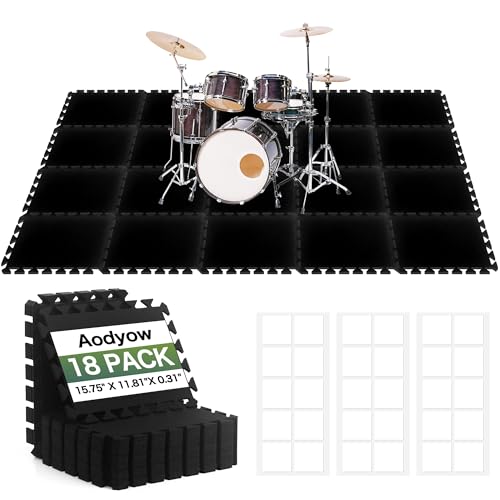
- 18 modular felt panels
- Absorbs impact and vibration
- Cuttable, stackable design
Best For: Equipment areas, hard floors, and vibration-prone home theater setups
Flexible Floor Coverage
Interlocking Felt Soundproof Mats

- 20 puzzle pieces cover up to 17 sq. ft.
- Helps reduce footfall shock and reverb
- Expandable, non-slip modular design
Best For: Home theaters and hard-floor spaces needing cushioning and vibration dampening
Large-Format Wall Treatment
Focusound Acoustic Foam Panels

- Fifty 12-by-12-inch panels provide broad coverage
- Wedge grooves reduce echo and reverberation
- Includes 300 pieces of installation adhesive
Best For: Wall-based acoustic treatment in theaters, studios, and offices
Compact Media-Room Upgrade
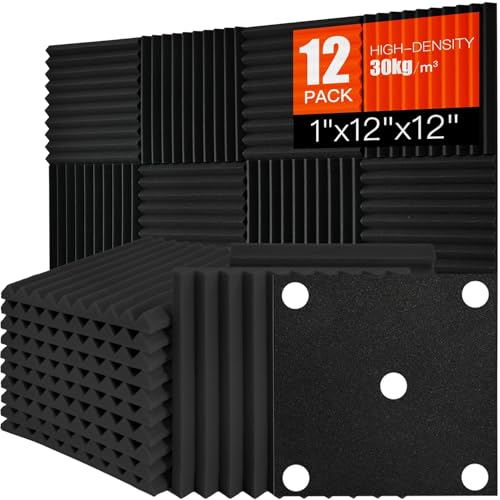
- Twelve panels cover 12 square feet
- Wedge foam helps manage reflections and echo
- Works on walls, doors, or ceilings
Best For: Small home theaters, gaming rooms, and targeted acoustic treatment
Best Floor Underlayment – TroyStudio Acoustic Cork Roll
For home theaters where footsteps, chair movement, and dropped objects are the main concern, this natural cork roll is a practical option among soundproofing mats for home theaters. Its 3mm honeycomb cork structure provides a resilient layer beneath many flooring types, helping reduce impact transmission while also smoothing minor subfloor imperfections.
Best For: Home theater floors, recording studios, and rooms needing an underlayment beneath laminate, wood, tile, vinyl, or similar flooring.
Pros:
- Provides 40.5 square feet of coverage in one roll.
- Natural cork is moisture- and mold-resistant and offers thermal insulation.
- Can be cut with a utility knife and installed by glue-down or loose-lay methods.
- Helps reduce impact noise from footsteps, moving chairs, and dropped objects.
Cons:
- A vapor barrier is required over concrete subfloors.
- Not recommended for high-moisture areas such as basements and bathrooms.
- At 1/8 inch thick, it is primarily an underlayment rather than a standalone room treatment.
This is the strongest fit when your theater’s noise problem travels through the floor. It is less suitable if you need to control wall reflections or airborne echo inside the room.
Best for Echo Control – Black/Blue Wedge Acoustic Foam Tiles
These wedge-shaped foam tiles are designed for controlling reflections rather than isolating a theater from outside noise. For shoppers comparing soundproofing mats for home theaters, they can help reduce flutter echo, reverberation, and excess reflections on walls or other suitable surfaces.
Best For: Home theaters, listening rooms, karaoke spaces, and studios where vocal clarity and reduced mid- and high-frequency echo matter.
Pros:
- Wedge texture helps absorb sound and reduce excess reflections.
- Peel-and-stick installation requires no tools.
- Each 12-by-12-by-1-inch panel can be installed in about 1–2 minutes.
- Black/blue coloring adds a studio-style visual treatment.
Cons:
- The supplied notes describe absorption of medium and high frequencies, not full sound isolation.
- The listing notes 52 panels in the package description while the title says 96 pack, so package quantity should be confirmed before ordering.
- Foam tiles are intended for reflection and echo control rather than floor impact reduction.
Choose these for improving the room’s internal acoustics and reducing noticeable echo. Pair them with proper placement and other treatments if your goal is to limit bass transmission or sound escaping the theater.
Best for Equipment Vibration – Interlocking Felt Floor Mats
These interlocking felt mats suit home theaters that need localized protection beneath subwoofers, chairs, or other equipment. While not a full-room barrier, their 0.4-inch high-density felt construction can help absorb vibration and impact while keeping gear more stable on the floor.
Best For: Subwoofers, music equipment, office chairs, exercise equipment, and small theater areas where floor vibration and sliding are concerns.
Pros:
- High-density felt helps absorb impacts and vibration through the floor.
- Interlocking puzzle design helps keep mats flat and equipment in place.
- Panels can be trimmed with a utility knife and stored flat when not in use.
- Non-toxic, odorless, and stain-resistant felt protects floors from scratches.
Cons:
- The 20-piece set provides localized coverage rather than a complete theater floor.
- Interlocking mats may require extra trimming around furniture and equipment.
- They reduce vibration and echo but are not presented as a complete sound-isolation system.
This is a flexible choice for targeting vibration at its source, especially under a subwoofer or seating. For broad floor isolation, you would need a larger underlayment solution.
Best Self-Adhesive Wall Panels – Brick Acoustic Foam Panels
These self-adhesive brick-style panels are a convenient wall treatment for home theaters with echo or reverberation issues. Although shoppers may group them with soundproofing mats for home theaters, they are intended for wall, door, window, or ceiling installation and primarily absorb room reflections rather than block sound transmission.
Best For: Home theaters, home studios, offices, and listening rooms needing a simple, decorative treatment for reflections and reverberation.
Pros:
- Self-adhesive backing eliminates the need for separate tape or spray adhesive.
- Brick design combines acoustic treatment with a decorative wall finish.
- Polyester construction is described as odorless and non-toxic.
- One 12-piece pack covers approximately 12 square feet.
Cons:
- A 12-square-foot pack offers limited coverage for larger theater rooms.
- Wall panels address reflections and reverberation rather than floor impact noise.
- Permanent adhesive placement may require careful positioning before installation.
These panels make sense when installation convenience and visual appeal matter. Use them to refine the theater’s internal acoustics, while relying on floor underlayment or vibration mats for noise traveling through the structure.
Best Heavy-Duty Blanket Pair – 850GSM Acoustic Sound Blankets
If you need flexible soundproofing mats for home theaters, this two-blanket set offers a hangable alternative for reducing echo, reverb, and some ambient noise. Its large 96-by-80-inch size, dense recycled-cotton fill, and grommets make it practical for covering doors, windows, walls, or room-divider areas.
Best For: Home theaters, studios, doors, windows, and temporary acoustic treatment where light blocking and portable coverage are useful.
Pros:
- Dense 850GSM construction provides substantial sound absorption and weighs 9.2 pounds per blanket.
- Large coverage area works across windows, doors, walls, or as a room divider.
- Nine metal grommets support hanging with hooks, poles, or compatible strips.
- Reinforced Z stitching and double-stitched edges support repeated use.
Cons:
- Absorbs echoes and dampens noise rather than blocking sound completely.
- Hanging hardware is not included.
- May have a mild shipping odor that requires 24–48 hours of airing out.
This is a versatile choice when you want broad, removable acoustic coverage instead of permanent wall treatment. For stronger results, the supplied notes recommend using two layers with an air gap.
Best Floor Vibration Control – Interlocking Felt Sound Mats
For floor-focused soundproofing mats for home theaters, this 18-piece interlocking set helps absorb impacts, reduce reverberation, and limit vibration transfer. The puzzle-style panels can cover equipment areas or be trimmed for a more customized fit.
Best For: Home theater equipment, speaker and subwoofer areas, music rooms, drum kits, pianos, treadmills, and hard floors.
Pros:
- High-density felt helps damp impacts and vibrations from instruments and equipment.
- Interlocking design creates a flat, slip-resistant surface.
- Panels can be cut with a utility knife, stacked, and stored when not in use.
- Includes 50 removable double-sided adhesive strips for added slip resistance.
Cons:
- Each panel is relatively small at 15.7 by 11.8 inches.
- The 0.3-inch thickness may provide less cushioning than thicker floor systems.
- Designed primarily for floor impact and vibration control, not complete room sound isolation.
This set is a practical match for isolating theater components or other vibration-producing equipment from hard flooring. Its modular format is especially useful when you need targeted coverage rather than a single large mat.
Best Ready-to-Mount Option – 72-Inch Sound Dampening Blanket
This 72-by-40-inch blanket is a convenient option for soundproofing mats for home theaters when you want removable wall, door, or window coverage. It helps reduce echo, reverb, and unwanted noise while also blocking light, and its included mounting kit simplifies installation.
Best For: Smaller home theaters, recording spaces, gaming rooms, doors, windows, walls, and temporary blackout applications.
Pros:
- Provides broad 72-by-40-inch coverage while remaining portable.
- High-density construction helps reduce echo, reverb, and ambient noise.
- Five metal grommets and reinforced stitching support repeated hanging.
- Includes five hooks and five mounting screws for faster installation.
Cons:
- Smaller than the 96-by-80-inch blanket option in this roundup.
- One blanket may not cover a full theater wall or multiple openings.
- It dampens sound but is not a complete sound-isolation barrier.
The included hardware makes this a strong pick for renters, DIY users, or anyone who wants to install acoustic coverage without gathering additional mounting supplies. Use multiple blankets for larger rooms or broader treatment.
Flexible Floor Coverage – Interlocking Felt Soundproof Mats
These interlocking felt mats are a practical option when shopping for soundproofing mats for home theaters and other hard-floor spaces. The high-density felt helps absorb footfall shock and reduce reverb, while the puzzle-piece design makes it easy to create a customized floor area.
Best For: Home theaters, music rooms, gyms, playrooms, and other spaces where floor protection, cushioning, and vibration dampening are priorities.
Pros:
- Twenty 11.8-by-11.8-inch pieces cover up to 17 square feet.
- High-density felt helps absorb shock, echo, and foot-traffic reverberation.
- Interlocking pieces are lightweight, easy to assemble, and expandable with additional sets.
- Includes removable double-sided tape for extra slip resistance.
Cons:
- Coverage is limited to 17 square feet per set.
- Designed primarily for floor use rather than wall or ceiling treatment.
- The 0.4-inch thickness may provide less cushioning than thicker floor mats.
Choose this set if your theater or media room needs a simple, low-profile floor treatment that also protects hard flooring. Its modular format is especially useful for covering selected seating, equipment, or activity areas instead of an entire room.
Large-Format Wall Treatment – Focusound Acoustic Foam Panels
For buyers looking for soundproofing mats for home theaters but needing wall-focused acoustic treatment, this 50-pack of foam panels offers broad coverage for reducing unwanted echoes and reverberation. The wedge profile is intended to absorb reflected sound rather than provide structural sound isolation.
Best For: Home offices, recording studios, vocal booths, control rooms, and theater-adjacent spaces where echo control and clearer audio are important.
Pros:
- Includes 50 one-inch-thick, 12-by-12-inch acoustic foam panels.
- Triangular grooves help absorb echoes, waves, reverb, and flutter echoes.
- Includes 300 pieces of double-sided adhesive for installation.
- Notes identify the foam as fire-resistant, breathable, and non-toxic for everyday use.
Cons:
- These are wall panels, not floor mats for cushioning or impact protection.
- Foam treatment addresses reflections and echo rather than fully blocking sound between rooms.
- Panels may need water treatment and 24–48 hours of air drying if they do not quickly recover their shape.
This is a strong coverage-oriented choice for taming reflections across a larger wall area. It makes the most sense when your home theater or media room needs improved acoustic clarity and you are comfortable installing lightweight foam panels.
Compact Media-Room Upgrade – Black Wedge Acoustic Foam
This 12-pack is a compact way to add acoustic treatment when comparing soundproofing mats for home theaters. The one-inch wedge foam panels are designed to soften reflections and reduce reverberation in media rooms, gaming spaces, studios, and other personal listening environments.
Best For: Home theaters, basement entertainment areas, gaming rooms, streaming setups, offices, and small recording or practice spaces.
Pros:
- Twelve 12-by-12-inch panels provide 12 square feet of coverage.
- High-density wedge foam helps reduce echo and manage sound reflections.
- Suitable for theaters, gaming, streaming, offices, and music-practice spaces.
- Lightweight panels can be installed on walls, doors, or ceilings with adhesive.
Cons:
- The 12-pack offers less coverage than larger multi-panel kits.
- At one inch thick, it is intended for acoustic reflection control rather than comprehensive sound isolation.
- Vacuum-packed panels may require 24–48 hours to fully expand.
This kit fits buyers who want to target specific reflection points without committing to a large installation. Use it to improve speech and audio clarity in a smaller theater, gaming room, or media area, then add panels if more coverage is needed.
How We Picked These Soundproofing Mats for Home Theaters
We selected products across the main categories used in home theater sound control: floor underlayment, modular anti-vibration mats, wall-mounted acoustic panels, and movable sound-dampening blankets. We considered coverage, thickness, installation method, surface grip, portability, and suitability for common theater setups.
It is important to distinguish sound absorption from true sound isolation. Foam panels and felt mats can reduce reflections and rattling, while dense underlayment and vibration-control layers are more useful for limiting sound transfer through floors. No single product eliminates bass transmission or blocks airborne noise on its own.
Quick Comparison
| Product Type | Best Use | Main Advantage | Watch For |
|---|---|---|---|
| Cork underlayment | Under flooring or platforms | Low-profile vibration and impact reduction | Requires accurate installation and floor compatibility |
| Interlocking felt mats | Equipment zones and temporary floors | Easy modular coverage | Limited help with airborne noise |
| Acoustic foam panels | Walls and reflection points | Improves room clarity and echo control | Does not provide substantial sound isolation |
| Sound-dampening blankets | Doors, walls, or movable barriers | Flexible and reusable | Needs secure mounting and sufficient overlap |
Key Buying Factors for Soundproofing Mats for Home Theaters
Match the Material to the Noise
For subwoofer vibration, risers, speaker stands, and equipment racks, prioritize dense, resilient floor layers with anti-slip construction. For echo and harsh reflections, use acoustic panels on walls and ceilings rather than relying on a floor mat.
Check Dimensions and Coverage
Measure the seating area, riser, and equipment footprint before buying. Small interlocking tiles are convenient for targeted zones but may require many packs for full-room coverage. Rolls provide more continuous coverage, though they are less convenient to cut and reposition.
Consider Installation and Floor Protection
Self-adhesive panels are quick to install but can leave residue or damage paint. Mats should lie flat without creating a trip edge, and underlayment should be compatible with the finished flooring. For rented spaces, favor removable tiles or hanging blankets.
Look at Thickness, Density, and Safety
Thicker is not automatically better. Density, compression resistance, and the ability to stay in place matter more for vibration control. Keep foam away from heat sources, follow the manufacturer’s fire-safety guidance, and avoid blocking vents or exits.
Who Should Buy Which Soundproofing Mats for Home Theaters?
Choose cork underlayment when you are building or remodeling a floor, platform, or riser and want a low-profile layer beneath finished flooring.
Choose interlocking floor mats for a flexible setup, focused vibration control beneath seating or gear, or a home theater that may be rearranged. They are especially practical for renters and small equipment areas.
Choose acoustic foam panels when the primary issue is echo, flutter, or excessive room brightness. Place them at early-reflection points rather than covering walls randomly.
Choose sound-dampening blankets when you need temporary coverage for doors, windows, shared walls, or recording-style setups. They are useful when permanent installation is not possible.
For the best overall result, combine solutions: control reflections with wall treatment, reduce vibration beneath speakers and seating, and seal obvious gaps around doors. That layered approach is usually more effective than expecting one of these products to soundproof an entire room.