A Telecaster can expose a pedal’s strengths and weaknesses fast. The right overdrive should keep the guitar’s bite, add musical grit, and stay responsive to your picking hand.
We focused on overdrive pedals for Telecaster players who want everything from transparent edge-of-breakup tones to more saturated blues and rock sounds.
Best 10 Overdrive Pedals for Telecaster Picks for 2026
Classic Tube-Like Push

- Asymmetrical clipping adds tube-like warmth
- Stacks well with boost and distortion pedals
- Simple Level, Tone, and Drive controls
Best For: Players who want a straightforward, stack-friendly overdrive for a Tele
Natural Low-End Control
Nobels ODR-mini2 Natural Overdrive

- Variable Bass Cut helps tighten low end
- Spectrum Tone control shapes bass and treble
- Compact mini pedal with 9V to 18V DC power
Best For: Tele players who want a natural overdrive with extra EQ-style control
Warm or Hot Drive
Donner Blues Drive Overdrive Pedal

- Two modes: Warm and Hot
- Warm mode mimics a classic TS-style sound
- True bypass with simple three-knob control
Best For: Players who want two practical overdrive voices in one budget pedal
Texas-Style Twang
Caline Enchanted Overdrive CP-511

- Ranges from clean boost to overdriven twang
- True bypass with aluminum alloy casing
- Compact size for pedalboards
Best For: Players who want a flexible, musical drive with boost-to-breakup range
Analog Dual-Voicing Overdrive
JOYO BRIGHT DAY Vintage/Modern Overdrive

- All-analog circuit with two selectable voicings
- Level, Gain, and Tone controls cover a wide range
- True bypass and rugged metal housing
Best For: Tele players who want flexible blues-to-crunch overdrive
Mini Vintage-Style Drive
FLAMMA FC07 Warm/Hot Overdrive

- Warm and Hot modes for two drive flavors
- True bypass and analog signal path
- Mini metal enclosure keeps it board-friendly
Best For: Tele players wanting a small vintage-style overdrive
Vintage Warmth
JOYO Vintage Overdrive Guitar Pedal
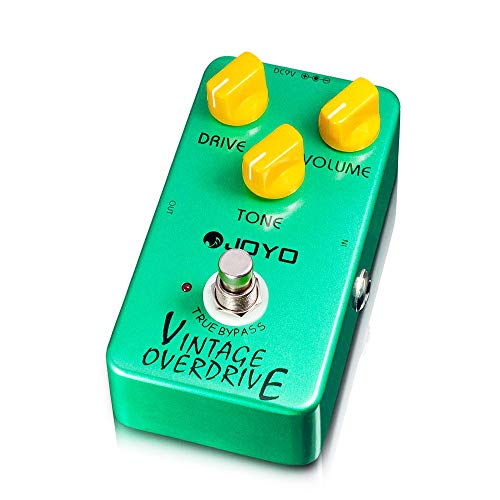
- RC4558 chip for smooth, vintage-inspired overdrive
- Wide gain range from clean boost to thicker crunch
- True bypass and compact aluminum housing
Best For: Tele players seeking warm blues, classic rock, and country overdrive
Classic TS Feel

- All-analog TS-style circuit for classic overdrive
- Simple Volume, Tone, and Gain controls
- True bypass in a compact pedalboard-friendly size
Best For: Telecaster players wanting an easy-to-use classic TS-style pedal
Dual-Voice Option
Pogolab Two-Mode Overdrive Pedal

- Two voicings: flat and bright
- Separate gain, tone, and level controls
- Mini size with true bypass
Best For: Tele players who want a compact pedal with two tone options
Classic Tube-Like Push – BOSS SD-1 Super Overdrive
If you want overdrive pedals for telecaster tones that stay simple and responsive, the BOSS SD-1 is a strong fit. Its asymmetrical clipping is designed to deliver tube-like characteristics, and it is known for stacking well with boost, overdrive, and distortion pedals when you want more flexibility from a Tele setup.
Best For: Players who want a straightforward, genre-defining overdrive that stacks easily with other pedals.
Pros:
- Unique asymmetrical clipping for tube-like warmth
- Stacks well with boost, overdrive, and distortion pedals
- Simple Level, Tone, and Drive controls
- Compact BOSS format with analog signal path
Cons:
- Basic control set may feel limited for tone-shaping
- Needs 9V power via battery or PSA adapter
This is a dependable choice if you want a familiar overdrive voice that can add warmth, push an amp, or sit in a stacked pedalboard without fuss.
Natural Low-End Control – Nobels ODR-mini2 Natural Overdrive
For overdrive pedals for telecaster rigs that need a more natural feel, the Nobels ODR-mini2 gives you extra low-end control without losing the pedal’s analog overdrive character. The variable Bass Cut knob and Spectrum Tone control make it easier to tune the response for a Tele, especially if you want to tighten the bottom end or shape the highs and lows together.
Best For: Tele players who want a compact, natural-sounding overdrive with more control over bass and tone.
Pros:
- Variable Bass Cut knob helps tame the low end
- Spectrum Tone control adjusts bass and treble together
- Compact mini enclosure
- Powered by 9V to 18V DC PSU
Cons:
- Requires a DC power supply
- Mini format may be less convenient for large hands
This pedal stands out if you want a more tailored overdrive voice rather than a fixed mid-hump style, making it a practical choice for cleaner Tele setups.
Warm or Hot Drive – Donner Blues Drive Overdrive Pedal
If you are comparing overdrive pedals for telecaster use and want an easy way to move from classic crunch to a louder push, the Donner Blues Drive is built around two usable voices. The Warm mode aims for a classic TS-style overdrive sound, while Hot adds a more powerful, tightened response that can help a Tele cut through.
Best For: Players who want a budget-friendly overdrive with two distinct gain flavors.
Pros:
- Two overdrive modes: Warm and Hot
- Warm mode replicates a classic TS-style sound
- True bypass design
- Simple Level, Tone, and Gain controls
Cons:
- 9V adapter is not included
- Basic control layout may not suit deep tone tweakers
This is a straightforward option if you want flexible overdrive sounds without adding complexity to your board.
Texas-Style Twang – Caline Enchanted Overdrive CP-511
Among overdrive pedals for telecaster players, the Caline Enchanted Overdrive is aimed at expressive dynamics and twang-friendly breakup. The supplied notes highlight its ability to move from clean boost to Texas Flood SRV-style overdriven twang with a clean amp and a Strat, which suggests a responsive, musical drive that can also suit a Tele’s bright attack.
Best For: Players looking for a musical overdrive that can move from boost to gritty breakup.
Pros:
- Can go from fat clean boost to overdriven twang
- True bypass design
- Aluminum alloy casing
- Compact footprint at 11.2 x 6.4 x 3.4 cm
Cons:
- 9V center-negative adapter not included
- Notes reference a Strat, so Tele results may vary by rig
This pedal looks best for players who want a flexible, touch-sensitive overdrive rather than a one-dimensional gain box.
Analog Dual-Voicing Overdrive – JOYO BRIGHT DAY Vintage/Modern Overdrive
If you want overdrive pedals for telecaster that can move from subtle breakup to fuller crunch, the JOYO BRIGHT DAY is built around an all-analog circuit with two voicing options. Vintage mode aims for a creamy, mid-forward feel with a slightly brighter top end, while Modern mode tightens the bass and adds clarity for a more balanced response. The simple three-knob layout makes it easy to dial in tones quickly without overthinking the setup.
Best For: Tele players who want a flexible, budget-friendly overdrive that can handle blues leads, rhythm crunch, and stacking well.
Pros:
- All-analog overdrive with Vintage and Modern voicing options
- Level, Gain, and Tone controls cover clean boost to saturated drive
- True bypass helps preserve your guitar signal when bypassed
- Rugged metal alloy enclosure with low 22mA current draw
Cons:
- 9V battery and adapter are not included
- Maximum flexibility still comes from careful knob-tweaking
- Best quiet performance depends on a regulated isolated supply
This is a practical choice if you want a straightforward drive pedal that keeps the Telecaster’s character intact while adding range. The dual voicing and simple control set make it easy to find a usable sound fast.
Compact Twin-Mode Overdrive – MOSKY Golden Horse Mini Overdrive
Among overdrive pedals for telecaster, the MOSKY Golden Horse stands out for players who want a compact boost-style drive with two voice options. Its Normal and Soft modes let you choose between a more assertive or gentler response, and the three-knob layout keeps setup simple. The full-metal shell and mini footprint make it easy to fit on a crowded board.
Best For: Telecaster players looking for a tiny, true-bypass overdrive/boost with simple controls and two voice modes.
Pros:
- Two voice modes: Normal and Soft
- Treble, Output, and Gain controls for quick shaping
- True bypass switching preserves unprocessed signal when off
- Compact full-metal design saves pedalboard space
Cons:
- 9V adapter-powered operation may require extra planning
- Mini format offers fewer controls than larger drive pedals
- No battery spec is provided in the supplied details
If you need a small drive that can serve as either a light boost or a more obvious overdrive, this one is easy to recommend. It keeps the workflow simple while leaving enough range to match different Telecaster rigs.
Mini Vintage-Style Drive – FLAMMA FC07 Warm/Hot Overdrive
The FLAMMA FC07 is a useful pick if you are comparing overdrive pedals for telecaster and want a mini pedal with a classic tube-style feel. Warm mode focuses on creamy vintage tones, while Hot mode adds more crunch and boosted impact. The tiny footprint and true bypass switching make it a practical option for boards where space and signal integrity both matter.
Best For: Telecaster players who want a mini analog overdrive with vintage warmth and a hotter second mode.
Pros:
- Warm and Hot modes provide two distinct overdrive characters
- Designed to recreate classic tube overdrive tones
- True bypass keeps the signal untouched when off
- Mini, rugged metal enclosure is lightweight and durable
Cons:
- 9V DC power supply is required and not included
- Minimum 7mA power requirement still means you need external power
- Mini format limits on-pedal control compared with larger units
This pedal makes sense if you want vintage-flavored drive in a small, durable package. The Warm/Hot switch gives it enough range for basic blues and rock use without making the pedalboard more complicated.
Vintage Warmth – JOYO Vintage Overdrive Guitar Pedal
If you’re comparing overdrive pedals for telecaster, the JOYO Vintage Overdrive is a straightforward way to add smooth, vintage-inspired grit without losing the snap of a single-coil guitar. Its RC4558 chip and wide gain range make it easy to move from a clean boost to a thicker crunch, while true bypass helps keep your core tone intact when the pedal is off.
Best For: Tele players who want warm, classic overdrive for blues, classic rock, and country.
Pros:
- RC4558 op-amp delivers a smooth, vintage-style overdrive voice.
- Wide gain range handles both clean boost and richer crunch.
- True bypass keeps the signal path clean when disengaged.
- Compact aluminum alloy housing is built for pedalboard use.
Cons:
- Single-voice approach may be less flexible than multi-mode pedals.
- Power supply or battery is not included.
This is a practical budget-friendly option if you want a classic overdrive pedal that can stay musical with single-coil guitars. The warm mid-range presence and simple design make it easy to dial in without a lot of fuss.
Classic TS Feel – BLUE TUBER TS-Style Overdrive
For players shopping overdrive pedals for telecaster, the BLUE TUBER keeps things simple with an all-analog TS-style circuit, true bypass, and the familiar three-knob layout. It is a compact option if you want an easy-to-use pedal that can shape classic overdrive tones without complicating your board.
Best For: Telecaster players who want a compact, easy TS-style overdrive with simple controls.
Pros:
- All-analog circuit aims for authentic classic overdrive tone.
- Three knobs for Volume, Tone, and Gain keep setup simple.
- True bypass preserves the original signal when off.
- Compact size is pedalboard-friendly and easy to carry.
Cons:
- Power adapter is not included.
- More limited control set than pedals with extra voicing options.
This is a clean, no-drama overdrive choice for players who value simple operation and a classic TS-style format. If you want something compact that stays out of the way until you step on it, this fits the bill.
Dual-Voice Option – Pogolab Two-Mode Overdrive Pedal
If you want overdrive pedals for telecaster with a little more range, the Pogolab stands out for its two tones, flat and bright, that can move between overdrive and distortion. The separate gain, tone, and level controls give you more room to shape the sound, while true bypass helps keep the signal intact when the effect is off.
Best For: Tele players who want a compact overdrive with both flat and bright voicings.
Pros:
- Two overdrive tones: flat and bright.
- Separate gain, tone, and level controls for more shaping.
- True bypass keeps the signal path intact when off.
- Mini pedal design is easy to fit on a crowded board.
Cons:
- Power cable and adapter are not included.
- Only one switch for voicing, so deeper tone shaping is still basic.
For players who want a little more flexibility than a standard single-voicing drive, this pedal offers a useful bright/flat switch in a small footprint. It is a practical choice if you like experimenting with tones without moving to a larger multi-effect unit.
How We Picked the Best Overdrive Pedals for Telecaster
For Overdrive Pedals for Telecaster, we prioritized touch sensitivity, low-end clarity, noise control, and how well each pedal complements single-coil brightness. We also considered bypass type, enclosure size, control simplicity, and value for players building a practical pedalboard.
Quick Comparison
Transparent-style pedals suit players who want the Tele to stay front and center, while mid-hump and vintage-voiced designs add thickness and sustain for solos. Mini pedals are ideal if space is tight, but full-size units often offer easier tweaking and a more spacious control layout.
Key Buying Factors for Overdrive Pedals for Telecaster
Tone Voicing
A Tele’s bridge pickup can be bright and sharp, so many players prefer overdrives with a warm or slightly mid-focused voicing. If you want a cleaner push, look for pedals marketed as natural or transparent. If you want more bite and sustain, choose a stronger midrange presence.
Gain Range and Feel
The best Overdrive Pedals for Telecaster should work well at low gain for edge-of-breakup rhythm tones and still have enough drive for lead work. Pay attention to how the pedal responds to picking dynamics, since Tele players often rely on touch and volume-knob cleanup.
Control Layout and Size
Simple level, tone, and gain controls are usually enough for classic Tele sounds. If you switch between rhythm and lead often, extra voicing options can be helpful. Mini enclosures save space, but larger pedals are easier to dial in on the fly.
Power and Bypass
True bypass can help preserve signal integrity in simpler rigs, especially if you use only a few pedals. Standard 9V power compatibility is also important for convenience and pedalboard planning.
Who Should Buy Which Overdrive Pedals for Telecaster?
If you want a familiar, proven blues and country-overdrive sound, choose a classic-style pedal with clear mids and responsive cleanup. If your Tele is especially bright, a warmer or more natural-sounding model may balance it better. Players on compact boards should lean toward mini pedals, while gigging players may prefer models with broader controls and a more flexible voice.
Ultimately, the best choice depends on whether you want subtle enhancement or a more obvious overdrive character. Matching the pedal’s voicing to your amp and your Telecaster’s pickup output is the fastest way to get a sound that feels musical right away.