Dual overdrive pedals are a smart choice if you want more gain options without filling your board with multiple boxes. They let you stack tones, switch between flavors, and fine-tune your drive for different guitars, amps, and genres.
In this roundup, we focus on pedals that offer practical control, solid build quality, and useful switching features for real-world playing. Whether you want subtle breakup or thick layered drive, the right dual overdrive can cover a lot of ground.
Best 10 Dual Overdrive Pedals Picks for 2026
Stack-and-Blend Choice

- Crayon and Hot Tubes circuits in one pedal
- Blend control for dry signal mixing
- Master Bass and Treble EQ section
Best For: Stacked drive with bass-friendly control
Twin-TS Tone Builder

- 30+ tone combinations from one pedal
- Dual-channel, stackable analog design
- Selectable EQ, clipping, and routing
Best For: Tone tweakers who want many combinations
Premium Circuit Selector

- Six overdrive and boost circuits
- Series and parallel operation
- Expression pedal input for added control
Best For: Advanced players who want premium routing
Dual-Channel Versatility
JOYO Maximum Dual-Channel Overdrive Pedal

- Two stacked overdrive circuits with independent boost
- Six voicings from hard clip, flat, smooth, diode, and MOSFET options
- True bypass aluminum build with ambient LED lighting
Best For: players who want flexible dual-channel overdrive and lead boost in one pedal
Premium MIDI Control
Wampler Pantheon Deluxe Dual Overdrive Pedal

- Two independent Pantheon circuits with separate voicings
- 200 gain-setting combinations with dual I/O
- MIDI channel switching for advanced control
Best For: players who want premium dual overdrive tones with MIDI switching and deep flexibility
Independent Boost and Drive
StewMac Two Kings Boost Dual Overdrive Pedal

- Independent boost and overdrive circuits
- DIP switches for soft or hard clipping modes
- True bypass with Volume, Drive, Tone, and brightness trim
Best For: players who want separate boost and drive channels with simple, flexible tone shaping
Premium British Dual Overdrive
Friedman BE-OD Deluxe Dual Overdrive
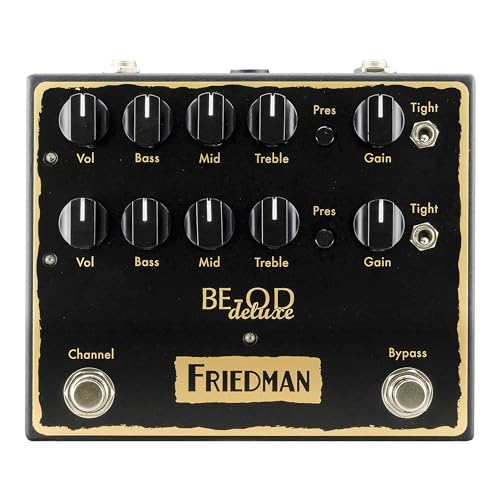
- Dual channels with full EQ controls
- Three-position Tight switch per channel
- True bypass and 9V-18VDC operation
Best For: Players wanting detailed British-style dual overdrive with amp-like control
Budget Transparent Dual Overdrive
Caline CP-70 High Chief Dual Overdrive

- Two transparent low-gain overdrive versions
- True bypass design
- Simple, compact knob layout
Best For: Budget-minded players seeking clean, low-gain dual overdrive tones
Dual-Channel Analog Pick – JOYO King of Kings R-20
If you’re comparing dual overdrive pedals for flexible gain stacking, the JOYO King of Kings gives you two fully independent channels in one compact unit. Each side has its own Volume, Gain, Tone, and clipping options, so you can run a warm rhythm overdrive, a clean boost, or stack A into B for richer lead saturation.
Best For: Players who want affordable dual-channel overdrive with lots of voicing options and simple analog controls.
Pros:
- Two independent channels with separate Volume, Gain, and Tone controls
- Hard/soft clipping switches on each channel for multiple voicings
- Stackable A→B routing for cascading overdrive tones
- True bypass and rugged aluminum alloy construction
Cons:
- Powered by 9V DC adapter only; no battery compartment
- Clipping differences are most noticeable at higher gain settings
- Power adapter is not included
For players who want straightforward dual overdrive pedals without menu diving, this one stays focused on hands-on control and classic analog behavior. Its strength is flexibility at low to mid gain, especially if you like shaping tones from transparent boost to singing stacked drive.
Stack-and-Blend Choice – Electro-Harmonix Hot Wax
The Electro-Harmonix Hot Wax is a practical take on dual overdrive pedals, combining the Crayon and Hot Tubes circuits in one box. You can use either side by itself or stack the Crayon into the Hot Tubes, while the blend control and master EQ add extra control over the final sound.
Best For: Guitarists and bass players who want stacked overdrive with dry blend and simple tone shaping.
Pros:
- Use Crayon or Hot Tubes individually, or stack them together
- Blend control lets you mix in dry signal, especially useful on bass
- Master Bass and Treble EQ offers extra tonal control
- Works on guitar and bass
Cons:
- Only one overall set of controls for the final output
- Less channel-by-channel customization than some dual-channel pedals
- May be more feature-rich than players wanting a very simple overdrive
If you want dual overdrive pedals that are easy to use but still versatile, Hot Wax stands out for its blend feature and EQ section. It is a strong option when you want stacked drive without losing low-end clarity.
Twin-TS Tone Builder – SONICAKE QDS-07
The SONICAKE QDS-07 is aimed at players who want dual overdrive pedals with a lot of tone-shaping combinations. Its dual-channel layout, selectable EQ modes, two clipping voicings, and two routing orders create a wide range of sounds while staying in a pure analog, true-bypass design.
Best For: Players who like experimenting with many overdrive combinations from a single analog pedal.
Pros:
- More than 30 tone combinations from EQ, clipping, and routing options
- Dual-channel overdrive can be used individually or stacked
- Pure analog circuit with true bypass
- Seven knobs provide detailed hands-on control
Cons:
- More complex than a basic two-knob overdrive setup
- Requires a 9V center-negative power supply, not included
- Many options may take time to dial in
For buyers who want a versatile dual overdrive pedal with lots of combinations, this SONICAKE stands out on feature count. It is better suited to players who enjoy tweaking EQ, clipping, and signal order to find a personalized sound.
Premium Circuit Selector – Strymon Sunset Dual Overdrive
The Strymon Sunset is a feature-rich option for dual overdrive pedals, built around six overdrive and boost circuits with series and parallel operation. It adds expression pedal input as well, making it a strong choice when you want more control over how your gain stages interact.
Best For: Players who want a premium dual overdrive with multiple circuits and advanced routing options.
Pros:
- Six overdrive/boost circuits in one pedal
- Series and parallel operation for flexible stacking
- Expression pedal input expands control options
- Compact footprint for a multi-circuit design
Cons:
- Only basic product details are provided here, so deeper tone specifics are not listed
- Likely more complex than a simple two-channel overdrive
- May be more pedal than players who only need a straightforward drive
If your priority is maximizing routing and circuit variety, this Strymon is one of the most versatile dual overdrive pedals in the group. It is best viewed as a control-heavy platform for players who want to move beyond standard two-channel layouts.
Dual-Channel Versatility – JOYO Maximum Dual-Channel Overdrive Pedal
If you’re shopping for dual overdrive pedals and want maximum flexibility without a complicated layout, the JOYO Maximum is built around stacked drive and boost stages. Its Drive channel covers everything from clean boost to amp-like crunch, while the dedicated Boost channel adds extra saturation and sustain for leads. Two toggle switches also give you six voicing options, so you can shape the pedal around your amp and playing style.
Best For: Players who want an affordable dual-channel overdrive with lots of tone-shaping options for rhythm and lead work.
Pros:
- Two-stage design with independent Drive and Boost channels
- Six total voicings from the dual toggle switches
- MOSFET mode and diode clipping add useful tonal variety
- True bypass and rugged aluminum housing
Cons:
- Boost only works when the Drive channel is engaged
- Requires 9V DC adapter power; no battery compartment
The Maximum makes sense if you want a practical dual overdrive that can move from transparent push to fuller solo sounds without taking up much board space. Its straightforward knob layout and flexible voicings give you a lot to work with before you need to look at more expensive options.
Premium MIDI Control – Wampler Pantheon Deluxe Dual Overdrive Pedal
For players comparing dual overdrive pedals and wanting a more feature-rich board centerpiece, the Wampler Pantheon Deluxe adds serious flexibility. It combines two completely independent Pantheon circuits, with Channel 1 voiced as a classic Blues Breaker tone and Channel 2 based on the original Pantheon with a modern boutique feel. With dual inputs and outputs plus MIDI channel switching, it is designed for players who want deep control over gain structure and routing.
Best For: Guitarists who want independent dual overdrive channels with MIDI switching and a wide range of gain combinations.
Pros:
- Two fully independent overdrive circuits in one pedal
- Channel 1 Blues Breaker voice and Channel 2 modern boutique voicing
- 200 combinations of gain settings for broad tonal control
- MIDI channel switching plus dual inputs and outputs
Cons:
- More complex than a simple two-knob drive pedal
- Larger footprint than compact overdrive options
This is a strong pick if you want dual overdrive pedals that go beyond basic stacking and offer real routing and switching flexibility. The Pantheon Deluxe is aimed at players who need multiple gain flavors, easy tweaking, and modern control features in one unit.
Independent Boost and Drive – StewMac Two Kings Boost Dual Overdrive Pedal
If you want dual overdrive pedals that separate clean push from drive duties, the StewMac Two Kings Boost keeps things focused and flexible. It uses independent boost and overdrive circuits, with DIP switches on each side to switch between clean soft clipping overdrive and hard clipping distortion styles. That makes it easy to dial in anything from a subtle push to a more saturated sound, while the stacked performance keeps the pedal useful for solo and rhythm work.
Best For: Players who want separate boost and overdrive channels with simple mode switching and true bypass reliability.
Pros:
- Independent boost and overdrive channels
- DIP switch modes for soft clipping or hard clipping styles
- Volume, Drive, Tone controls plus internal brightness trim
- True bypass and lifetime warranty
Cons:
- Uses internal trim and DIP switches, so setup is less immediate than a basic pedal
- No battery backup included in the supplied details
The Two Kings Boost is a practical choice if you want straightforward dual-channel flexibility without overcomplicating your board. Its clean push, overdrive options, and stackable design make it easy to tailor for a range of playing situations.
Premium British Dual Overdrive – Friedman BE-OD Deluxe Dual Overdrive
If you want one of the more serious dual overdrive pedals for British-flavored gain, the Friedman BE-OD Deluxe is built around the legendary BE-100 tube head. Each channel gives you volume, gain, bass, middle, treble, and presence controls, plus a three-position Tight switch for shaping the low end and feel.
Best For: Players who want versatile, amp-like British overdrive tones with two fully featured channels.
Pros:
- Dual channels with independent tone-shaping controls
- Three-position Tight switch on each channel for added control
- True bypass switching helps preserve signal when disengaged
- Includes splitter cable for 18V operation from two isolated 9V outputs
Cons:
- More complex than a simple single-boost overdrive
- Designed for 9V-18VDC operation, so power setup matters
The BE-OD Deluxe is a strong choice if you need layered gain sounds and detailed control from a dual overdrive pedal. Its feature set is clearly aimed at players who want more than a basic grit box and prefer a pedal that can cover a wider range of British-style drive tones.
Budget Transparent Dual Overdrive – Caline CP-70 High Chief Dual Overdrive
The Caline CP-70 High Chief is a practical pick if you’re shopping for dual overdrive pedals with a transparent, low-gain character. It combines two versions of a famous-style overdrive into one true bypass unit, making it a straightforward way to get stacked or alternate low-gain tones without a complicated layout.
Best For: Players who want an affordable dual overdrive with transparent, low-gain flavors.
Pros:
- Dual overdrive design in one compact pedal
- Transparent low-gain focus in both versions
- True bypass switching
- Simple knob-based control layout
Cons:
- Limited to 9V operation
- Not designed for heavily featured tone-shaping compared with premium units
This is a sensible option if you want the dual-overdrive idea in a simpler, more affordable format. It won’t offer the deep control of more elaborate pedals, but it keeps the focus on usable low-gain drive and easy integration into a board.
Compact Multi-Mode Dual Overdrive – SONICAKE King of Twins QDS-08 Dual Channel
The SONICAKE King of Twins QDS-08 stands out among dual overdrive pedals because each channel offers three modes: overdrive, boost, and distortion. With a pure analog circuit, true bypass, and two-channel flexibility, it’s a compact way to build a wide range of usable drive combinations.
Best For: Guitarists or bass players who want multiple gain flavors from a compact dual-channel pedal.
Pros:
- Two channels with 3 modes each for six combinations
- Pure analog circuit for responsive feel
- True bypass helps keep the signal clean when off
- Dedicated knobs per channel for detailed control
Cons:
- Short 90-day warranty
- More mode choices may take extra time to dial in
If you want maximum versatility from a small pedal, this one offers a lot of range without leaving analog territory. It’s especially appealing for players who like switching between overdrive, boost, and distortion textures in one box.
How We Picked the Best Dual Overdrive Pedals
We prioritized pedals that give players genuinely useful dual-channel flexibility, not just extra knobs. That means independent gain staging, strong tone shaping, reliable bypass or switching behavior, and enough headroom to work with both single-coils and humbuckers. We also looked for practical features like stackable channels, EQ switches, clipping options, MIDI control, and compact enclosures for pedalboard use.
Quick Comparison
When comparing Dual Overdrive Pedals, think in terms of workflow as much as tone. Some models are built for transparent stacking and edge-of-breakup control, while others are voiced for higher-gain rock tones or amp-like saturation. If you want flexibility, look for pedals that can work as two separate drives, a boost-plus-drive rig, or a single larger drive sound with multiple clipping voices.
Key Buying Factors for Dual Overdrive Pedals
Channel Design and Stacking
The best Dual Overdrive Pedals let you use each side independently and stack them in a useful order. A clean boost into drive can tighten low end and add sustain, while two different drive voices can cover rhythm and lead roles.
Voicing and EQ Range
Pay attention to whether the pedal is transparent, mid-focused, or high-gain voiced. Tone switches, EQ modes, and clipping choices can make a big difference if you switch between clean amps, already-broken-up amps, or different guitars.
Headroom and Gain Range
Some players want mild breakup and dynamic touch sensitivity; others need more saturation. Choose a pedal that stays articulate when stacked and offers enough gain spread to avoid sounding compressed or muddy.
Routing, Boost, and Switching Features
Flexible routing is especially important for Dual Overdrive Pedals. Features like A/B stacking, independent boost sections, MIDI recall, or alternate clipping modes can make one pedal replace several simpler drives.
Who Should Buy Which Dual Overdrive Pedals?
If you want a versatile all-purpose drive solution, choose a pedal with multiple clipping or EQ options and a strong low-gain-to-medium-gain range. Players who build tones around amp-like breakup should favor transparent or highly touch-sensitive designs. If you need heavier modern drive, look for a model with more output, tighter bass response, and the ability to stack into another gain stage. For pedalboards with limited space, compact dual-channel options can be the best balance of size and flexibility.
In short, the right Dual Overdrive Pedals should solve a specific tone problem on your board rather than simply add more distortion. Focus on how the pedal stacks, how much EQ control it offers, and whether its voicing matches your amp and playing style.